

Wholesale Engraving Laminate from China for Premium Surface Solutions
2026-09-19
Most sourcing stories from China start with a compromise: price, speed, or finish quality—pick two. LYSHIRE built its engraving laminate range to break that triangle. In this post, we look at how wholesale engraving laminate from China is moving beyond basic commodity boards into premium surface solutions, and what that means for your next project.
How Chinese Mills Define an Engraved Surface vs a Printed Texture
On the shop floor, a Chinese mill usually separates an engraved surface from a printed texture by checking whether the pattern sits in the tool or on the material. Engraving means the roller, plate, or cylinder has been cut, etched, or laser-ablated to create recesses—commonly 15 to 80 microns deep. That recess either holds ink for transfer or acts as an embossing die, leaving a tactile ridge or valley on the substrate. A printed texture, in contrast, is a layer of ink or coating applied to a flat base. The surface remains topographically smooth; the visual effect comes only from color and halftone arrangement.
This difference becomes obvious in how the mills handle quality checks and wear trials. An engraved surface is measured with a profilometer or inspected under a microscope for groove depth, wall angle, and edge definition. The product is then expected to keep its tactile character through rubbing, laundering, or repeated handling. A printed texture is tested for rub fastness, dot gain, and registration accuracy instead. If the coating abrades or fades, the printed texture vanishes, while an engraved pattern can still be felt long after the ink layer is gone.
In many factories, the two terms are also used side by side when a product combines both processes. A laminate or wallpaper line might run an engraved embossing cylinder against a gravure-printed decorative film. Workers will call the emboss an engraved surface and the ink layer a printed texture to avoid confusion during setup and inspection. Ultimately, the working definition comes down to physical deformation versus pigmented deposition—if the pattern can be felt with eyes closed, it is an engraved surface; if it can only be seen, it is a printed texture.
The Physical Depth That Separates Premium Laminate from Standard Sheets
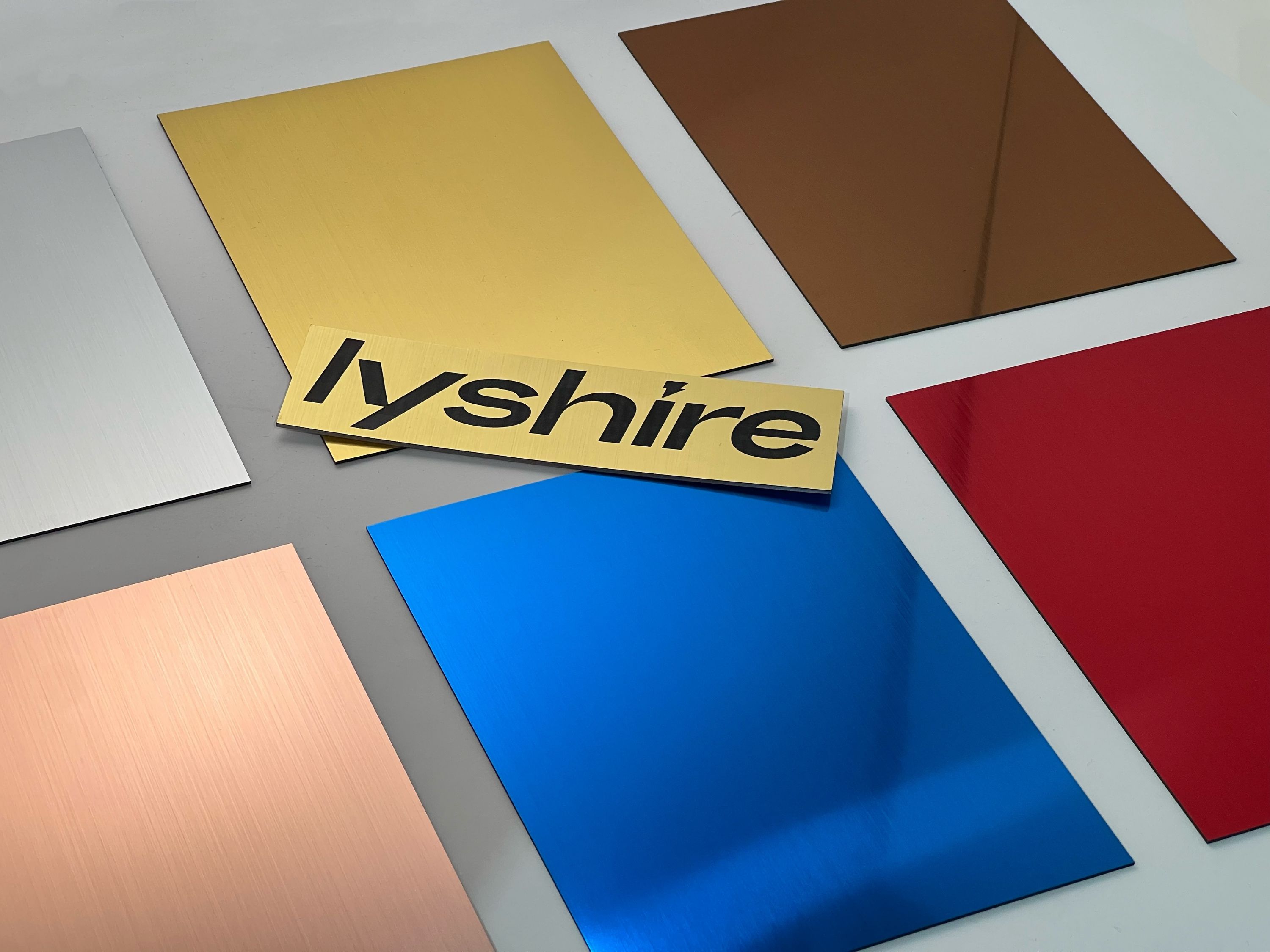
Thickness in laminate isn't just a number on a spec sheet—it's a structural promise. Premium sheets earn their depth through a genuinely thicker wear layer and a denser core, not by padding the back with filler. Run your thumb along the edge of a high-end board and you'll feel a clean, uniform cross-section, with the decorative layer sitting well below the surface rather than printed paper glued onto a wobbly base.
Standard sheets often hit the same millimeter mark by stacking thinner layers, which leaves the material feeling hollow underfoot and more prone to telegraphing the subfloor's imperfections. The density difference becomes obvious when you drop a sample on a hard floor: a premium board lands with a solid, almost ceramic thud, while a budget sheet produces a plasticky rattle that gives away its airy core.
That physical depth also dictates how the material behaves months after installation. A thicker premium laminate resists edge chipping during cuts, holds its shape in varying humidity, and doesn't develop the telltale lip at plank joints that cheap versions show after a few seasons. It's not about looking thicker—it's about staying flat, quiet, and intact where the eye rarely looks but the hand always notices.
Bulk Ordering Without Being Pushed into the Same Old Patterns
Most bulk ordering setups quietly assume you want the same item, the same finish, the same predictable box count every time. It doesn't take long before that convenience starts to feel like a creative straightjacket. The real shift happens when you treat a large order as a chance to mix variations without tripling your workload. Think mixed sizes in one shipment, color runs that don't require separate purchase orders, or packaging that reflects different sub-brands instead of one generic look.
The trick is to stop treating "bulk" as a synonym for "uniform." A well-designed ordering system should let you tweak components, stagger delivery dates, or reserve a portion of the order for later customization. That way you're not locked into a single massive batch of identical products that might not fit every location, season, or audience. Some of the most practical bulk orders leave room for a second phase: you lock in the volume discount, but delay final specs on part of the inventory until you see how the first wave performs.
None of this requires a complicated platform. It's more about asking the right questions before you commit: Can I split the order by variant without penalty? Can I hold back a percentage for later refinement? Will the supplier flag potential overstock instead of just pushing the maximum quantity? The goal isn't to avoid buying in volume; it's to make the volume work for you rather than against you.
What a Sample Reveals About a Supplier’s Finishing Line
A single sample often says more about a supplier than a hundred brochures. The way edges are deburred, corners are radiused, and surfaces are textured tells you whether the finishing line is run by operators who care or by machines left on autopilot. Look closely at the transitions between machined faces and coated areas—those boundary lines rarely lie.
Scratches that repeat at the same angle, faint swirl marks under certain light, or inconsistent anodizing thickness all point to bottlenecks or worn tooling. A well-maintained finishing line produces samples with uniform gloss, tight tolerances on cosmetic surfaces, and no residue from polishing compounds. If the sample carries fingerprints or protective film that’s already peeling, expect the production batches to inherit the same carelessness.
Ultimately, a sample is a snapshot of the supplier’s discipline. It reveals whether they stage a perfect prototype while the real line struggles, or whether their daily output matches the promise. Suppliers who understand finishing know that the last 5% of the process is where reputations are made—and lost.
Negotiating Custom Runs Without Paying for Idle Engraving Cylinders
When you ask a printer for a custom run, the quote often hides a line item that has nothing to do with your actual printing: the cost of engraving cylinders that will sit idle after your job is done. Many buyers accept this as an unavoidable part of short-run work, but it doesn't have to be. Start by asking the supplier to separate the cylinder cost from the per-unit printing price. You may discover that the cylinder fee is calculated based on a full amortization over a single run, which is negotiable if you are willing to commit to a repeat order schedule or provide a longer lead time that lets the printer fit your job into a slower production window.
A more direct approach is to negotiate a cylinder storage and reuse agreement. Instead of paying for the engraving outright, propose that the printer retain the cylinder for a specified period, say twelve months, with no storage fee, and you will only be charged a reduced re-engraving cost if the design changes. This works especially well for packaging or label work where the same base design is used across seasonal batches. If you can demonstrate that your total order volume over the year justifies the initial engraving, many print shops will waive the idle time charge entirely and roll the cylinder cost into a slightly higher per-unit rate only on the first run.
Finally, explore hybrid production methods that eliminate the idle cylinder problem altogether. Some shops now offer digital cylinder engraving on demand, where the cylinder is imaged, used, and then stripped for reuse without a dedicated physical inventory. Others allow you to combine multiple small custom designs onto a single cylinder, sharing the setup cost across several clients. While this may not work for all products, asking about shared cylinder runs or gang-run engraving can significantly cut your upfront costs, especially for prototypes or limited-edition items. The key is to treat the cylinder as a reusable tool, not a disposable part of your job, and negotiate accordingly.
Export Crating and Layering That Protect the Engraved Face
Protecting an engraved face during export starts long before the crate is sealed. A common mistake is relying on loose fill or standard bubble wrap, which lets the panel shift and turns minor vibration into repeated abrasion across the lettering. Instead, each engraved surface gets a low-tack protective film that peels cleanly after delivery, followed by a 3mm closed-cell foam layer cut slightly larger than the face itself.
Between stacked pieces, corrugated dividers or honeycomb board keep the foam from compressing unevenly. Sharp corners are capped with rigid plastic or fiberboard guards so the engraved area never touches an adjacent edge. The layering is taped in place rather than wrapped too tightly, because over-tensioned film can press grit into the grooves and spoil fine detail.
The outer crate uses a fitted timber frame with internal blocking that holds each panel upright or face-down on padded rails. A moisture barrier lines the interior, and the base sits on shock-absorbing blocks to reduce dock handling impact. This combination of soft face contact, rigid separation, and a stable outer shell keeps the engraved surface clean and untouched from warehouse to final uncrating.
FAQ
It offers a crisp, detailed surface that holds fine patterns without chipping, plus the layered core resists wear in high-traffic settings.
Yes, we produce sheets in a range of thicknesses and textures, and we can match specific color codes or gloss levels before bulk production.
Standard orders ship within 15–20 days after artwork approval, while larger or fully custom runs may take up to 30 days.
Each batch goes through thickness, adhesion, and engraving tests, and we provide sample panels for sign-off before the full run.
It is used for signage, branded interiors, retail displays, and architectural panels where a premium, durable finish matters.
The usual starting point is 300 sheets, but we can adjust based on the project scope or negotiate for repeated orders.
It supports fine details down to 0.1 mm line width and engraving depths up to 0.3 mm without exposing the core.
Yes, we can send A5 sample swatches or a small trial kit so you can test engraving results on your own equipment.
Conclusion
When sourcing wholesale engraving laminate from China, the distinction between a truly engraved surface and a printed texture often comes down to physical depth rather than visual mimicry. Mills that invest in deeper embossing rollers create panels where the grain or geometric pattern shifts as light moves across the sheet, unlike flat printed films that feel smooth and repeat predictably. This depth is not just aesthetic; it separates premium laminate from standard sheets because the relief resists showing fingerprints and minor scuffs far better than a two-dimensional print. For buyers placing bulk orders, the real challenge is avoiding the same tired patterns that every distributor already stocks. The best suppliers keep a rotating library of custom engraving cylinders and are willing to run short trial batches, so you are not forced to choose from a generic catalog that your competitors can also access.
A physical sample tells you more than a spec sheet ever will. Run your fingernail across the surface and look at the edge under a raking light—if the texture disappears at the edges or looks compressed, the finishing line is likely underpowered or rushing the embossing stage. When negotiating custom runs, push for a cylinder-sharing model where the engraving cost is amortized across several orders rather than billed as a one-off idle-tool charge. This approach works especially well for regional distributors who need exclusive patterns but cannot absorb a full cylinder fee upfront. Finally, do not overlook export crating. Engraved faces are easily marred by shifting sheets inside a container, so insist on interleaved foam or plastic film between panels and reinforced corner blocking that prevents the stack from sliding against the container walls.
Contact Us
Contact Person: Tina Hou
Email: [email protected]
Tel/WhatsApp: +86 17816238685
Website: https://www.lyshire.com