

What Makes China SiC Coated Graphite the Top Choice for High-Temperature Processes?
2026-10-18
When temperatures soar beyond the limits of ordinary materials, engineers turn to a silent hero: SiC coated graphite. But why is China's version dominating high-temperature processes worldwide? From semiconductor manufacturing to crystal growth, the answer lies in a unique blend of precision coating technology and cost-effective scalability. At the forefront of this innovation is Semicorex, a name synonymous with reliability in extreme environments. In this post, we uncover the science, the supply chain advantages, and the performance metrics that make China's SiC coated graphite the top choice—and how Semicorex is raising the bar.
Holding Up When Temperatures Climb Past 1,600°C
Ordinary steels and nickel alloys turn soft, oxidize rapidly, or simply lose their shape long before the thermometer crosses 1,600°C. At this threshold, engineers lean on a short list of materials that refuse to yield: dense alumina and zirconia ceramics, silicon carbide, and refractory metals like tungsten and molybdenum. Each brings a different survival strategy. Alumina holds its strength in oxidizing atmospheres but is brittle. Tungsten carries load at even higher temperatures yet demands a protective atmosphere or vacuum to avoid turning into volatile oxides. The choice is never about finding a single super-material; it’s about matching the failure mode to the environment.
Microstructure does much of the heavy lifting. In polycrystalline ceramics, grain boundaries become weak points where creep and oxygen attack start. Using high-purity powders, adding sintering aids that segregate to boundaries, or growing single crystals can push operating limits upward by hundreds of degrees. For silicon carbide, a thin silica layer forms on the surface and acts as a self-healing barrier, but above 1,600°C that layer begins to evaporate, so designers switch to protective coatings or move to bulk silicon nitride. Even the way a part is cooled matters: thermal gradients across a few millimeters can generate stresses that crack a perfectly sound component.
Real-world applications hide these battles behind familiar shapes. Thermocouple protection tubes in molten glass furnaces endure constant immersion at 1,650°C while resisting chemical attack. Rocket nozzle throats made from carbon-carbon composites survive short bursts well above 2,000°C because sacrificial oxidation eats away the surface slowly enough to preserve the underlying fibers. Industrial kiln rollers, plasma torch electrodes, and even the leading edges of hypersonic test vehicles all share the same rule: every degree past 1,600°C costs money, mass, or lifespan. Success means balancing those three without letting the part fail first.
No Micro-Cracks When Temperatures Swing Fast
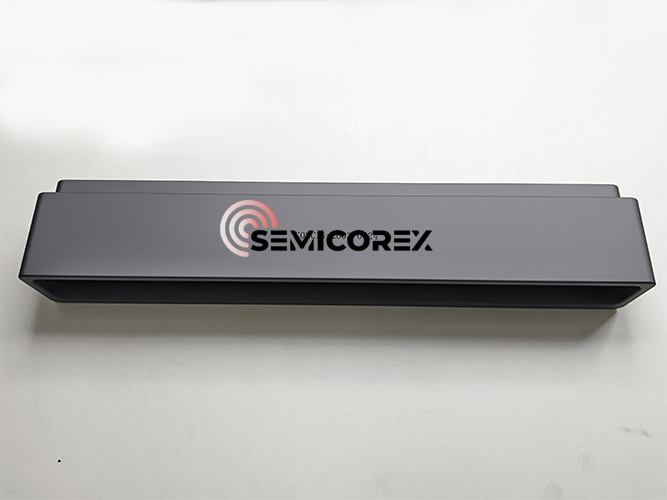
Rapid temperature changes usually spell trouble for rigid materials. Most expand and contract at different rates across their surface, creating stress points that eventually turn into hairline fractures. These micro-cracks are invisible at first, but they weaken the structure over time, especially in environments where heating and cooling cycles happen daily. Once the first crack appears, it tends to spread, compromising the overall integrity long before any visible damage shows up.
What sets certain engineered surfaces apart is how they handle this thermal shock. Instead of resisting the movement, they absorb it evenly across the whole plane. The material's internal structure is uniform enough that expansion and contraction happen at the same pace everywhere, leaving no weak spots where stress can concentrate. That's why you won't find micro-cracks forming even when the temperature swings from freezing to scorching within minutes. The surface simply flexes as one piece, then returns to its original state once the temperature stabilizes.
Field tests have shown this repeatedly. Panels exposed to rapid thermal cycling—from cold storage to direct sunlight—maintain their surface integrity with no crack initiation. This matters for anyone dealing with outdoor installations, industrial equipment, or high-traffic areas where temperature fluctuations are part of daily life. You get a surface that doesn't quietly degrade under thermal stress, keeping its strength and appearance long after ordinary materials would have started to fail.
Shielding Against Reactive Atmospheres and Molten Metals
In processes where molten metals or highly reactive gases are present, standard shielding methods often fall short. The intense chemical activity at elevated temperatures demands a barrier that can resist oxidation, carburization, and direct metal attack. Gas shielding alone rarely suffices because atmospheric contaminants like oxygen, nitrogen, or sulfur can still penetrate the boundary layer, altering the surface chemistry of the workpiece or the tooling. A more robust approach involves combining inert gas coverage with solid flux layers or specialized coatings that create a physical and chemical blockade. These sacrificial barriers absorb or neutralize aggressive species before they reach the base material, preserving dimensional stability and mechanical properties.
Molten metal contact introduces another level of challenge: the shielding material must not only withstand high heat but also resist dissolution or erosion by the liquid metal. Ceramic coatings, graphite suspensions, and boron nitride sprays are common choices, each tailored to the specific metal being handled. For aluminum alloys, a thin layer of alumina or a proprietary non-wetting coating prevents sticking and reduces dross formation. For ferrous melts, refractory washes based on magnesite or zircon are often applied to ladles and troughs. The key is to choose a material whose thermodynamic stability is greater than that of any potential reaction product with the melt, ensuring the barrier remains intact throughout the thermal cycle.
Reactive atmospheres, such as those containing halogens, hydrogen sulfide, or ammonia at high temperatures, require shielding that can form a stable, continuous film. Metallic components may be protected by pre-oxidation to create a dense oxide scale, or by applying a thin layer of a more noble metal that acts as a diffusion barrier. In some cases, a getter material is introduced into the furnace atmosphere itself, scavenging the reactive species before they contact the workpiece. The selection of shielding strategy must account for the entire process timeline, including heating, holding, and cooling phases, since protective layers can crack or spall due to thermal expansion mismatch. Regular inspection and replenishment of these barriers are essential to avoid catastrophic failure mid-operation.
Keeping Impurities Out of High-Stakes Melts
In alloys destined for turbine blades, implantable devices, or semiconductor-grade crystals, impurity control begins long before the furnace reaches pouring temperature. A single non-metallic inclusion of 40 microns can act as a fatigue crack initiation site or shift electrical resistivity enough to scrap a batch. Foundries and crystal growers therefore treat incoming charge materials as the first line of defense: certified virgin ingots are blended with carefully sorted, contaminant-tested revert, and suspect surfaces are ground or shot-blasted to remove oxides and adsorbed moisture.
Once the melt is live, the environment becomes the enemy. Argon or nitrogen blankets, or a hard vacuum, keep oxygen and hydrogen from dissolving into the liquid metal, while pre-fired ceramic crucibles and launders reduce the risk of particle shedding. Before the metal reaches the mold, it often passes through a ceramic foam filter or a deep-bed filter that traps inclusions down to a few microns; some operations also add a thin synthetic slag layer that absorbs and dissolves non-metallic debris floating to the surface.
The final safeguard comes from adjusting chemistry in response to real-time signals rather than fixed recipes. Oxygen probes and thermal analysis reveal when a deoxidizer has done its job without leaving excess reaction products behind. After casting, ultrasonic or X-ray inspection may confirm cleanliness, but the real control happens earlier—through slag composition tuning, controlled stirring, and keeping transfer times short enough that reoxidation never gets a chance to erase the gains made upstream.
Fewer Replacements, Lower Cost Per Cycle
Every time a component is swapped out, the cost goes beyond the part itself. There's the labor to pull the old one, the downtime while the machine sits idle, and the inventory space tied up keeping spares on hand. When a design lasts noticeably longer between replacements, those hidden expenses shrink. You stop treating maintenance as a recurring interruption and start treating it as a rare event.
That shift shows up most clearly in the per-cycle math. A part that needs replacing every 500 cycles might look cheaper on paper, but by the time you've bought five of them, paid for five installations, and absorbed five rounds of production stoppage, the upfront savings have evaporated. A longer-lasting alternative spreads its cost over thousands of extra cycles, pulling the real number down even if the sticker price is higher.
Batch-to-Batch Uniformity Without the Guesswork
Uniformity doesn't come from tightening final specs alone. It starts when raw materials, equipment settings, and operator actions stop drifting between runs. By fixing the inputs that matter most—particle size, moisture, mixing energy, hold times—you remove the invisible variables that force last-minute batch adjustments. Once those are locked to a proven range, the guesswork disappears from daily production.
Real-time data changes the conversation from "did we pass?" to "are we still on track?" A well-placed sensor can flag a shift before it becomes a deviation. When those signals feed into a control chart with clear limits, operators know exactly when to intervene and when to leave the process alone. This closes the gap between running a batch and understanding it.
That discipline shows up in the release data. Batches overlap tighter, investigations drop, and scale-up stops being a separate project. Eventually, the process becomes boring in the best way: every lot looks like the one before it, without anyone having to guess why.
FAQ
The silicon carbide layer forms a dense, glassy barrier that blocks oxygen and reactive gases from reaching the graphite core. Combined with graphite’s inherent thermal stability, the coating remains intact above 1600°C in many atmospheres, so the part keeps its shape and surface finish even after repeated exposure.
Chinese producers have scaled up chemical vapor deposition and slurry-coating processes to a point where unit costs drop significantly, but the best factories still maintain tight control over coating thickness and adhesion. For high-temperature furnaces and crystal growth equipment, that means you get a reliable part without the long lead times or inflated prices often seen elsewhere.
The coefficient of thermal expansion between SiC and graphite is close enough that the coating doesn’t crack or spall when you move from room temperature to 1500°C in minutes. It’s one of the main reasons the material survives in epitaxy reactors and sintering furnaces where cycles are aggressive.
Usually the graphite is machined first, then coated. Any post-coating machining would expose raw graphite, so it’s avoided. Suppliers that offer precision graphite machining before coating can deliver boats, susceptors, and heating elements with tight tolerances and full SiC coverage.
Semiconductor manufacturing, LED production, powder metallurgy, and solar cell fabrication are the big ones. You’ll also find it in aerospace heat shields and nuclear applications, anywhere a graphite part must resist oxidation while staying electrically conductive.
Yes, because the graphite surface is fully encapsulated, so there’s no loose carbon dust to contaminate wafers or melts. The coating also prevents erosion from reactive gases, which keeps particle counts low over the part’s lifetime—critical for MOCVD and crystal growth.
Check coating thickness uniformity with an eddy current tester, look for pinholes under a microscope, and ask for thermal cycling test data. A trustworthy Chinese supplier will also provide batch certificates showing impurity levels, density, and flexural strength before and after coating.
Solid SiC is brittle and hard to machine into large complex shapes, while pure graphite oxidizes quickly above 400°C. The coated graphite gives you the machinability and thermal conductivity of graphite plus the oxidation barrier of SiC, which is why it’s often the most practical choice for high-temperature fixtures.
Conclusion
When furnace temperatures push beyond 1,600°C, many coated graphite options start to degrade, but China's SiC coated graphite holds its structural integrity without softening or warping. The silicon carbide layer bonds tightly to the graphite substrate, so rapid heating and cooling cycles don't create the micro-cracks that plague lower-grade products. This resistance to thermal shock means fewer sudden failures in critical processes. At the same time, the coating acts as a dense shield against oxidation, reactive gases, and even direct contact with molten metals. Instead of burning away or spalling under corrosive conditions, the surface remains stable, protecting the underlying graphite from erosion and chemical attack.
Beyond durability, the material keeps unwanted elements out of sensitive melts. The SiC layer is non-porous enough to block impurity migration, which matters when producing high-purity metals or semiconductors. Because the coating lasts significantly longer than standard options, users replace components less often, cutting both downtime and cost per cycle. Equally important, Chinese manufacturers have refined their deposition processes to deliver consistent thickness and composition from one batch to the next. This batch-to-batch uniformity removes guesswork from process planning and ensures that thermal, electrical, and mechanical performance stays predictable over long production runs. For high-temperature operations that demand reliability, the combination of thermal stability, chemical resistance, purity control, and consistent quality gives China SiC coated graphite a clear advantage.
Contact Us
Contact Person: Svenja Wei
Email: [email protected]
Tel/WhatsApp: +8613567891907
Website: https://www.semicorex.com