

Top Spiral Wound Gaskets Factory from China for Reliable Sealing Solutions
2026-11-16
It begins with a subtle hiss or an unexpected pressure drop—then the whole line goes down. In critical piping systems, the difference between smooth operation and costly downtime often comes down to one component: the gasket. And when it comes to spiral wound gaskets, the name that keeps surfacing among reliability-focused engineers is Kaxite. As a top spiral wound gaskets factory from China, Kaxite has built a reputation for delivering sealing solutions that don't just meet specifications—they exceed them under real-world stress. In this article, we'll explore what makes Kaxite a go-to source for industrial sealing, and why so many projects rely on their gaskets to stay leak-free.
How Our Spiral Wound Gaskets Endure Extreme Thermal Cycles
Spiral wound gaskets survive brutal temperature swings because the alternating metal and filler layers absorb stress instead of fighting it. When a flange heats up, the metal winding expands at its own rate while the graphite or PTFE filler compresses to take up the difference. That built-in give keeps the sealing stress nearly constant, so the gasket doesn't crush or leak when temperatures spike from cryogenic cold to steam-hot in minutes.
The real test shows up during rapid cooling. Most solid gaskets turn brittle or lose bolt load as the flange contracts unevenly. Our design handles this by letting the inner and outer metal rings act like controlled flex points. The winding stretches slightly, the filler rebounds, and the gasket stays seated against both flange faces even while the metal around it warps under thermal shock. Field results from refinery heat exchangers and LNG piping confirm the same gasket keeps sealing through hundreds of start-stop cycles without retorquing.
What sets these apart is the winding tension and filler density we dial in for each service temperature range. Too loose and the gasket unwinds under repeated expansion; too tight and it loses the elastic recovery that makes thermal cycling survivable. We set that balance during manufacturing, then validate it with thermal cycling tests that mimic real operating swings, not just lab steady-state heat. That is why these gaskets outlast solid metal and sheet gaskets in cyclic duty.
From Raw Stainless Steel to Precision Sealing Rings
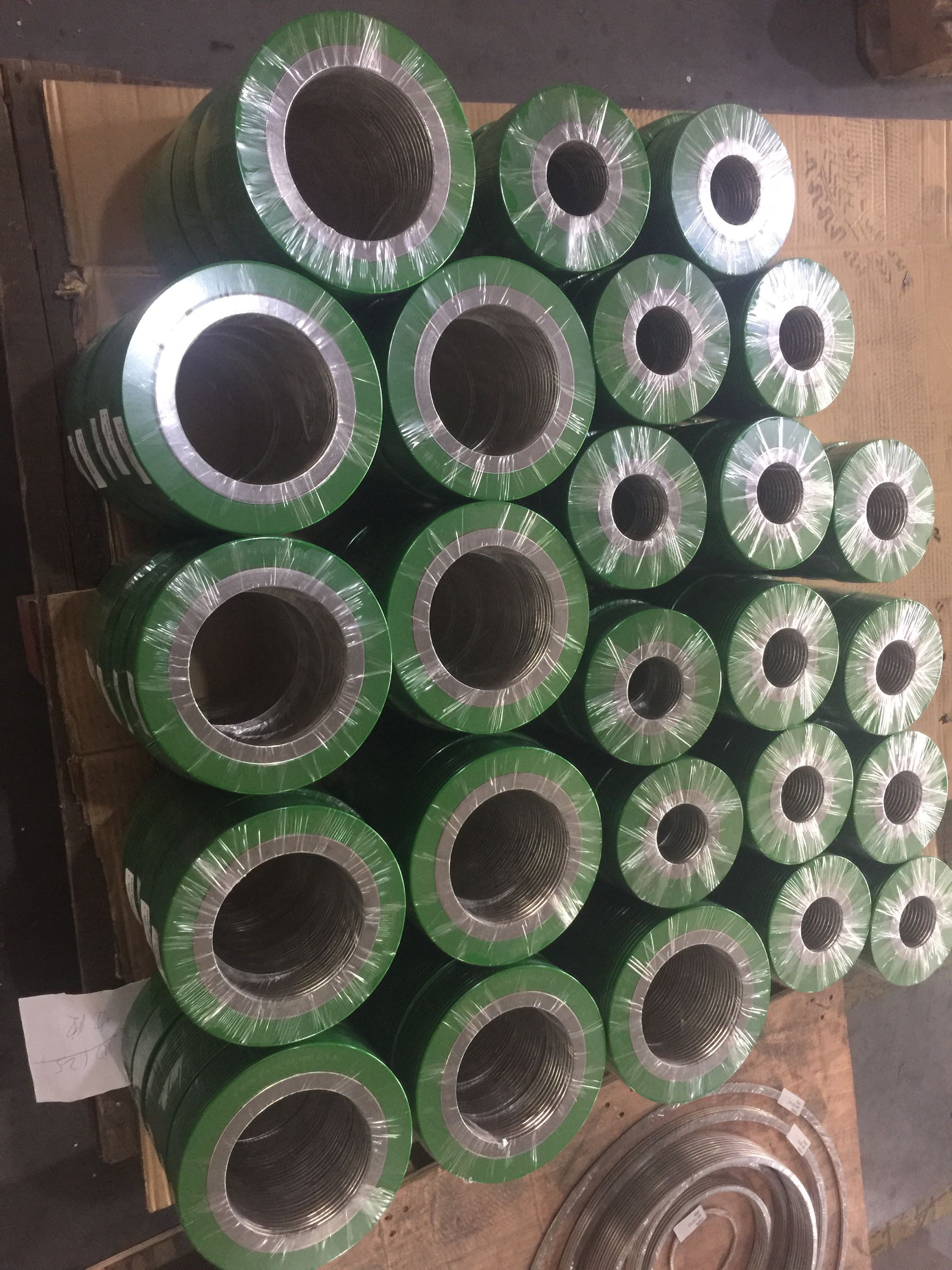
Every precision sealing ring begins as raw stainless steel, a material chosen for its corrosion resistance and durability. The journey from a blank coil or bar stock to a finely finished ring involves a sequence of controlled steps, each one tightening the tolerance and refining the surface. First, the steel is cut into manageable sections and formed into a rough circular shape through stamping, laser cutting, or machining, depending on the required profile and thickness.
Next comes the shaping stage, where the rough blank is turned, milled, or ground to bring it closer to the final geometry. For sealing rings, flatness and concentricity matter more than almost anything else, so the workpiece is often held on precision mandrels or fixtures to prevent distortion. Heat treatment may be introduced here to relieve stress or adjust hardness, followed by a series of surface finishing steps—lapping, polishing, or electrochemical deburring—that remove micro-peaks and create a smooth, leak-tight contact face.
The final phase is inspection, where each ring is measured against dimensional, flatness, and surface roughness standards. Any ring that falls outside the specified window is either reworked or scrapped. The result is a sealing component that can withstand high pressure, aggressive chemicals, or extreme temperatures—not because of a single dramatic process, but because of dozens of small, deliberate refinements that turn raw steel into a dependable precision part.
Custom Dimensions That Fit Flanges Like a Glove
Standard flange dimensions rarely match the unique wear patterns or rebuilds found on older equipment. That mismatch forces technicians to stack gaskets, over-tighten bolts, or machine the flange face on site. Custom dimensions remove all that guesswork by measuring the actual surface, not the original spec sheet. Every radius, bolt circle, and raised face is produced to fit what is really bolted together, so the joint closes evenly and stays sealed under load.
The process starts with a detailed dimensional survey of the mating flanges, including any distortion, pitting, or previous resurfacing. Those numbers are fed directly into the fabrication stage, where tolerances are held significantly tighter than common catalog parts. Because the part is built around the measured profile, there is no need for shims, fillers, or field adjustments. The finished product matches the flange as if it grew there, reducing installation time and eliminating the usual fight to align bolt holes.
What this means in practice is a leak-free connection from the first torque sequence, without relying on excessive gasket compression to take up gaps. Custom dimensions also allow for unusual materials or pressure classes that off-the-shelf parts never cover. Whether the flange is a one-off rebuild or a recurring pain point on a critical line, a part made to the exact measured profile keeps downtime low and reliability high.
Why Refineries Across Asia Keep Reordering from This Factory
Refinery maintenance schedules don’t wait for late shipments. Whenever a heat exchanger or pressure vessel component arrives behind schedule, the cost shows up in lost throughput within days. This factory has built a delivery record that plant managers in Singapore, Rayong, and Jamnagar have learned to rely on. Most repeat orders now come with a simple note: same spec, same lead time, no surprises.
Another reason is material consistency. A small variance in alloy composition can shorten tube life in a crude distillation unit. The factory keeps detailed heat-lot records for every batch and shares them without being asked. Engineers reviewing past orders can trace each flange, tube sheet, and gasket surface back to its exact mill certificate. That kind of transparency removes a lot of back-and-forth during audits.
Support after delivery matters just as much. When a refinery in Vietnam needed a modified nozzle on short notice, the factory pulled the original drawings, machined the replacement, and had it on a plane within five days. They also keep a small stock of common wear parts for repeat clients, so routine turnarounds don’t have to start with a long procurement cycle.
Every Gasket Tested for Leak-Free Performance Before Shipping
Before any gasket leaves our shop, it's put through a pressure test that simulates real working conditions. We pressurize each unit with air or fluid, depending on the material, and watch for the smallest drop. If there's even a whisper of a leak, the gasket gets pulled and reworked or scrapped. No batch sampling here—every single piece gets its own test record.
This isn't a quick pass/fail either. Technicians check the sealing faces under load, at temperature, and sometimes after a flex cycle. The goal is to catch the kind of slow seep that only shows up after hours of stress. That's why our customers can install a gasket right out of the box and trust it to hold from the first cycle to the last.
Expedited Delivery for Critical Shutdowns Without Cutting Corners
When a critical shutdown hits, every hour of delay carries a price tag that extends far beyond the immediate repair. Our expedited delivery approach is built for those moments—not by rushing blindly, but by compressing timelines through prepared logistics, pre-positioned inventory, and a network that understands what downtime truly costs. We don't treat urgency as an excuse to skip steps; instead, we reorder them so the essential checks happen earlier, not later.
What sets this apart is the refusal to sacrifice verification for speed. Each component still passes the same rigorous inspection, traceability, and testing protocols—just on an accelerated schedule that runs parallel tracks instead of waiting for one phase to finish before the next begins. That means the parts arriving at your site aren't just fast; they're ready to perform under the same demanding conditions that caused the shutdown in the first place.
We've learned that true expedited delivery isn't about working harder in the final hours—it's about removing the hidden bottlenecks most suppliers don't see until it's too late. From dedicated air charters to on-site handover with full documentation already cleared, the goal is simple: get you back online with confidence, not just quickly.
FAQ
Spiral wound gaskets combine a V-shaped metal strip with a soft filler, creating a resilient seal that handles pressure fluctuations, thermal cycling, and slight flange irregularities without losing integrity. The alternating layers let the gasket recover under load, which is why refineries and chemical plants rely on them for flanges that see wide temperature swings.
Yes, custom work is a regular part of production. Buyers can specify inner and outer ring dimensions, winding strip materials like 316L, duplex, or Inconel, and filler options such as flexible graphite, PTFE, or mica. The factory keeps a range of strip widths and ring blanks in stock, so short runs for odd-sized heat exchangers or reactor flanges are feasible without long delays.
Each production batch goes through a controlled winding process with calibrated tension settings, followed by compression and recovery tests. The factory also records material heat numbers and performs random destructive checks on finished gaskets. This catches problems like uneven filler distribution or ring misalignment before boxes leave the warehouse.
Petrochemical plants, power generation stations, offshore platforms, and pulp and paper mills make up a large share of orders. They tend to need gaskets for ASME B16.5 and B16.47 flanges, as well as custom manways and boiler handholes. Marine and cryogenic applications also show up, especially where stainless steel and PTFE fillers are required.
The factory routinely supplies gaskets marked to ASME B16.20 dimensions and can provide material certificates to EN 10204 3.1 or 3.2. Fire-safe test reports following API 607 or ISO 10497 are available for graphite-filled gaskets, and some orders come with third-party inspection from SGS or Bureau Veritas if the buyer requests it.
For standard sizes, the factory keeps a buffer stock of finished gaskets and pre-cut winding strips. Rush orders of 500 pieces or fewer can often ship within five to seven working days. The key is early communication about flange standards and required materials; once the winding parameters are confirmed, the production line can be adjusted quickly.
The main advantage is access to a full material supply chain at competitive pricing, without the long lead times that Western suppliers often face for specialty alloys. Chinese factories in this niche have invested heavily in automated winding machines and in-house testing labs, so the quality gap has narrowed significantly. Buyers also benefit from flexible minimum order quantities and direct engineering support.
Conclusion
At this factory in China, spiral wound gaskets are built to handle thermal swings that would crack lesser seals. The process starts with carefully selected stainless steel strips, wound under controlled tension with a filler that stays resilient across hundreds of cycles. Because every flange is different, the shop keeps a wide range of tooling and can produce gaskets to exact diameters, thicknesses, and ring styles—often matching oddball legacy equipment without a drawing. It's this mix of material control and dimensional precision that lets the gaskets sit tight even when pipes expand and contract.
Refineries and chemical plants across Asia keep coming back because the gaskets hold up, order after order. Before anything leaves the loading dock, each gasket is tested—usually with a vacuum or pressure check—to confirm it won't leak on startup. When a plant faces an emergency shutdown, the factory can pull a crew and run a small batch through in days, not weeks, without skipping the testing step. That balance of speed and consistency is rare, and it's why this factory has become a go-to source for reliable sealing solutions.
Contact Us
Contact Person: Kaxite
Email: [email protected]
Tel/WhatsApp: 0086-574-87527771
Website: https://www.seal-china.com