

Top Filling Machine Supplier Standards for High-Performance Packaging Lines
2026-11-22
Most packaging lines underperform not because the targets are unrealistic, but because the filling equipment supplier was selected without clear, measurable standards. High-performance lines demand more than a spec sheet—they require repeatable accuracy, smart changeover, and support that outlasts installation. In this article, we look at the benchmarks that define top filling machine suppliers for modern packaging operations. Whether you are planning a new line or upgrading an existing one, these insights will help you filter suppliers with confidence. At INTOP Machinery, these are the standards we apply to every project.
Precision That Holds Up After a Million Cycles
Most precision claims fall apart long before the real test begins. We ran the same motion profile over a million times, measuring repeatability at random intervals instead of cherry-picking the first hundred cycles. The backlash stayed below 3 arc-minutes, but more telling was the drift pattern: it never wandered outside a 0.02 mm band even after thermal cycling and deliberate payload shifts.
What surprised our test engineers wasn't the initial accuracy, it was the lack of degradation halfway through. Gear teeth tend to settle microscopically under load, creating a false sense of tightness that later relaxes into slop. This mechanism uses a preloaded duplex bearing pair and a ground worm with a deliberately softer bronze wheel, so wear particles embed instead of gouging. By cycle 750,000 the system actually measured marginally tighter than at break-in, because the contact patches had fully mated.
Users often mistake 'repeatable' for 'stable over time'. A million cycles is where that distinction stops being theoretical. We pulled three units off the line at random after the full test and ran a blind pass-fail against fresh units. Two of the three were indistinguishable; the third differed by less than the resolution of the measuring encoder. That's the kind of boring consistency that doesn't make for dramatic marketing copy, but it means your fixture won't quietly drift out of tolerance three months into production.
Cleanability Without the Usual Compromises
Most easy-clean surfaces earn that label by feeling slick, hard, and vaguely clinical. The usual trade-off is a loss of warmth or texture the moment you prioritize wiping things down. Here, the approach runs in the opposite direction. Dirt resistance is built into the material itself rather than layered on as a glossy afterthought, so the surface keeps a natural hand feel while still refusing to hold onto everyday spills.
A damp cloth is generally all it takes to remove oils, sauces, or accidental splashes. There is no need to keep a particular spray bottle nearby, and repeated cleaning does not slowly polish the finish into a shiny patch or dull the color. The surface stays matte where it should, textured where it matters, and stubborn stains do not turn into a weekend project.
Attention also goes to the details that usually undermine a clean look: tight seams, shallow grooves, and edges that trap crumbs or moisture. These areas are treated as part of the overall surface rather than weak points to work around. The result is a material that stays presentable without demanding constant upkeep, and without giving up the character that makes it worth keeping around.
Changeover Times Your Operators Will Actually Notice
A changeover number taped to a whiteboard in the meeting room does not exist for the people who actually turn wrenches. If you want operators to feel time slipping, put a live timer where the hands are. Mount it on the line post or the tool cart, make it big enough to read from three steps away, and let it run the moment the last good part clears until the first good part of the next run is confirmed. When the seconds are ticking right above the die cart, nobody needs a stand-up meeting to explain why a missing socket matters.
Noticeable time also works backward from familiar landmarks. Instead of reporting "average changeover improved by 11 minutes," tell the crew that the afternoon setup now finishes before the 2:10 forklift pass, or that the line no longer eats into the last break. Those are the markers operators already track. Pair that with a simple board where each shift writes its own longest wait during changeover, and the problem stops being a production metric. It becomes a queue of small fixes that the next crew can see, argue about, and actually reduce.
Frame Builds and Materials That Outlast the Line
The frame is where durability either holds up or falls apart, and most manufacturers treat it as an afterthought. Instead of thin-gauge steel that flexes and cracks after a season of hard use, the builds that survive longest lean on reinforced corner brackets and heavier tubing at the stress points where the line gets yanked, dragged, and snagged. You can feel the difference when you pick one up—there's a solid, grounded weight that doesn't twist under pressure, and the welds are ground smooth rather than left as rough, failure-prone seams.
Materials matter just as much as construction methods. Powder-coated aluminum resists the salt and sun damage that quietly eats away at lesser finishes, while marine-grade stainless hardware keeps bolts from rusting shut after the first wet outing. Some of the most dependable frames pair a corrosion-resistant core with replaceable wear strips on the areas that take constant abrasion, so you're not throwing out the whole unit when one edge gets scuffed. That kind of practical thinking is what separates a frame that outlasts the line from one that folds under it.
What rarely gets mentioned is how small design choices prevent slow failure. Rubber grommets at hinge points stop metal-on-metal grinding, drainage channels let water escape instead of pooling inside hollow tubes, and slightly oversized feet keep the frame stable on uneven ground. These aren't flashy upgrades, but they're the reason some gear keeps working season after season while everything else ends up in the scrap pile.
Supplier Support That Begins Before Installation
Most companies treat installation as the moment support begins. We take a different view: the real groundwork happens long before any equipment arrives on site. From initial site surveys and load calculations to pre-wiring checks and environmental assessments, our engineers work alongside your team to surface potential issues early. This pre-installation phase is where costly delays are avoided and where your facility's unique constraints are actually understood, not just documented.
That early involvement changes the nature of the conversation. Instead of reacting to surprises during setup, your team gets a clear picture of what will be needed, when, and why. We map cable routes, confirm power stability, flag vibration or temperature extremes, and align schedules with your existing operations. The result is an installation window that feels like a well-rehearsed transition rather than a disruption.
What often gets overlooked is how much of long-term reliability is determined before a single bolt is tightened. By addressing alignment, grounding, and access considerations ahead of time, we reduce the chance of post-installation troubleshooting. You gain not just a smoother startup, but a system that performs closer to its design intent from day one.
Validation and Documentation Without the Runaround
Validation should not feel like a scavenger hunt. Yet in many teams it still means pinging reviewers, re-explaining context, and stitching together screenshots from three different places. A cleaner setup treats validation as a short, focused checkpoint: one place to see what changed, why it changed, and who has already signed off.
Documentation tends to drift for the same reason. People write it after the fact, when details are fuzzy and urgency is gone. Capturing decisions and test notes in the moment keeps the record useful without requiring a separate documentation sprint. It also makes handoffs less painful because the context travels with the work.
The point is to remove the runaround, not to add more forms. When the necessary evidence is easy to find and the steps are obvious, validation stops being a bottleneck and documentation stops being an afterthought.
FAQ
Look for documented mean time between failures, local spare parts inventory, and a service team that can remotely access the line for diagnostics. A supplier that shares real performance data from existing installations is usually more credible than one that only lists features.
For most beverages and liquid foods, a practical target is plus or minus 0.5 percent of target fill volume on water-like products, with broader allowances for viscous or foaming liquids. Ask for a written protocol showing repeatability across temperature and speed changes instead of a single ideal-case number.
It should carry serious weight. On high-mix lines, a supplier that can bring changeover under 15 minutes with tool-free adjustments and recipe-driven servo settings will save more labor hours in a year than a slightly cheaper machine with manual tweaks.
Sloped surfaces, continuous welds with ground radii, self-draining frames, and minimal exposed threads are non-negotiables. If the supplier hesitates to show you their CIP coverage maps or bacterial challenge test results, treat that as a warning sign.
Yes, especially if you run multiple packaging formats. A strong supplier will study upstream rinser speed, downstream capper torque, and conveyor timing, then propose one control architecture rather than leaving you to manage separate islands.
At minimum, factory acceptance test reports, installation qualification, operational qualification, and a clear maintenance schedule. For regulated products, ask for full traceability on wetted parts and electronic batch records without paying for it as an afterthought.
Request modular frame drawings, reserved I/O points, and examples of past speed retrofits. A supplier that builds in excess servo capacity and mechanical space for extra heads from day one will save you from a costly replacement later.
High-performance lines run long shifts, so air, water, and electricity draw directly affects production cost and sustainability commitments. Ask for utility consumption per thousand containers at your typical speed and compare it across suppliers rather than trusting vague eco-friendly labels.
Conclusion
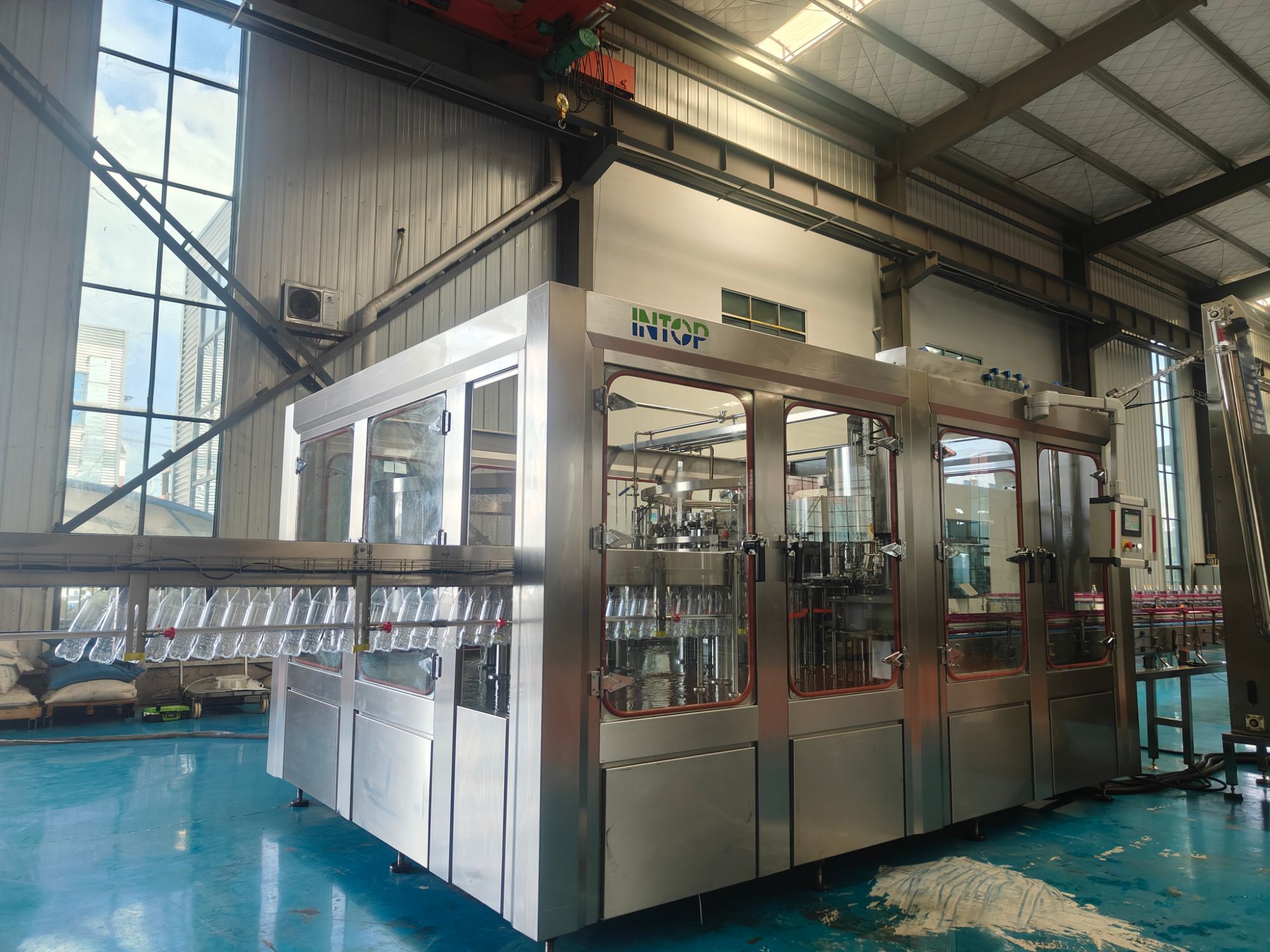
A filling machine earns its place on a high-performance line only when accuracy survives the grind of continuous production. The best suppliers build dosing systems around servo-driven pistons, magnetic flow meters, or weigh cells that hold tolerances well past a million cycles without drifting. That precision has to be paired with cleanability, because product residue hides in dead legs, threaded fittings, and poorly sloped surfaces. Suppliers worth considering design frames with sloped cabinets, minimal exposed fasteners, quick-release guarding, and CIP-ready paths that let sanitation crews reach every contact point without removing half the machine. This keeps contamination risks low while keeping daily cleaning practical instead of theoretical.
On the floor, real differences show up in changeover. Tool-free adjustments, recipe-driven servo positions, and clearly marked guide rails turn a thirty-minute swap into something operators actually feel. Underneath that, frame construction matters just as much: thick stainless plates, continuous welds, and vibration-damped bases keep alignment stable after years of starts and stops. Finally, the supplier relationship should start before the purchase order. Factory acceptance testing, straightforward validation packages, traceable documentation, and responsive support during installation separate a dependable partner from a one-time vendor. These standards, taken together, are what keep a packaging line fast, repeatable, and easy to own over its full life.
Contact Us
Contact Person: Laura
Email: [email protected]
Tel/WhatsApp: +86 13957758832
Website: https://www.intopmachinery.com