

Top CNC Parts for Precision Machining and Manufacturing
2026-10-20
Precision machining lives or dies by the parts you feed into the machine. A slightly off-spec collet, a subpar linear bearing, or a worn-out ball screw can turn a tight tolerance job into a pile of scrap. That's why top-tier manufacturers obsess over the unsung heroes of the CNC world. At BOYIKUN, we've watched shops transform their output by swapping in the right components. Curious which CNC parts actually make a measurable difference? Here's our shortlist—straight from the shop floor, not a catalog.
Ultra-Balanced Spindle Rotors
High-speed spindles live or die by how smoothly their rotors spin. An ultra-balanced rotor keeps vibration at the micro-inch level, which means the cutting tool doesn't chatter and the workpiece surface comes out clean. Instead of chasing balance after assembly, these rotors get corrected on dynamic balancing machines that pinpoint and remove even the tiniest mass asymmetry. That extra step shows up as bearings that last longer and a spindle that holds its accuracy over thousands of hours.
What you notice in daily use is less noise, less heat, and fewer unexpected shutdowns. Because the rotor spins true, the motor doesn't fight its own centrifugal forces, so it draws less current under load. For anyone pushing small-diameter tools or grinding at high RPM, that kind of stability isn't a luxury—it's the difference between a good finish and a scrapped part.
Lattice-Structured Aerospace Brackets
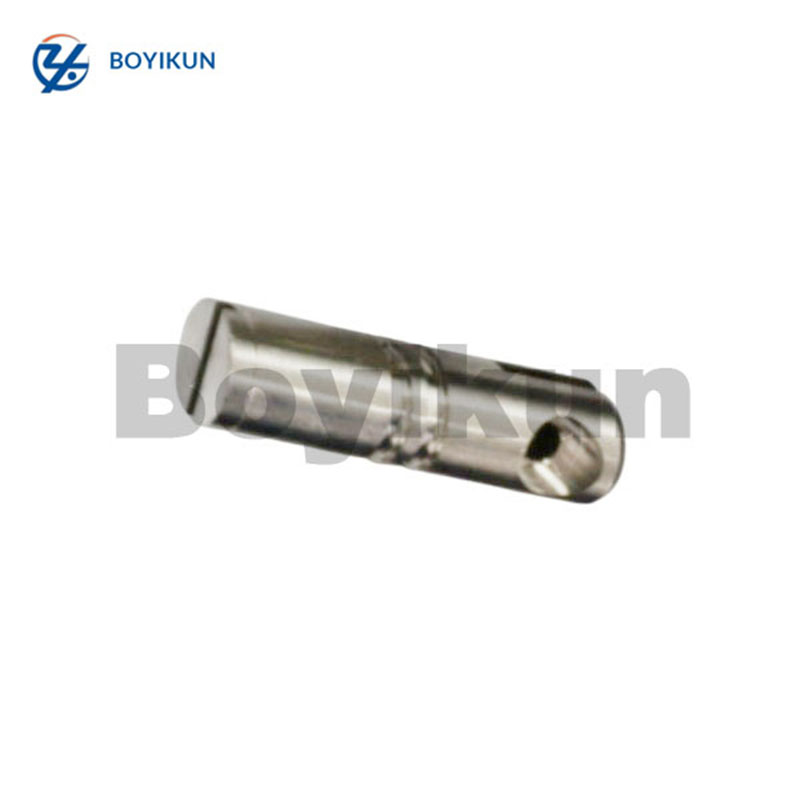
Replacing solid machined lugs with lattice-packed volumes changes how stiffness gets distributed across a bracket. In flight hardware, a door hinge bracket or an avionics tray support might carry the same load as before, but a well-designed lattice core removes material only where stress maps show it is not needed. That results in parts that weigh 30–50% less without giving up the bolt-hole accuracy or mounting face flatness that assembly crews rely on.
The real advantage shows up when the lattice is not treated as a uniform fill. Wall thicknesses and cell sizes can be graded so the structure is dense near fastener bosses and open in the middle of the body. Engineers using laser powder bed fusion exploit this by aligning cell struts with primary load paths, which avoids the shear-band failures seen in early uniform-grid attempts. It also gives designers a way to push natural frequencies above engine vibration ranges without adding external ribs or gussets.
Material choice still matters. Ti-6Al-4V remains the common choice for brackets near hot sections, while AlSi10Mg appears more often on cabin-side fittings where post-machining is simpler. Process consistency remains the tough part: trapped powder removal, surface roughness inside narrow channels, and fatigue debit from as-built surfaces can erase weight savings if not handled during design. That is why successful programs pair the lattice geometry with a clear post-processing plan instead of treating it as a purely geometric exercise.
Swirl-Optimized Hydraulic Manifolds
Internal flow geometry gets reshaped in swirl-optimized hydraulic manifolds to force fluid into a controlled rotational pattern before it reaches valve ports or actuator lines. The benefit shows up as a sharp drop in localized pressure spikes and stagnant zones that typically trigger cavitation and uneven wear. Machined guide vanes or helical inlet paths push the oil away from sharp corners, which keeps flow attached and reduces energy loss across the block.
Design iteration relies heavily on computational fluid dynamics to fine-tune the swirl chamber profile and outlet placement. Rather than simply enlarging passages, the goal is to keep the vortex stable across a wide range of flow rates and viscosities. That stability translates into more predictable valve shifting and lower noise, especially in mobile equipment where load changes happen constantly.
On the manufacturing side, producing these manifolds often calls for multi-axis machining or additive techniques because the internal contours are too complex for conventional cross-drilled holes. The upfront tooling cost tends to pay back through reduced heat buildup, longer seal life, and less pump work needed to overcome manifold resistance.
Micro-Channel Liquid Cooling Plates
Micro-channel liquid cooling plates push fluid through networks of passages often narrower than a millimeter, forcing coolant into direct contact with the largest possible surface area while keeping flow resistance surprisingly low. The channel geometry—whether straight, serpentine, or pin-fin—determines how evenly heat is stripped from the base plate, and small changes in aspect ratio or hydraulic diameter can shift thermal resistance by double digits.
Rather than relying on bulk material conductivity alone, these plates use short conduction paths from the heat source to the coolant, which makes them especially attractive for high-flux devices like IGBT modules, laser diode arrays, and server processors. Manufacturing typically involves skiving, etching, or vacuum brazing, and the best designs balance channel density against pressure drop so the pump does not consume the energy saved by lower junction temperatures.
Field experience shows that clean coolant and filtration are critical because sub-millimeter channels clog more easily than conventional cold plates. With proper fluid conditioning, however, micro-channel plates can sustain heat fluxes above 500 W/cm² while maintaining a compact footprint, which is why they continue to replace older copper tube and aluminum extrusion approaches in dense power electronics.
Burr-Free Titanium Bone Screws
The absence of burrs on titanium bone screws isn't just a finishing touch—it's a clinical requirement. Burrs left along the thread crests or drive recess can shed metallic debris into surrounding tissue, trigger inflammatory responses, and compromise the screw's seating torque. A truly burr-free profile ensures the screw threads engage cortical bone cleanly, reducing the risk of microfractures at the pilot hole and giving surgeons a more predictable feel during insertion.
Achieving that kind of edge quality in titanium demands more than polishing. Specialized tumbling, electropolishing, and precision machining centers work together to remove micro-fragments without dulling the sharp thread geometry that gives the screw its bite. The result is a fastening surface that resists galling, holds torque consistently, and avoids the microscopic stress risers that can shorten implant life under cyclic loading.
Quick-Swap Pallet Fixtures
Quick-swap pallet fixtures trade traditional clamping and dialing-in for a system of pre-set locating points and locking mechanisms. A base plate stays bolted to the machine table, while removable pallets carry dedicated workholding for each part family. Swapping setups becomes a matter of dropping a pallet onto alignment pins and engaging a lever or air port, rather than rebuilding the entire fixture from scratch.
The real payoff shows up in shops running many short batches. A changeover that once took twenty minutes and a dial indicator can shrink to under ninety seconds, with repeatability often within a few microns. Because each pallet is set once and stored ready to go, operators stop chasing zero shifts and start trusting the next job to be exactly where the CAM program expects it.
Good quick-swap hardware keeps things simple: hardened locating elements, a mechanical or hydraulic lock that draws the pallet down firmly, and a chip-resistant sealing surface. Bolting patterns should match the machine's existing T-slots or grid holes, and the pallet should be stiff enough to prevent vibration at heavier cuts. A quick visual inspection for chips or debris before locking is usually enough to keep repeatability tight over years of daily use.
FAQ
The spindle, linear guides, ball screws, and feedback encoders do most of the heavy lifting. If any of these components has excessive play, runout, or thermal drift, dimensional accuracy suffers quickly. High-quality angular contact bearings and proper preload in the spindle and ball screw assemblies make a noticeable difference.
Way covers, wipers, and chip management components often get ignored. Once chips and coolant penetrate the guideways or contaminate the ball screw nut, wear accelerates and positioning repeatability drops. Keeping these protective parts intact prevents expensive damage downstream.
Hardened and precision-ground steel grades, ceramic hybrid bearings, and coated surfaces resist wear and corrosion far better than softer alternatives. For parts like spindle housings and machine bases, cast iron or polymer concrete add damping that reduces vibration and improves surface finish.
Regular inspection of backlash, gib adjustment, and lubrication condition matters more than most people think. Checking ball screw end supports for looseness and monitoring spindle drawbar force help catch issues before they turn into visible cutting problems.
If the spindle shows tapered bearing wear beyond manufacturer limits, persistent runout after bearing replacement, or damaged tool taper surfaces, rebuild may not restore original accuracy. High-speed spindles with failing motor windings or cracked housings usually justify full replacement.
Ball screws use recirculating ball bearings inside the nut to convert rotation into linear motion with very low friction and minimal backlash. Lead screws rely on sliding contact, which creates more heat, faster wear, and less predictable preload, all of which hurt precision work.
Heat from spindle rotation, ballscrew motion, and ambient temperature changes causes metal parts to grow unevenly. Machines built with symmetric structures, temperature sensors, and active cooling or thermal compensation software handle this better than machines without these design considerations.
Tool holders must seat perfectly in the spindle taper and repeat under clamping force. Worn retention knobs or holder tapers create runout and vibration, which directly impacts tool life and part geometry. Using balanced holders and checking pull stud torque prevents many surface finish problems.
Conclusion
Precision machining has moved beyond simple dimensional accuracy. Modern CNC work now targets functional performance gains in very specific components. Ultra-balanced spindle rotors, for example, cut vibration to the point where surface finishes and tool life improve dramatically. Lattice-structured aerospace brackets show how generative design and five-axis milling can remove unnecessary mass without sacrificing strength. Swirl-optimized hydraulic manifolds take a different route: internal port geometry is tuned to reduce turbulence, which lowers pressure drop and heat buildup in fluid systems. Each of these parts demands a tailored toolpath strategy, often pairing aggressive roughing with fine finishing passes under strict coolant control.
Thermal management is another area where CNC parts are making a measurable difference. Micro-channel liquid cooling plates rely on tight tolerances and clean, burr-free channels to pull heat out of electronics or battery packs. In medical manufacturing, burr-free titanium bone screws eliminate secondary deburring steps while keeping thread profiles intact for better osseointegration. Quick-swap pallet fixtures tie the whole workflow together, letting shops swap workpieces in seconds and keep spindles running. These components share a common thread: the CNC process is not just cutting metal; it is engineering the final part's behavior. Shops that push these boundaries tend to see the biggest gains in repeatability and per-part cost.
Contact Us
Contact Person: Xianchen Hu
Email: [email protected]
Tel/WhatsApp: 86-13248645200
Website: https://www.hexnb.com/