

Substantial Dry-Type Transformer: Why It Matters for Modern Power Systems
2026-08-17
Imagine a transformer that shrugs off fire risks, thrives in harsh environments, and quietly powers the digital backbone of modern cities—all without a drop of oil. That’s the promise of the substantial dry-type transformer, and it’s reshaping how engineers think about reliable power delivery. As grids strain under renewable integration and urban density, the limitations of traditional liquid-filled units become glaringly obvious. Enter Chang Song, a name synonymous with rugged, maintenance-light dry-type transformers built for the demands of today’s power systems. In this post, we’ll unpack why these transformers are moving from niche to necessity—and why ignoring them could leave your next project dangerously behind the curve.
The Growing Case for High-Capacity Dry-Type Units
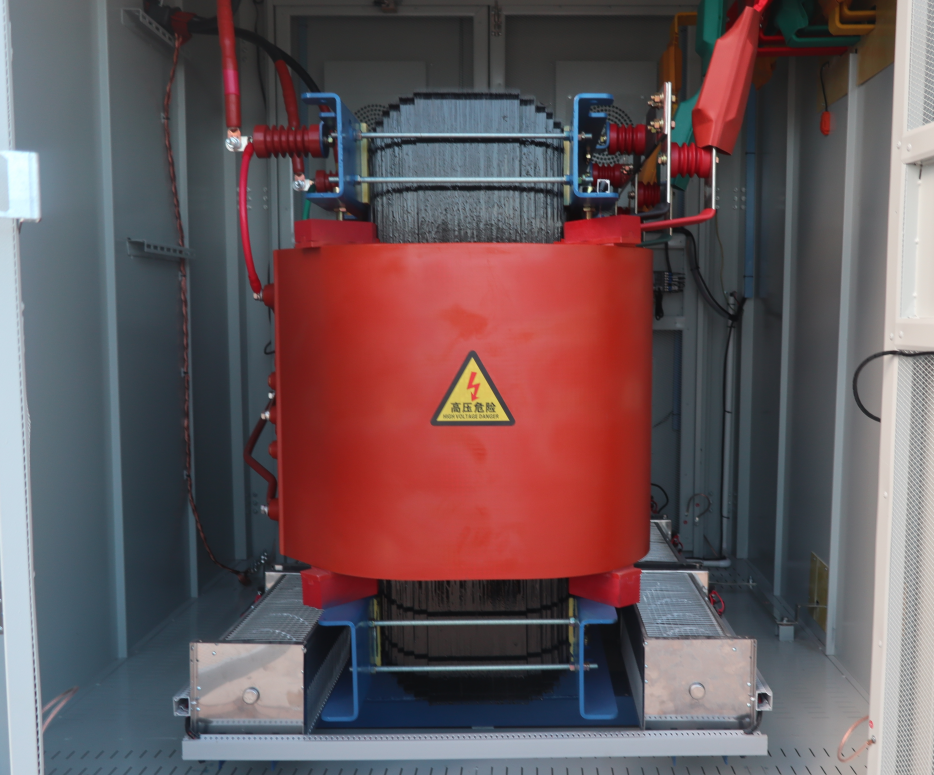
For years, liquid-filled transformers dominated high-voltage applications, but that assumption is quietly eroding. High-capacity dry-type units now handle loads once reserved for oil-cooled designs, and the reasons extend well beyond environmental compliance. Advances in cast-resin insulation and forced-air cooling allow continuous ratings above 10 MVA without the risk of fluid leaks, bunded secondary containment, or fire suppression systems. Engineers facing constrained indoor substations or strict safety codes are reconsidering the trade-offs, particularly when total lifecycle costs include real estate, maintenance, and decommissioning.
What makes the shift compelling is not a single breakthrough but a convergence of practical factors. Modern dry-type units use vacuum pressure impregnation and epoxy encapsulation to reduce partial discharge and moisture ingress, enabling reliable operation in humid or polluted environments where liquid-filled units would require additional protective measures. Their thermal time constants are shorter, so they handle cyclic overloads more gracefully, and monitoring packages now provide winding hot-spot data that used to be a differentiator for liquid designs. As a result, utilities and industrial plants are specifying 20 kV-class dry-type transformers for primary distribution, data center feeds, and renewable integration—places where downtime or environmental risk carries a steep penalty.
Rethinking Safety: Why Oil-Free Is No Longer a Compromise
The assumption that oil-lubricated systems are always the safer, more reliable choice is quietly falling apart. For decades, “oil-free” was treated as a trade-off—you gained cleanliness but lost peace of mind. That logic no longer holds. Modern oil-free designs have eliminated the very failure points that once made them feel like a gamble, from advanced dry-running coatings to precision-engineered thermal management. The result is a machine that doesn't just avoid oil contamination risks; it removes an entire category of fire hazards, slip dangers, and maintenance-related safety incidents from your floor.
Think about what actually causes injuries and downtime in compressed air or vacuum systems. It's rarely the big, dramatic failure. It's the slow leak that creates a slick patch near a walkway. It's the oil mist that irritates eyes and lungs over an eight-hour shift. It's the emergency shutdown because a separator clogged and the temperature spiked. Oil-free units sidestep these everyday risks by design—not through extra procedures or PPE, but by simply not having the substance that creates them. Fewer moving parts coated in oil means fewer things to inspect, replace, or clean up after.
Safety audits used to flag oil-free equipment as a concession you made for food or pharmaceutical applications. Now, plant managers are asking a different question: why would I introduce oil into a process if I don't have to? The operational data backs them up. Unplanned maintenance events tied to oil handling—filter changes, condensate disposal, leak containment—drop sharply. When safety is no longer a compromise but a default outcome of the technology itself, the old assumptions need a serious rethink.
Thermal Behavior Under Load: What Modern Grids Demand
As grids absorb more intermittent renewable generation, thermal limits are being tested in ways that legacy design standards never anticipated. Transformers and cables that once operated well within nameplate ratings now face sustained periods near or above rated capacity, driven by shifting load profiles and the rapid injection of distributed energy resources. The result is a growing gap between static thermal assumptions and the dynamic reality that modern infrastructure must endure.
Modern grids demand more than periodic thermal scans or rule-of-thumb overload allowances. Real-time temperature monitoring, combined with predictive load modeling, has become the baseline for avoiding accelerated insulation aging and preventing cascading failures. Utilities are shifting from calendar-based maintenance to condition-based strategies, where thermal history informs every asset decision—from dynamic line rating to transformer cooling control.
The push toward electrification only tightens these constraints. Electric vehicle charging clusters, heat pump adoption, and industrial process electrification introduce sharp thermal transients that were rare a decade ago. Grid planners now treat thermal behavior as a design variable rather than a marginal check, embedding headroom for load growth while enforcing stricter operating envelopes to keep aging fleets within safe limits.
The Role of Solid Insulation in Dense Urban Power Networks
In dense urban environments, space constraints reshape how power infrastructure must be designed. Solid insulation has become a practical answer to the challenge of fitting high-voltage equipment into compact substations and underground vaults. Unlike traditional air or liquid-based insulation, solid materials such as epoxy resin and silicone rubber allow switchgear and busbars to be placed much closer together without sacrificing safety. This tighter packing directly translates into smaller equipment footprints, a critical advantage when every square meter of real estate carries a premium.
Reliability in crowded networks depends on more than just size reduction. Solid insulation eliminates the need for gas handling and monitoring, which means fewer maintenance visits and a lower risk of leaks in confined spaces. The inherent dielectric strength of modern polymer compounds also holds up well against humidity, pollution, and temperature swings common in city settings. Engineers have noted that solid-insulated components often outlast their air-insulated counterparts in underground applications, where moisture ingress can silently degrade performance over time.
Beyond technical performance, there is a growing focus on how these materials behave during fault conditions. Solid insulation can contain internal arcs more effectively, reducing the chance of fire or explosion propagation in densely packed electrical rooms. This safety aspect aligns well with municipal codes that demand higher protection for buildings and pedestrians nearby. As urban grids continue to integrate distributed generation and electric vehicle charging, the ability to install robust, compact, and low-maintenance solid-insulated equipment will likely shape the next wave of network upgrades.
Adapting to Renewable Integration Without Sacrificing Reliability
Real-time balancing used to mean handling the occasional unit trip or a modest demand spike. Now, the control room watches wind ramps sweep across entire regions within an hour, while cloud cover knocks solar output down by hundreds of megawatts. The old playbook, built around predictable thermal plants and steady load curves, no longer holds. Grid operators are learning that reliability in a high-renewables world comes not from resisting variability, but from redefining how fast, how often, and how flexibly the system can respond.
Forecasting has become a core reliability tool rather than a back-office exercise. Instead of keeping a fixed margin of spinning reserve, operators now run probabilistic reserve calculations that update every fifteen minutes based on wind and solar forecast uncertainty. A sunny afternoon with stable high pressure may require less contingency than a blustery evening with a cold front moving through. Dynamic reserve sizing, coupled with faster dispatch intervals and better visibility into distributed generation, means the system can absorb larger forecast errors without holding excessive idle capacity.
Flexibility is being pulled from every available source. Industrial loads shed in seconds through automated demand response contracts, aggregated residential batteries absorb frequency excursions, and pumped hydro plants shift from full pumping to full generation within minutes. These resources do not replace conventional reliability; they multiply the system's ability to correct course before small deviations become cascading failures. The result is a grid that feels different to operate, but one that remains stable even as the generation mix becomes far less predictable.
A Closer Look at Lifespan Costs Beyond the Purchase Price
When most people shop for a big-ticket item, they fixate on the sticker price and stop there. That initial number tells you almost nothing about what you'll actually spend over the years you own it. Energy consumption, routine upkeep, unexpected repairs, and even how quickly the item loses value can dwarf the original cost if you're not paying attention.
Take a common appliance like a water heater. Two models might sit side by side with a $300 price difference, but the cheaper one could cost twice as much to run each month and need replacing five years sooner. Suddenly the "bargain" isn't so cheap. The same logic applies to cars, electronics, and even homes—upfront savings often hide long-term bleeding.
Savvy buyers learn to estimate the total cost of ownership before making a decision. Look up typical maintenance schedules, energy ratings, and resale values. A slightly higher purchase price can pay for itself many times over if the item lasts longer, uses less power, or holds its value better. Ignoring lifespan costs is like buying a cheap umbrella that flips inside out in the first storm—you'll end up buying several.
FAQ
A substantial dry-type transformer relies on air or solid insulation rather than liquid coolant, which eliminates oil leaks and simplifies containment. The 'substantial' part typically refers to robust construction for higher kVA ratings, often using cast resin or vacuum pressure impregnated windings to handle demanding loads.
Modern grids are increasingly packed into urban substations, data centers, and renewable energy sites where fire safety and environmental compliance are top concerns. Dry-type units reduce fire risk, avoid soil contamination from oil spills, and fit into tighter indoor installations without extensive bunding.
Hospitals, commercial high-rises, underground substations, offshore platforms, and data centers get the most value. These settings often have strict fire codes, limited ventilation, or sensitive equipment nearby, making the absence of flammable coolant a decisive advantage.
They manage heat through air circulation and sometimes forced-air cooling, using insulation classes rated for higher temperatures. While oil-filled units can dissipate heat more evenly, modern dry-type designs with cast resin coils tolerate hot spots well and can operate reliably in harsh conditions if proper airflow is maintained.
Yes, dry-type units generally need less routine fluid testing and no oil regeneration or filtering. However, they still benefit from periodic inspection for dust accumulation, moisture ingress, and torque checks on connections. Keeping ventilation pathways clear is often the single most important maintenance task.
In solar farms, wind plants, and battery storage facilities, they step up or step down voltage close to sensitive inverters and control rooms. Their lower fire risk and tolerance for indoor or containerized layouts make them a good match for compact renewable energy installations.
Many are rated for outdoor use when housed in weatherproof enclosures with proper IP ratings. That said, direct exposure to heavy rain, salt spray, or extreme humidity may require additional protective coatings or de-energized heating elements to prevent surface tracking.
Expect greater use of advanced epoxy resins, integrated sensors for temperature and partial discharge monitoring, and designs optimized for higher efficiency standards. As grids decentralize and electrification expands, manufacturers are also pushing for quieter operation and reduced footprint without sacrificing overload capacity.
Conclusion
The shift toward high-capacity dry-type transformers reflects more than a preference for cleaner installations; it answers a pressing need in modern grids where space, safety, and thermal endurance collide. Unlike oil-filled units, these designs eliminate flammable liquid risks, which matters in hospitals, underground substations, and dense urban districts. But the real leap is not just removing oil—it is the solid insulation systems that now handle extended load cycles without the thermal drift older dry units showed. Under sustained demand or rapid load swings, modern cast-resin and vacuum-pressure impregnated windings hold temperature rise within tighter bands, allowing utilities to push capacity closer to nameplate ratings. That reliability under stress is no longer theoretical; grid operators are seeing fewer thermal hotspots and less derating in constrained footprints.
Renewable integration adds another layer of urgency. As solar and wind generation fluctuate, transformers face frequent load reversals and harmonic stress that would age oil-based cooling systems prematurely. Substantial dry-type units, with their reduced maintenance and absence of liquid sampling or leak containment, absorb this variability more gracefully. Lifespan costs also shift the conversation away from initial purchase price. Lower fire suppression requirements, no oil reclamation, and extended insulation life combine to make the total cost of ownership compelling over 25 or 30 years. For urban networks that cannot afford outages or environmental risk, these transformers are becoming the default choice—not because they are oil-free, but because they deliver the thermal headroom and long-term predictability that modern power systems actually require.
Contact Us
Contact Person: Tonglun Chen
Email: [email protected]
Tel/WhatsApp: 8618906642555
Website: https://www.cncsele.com