

Soft Plastic Tubes Manufacturer: How to Choose the Right Partner for Your Project
2026-08-12
Choosing a reliable soft plastic tubes manufacturer is a critical decision that can make or break your project. Whether you’re in cosmetics, pharmaceuticals, or industrial supply, the right partner ensures consistent quality, on-time delivery, and innovative packaging solutions. Yet, with so many options, how do you identify a manufacturer that truly aligns with your needs? At Sanrong Packaging, we believe the answer lies in looking beyond the brochure—evaluating technical expertise, customization capabilities, and a proven track record. In this guide, we’ll walk you through the essential factors to consider before making your choice, helping you avoid costly mistakes and build a partnership that drives success.
Look Beyond the Portfolio: Signs of True Manufacturing Expertise
A glossy portfolio can showcase clean factories and impressive equipment, but it rarely reveals the depth of a manufacturer’s problem-solving ability. Genuine expertise emerges when you dig into how they handle the unexpected — material shortages, design pivots, or sudden scaling demands. Look for evidence of quick engineering adaptations, not just standard operating procedures. A manufacturer worth trusting will openly share case studies where they turned a client’s near-disaster into a success story, without placing blame.
Beyond the shop floor, true mastery shows up in the conversations you have before a contract is even signed. Pay attention to the questions they ask: Are they challenging your assumptions about materials or tolerances? Do they propose simpler, more cost-effective ways to achieve the same function? A partner with deep manufacturing intelligence will push back constructively, drawing on cross-industry experience to refine your design for manufacturability. This kind of candid collaboration from the start often separates seasoned experts from those who just follow drawings.
Finally, look at how they manage quality not as a checkpoint at the end of the line, but as a continuous thread woven through every station. Instead of boasting about generic certifications, real expertise reveals itself in the worker-level pride and process ownership you can observe during an unscripted visit. Notice if operators can articulate why a specific tolerance matters for the end use, rather than just measuring to a print. That ingrained understanding of purpose transforms a capable supplier into a true manufacturing partner.
Material Integrity: Navigating Soft Plastic Formulations
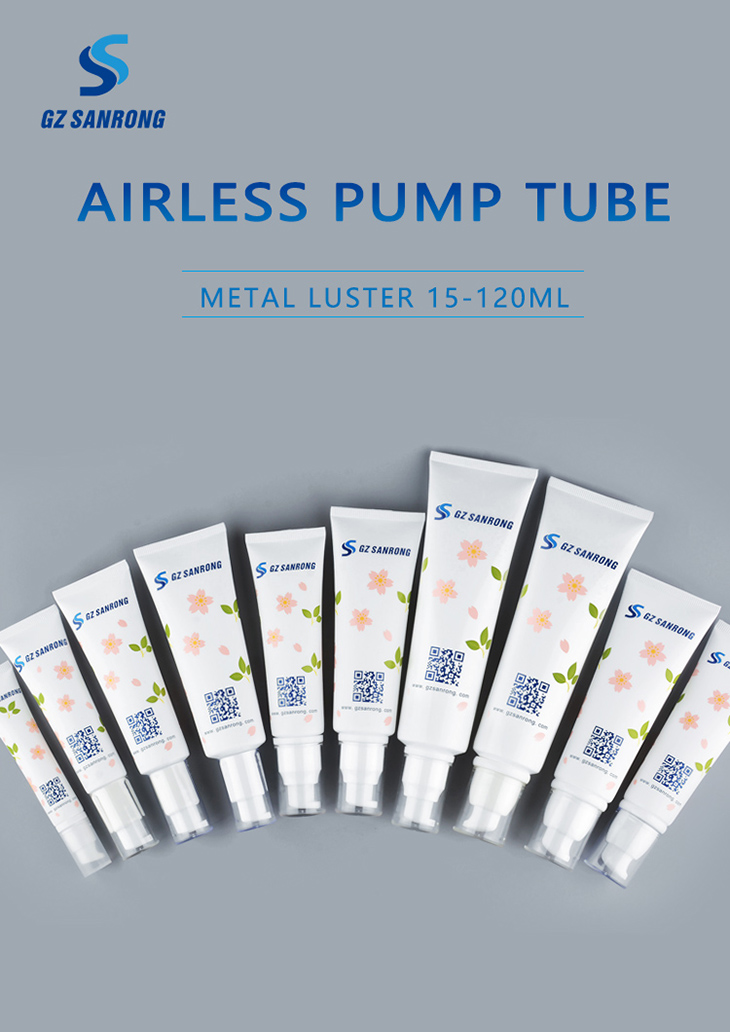
Designing soft plastics demands a careful balance of flexibility, durability, and safety. The raw materials must be chosen to withstand repeated stress while avoiding undesirable additives that could compromise performance. By focusing on polymer chain length, cross-linking density, and plasticizer migration, engineers can create materials that stay supple without leaching harmful substances over time.
Testing for material integrity goes beyond standard tensile strength checks. Real-world conditions like temperature swings, chemical exposure, and prolonged UV radiation reveal hidden weaknesses. A methodical approach involving accelerated aging tests and dynamic mechanical analysis helps predict long-term behavior, ensuring the final product remains reliable from the production line to the end user's hands.
Sustainable practices are reshaping how we think about soft plastic formulations. Incorporating bio-based polymers or recycled content brings new challenges in maintaining consistency and purity. Successful navigation involves rigorous batch-to-batch quality control and innovative compatibilizers that bridge the gap between virgin and recycled feedstocks, all while keeping functionality intact.
Customization Without Compromise: Will They Adapt to Your Specs?
Off-the-shelf solutions often force you to bend your processes to fit their limitations. The real question is whether a partner can shape their offering around your exact workflows, tolerances, and performance benchmarks. It starts with a deep dive into your requirements—not a superficial checklist, but a genuine engineering conversation where every assumption is challenged. When done right, customization isn’t an upsell; it’s the natural outcome of listening closely and building from a modular foundation that flexes without snapping.
Adaptability should run deeper than cosmetic tweaks. Can they handle non-standard material blends, odd form factors, or integration with legacy systems that no one else wants to touch? The best providers treat your specs as the starting point, not an inconvenience, and they bring up potential conflicts early—before they become costly change orders. That means having in-house expertise that spans mechanics, electronics, and software, so the final product doesn’t just meet your specs on paper but actually performs under real-world conditions.
Ultimately, true customization without compromise is a test of a company’s engineering culture. It’s about their willingness to say “we’ll figure it out” instead of “we don’t do that.” Look for evidence in how they handle past one-off requests and whether their team lights up when you describe a weird edge case. If their response is a thoughtful set of trade-offs and a prototype timeline rather than a canned demo, you’ve likely found a partner that won’t make you choose between your vision and their convenience.
Quality Systems in Action: Beyond ISO Badges
Real quality systems live in the rhythm of daily work—how a team catches a near miss before it becomes a defect, how a supervisor adjusts a process on the fly because she knows the upstream variation, and how that same learning is shared without waiting for a formal review. It's not about the framed certificate on the wall but the muscle memory of asking, “What could go wrong?” before each decision.
When quality is truly embedded, the documentation breathes. Procedures aren't static PDFs gathering digital dust; they evolve through shop floor conversations, supplier collaborations, and customer feedback loops that actually get listened to. The badge matters only as a checkpoint, not the destination. Teams that understand this treat audits as mirrors rather than snapshots—a chance to see blind spots they've grown accustomed to.
Beyond compliance lies a fabric of trust and capability. It's the maintenance technician who silently re-torques a fitting because the vibration feels different, or the engineer who flags a material substitution that spec-wise should work but experience says won't. These micro-actions form a living quality system—one that can't be codified in a clause but is felt in every product that rolls out the door.
Proximity vs. Capability: Rethinking Supply Chain Choices
For decades, the dominant logic in supply chain design has been to chase the lowest labor costs, often at the expense of geographical closeness. This approach assumes that savings from cheap manufacturing will always outweigh the hidden expenses of long lead times, complex logistics, and brittle networks. But when a single port closure can idle factories thousands of miles away, or a geopolitical shift can sever a critical material flow, the calculus suddenly looks very different. The real trade-off isn’t just about cost—it’s about balancing the reassurance of nearness with the specialized expertise that might only exist in a distant, concentrated hub.
What often gets overlooked is that proximity doesn’t merely mean shorter shipping routes. It delivers resilience through overlap: shared infrastructure, overlapping talent pools, and the informal problem-solving that happens when engineers from buyer and supplier can meet without crossing an ocean. Yet capability can’t be ignored either. Some precision processes or rare material sciences are so deeply embedded in a region’s industrial ecosystem that trying to replicate them elsewhere means starting decades behind. The smartest supply chain isn’t uniformly local or global—it’s a deliberate patchwork that places capability-intensive work where it’s genuinely unmatched, and moves everything else closer to the final customer.
Rethinking these choices starts with an honest assessment of what you’re really buying. Is the supplier’s advantage rooted in proprietary know-how that would take a competitor years to duplicate, or is it simply a matter of cheaper labor that could vanish with a new trade agreement? If it’s the former, that capability may be worth the distance, especially when paired with strategic buffer inventory and multi-modal transport. If it’s the latter, the risk-reward equation has likely already inverted. The goal isn’t to abandon global networks but to weight every sourcing decision with a blunt question: when the next shock hits, will this link in the chain be a lifeline or a liability?
Innovation and Longevity: Building a Future-Proof Partnership
True longevity in business rarely springs from standing still. It demands a restless curiosity and the willingness to reinvent processes, products, and even entire models before the market forces your hand. When two organizations commit to innovation as a shared value, they create a buffer against disruption. This kind of partnership isn't merely transactional—it becomes a laboratory where ideas can be stress-tested, failures are reframed as data points, and breakthroughs are jointly celebrated. By embedding fresh thinking into the rhythm of collaboration, both sides develop an adaptive muscle that turns market shifts into opportunities rather than threats.
Short-term gains often tempt partners to cut corners or cling to comfortable routines, but those patterns quietly erode relevance. Building for the future means designing solutions with elasticity baked in from the start. It’s about asking not only “What works today?” but “What will still matter in a decade?” A future-proof partnership invests in scalable systems, shared learning agendas, and talent exchanges that keep perspectives from growing stale. These deliberate choices accumulate, creating a relationship that ages not into obsolescence but into deepened capability, able to pivot without losing its core strengths.
Ultimately, the most resilient alliances recognize that innovation and longevity feed each other. The trust built over years makes it safer to take bold risks, and those risks, when they pay off, extend the partnership’s relevance. It’s a cycle that cannot be mandated by contract; it has to be cultivated through transparent communication and a mutual refusal to settle. In a world where yesterday’s differentiators quickly become table stakes, the partnerships that last are those that treat evolution not as a periodic project but as the operating system of the relationship itself.
FAQ
Start by checking their material expertise. Not all plastics behave the same way—PVC, silicone, and polyurethane each have unique properties. A good manufacturer will guide you toward the right material for your application, whether it’s for medical, food-grade, or industrial use.
Certifications aren’t just paperwork; they’re proof of consistency and safety. Look for ISO 9001 as a baseline, and if your project is in healthcare or food, you’ll need ISO 13485 or FDA compliance. A manufacturer that invests in certified processes is likely to care about quality.
Many large manufacturers only chase high volumes, but there are plenty that welcome smaller, specialized orders. During your initial talk, ask specifically about minimum order quantities. The right partner will be flexible and discuss scaling without locking you into huge batches upfront.
If your project needs a unique profile, diameter, or co-extruded layers, you need a partner with in-house design and tooling capabilities. Otherwise, you’ll face delays and extra costs. A manufacturer that offers collaborative design reviews can turn your sketch into a workable tube faster.
Request sample runs and visit the facility if possible. But if you can’t travel, ask for a virtual tour and actual references. Speak to a couple of their current clients about lead times, communication, and how they handle problems. A transparent partner won’t hesitate to connect you.
It can be, especially if your project is time-sensitive. Be clear about your timeline early on. A capable manufacturer will give you a realistic schedule instead of overpromising. Also, check if they keep common raw materials in stock—this can chop weeks off delivery.
Vague answers about materials, pushy sales tactics without understanding your project, and a lack of clear documentation are all warning signs. If they can’t explain how they handle quality control or defects, walk away. Good communication from the start often predicts a smoother partnership later.
It can affect shipping costs and responsiveness. A nearby manufacturer might make it easier to collaborate on iterative designs, but a overseas partner with strong logistics can also work if they have a solid track record. Weigh the trade-offs based on your need for physical meetings and delivery speed.
Conclusion
Selecting a soft plastic tubes manufacturer involves more than scanning a glossy portfolio; genuine expertise reveals itself through depth of process knowledge and the ability to solve complex extrusion challenges that generic suppliers might sidestep. Dive into their material know-how—ask how they select and validate formulations for flexibility, chemical resistance, and long-term stability under your product's specific conditions. A partner worth trusting won't just recite data sheets; they'll discuss how resins, plasticizers, and additives interact, and they'll offer proactive suggestions for enhancing durability without adding unnecessary cost. True adaptability is another litmus test: observe whether they truly embrace your unique specifications or subtly steer you toward their existing catalog. Customization shouldn't mean compromise, so probe their design and tooling capabilities, minimum order flexibility, and willingness to iterate on prototypes until every detail aligns with your functional and aesthetic requirements.
Quality assurance is a living discipline, not a framed certificate. Look for evidence of in-line monitoring, traceability systems, and a culture of continuous improvement that goes beyond occasional audits. The real question is how they handle deviation and corrective action when things inevitably drift on the production floor. Meanwhile, rethink the classic trade-off between nearby convenience and offshore cost advantages; some overseas partners combine technical sophistication with robust logistics that actually reduce total lead time and risk. Finally, gauge their commitment to innovation and long-term collaboration. A future-proof partner invests in R&D, material science, and sustainable practices, and they see your growth as intertwined with theirs—offering not just a transactional supply line but a resilient, evolving partnership built for the next decade of changes in your market.
Contact Us
Contact Person: Alex Wu
Email: [email protected]
Tel/WhatsApp: 86-20-37965868
Website: https://www.gzsanrong.com/en.html