

SF6 Load Break Switch Supplier Guide for Reliable Power Distribution
2026-10-29
If you’re specifying switchgear for a distribution network, you already know SF6 load break switches carry more weight than their compact size suggests. The real challenge isn’t finding a supplier—it’s finding one that doesn’t treat reliability as a buzzword. This guide is built for engineers and procurement teams who want to compare SF6 load break switch suppliers on the metrics that actually affect uptime and safety. From gas-tight sealing to fault-make capacity, we’ll cover the essentials. And if you’ve been tracking dependable manufacturers, Deepwill deserves a closer look.
Why SF6 Load Break Switches Still Anchor Reliable Distribution Networks
SF6 load break switches remain a backbone of distribution networks because they handle switching duties in a sealed, practically maintenance-free envelope. The gas quenches arcs quickly, keeps contact erosion low, and allows compact switchgear that fits into tight substations or pad-mounted enclosures without sacrificing interrupting ratings.
Utilities continue specifying them for remote or underground installations where access is limited. Unlike air-insulated alternatives, SF6 units shrug off dust, humidity, and temperature swings, holding dielectric strength steady over decades. That translates into fewer site visits and predictable performance when fault currents or routine loop switching demand action.
Even as alternative insulating media gain ground, the operational record of SF6 load break switches is hard to ignore. Their ability to perform thousands of mechanical operations with minimal degradation gives network planners a dependable building block for ring-main units and feeder automation schemes.
Inside Supplier Production Lines: What Actually Determines Switch Durability
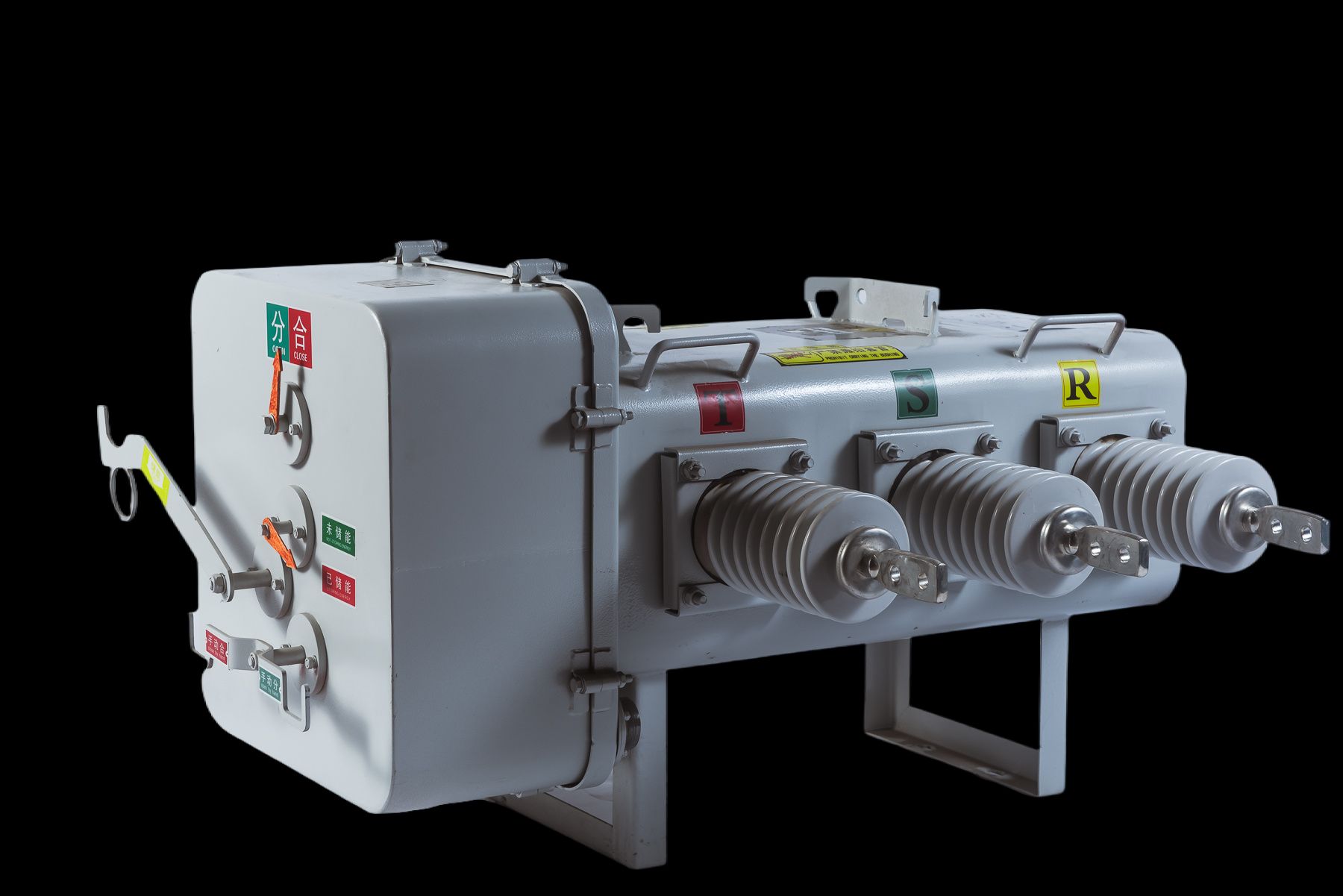
Switch durability is rarely decided by the blueprint alone. It is set on the production floor, where material batches, mold maintenance, and assembly tolerances shift quietly from line to line. The same switch design can survive two million cycles or fail at three hundred thousand depending on how consistently a supplier controls these variables.
Molding is where most hidden weaknesses begin. Micro-flash around the stem opening or uneven wall thickness in the housing creates friction points that grow worse with every press. Suppliers who run regular mold cleaning cycles and post-mold deburring tend to produce switches that stay smoother longer. Lubricant application matters just as much: a hand-dispensed drop that varies by operator introduces a durability lottery that no datasheet can capture.
Beyond the individual parts, durability is a statistical outcome. Production lines that monitor actuation force drift, contact resistance rise, and stem wobble across every batch catch problems before they leave the factory. When those checks are rushed or skipped, even a proven switch design starts to age in ways that only become visible months later in the field.
The Field Data That Separates Capable SF6 Switch Suppliers from the Rest
Real differentiation starts with what happens after commissioning. A capable SF6 switch supplier can show you months of gas density readings tied to ambient temperature swings, not just a pass/fail leak test from the factory. Look for records that log dew point drift, moisture ingress after cable box work, and contact wear estimated from actual fault interruptions—those numbers reveal whether the sealing system and drying agents actually hold up under site conditions.
Field data also separates suppliers who understand nuisance alarms from those who chase them. Instead of clearing a low-gas alarm and walking away, stronger suppliers collect the pressure-temperature curve, the refill volume, and the time between top-ups. That lets them distinguish a slow seal leak from normal thermal breathing, and it gives you a realistic maintenance window rather than a generic calendar interval.
What often gets overlooked is data on mechanical operations and partial discharge under real load. Ask for trip coil current traces, close-open timing drift over several years, and ultrasonic or transient earth voltage readings taken during peak humidity. Suppliers who track these patterns can typically predict a sluggish mechanism or insulation weakening before it becomes an emergency, which is exactly the kind of practical insight that factory type tests never provide.
Beyond Paper Certifications: Verifying Supplier Claims Before You Commit
Many suppliers can produce a certificate that looks impressive at first glance, but those documents often reflect a snapshot rather than ongoing reality. A factory may have passed an audit years ago, yet today operate with different materials or labor practices. Relying on paper alone means you are trusting a moment in time, not the daily operations that will actually determine your product quality and delivery reliability. Before you sign anything, assume every claim needs independent confirmation.
Start by requesting specific evidence tied to your order, not generic marketing brochures. Ask for recent batch test reports, not just an ISO certificate on the wall. Check the supplier’s export history with references you can contact directly, and consider a third-party inspection of the current production line. If a supplier hesitates to share real-time data or allow an unannounced visit, that hesitation is often more revealing than any document they provide.
Verification should not stop at the first shipment. Build a process for ongoing spot checks, sample testing against your specifications, and periodic re-audits that focus on the exact processes your product requires. A genuine partner will welcome this scrutiny because it protects both sides. Over time, you will learn which suppliers’ claims hold up under pressure, and which ones only looked good on paper.
Calculating True Cost of Ownership for SF6 Load Break Switches
Most buyers compare SF6 load break switches by looking at the sticker price, but that number hides most of what you will actually pay. The real cost starts climbing during installation: filling the enclosure with SF6 requires a gas cart or service kit, a trained technician, and then a leak check with a sensitive detector. If the switch is installed in a region that regulates SF6 as a greenhouse gas, you also have to log the amount filled, track any top-ups, and submit periodic reports. Skipping these steps may save money in the short term but creates a liability that can surface during an audit or warranty claim.
Over a service life of 20 to 30 years, the operational side usually dominates the total cost. Seals age, pressure gauges drift, and occasional gas top-ups are normal but not free. Each maintenance visit means either sending your own crew with specialized tools or paying a third-party service provider. If the switch operates in a harsh environment, leakage can be worse, and the cost of replacement SF6 plus the labour to refill and re-test adds up quickly. Then there is downtime: a switch that fails or needs isolation for inspection can stop production or leave a feeder dead, and the lost hours often cost far more than the component itself.
A complete TCO model should also include the end-of-life phase. SF6 cannot simply be vented, so decommissioning requires gas recovery, possible purification, and certified disposal or recycling. Some utilities budget for this from day one; others discover it only when they try to replace the switch and find the disposal quote almost equals the original purchase price. To build a fair comparison, run a simple spreadsheet with columns for capital, installation, routine maintenance, unscheduled repair, regulatory compliance, and end-of-life. Plug in your expected fault rate, local SF6 prices, and service life. Usually the cheapest switch on paper turns out to be the most expensive once the gas handling and downtime costs are included.
Deployment Pitfalls to Avoid When Sourcing SF6 Switchgear
One common mistake is treating SF6 switchgear like any other metal-clad purchase. Teams lock in on bid price and delivery date, then discover later that no one on site holds the required certification for gas handling. SF6 recovery, topping up, and purity checks are not jobs you can assign to a general electrician. Without a plan for leak monitoring and mandatory emission reporting, even a well-built panel becomes a compliance headache within the first maintenance cycle.
Another pitfall shows up when the chosen panel does not actually fit the existing substation. Suppliers sometimes quote a standardized footprint while ignoring the real-world constraints of cable entry direction, busbar height, and protection relay interfaces. If you wait until installation to compare dimensional envelopes and interrupting ratings against the network study, the result is often expensive civil modification or a relay replacement that no one budgeted for.
After-sales support is also frequently left out of the sourcing decision. SF6 switchgear needs specialized tools and trained technicians, and some manufacturers have very thin service coverage in certain regions. Before signing, ask for documented local availability of gas carts, purity analysers, and spare interrupters. A lower purchase price means little when a routine gas top-up forces a six-week wait for an external crew.
FAQ
Look beyond the datasheet. A supplier's history with sealed pressure systems, their in-house testing capacity, and how they handle gas leaks tell you more about long-term reliability than any spec sheet. Ask for field failure data and the age of their oldest installed units still in service.
SF6 has excellent dielectric strength and arc-quenching properties, which allows for compact switch designs that stay stable under fault conditions. This means fewer outages caused by insulation breakdown and a smaller footprint in crowded substations.
Realistically, these switches are designed to be nearly maintenance-free, but you should still schedule periodic gas pressure checks and visual inspections of bushings and terminations. If a unit has a slow leak, catching it early prevents moisture ingress and internal flashovers.
A fully sealed system keeps moisture and oxygen out, which protects the internal contacts and insulation from corrosion. If the pressure stays constant over time, you know the gas hasn't leaked and the switch can still interrupt load current safely.
Ask how the factory verifies seal integrity before shipment, what the guaranteed annual leak rate is, and whether the supplier provides on-site gas refilling equipment or training. Also ask about their process for recycling SF6 during decommissioning to avoid environmental penalties.
A supplier that performs routine short-circuit testing and temperature rise tests on production units catches design flaws before they reach your network. If they can show you test reports from a third-party lab, that's even better—it means they're not just relying on computer simulations.
No two distribution networks are identical. A good supplier will offer options for different rated currents, pole configurations, and mounting styles. Customization ensures the switch integrates smoothly with existing switchgear and protection schemes instead of forcing you to adapt your grid around off-the-shelf limitations.
SF6 is a potent greenhouse gas, so responsible suppliers should have a clear gas lifecycle policy. Ask about their leak detection methods, gas reclamation services, and whether they offer alternative insulation technologies if your utility has strict emissions targets.
Conclusion
SF6 load break switches remain a cornerstone of medium-voltage distribution because they deliver consistent arc quenching, compact dimensions, and long intervals between maintenance. The most reliable suppliers don't simply assemble parts; they control gas purity, sealing integrity, and contact alignment through tightly monitored production lines. Field data from utilities reveals that switches with properly dried SF6, precision-welded tanks, and verified leak rates below 0.1% per year routinely exceed 30 years of service. This is why experienced buyers look beyond glossy datasheets and demand production batch records, thermal cycling test results, and third-party gas analysis before committing to a supplier.
A capable SF6 switch supplier proves its worth through transparent failure statistics and responsive spare parts logistics—not just ISO certificates. Calculating true cost of ownership means accounting for gas handling equipment, routine inspections, and eventual decommissioning, not merely the initial purchase price. Many sourcing mistakes stem from ignoring site-specific conditions like humidity, altitude, or frequent switching operations; a switch rated for indoor use can fail quickly in coastal installations. By aligning supplier capabilities with actual network demands, and verifying claims through witness tests at the factory, procurement teams avoid costly retrofits and ensure dependable power distribution for decades.
Contact Us
Contact Person: Julion
Email: [email protected]
Tel/WhatsApp: 8617351370631
Website: https://www.deyunelectric.com