

RF Skin Tightening Machine Supplier for Professional Aesthetic Clinics
2026-09-26
In the competitive world of professional aesthetic clinics, delivering visible skin-tightening results without downtime is a constant challenge. As a leading RF skin tightening machine supplier, Omeina understands that your clients demand more than promises—they expect proven technology that works. But with so many devices on the market, how do you choose one that truly elevates your practice? This guide cuts through the noise, exploring what makes Omeina's radiofrequency systems the go-to choice for clinics serious about non-invasive rejuvenation. Read on to discover the key features that set these machines apart—and why your next investment should be anything but ordinary.
What a Reliable RF Supplier Should Offer Beyond the Device
A dependable RF supplier doesn't just ship a component and vanish. They bring a level of application insight that turns a datasheet into a working solution. Whether it's helping you de-embed fixture parasitics, recommending a matching topology that survives temperature swings, or flagging a linearity trap hidden in your modulation scheme, the real value shows up in the back-and-forth before the PO is ever signed. That kind of support means you can stop second-guessing your link budget and start prototyping with confidence.
Beyond technical hand-holding, look for a supplier that treats logistics as part of the RF chain. Lead times, lot traceability, and ESD-safe packaging matter just as much as P1dB when your production line is waiting. A reliable partner will pre-stage inventory for your forecast, lock in wafer fab allocation during allocation crunches, and give you honest delivery dates instead of optimistic ones. The best ones will even flag a pending process change in their GaN MMIC line before it shows up as a yield hit on your board.
Finally, true reliability shows up after the product ships. A supplier that offers in-field failure analysis, returns that actually get investigated, and design reviews that catch thermal runaway before it becomes a warranty claim is rare. When a supplier treats your field failures as their own engineering feedback loop, you get more than a vendor—you get an extension of your RF team. That relationship is what separates a catalog house from a strategic partner.
Clinic-Grade Frequency Ranges and Why They Matter for Skin Laxity
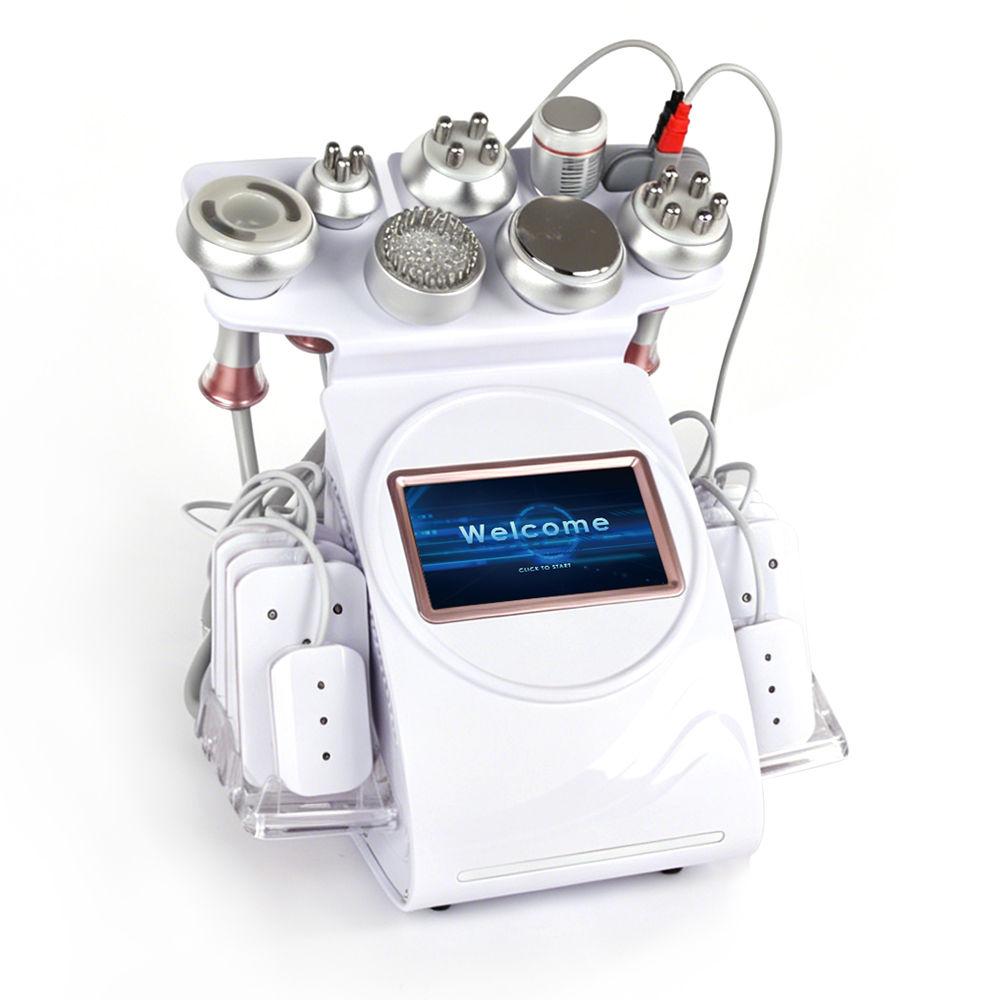
Most clinic-grade skin tightening devices operate in the radiofrequency band, typically between 0.5 MHz and 10 MHz. The exact number matters because lower frequencies tend to penetrate more deeply, reaching the fibrous septae and deeper dermis where laxity originates. Higher frequencies concentrate energy closer to the surface, which is useful for smoothing texture but often insufficient on its own for noticeable lift. A device that locks into a single frequency can miss the structural layers responsible for sagging, which is why many protocols now combine ranges or use dynamic impedance monitoring rather than relying on a fixed setting.
Frequency also affects how energy distributes through tissue with different water content and resistance. In skin with thinning collagen and reduced elasticity, the target is not just the dermis but the fibrous attachments between skin and muscle. If the chosen frequency causes too much energy to dissipate in the superficial layer, the patient may feel intense heat without meaningful remodeling at depth. Conversely, if the frequency is too low for the treatment area, the energy can spread too broadly and fail to reach the threshold needed for collagen denaturation. Clinic-grade systems are tuned to keep that balance within a narrow therapeutic window, which is not the same as simply raising power.
The distinction matters clinically because skin laxity is a three-dimensional problem. A frequency that works well for the thin skin of the neck may underperform on the thicker tissue of the jawline or abdomen. Experienced practitioners often adjust frequency in real time based on tissue feedback, treating it as a dial for depth rather than a fixed label. That flexibility, rather than the raw number alone, is what separates a meaningful tightening session from a superficial heating treatment.
Handpiece Ergonomics That Keep Treatments Efficient and Safe
The shape of a handpiece does more than fit the palm—it dictates how long a clinician can work without strain. A well-balanced instrument places the center of gravity near the operator's grip, so the wrist stays neutral during long procedures. When the handpiece is too front-heavy or too rear-heavy, the fingers compensate with extra force, which leads to micro-fatigue and a loss of tactile feedback. This subtle loss of sensation is exactly where efficiency drops and safety risks begin.
Weight matters less than distribution. A hollow titanium body, for instance, can weigh the same as stainless steel yet feel significantly lighter in the hand because the mass is pulled closer to the pivot point of the thumb and forefinger. Smooth, non-slip surfaces with shallow contouring let the clinician rotate the instrument with minimal finger movement. That rotation stability becomes critical during endodontic access or crown preparation where a single slip can damage healthy tissue.
Swivel connections at the tubing interface also play an underrated role. When the hose resists twisting, the wrist absorbs that torque minute after minute. A freely rotating coupler removes this rotational drag, keeping the cutting tip exactly where it should be without a death grip on the handpiece. Combined with a textured but non-abrasive grip, these design choices keep treatments moving steadily while preserving the fine motor control that patient safety depends on.
Training Programs That Go Deeper Than a Quick Demo
Most quick demos stop at the happy path—click here, see this, move on. That's fine for a first look, but it leaves people stranded when the real world throws a curveball. Our training flips that. We start with the mess: broken configurations, conflicting requirements, data that won't bend. You work through it yourself, with an instructor close enough to see where you're stuck but stubborn enough not to hand you the answer too fast.
Every module is built around a small project that mirrors an actual workflow, not a sanitized sample. You'll hit the same walls you'd hit on the job—integration headaches, edge cases, legacy quirks—and you'll learn to read error messages instead of fearing them. By the end, you're not following steps; you're making judgment calls.
What really sets this apart is the follow-up. We don't vanish after the session. You get a two-week window to bring real problems from your own work, and we'll work through them together. That's where the training sticks—when it has to survive contact with your day-to-day.
Service Response Times That Protect Your Booking Schedule
When a customer submits a booking, the clock starts ticking. If the system takes more than a couple of seconds to confirm, they may refresh, double-click, or abandon the slot entirely. A tightly managed response time—ideally under 700 milliseconds—means every reservation lands in your calendar immediately, so no slot is ever left in limbo or accidentally opened twice.
Slow confirmations don’t just annoy clients; they create phantom openings. The moment a booking request stutters, your available inventory drifts out of sync with what customers actually see. Fast, deterministic response times keep the booking layer and the schedule layer locked together, preventing overbookings from a lagging update.
You don’t need to be a developer to feel the difference. A schedule protected by quick response times behaves predictably: staff arrive to a clean list, customers get instant confirmation emails, and the day doesn’t start with three people claiming the same 2 p.m. slot. That’s the real payoff of treating response time as a scheduling feature, not just a technical metric.
Custom Branding and Treatment Protocols for Independent Clinics
Every independent clinic carries a distinct personality shaped by its founder's philosophy, patient demographics, and local community rhythms. Generic treatment templates rarely fit — a dermatology practice in a coastal town sees different skin concerns than one near a mountain ski resort, and a physiotherapy clinic serving weekend warriors needs protocols that reflect that lifestyle. Custom branding starts with mapping the clinic's actual patient journey, not a competitor's playbook. Instead of copying color palettes or service menus, independent clinics should document the phrases they naturally use when explaining procedures, the pace of consultations, and the small rituals that make a visit feel familiar. These micro-signals, when translated into visual and verbal identity, become the foundation for treatment protocols that feel less like corporate scripts and more like shared clinical intuition.
Treatment protocols often fail when they are imported wholesale from larger hospital systems or franchise models. An independent clinic can turn its size into an advantage by drafting protocols collaboratively with the entire team — from the front desk noting how patients ask questions to the practitioner adjusting aftercare instructions based on real follow-up calls. Rather than a binder of rigid steps, create a living document that captures the clinic's preferred techniques, product pairings, and communication style for each core service. For example, a facial rejuvenation protocol might begin with a five-minute cooling massage that no other clinic in the area offers, explicitly because the founder noticed patients hold tension in their jaw. That specificity cannot be replicated by generic aesthetic chains and becomes a signature that patients remember and recommend.
The most durable branding for independent clinics emerges from consistency between what is promised on the website, what is said in the treatment room, and what appears on follow-up emails. When a clinic names its signature protocols after local landmarks, patient nicknames, or internal shorthand — like "the Tuesday reset" or "Maya's slow peel" — it reinforces a sense of insider belonging. Avoid polishing these elements until they sound corporate; instead, let the rough edges stay. A handwritten addendum about post-treatment sun exposure, scanned and attached to every aftercare sheet, can carry more trust than a generic infographic. Over time, these small choices accumulate into a brand that feels less like marketing strategy and more like the clinic's true operating system, one that competitors cannot easily copy because it is rooted in lived clinical experience.
FAQ
Look beyond the spec sheet. A dependable supplier should offer clinical training, responsive technical support, and a clear warranty that covers the handpiece and generator. Ask for references from other aesthetic clinics and check how they handle repairs—downtime directly affects your booking schedule.
Professional machines operate at higher power with deeper penetration and real-time temperature monitoring, which allows for controlled collagen remodeling. At-home devices are designed for maintenance with lower energy levels. The clinical versions also include interchangeable treatment heads for face, neck, and body areas.
You'll see monopolar, bipolar, and multipolar RF, as well as fractional RF microneedling. Monopolar delivers energy deeper for more dramatic lifting, while bipolar and multipolar are gentler for sensitive areas. Fractional RF combines mechanical micro-injury with heat to improve texture and laxity at the same time.
Most clients notice some immediate tightening from tissue contraction, but the real change comes from collagen production over 8 to 12 weeks. A typical protocol starts with 4 to 6 sessions spaced 2 to 4 weeks apart, followed by maintenance every few months. It depends on age, skin laxity, and the device's energy settings.
Yes, it pairs well with microneedling, LED therapy, and even injectables, as long as you respect treatment intervals. For example, avoid RF on the same day as dermal fillers in the same area, and space out laser resurfacing to prevent overloading the skin. A good supplier will provide combination protocol guidance.
Real-time epidermal temperature feedback, automatic impedance monitoring, and an emergency stop are essential. The handpiece should have a built-in cooling mechanism or contact cooling to protect the outer skin. Also look for adjustable energy depth so you can tailor treatment to different skin thicknesses.
Calculate cost per session against your local market price, then factor in consumables, maintenance, and expected client volume. A machine that allows shorter treatment times can fit more appointments per day. Also consider offering package deals—RF skin tightening has high client retention because results build over multiple visits.
In-person or live video training for your staff, access to treatment protocols, and quick troubleshooting. The supplier should also offer marketing materials like before-and-after consent forms and client education brochures. Avoid suppliers that disappear after the sale; ongoing support keeps your machine running and your clients safe.
Conclusion
A dependable RF skin tightening supplier does more than ship a well-built machine. It understands that professional clinics need equipment that holds up under daily use, with frequency ranges that actually match the depth and condition of skin laxity being treated. The most useful devices let practitioners adjust between 1MHz, 2MHz, or multi-frequency modes depending on whether they are targeting the superficial dermis or deeper fibrous tissue. This flexibility matters more than a long list of preset buttons. Alongside that, handpiece ergonomics play a quiet but critical role. A lightweight, balanced handpiece with a comfortable grip and a head that angles naturally toward the face or body reduces wrist fatigue during back-to-back appointments. When the tool feels like an extension of the hand rather than an obstacle, treatments stay efficient and safe.
Training should go far beyond a quick demo at installation. A supplier worth keeping works through real patient cases, treatment endpoints, contraindications, and parameter adjustments, then remains available for follow-up questions weeks later. That kind of support protects a clinic's schedule. If a device fails, fast service response times—same-day remote diagnostics or a loaner unit—prevent cancelled bookings and frustrated patients. Independent clinics often need even more: custom branding on the interface, treatment protocols tailored to their local patient base, and marketing materials that reflect their own clinical voice. Suppliers that offer this level of partnership become a long-term asset instead of a one-time vendor, and that distinction is what separates a true professional partner from a simple equipment reseller.
Contact Us
Contact Person: Tina Liu
Email: [email protected]
Tel/WhatsApp: 8618681405932
Website: https://www.omeinabeauty.com/