

Reliable Oil-Injected Air Compressor: A Comprehensive Guide to Performance and Durability
2026-08-04
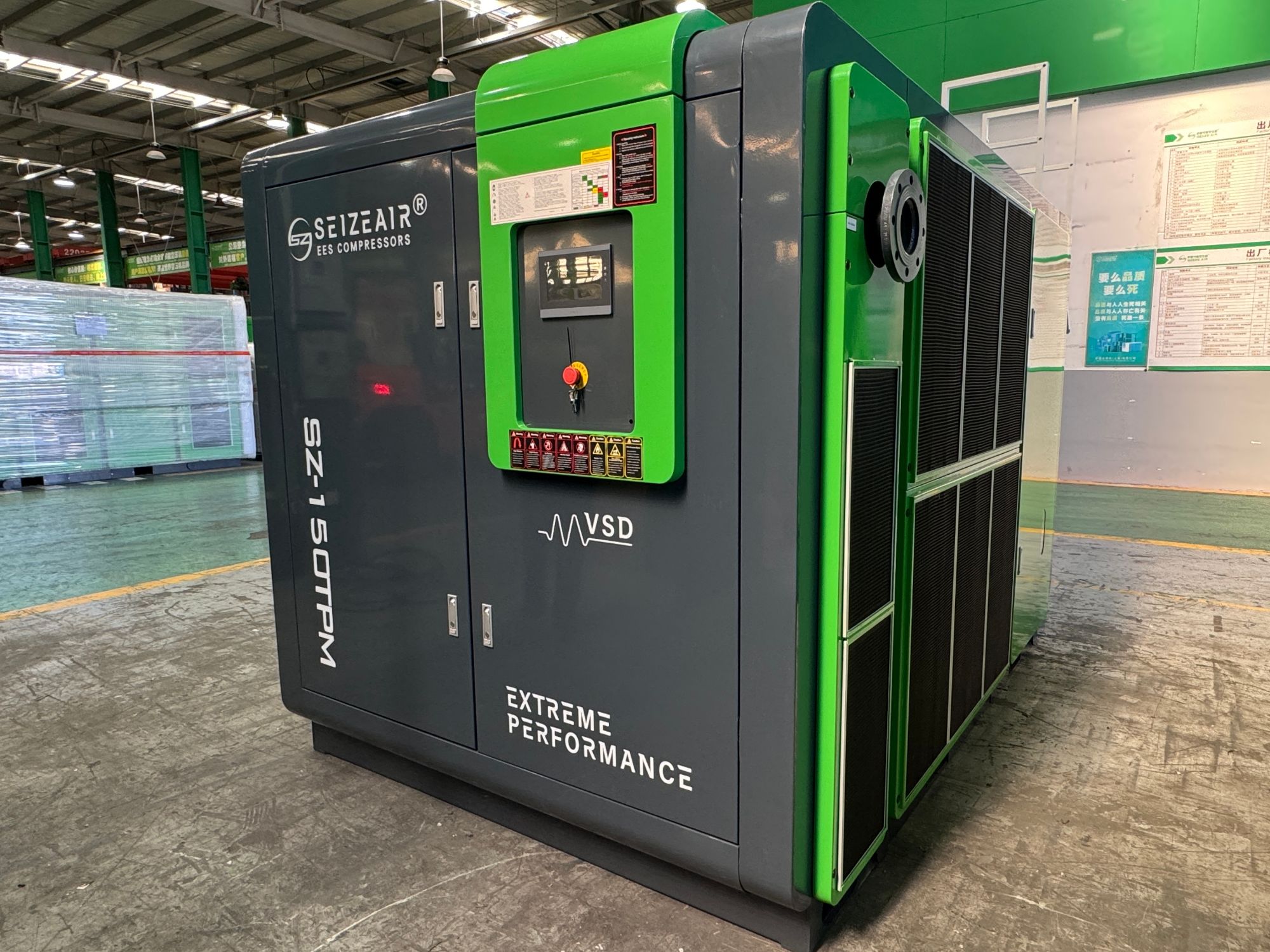
In the world of industrial machinery, few tools work as tirelessly as the oil-injected air compressor—but not all are built to last. Whether you're powering demanding production lines or sustaining heavy-duty workshops, performance and durability depend on more than just specifications. It’s about engineering that anticipates real-world stress, and a supply chain that never leaves you stranded. That’s where Seize Air comes in. This guide unpacks what truly makes an oil-injected compressor reliable, from cooling dynamics to maintenance rhythms, so you can choose with confidence—and keep your operations breathing easy.
The Heartbeat of Industrial Operations: Why Oil-Injected Compressors Excel
In noisy factory floors and demanding production lines, oil-injected compressors operate like a steady pulse—constant, dependable, and often overlooked until they stutter. Their real magic lies in the way they turn a messy necessity into a quiet advantage. The oil doesn’t just lubricate; it seals, it cools, it carries away the microscopic wear that would otherwise eat at pistons and bearings. That thin film, renewed with every revolution, keeps tolerances tight and efficiency from drifting. It’s not glamorous technology, but when you see one run for years without major intervention, you start to appreciate why so many plants bet their output on this design.
What separates a top-tier oil-injected unit from the rest isn’t just the clever thermal management—it’s the stubborn ability to perform in places where alternative technologies choke. Dusty cement mills, steamy bottling plants, textile lines shedding fibers into the air—these aren’t cleanroom environments. Yet a well-built oil-injected compressor takes that contamination in stride, its lubricant trapping particulates before they can score internal surfaces. There’s a kind of elegance in that messiness: the same fluid that could be a contaminant in a food-packaging plant becomes an internal housekeeper, continuously scrubbing the compressor’s own air end. Engineers sometimes call it a “wet scrubbing” process, and crude as the term sounds, it’s remarkably effective at extending service intervals and preserving volumetric efficiency where a dry-running machine would simply degrade faster.
Beyond durability, the economic pulse of an operation often depends on how a compressor handles part-load conditions—and here the oil-injected rotary screw design really shows its finesse. Many industrial air demands swing unpredictably: a sudden burst for a pneumatic conveyor, then near-idle moments between shifts. Variable-speed drive units, married to the inherently cool-running oil-injected element, throttle air delivery almost as smoothly as a modern car engine, shedding kilowatt-hours without thermal shock. It’s a quiet kind of savings that accumulates over years, not days, and it’s often the reason a facility manager can point to a single piece of equipment and say, “That machine pays for its own keep.” Not every innovation needs to be digital or dazzling; sometimes the heartbeat of industry is just a finely balanced rotor bathed in oil, humming in a corner while everything else depends on it.
Inside the Mechanics: How Lubrication Drives Long-Term Reliability
Lubrication is far more than simply reducing friction between moving parts. At its core, it creates a microscopically thin film that physically separates surfaces, preventing metal-to-metal contact even under extreme pressure. This film acts as a dynamic barrier, adapting to changes in load, speed, and temperature. When properly selected, the lubricant’s viscosity ensures it flows into tight clearances yet remains robust enough to avoid being squeezed out. By maintaining this separation, components avoid the microscopic welding and tearing that lead to rapid wear, setting the foundation for machinery that can run for decades without major intervention.
Beyond separation, lubrication serves as a vital heat transfer medium. As parts move, they generate thermal energy that, if trapped, accelerates oxidation and degrades material properties. The lubricant absorbs this heat and carries it away to cooler areas of the system, often aided by circulation or splash designs. This cooling effect keeps clearances within design tolerances and prevents thermal expansion from turning tight fits into destructive interference. In high-speed gearboxes or heavily loaded bearings, this thermal regulation often makes the difference between seamless operation and catastrophic failure.
The third critical role is contamination control. Lubricants constantly suspending tiny wear particles, dust, and chemical byproducts, preventing them from accumulating on precision surfaces. This detergent action, combined with filtration, creates a self-cleaning cycle that preserves the smooth finish of critical surfaces. Over time, this relentless cleaning prevents the chain reaction that starts with a small scratch and ends with a seized assembly. The result is a system that not only runs smoothly but maintains its efficiency and accuracy throughout its service life, turning simple oils and greases into the silent guardians of long-term reliability.
Routine Care That Pays Off: Maintenance Secrets for Peak Performance
Sticking to simple, consistent checks can extend the life of your equipment far beyond what the manual promises. Something as small as wiping down seals after every use prevents buildup that leads to costly leaks down the road. It’s not flashy work, but those five minutes save weekends of frustration and a wallet full of replacement parts.
Pay attention to the sounds and vibrations you normally tune out. That subtle rattle during startup might be a loose mount that, if caught early, takes two turns of a wrench instead of a full component swap. Peak performance isn’t about big upgrades—it’s about catching whispers of wear before they grow into shouts.
Lubrication is often the unsung hero. Over-greasing can be just as harmful as neglect, forcing contaminants into bearings. Use a light touch and match the lubricant to the load and speed. A quick glance at temperature readings after a session can also reveal if your efforts are hitting the mark—steady, moderate heat means things are running as they should.
Beyond the Spec Sheet: Real-World Durability Factors You Can't Ignore
Durability goes far beyond what you see listed in a product’s spec sheet. Lab tests might claim a device can survive drops from a certain height or withstand extreme temperatures, but the real world is far less predictable. The way a phone’s glass curves at the edges, the type of coating used on a laptop’s hinges—these subtle design choices often make the difference between a device that lasts and one that fails early. I’ve seen expensive gadgets break after a simple slide off a couch, while others survive rough construction sites for years. Real durability lives in the details that no marketing sheet will ever tell you.
Think about the materials that don’t make it into the highlights. Manufacturers love to boast about strengthened glass or aluminum unibodies, but what about the rubber gaskets inside a smartwatch that keep moisture out, or the way a tablet’s internal frame distributes shock? These components rarely get named, yet they determine whether your device can handle the daily grind. For instance, a laptop’s keyboard may be listed as “spill-resistant,” but without internal drainage channels, a small coffee mishap can still fry the motherboard. It’s the quiet engineering that counts.
Real-world durability also hinges on how a product ages over time—something spec sheets deliberately ignore. Does the hinge on that foldable phone loosen after six months of use? Will the rubberized grip on a camera become sticky or peel away? These are the factors that real users face. I’ve learned to look for signs of thoughtful, long-term design: replacement battery availability, common replacement part costs, and the repairability score that no ad will ever mention. Because in the end, a device that can be easily fixed will often outlive one that merely boasts military-grade certification on paper.
Smart Sizing and Setup: Matching Your Compressor to the Task
Picking the right compressor isn’t just about horsepower or tank size—it’s about understanding the rhythm of your work. A framing nailer gulps air in short, sharp bursts, demanding quick recovery and enough storage to keep pace without constant cycling. Meanwhile, a paint sprayer or sander craves steady, uninterrupted flow, where a smaller tank mated to a high-CFM pump can actually outperform a massive, sluggish unit. The sweet spot lies in matching CFM output and duty cycle to your tool’s actual appetite, not its peak rating. Oversize, and you waste energy and space; undersize, and you fight constant pressure drops that sabotage finish quality and drive up frustration.
Installation details make or break real-world performance. Mounting your compressor on vibration-isolating pads tames the low-frequency hum that rattles through floors and walls, preserving both sanity and neighbourly relations. For moisture-sensitive tasks, skip the cheap coil hoses that turn into condensate factories on hot days—invest in a refrigerated dryer or a simple desiccant bead canister right at the point of use. Even hose diameter acts as a hidden throttle: a 3/8-inch line might strangle a hungry impact wrench, while a lightweight 1/4-inch coil whip is perfect for finish nailers where portability trumps volume. Smart routing with drops and drains at low points keeps water from pooling in your lines long before it reaches the tool.
Think of your air system as a living network that adapts to daily patterns. Adding a secondary receiver tank near a high-demand station can buffer surges without forcing the main pump to work overtime, effectively multiplying storage without a bigger footprint. For intermittent workshops, a pressure switch with a wider differential—say 90–120 PSI—lets the pump rest longer between cycles, extending its lifespan. And never underestimate the quiet genius of a simple ball valve at each drop: shutting off unused branches eliminates micro-leaks that, over a month, can bleed more air than an actual job consumes. These tweaks aren’t in most manuals, but they turn a generic setup into a bespoke power source that moves with your craft.
Troubleshooting Like a Pro: Common Issues and Quick Fixes
When the screen suddenly freezes or an app refuses to close, don’t just stare at the spinning wheel. Start with the simplest move: force quit the stubborn program and relaunch it. More often than not, that’s all it takes. If the whole system acts sluggish, check what’s eating up resources—open your task manager and look for processes hogging memory or CPU. A quick reboot can also flush out temporary glitches that accumulate over days of uptime.
For connectivity hiccups, the culprit is usually closer than you think. Verify that the router lights are blinking as they should, and give it a power cycle—unplug, wait thirty seconds, then plug back in. On your device, toggle Wi-Fi off and on again; this forces a fresh handshake with the network. If that doesn’t cut it, forget the network entirely and reconnect from scratch. And always check for accidental airplane mode toggles—it happens more than you’d expect.
When a peripheral misbehaves, like a printer spewing error codes or a keyboard typing gibberish, start with the physical layer. Cables come loose, ports get dusty, and batteries drain. Reseat connections, try a different USB slot, and swap out the cable if you have a spare. Sometimes the fix is as mundane as turning the device off and on again—yes, even for printers.
FAQ
Oil-injected compressors use oil to lubricate moving parts, which dramatically reduces wear over time. The oil film also helps seal internal clearances, maintaining efficiency as the unit ages. Oil-free models rely on coatings that can degrade, so an injected compressor often outlasts them by years when properly maintained.
It depends on the duty cycle and environment, but a good rule of thumb is every 1,000 to 2,000 hours of operation. In dusty or high-moisture settings, you might cut that interval in half. Always check the manufacturer’s guidelines and monitor oil color—dark, murky oil means it’s time for a change.
Yes, these compressors are built for demanding, around-the-clock work. The key is managing heat: ensure adequate ventilation, keep the oil cooler fins clean, and don’t skip scheduled oil changes. Also, watch the duty cycle rating; even robust units need periodic rest if they’re not rated for 100% duty.
Look for increased operating temperature, oil leaks around seals, a drop in pressure, or excessive noise. If the air output smells burnt or carries an oily mist, the separator might be failing. Milky oil suggests water contamination—address it immediately to avoid internal corrosion.
Generally, yes. The oil absorbs and carries away heat from the compression chamber, so the unit runs cooler. That same oil bath dampens mechanical noise, resulting in less racket compared to an oil-free pump of similar size. Proper enclosure design enhances this further.
Stick with the viscosity and type specified by the manufacturer—usually a non-detergent, mineral-based or synthetic compressor oil. Synthetics handle temperature swings better and resist oxidation, extending change intervals. Avoid motor oil; it has additives that can foam and leave deposits in air passages.
Beyond oil changes, regularly clean or replace intake filters, drain moisture from the tank, check belt tension, and inspect hoses for cracks. Also, test the safety relief valve and keep the aftercooler fins free of debris. A consistent schedule prevents small issues from becoming breakdowns.
They excel in hot, dusty, or high-volume industrial environments where the cooling and lubrication prevent overheating. They’re also the go-to for constant-run applications like auto shops or manufacturing plants, where the superior heat dissipation and bearing protection keep them reliable for years.
Conclusion
Oil-injected air compressors aren’t just another piece of equipment — they’re the steady pulse behind countless production lines. What sets them apart is how the oil does more than just reduce friction; it actively seals, cools, and protects the internal components, creating a cycle that runs smoother and lasts longer than dry-running alternatives. That continuous lubrication bath means the bearings, rotors, and seals are constantly shielded from wear, even under heavy, non-stop loads. Still, the real secret to tapping into that built-in durability is sticking to a no-nonsense care routine: watching oil levels, swapping filters before they choke, and catching small leaks before they turn into expensive rebuilds. When operators treat maintenance as part of the daily rhythm rather than a checklist, the compressor rewards them with years of consistent air delivery.
Of course, even the best machine won’t deliver if it’s mismatched to the job or dropped onto an uneven floor with poor ventilation. Looking beyond catalog specs means checking ambient conditions, duty cycle spikes, and air quality needs — factors that decide whether a unit thrives or struggles. Proper sizing and a thoughtful installation layout cut down unnecessary strain from the start, while keeping an eye on belt tension, coolers, and moisture traps sidesteps common breakdowns. And when something does go off, knowing the typical culprits — like a sudden pressure drop pointing to a clogged inlet, or abnormal noise hinting at a worn coupling — lets you fix issues in minutes instead of waiting for a service call. Reliability isn’t magic; it’s built from smart choices, regular feel-for-the-machine inspections, and a willingness to understand what your compressor is telling you.
Contact Us
Contact Person: Mia
Email: [email protected]
Tel/WhatsApp: +86 19821985894
Website: https://www.seize-air.com