

Red Light Therapy Recommendations You Should Consider
2026-08-13
With so many red light therapy devices flooding the market, separating the genuinely effective ones from the gimmicks takes more than a quick scroll through sponsored reviews. The right recommendations can save you hours of research and a lot of wasted cash. That's why we've focused on options that actually earn their place on your shelf—whether you're targeting fine lines, post-workout recovery, or stubborn skin texture. And if you're after a brand that combines solid science with everyday practicality, you'll want to check out Omeina.
What Actually Changes When You Stick With Red Light Therapy
Most people quit before the real shift happens. Stick with red light therapy for six to eight weeks and you start noticing that your skin doesn't just look better under bathroom lighting—it actually holds moisture differently, recovers faster from minor nicks, and feels less reactive after workouts. Under the surface, mitochondria are producing ATP more efficiently, which means cells have more energy to repair collagen and elastin instead of just maintaining baseline function. It's not a dramatic overnight change; it's more like your baseline quietly moves up.
The biggest surprise for many is how it changes recovery. A hard training session that used to leave you sore for three days might now leave you stiff for one. Red light doesn't mask the damage; it helps your tissue clear inflammation and rebuild without the usual lag. Over months, the cumulative effect shows in smaller pore appearance, a more even tone, and that subtle firmness you can feel when pressing your cheek. Consistency matters because the benefits stack, but they also fade if you stop—so the real change is learning what your body does when you give it the right signal repeatedly.
Wavelengths That Do the Heavy Lifting
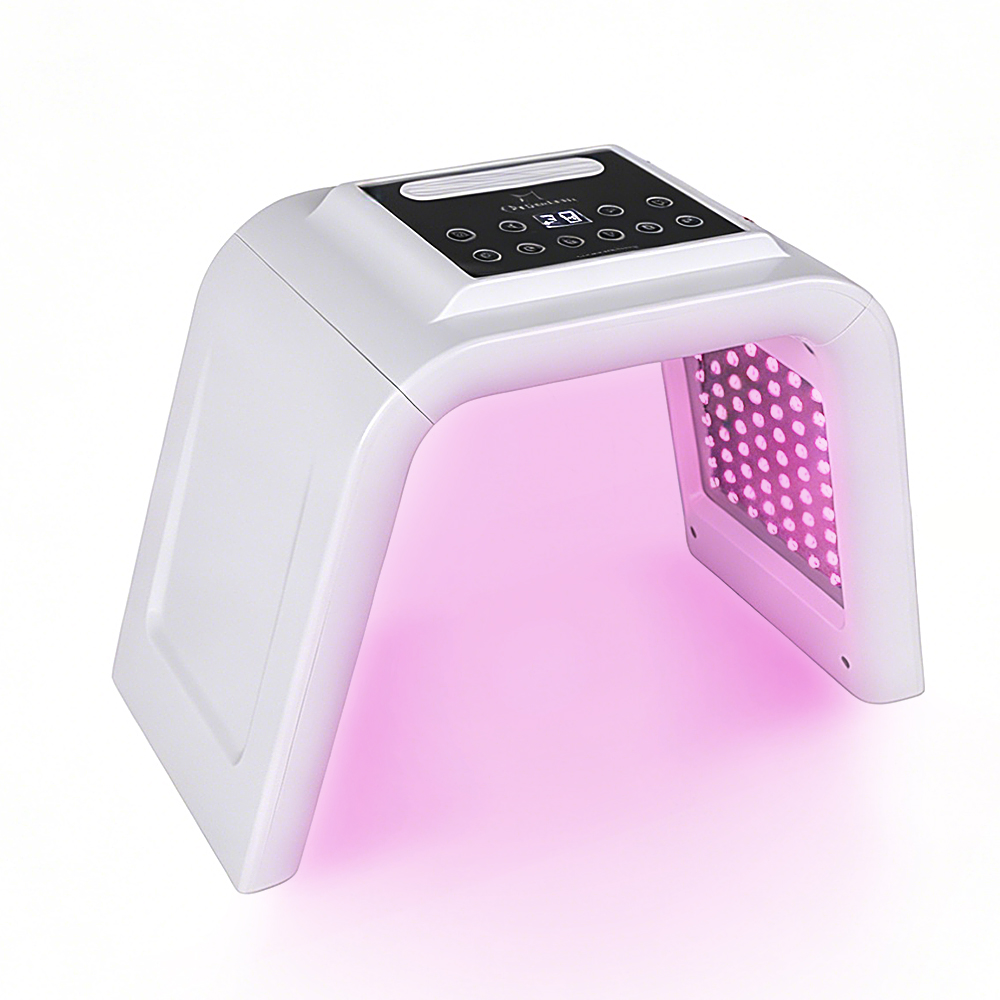
Not all wavelengths earn their place in a light therapy panel. The ones that genuinely move the needle sit between 600 and 900 nanometers, where photons slip past skin and muscle without getting scattered into useless heat. Red light around 660 nm gets absorbed by cytochrome c oxidase in the mitochondria, kickstarting ATP production right at the surface layers. Near-infrared at 850 nm goes deeper, reaching joints, tendons, and even bone, where it triggers the same cellular energy boost but with far less resistance from tissue. These two bands aren't arbitrary choices—they match the exact absorption spectrum of our cells' respiratory chain, which is why they outperform shorter or longer wavelengths by a wide margin.
What makes 660 and 850 nm the workhorses is their complementary depth profiles. The 660 nm red light handles skin repair, collagen synthesis, and superficial inflammation, while 850 nm near-infrared penetrates up to several centimeters, addressing deep muscle recovery and chronic joint pain. Together they cover everything from surface wounds to deep tissue injuries without overlapping into the useless UV or far-infrared ranges. Panels that focus energy on these two wavelengths deliver measurable results, whereas broad-spectrum devices waste power on frequencies that barely interact with human biology.
The real difference shows up in dosing. Because 660 and 850 nm photons are so readily absorbed by mitochondrial chromophores, you need far lower irradiance to reach a therapeutic threshold compared to, say, 630 nm or 940 nm. This efficiency means shorter sessions, less heat buildup, and fewer side effects like temporary redness. In practice, that's why high-quality panels concentrate their LED output on these two wavelengths—they let the light do the actual work instead of relying on placebo or painfully long exposure times.
How Long Should You Really Sit in Front of the Panel
Most advice about screen time assumes there's a magic number that works for everyone. That's not how bodies operate. Your ideal sitting duration depends on what kind of panel you're facing, whether you're actively working or passively watching, and how your posture holds up over time. A fixed rule like 'no more than 30 minutes' often ignores the fact that a programmer debugging code and a viewer bingeing a series have completely different engagement patterns.
A more useful approach is to listen to physical cues before they become pain. If your neck starts to drift forward or your lower back feels stiff, that's your signal to stand up and move, regardless of whether you've been there for ten minutes or an hour. For focused desk work, many people find that a 45 to 60 minute block works well, followed by at least five minutes of walking or stretching. The key isn't the timer on your phone; it's noticing when your attention dips and your body gets restless.
Think of it as managing cumulative load rather than each individual sitting spell. If you're stuck in front of a panel all day, frequent micro-breaks matter more than one long lunch walk. Stand up every time you finish a task, shift your sitting position regularly, and if possible alternate between a standing desk and a chair. Over weeks, you'll learn your own thresholds—some people can sit comfortably for 90 minutes, others start fidgeting after 20. Adjust accordingly, and don't treat generic guidelines as gospel.
The Device Features Worth Paying Extra For
When you're comparing devices, a handful of upgrades genuinely justify their higher price tags. A high refresh-rate display is one of them—once you've used a 120Hz panel, going back to 60Hz feels like swimming through molasses. It's not just about gaming; every scroll and transition becomes noticeably smoother, reducing eye strain over long reading sessions.
Durability features often fly under the radar but pay for themselves quickly. An IP68 rating and tougher glass (like Gorilla Glass Victus) mean your phone survives accidental spills, dust, and drops that would crack lesser screens. Instead of paying for a screen replacement, you just wipe it off and keep going. That's real savings.
Battery endurance is another area where spending more makes sense. A device that comfortably lasts a full day of heavy use—and supports fast charging when you do need a top-up—changes how you use it. No more carrying a power bank everywhere or rationing screen time. It's a liberating difference that you'll appreciate every single day.
Mistakes That Make Red Light Therapy Less Effective
One of the biggest mistakes people make is assuming any red light device will work, regardless of its actual output. Many budget panels claim therapeutic wavelengths but emit a broad, unfocused spectrum that barely penetrates beyond the outer skin layer. The sweet spot for mitochondrial absorption sits between 630–680 nm and 810–850 nm; stray too far outside that range and you're essentially paying for a fancy heat lamp. Distance matters just as much—if you hold the device more than six inches away, the irradiance drops sharply, and you might not reach the minimum energy dose needed to trigger cellular repair.
Another overlooked error is treating red light therapy like a sporadic spa treatment instead of a consistent biological intervention. Cells respond to cumulative photon dose, so using the device once a week for five minutes won't move the needle. On the flip side, overdoing it—cranking up the power and lying under the panel for an hour daily—can push tissues into a mild stress response that backfires, increasing oxidative burden rather than reducing it. Skin prep also trips people up: a layer of sunscreen, heavy moisturizer, or even makeup can reflect or absorb a significant chunk of the light before it reaches the dermis.
Perhaps the most common mistake is giving up too soon. Red light therapy doesn't erase wrinkles or joint pain overnight; it nudges cellular processes like collagen synthesis and ATP production, which unfold over weeks and months. Expecting a miracle after three sessions leads to frustration and abandonment, even though the therapy was actually working beneath the surface. Also, don't neglect your eyes—closing them is fine, but wearing opaque goggles blocks light from reaching the delicate periorbital skin, which is often the exact area people want to improve. Consistency, proper distance, and a clean, product-free treatment area beat chasing the most expensive device on the market.
Building a Routine You Won't Quit After Two Weeks
Most routines collapse because they demand too much novelty at once. Instead of adding a thirty-minute morning workout and a full journaling session on day one, pick one action so small it feels almost pointless. Maybe it's one sun salutation while the kettle boils, or writing a single sentence about what you're dreading. The goal is not the action itself but making the trigger automatic. Tie the new habit to something you already do without thinking: after you pour coffee, before you open email, right after brushing teeth. That anchor carries you through the first weeks when motivation wanes.
You also need a plan for the days when everything goes sideways. Decide in advance what the minimum viable version of your routine looks like. If you can't run three miles, can you walk to the end of the block? If you can't read ten pages, can you read one paragraph? Lowering the bar isn't failure; it's protecting the habit's identity. The moment you skip completely, you teach your brain that the routine is optional. But when you show up in a tiny way, you keep the thread unbroken.
Finally, review before you quit. At the end of week two, don't ask whether you feel transformed. Ask what made the routine harder and what made it easier. Then change one variable: move the time, shorten the duration, or pair it with a different cue. A routine worth keeping is one you're willing to tweak, not one you endure.
FAQ
Look for devices that emit both 660 nm and 850 nm. The 660 nm range works well for surface-level skin concerns like fine lines and redness, while 850 nm penetrates deeper into muscle and joint tissue. A lot of cheaper units only include one of these, which limits what you can treat.
Some can be, but many skimp on LED density and irradiance. A device claiming "high power" but lacking a stated mW/cm² figure at a specific distance is often underpowered. You want at least 40–60 mW/cm² at the treatment distance for meaningful results. Otherwise you're just paying for a fancy lamp.
Red light therapy uses specific wavelengths of visible and near-infrared light without significant heat, targeting cells directly. An infrared sauna heats your body to induce sweating and cardiovascular changes. They don't replace each other; if you have joint pain, red light often works faster, but if you want full-body relaxation and detox-like effects, the sauna wins.
For most people, 10–15 minutes per area, four to five times a week is plenty. If you're using it on multiple areas, split sessions rather than doing everything at once to avoid overdosing the skin. I've seen better results from consistent shorter sessions than occasional hour-long marathons.
Absolutely. People focus on the face, but red light can help with scalp health when you're dealing with thinning hair, and it's surprisingly useful for reducing post-workout soreness in forearms or calves. Some people also use it on their thyroid area, though that requires more caution and a lower dose.
You don't have to close your eyes or wear goggles for most panels because the light isn't harmful like UV, but staring directly into bright LEDs can cause temporary visual afterimages and eye strain. If the device is very high intensity or you're sensitive, a simple pair of tanning goggles works fine.
Ask for the irradiance at a specific distance (not just total power), whether it has both 660 nm and 850 nm LEDs, and whether there's independent testing for EMF or flicker. A brand that won't share those numbers probably has something to hide. Also look for a return policy longer than 30 days—it takes time to see results.
Conclusion
Most people expect red light therapy to feel like a quick fix, but the real shift happens when you stop treating it as a one-off and start noticing the cumulative effects. After a few weeks of regular use, skin texture often feels smoother, recovery from workouts gets less annoying, and that low-grade joint stiffness doesn't linger the way it used to. The wavelengths that actually pull their weight are mostly in the 630–660 nm range for surface-level skin concerns and 810–850 nm for deeper muscle and joint work. Panels that blend both are more versatile, but don't fall for cheap devices that only list one narrow band. As for time, most people do well with 10 to 15 minutes per area, three to five days a week. Longer isn't better—your cells can only absorb so much light before the benefit plateaus, and overdoing it just leaves you bored or red.
When you're comparing devices, skip the extras that sound impressive but don't change outcomes, like built-in timers with app connectivity or fancy stands. Pay extra for higher irradiance (at least 50–100 mW/cm² at the skin), a larger treatment surface, and low EMF or flicker if you're sensitive. The bigger mistakes are less about hardware and more about habits: using the panel too far away, applying skincare oils that block light, or skipping days when you feel fine. To make it stick, anchor the session to something you already do—like after a morning shower or while watching a show—and keep the panel somewhere you'll actually see it. If you need a calendar reminder, set it for the same three days every week until it becomes automatic.
Contact Us
Contact Person: Tina Liu
Email: [email protected]
Tel/WhatsApp: 8618681405932
Website: https://www.omeinabeauty.com/