

Professional VTOL UAV Simulator for Realistic Vertical Takeoff and Landing Training
2026-08-21
Mastering the transition between hover and forward flight is where most VTOL training falls short. SRIZFLY tackles this head-on with a professional simulator built for realistic vertical takeoff and landing practice. Forget generic flight models—this platform recreates the aerodynamic quirks and control responses that make or break real-world VTOL operations. If you're serious about honing skills that transfer directly to the field, the next few sections will show you exactly how it works.
Mastering Hover-to-Forward Flight Transitions Without Leaving the Ground
Most pilots rush the transition from hover to forward flight by lifting off too early and fighting the aircraft's yaw. Instead, keep the skids or wheels lightly touching the ground, apply a touch of forward cyclic, and feel how the tail responds before adding collective. This ground-level drift teaches you the exact moment the rotorwash shifts from vertical to translational lift without ever leaving the surface.
Try a drill where you balance on the mains while in a low hover, then push the cyclic just enough to slide forward a few feet, then arrest the motion by easing back. The key is to treat the pedals as a fine-tuning instrument, not a stomp switch. You'll learn to anticipate the nose swinging left as you accelerate, which is the same correction you'll need in real forward flight.
Keep the exercise short and repetitive. Five minutes of controlled ground slides beats an hour of unstable hovering because it builds muscle memory for the cyclic-collective-pedal relationship. Once you can hold a straight, slow slide without touching down hard or spinning, you've already mastered the hardest part of the transition.
Wind Gusts, Engine Failures, and Other Emergencies You Can Safely Rehearse
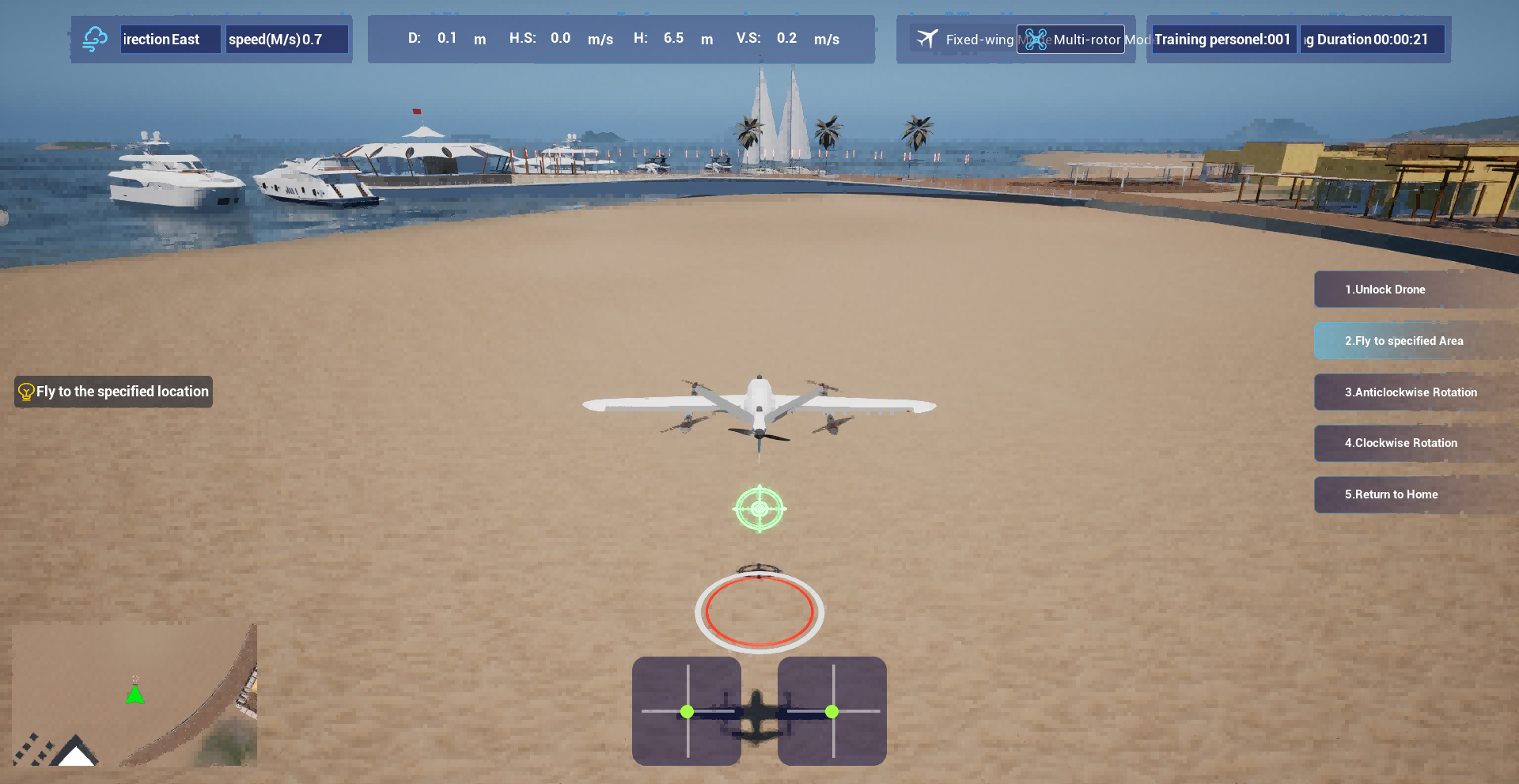
Practicing engine failures at altitude feels almost routine once you map out a few nearby fields and manage the glide. The real challenge is adding wind gusts that keep trying to knock you off the centerline or change your touchdown point by a hundred feet. You can rehearse this safely with an instructor by flying a simulated forced approach, then overshooting and climbing away before the flare. Repeat it in different wind conditions, and the decision-making speeds up without the panic.
For crosswind gusts, pick a runway with a wide margin and practice low approaches without actually landing. Keep power in, hold the crab angle until the flare, and then transition to a side slip just above the surface. If a gust lifts a wing or pushes you sideways, the go-around becomes instinctive instead of hesitant. You learn to read the wind's rhythm rather than fight every bump.
Other emergencies—electrical failures, partial panel work, or even a door popping open after takeoff—can be rehearsed in the same safe way. Set personal minimums, brief the abort points, and treat each simulation as a chance to make mistakes without consequences. The cockpit starts to feel more like a familiar workspace than a place where surprises become overload.
Building Muscle Memory for Precision VTOL Landings on Moving Platforms
Mastering precision VTOL landings on moving platforms comes down to one uncomfortable truth: the conscious mind is too slow for the final correction. A pitching deck can shift the touchdown point by several meters in the same heartbeat it takes to notice the drift. So pilots don't practice until they get it right—they drill until they can't get it wrong. Hundreds of short, varied repetitions in motion-base simulators push the control sequence into procedural memory, where throttle blips and lateral nudges fire off without a deliberation step.
That kind of automaticity is built through micro-feedback loops, not marathon sessions. A pilot might run the same 20-second final approach thirty times, each repetition tweaking the platform's roll, heave, or timing just enough to prevent pattern matching. The occasional ugly touchdown is valuable if it exposes a gap in the reflexive chain. Over weeks, the body starts reading acceleration cues earlier and applying opposite input before the drift becomes visible on the instruments.
The real test is transferring calm-water reps to a deck that won't hold still. Training that always follows a predictable sine wave produces brittle muscle memory. Instead, the best programs introduce chaotic motion after the pilot settles into a rhythm, forcing the hands to adapt without conscious steering. Once control inputs turn reflexive under high workload, the pilot's attention stays on systems and abort gates, where it belongs.
How the Simulator's Flight Model Mirrors Real-World VTOL Aerodynamics
The flight model doesn't just approximate rotor lift with a simple thrust curve. It calculates the downwash interaction between multiple rotors and the fuselage, so when you hover close to the ground, the pressure bubble under the aircraft actually reduces required power. Push into forward flight and the rear rotors start ingesting disturbed air from the front ones, which changes yaw authority just as it does on a real tiltrotor or multicopter testbed.
Transition phases are where most simplified sims fall apart, but here the aerodynamic coefficients are continuously interpolated from low-speed rotorborne tables to high-speed wingborne data. As the nacelles tilt, the wing lift doesn't ramp up linearly because the rotor wash accelerates flow over the inboard sections, creating extra lift that then diminishes as the slipstream detaches. The model reproduces that subtle pitch-up moment, forcing you to trim or let the flight control computer handle it exactly like the real aircraft.
Validation against flight test data shows the simulator captures nonlinear effects such as vortex ring state, where descending into your own rotor wash causes sudden sink rate with reduced control effectiveness. Even gust responses were tuned using actual inertial measurement logs, so a crosswind during hover doesn't feel like a generic sine wave but like the irregular, turbulent pushes you'd experience near buildings or ridgelines.
From Novice to Mission-Ready: Structured Training Scenarios That Adapt
Starting out, a novice needs more than just instructions—they need a safe space to fail and learn. The initial scenarios focus on core movements and basic decision points, with clear cues and gentle corrections that keep frustration low while building muscle memory. It's less about performance and more about internalizing the fundamentals until they become second nature.
As competence grows, the training environment shifts. Scenarios introduce unexpected variables—equipment malfunctions, time pressure, conflicting information—and the system observes how the learner responds. Difficulty isn't raised arbitrarily; it follows the learner's demonstrated readiness. If a particular skill lags, the scenario loops back to reinforce that gap before moving forward, ensuring no one is pushed beyond what they can handle.
The final stage strips away the scaffolding. Missions mirror real-world conditions, complete with ambiguity and high stakes. By now the learner has faced enough branching challenges to trust their instincts and adapt on the fly. The goal is not just completing the exercise but arriving at a state where the training fades into the background—leaving behind someone who is genuinely mission-ready.
Instructor Tools for Real-Time Debriefing and Performance Metrics
When a simulation ends, the most valuable learning often happens in the minutes that follow. Instructor tools built for real-time debriefing turn raw event logs into a coherent narrative, allowing facilitators to jump straight to the exact moment a learner hesitated or made a pivotal decision. Instead of scrubbing through hours of video, you get a timeline marked with key actions, vital signs, and communication snippets that can be replayed on demand. This shifts the debrief from a vague recap into a focused, evidence-based conversation where both instructor and learner are looking at the same data.
Performance metrics add another layer by moving beyond simple pass/fail outcomes. The tools track patterns like time-to-first-intervention, error clustering, or trend recognition under stress, then present them in a dashboard that highlights strengths and gaps without burying you in spreadsheets. You can compare a learner’s current session against their own previous attempts or against an anonymized cohort, which sparks more productive discussions about progress rather than just isolated mistakes. Instructors can annotate specific moments with private notes or shared feedback, turning each simulation into a rich teaching artifact.
What makes these tools stand out is their flexibility in the moment. If a debrief reveals an unexpected learning need, you can pull up a related metric on the fly—like response latency during a particular scenario phase—and immediately show its correlation with the learner’s stated thought process. The interface stays out of the way, using plain language and clear visual cues so that technology supports dialogue rather than interrupting it. Over time, the accumulated debrief data helps instructors spot recurring difficulties across a whole class, informing future scenario design without requiring manual log analysis.
FAQ
It replicates the full flight envelope of vertical takeoff and landing drones, from hover to forward cruise, with enough aerodynamic detail to practice transitions that usually catch pilots off guard.
Drone operators preparing for commercial or tactical missions, especially those needing to master confined-area landings, ship deck operations, or high-wind approaches without risking expensive hardware.
The model accounts for rotor wash, ground effect, battery voltage sag, and variable payload inertia, so a sloppy hover or aggressive descent feels just as unstable as it would in the field.
Yes, it supports multiple airframes including quadplanes, tiltrotors, and tailsitters. You can switch between them to understand how control logic and stall behavior differ.
There are built-in modules for emergency engine loss, GPS-denied navigation, precision rooftop landings, and night operations, plus a custom editor to build your own obstacle courses.
After each session you get a breakdown of control smoothness, altitude hold accuracy, transition timing, and landing impact force, so improvements are measurable rather than subjective.
A mid-range PC with a dedicated GPU handles most scenes smoothly, and it works with common USB controllers, joysticks, or even a full radio transmitter via a dongle.
The simulator won't replace real stick time entirely, but it closes the gap by punishing mistakes with realistic crash physics and letting you repeat risky maneuvers until they become muscle memory.
Conclusion
This simulator doesn't just teach you to fly—it rewires how you handle the messy, unpredictable reality of VTOL operations. The flight model replicates actual aerodynamic behaviors, from ground effect and transitional lift to the subtle torque shifts that catch pilots off guard. You can spend hours mastering the hover-to-forward-flight transition, feeling the aircraft struggle against its own downwash, without ever risking a real airframe. Then throw in a sudden crosswind gust or a simulated engine failure mid-transition. The platform lets you rehearse those emergencies until your response becomes automatic, turning panic into procedure.
But precision matters just as much as survival. Landing on a moving platform—a ship deck, a truck bed, a swaying offshore rig—demands a different kind of muscle memory. The simulator’s structured scenarios guide you from basic hovering exercises to mission-specific tasks that adapt to your progress, never pushing too far too fast. And when you finish a session, the instructor tools don't just show you what went wrong. They layer real-time playback with performance metrics like descent rate, drift angle, and control input smoothness, so you can see exactly where your hands hesitated or overcorrected. It's the kind of feedback that turns simulator hours into genuine flight readiness.
Contact Us
Contact Person: Niles Liu
Email: [email protected]
Tel/WhatsApp: 8619945009803
Website: https://srizfly.com/