

Professional Car Ozone Generator – The Secret to a Fresh, Odor-Free Car
2026-10-14
That stale, lingering smell in your car isn't just annoying—it's a sign that surface cleaners aren't reaching the real problem. Enter the professional car ozone generator, the tool detailers use to neutralize odors at the source. LUFUTATECH has focused on making this once pro-only technology accessible, but there's a right way and a wrong way to use it. Before you buy the first machine you see, here's what actually makes ozone treatment work for a truly fresh, odor-free car.
Why Your Car Still Smells After a Deep Clean
Deep cleaning often tackles the obvious culprits—crumbs, stains, and surface grime—but odors tend to live where vacuums and wipes rarely reach. Air vents, seat cushion foam, and the fibers of the headliner hold onto moisture and bacteria long after the visible mess is gone. When you run the air conditioning, trapped condensation reactivates mold and mildew spores, pushing a musty scent back into the cabin within hours. Even a shampooed carpet can smell fresh at first, then sour again once leftover moisture seeps into the underlayment and dries too slowly.
Another overlooked source is the cabin air filter. It is designed to trap dust and pollen, but if it is clogged or damp, it becomes a breeding ground for odor-causing microbes instead of a barrier against them. Many deep clean packages skip this small but critical part, leaving the blower to circulate contaminated air every time you turn on the fan. Similarly, food wrappers, old napkins, or a stray gym sock can slip under seats or into door pockets, and their slow decomposition keeps reintroducing the smell no matter how many times you scrub the upholstery.
Finally, the type of products used during the clean can backfire. Heavy perfumed shampoos and deodorizers tend to mask odors temporarily, but their residue can attract more dirt and trap moisture, making the underlying problem worse. Plastic and rubber trim also absorb smoke, pet dander, and spilled liquids over time, releasing those compounds again when the interior heats up. Unless the cleaning process includes proper extraction, drying, and replacement of odor-holding filters, the smell will return because its root cause was never actually removed.
Ozone vs. Air Fresheners: What Actually Happens to Odor Molecules
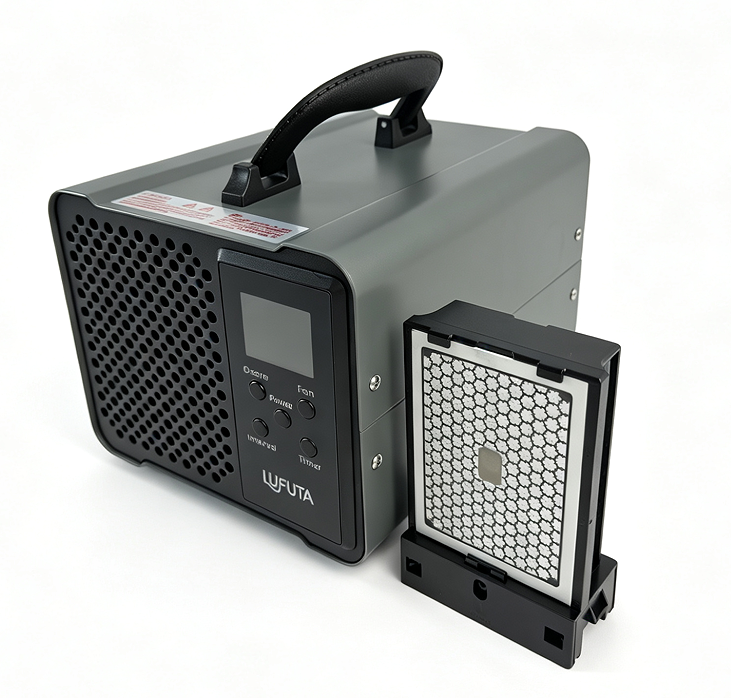
Most air fresheners don't eliminate odors—they simply flood the space with synthetic fragrances that overpower your olfactory receptors. The original odor molecules remain intact, often bound to cyclodextrins or encapsulated in oils, but they're still present. Once the fragrance fades, the underlying smell resurfaces.
Ozone works differently. As a reactive oxidizer, it collides with volatile organic compounds and breaks carbon double bonds, converting odor-causing molecules into simpler, less aromatic byproducts. This process alters the chemical structure rather than masking it. However, the same reactivity can irritate lung tissue, and incomplete oxidation may produce secondary pollutants like formaldehyde.
The practical difference comes down to chemistry versus perception. Air fresheners change what you smell; ozone changes what's actually there—at least partially. For persistent organic odors, oxidation has a clear advantage, but it brings trade-offs in safety and residual byproducts that masking agents avoid.
The 15-Minute Treatment for Smoke, Pets, and Spills
Fifteen minutes is enough to knock out the most common household odors and stains if you move fast. Start by opening a window or turning on a vent, then sprinkle baking soda over carpet spots and upholstery where smoke or pet smells have settled. While that sits, mix equal parts white vinegar and warm water in a spray bottle and mist any hard surfaces—counters, table tops, even the wall behind the couch. Wipe with a microfiber cloth, and you'll already notice the air feels lighter.
For fresh spills, blot first, don't scrub. A stack of paper towels pressed firmly draws liquid out of fibers. Pet accidents need an enzyme cleaner rather than soap, which can lock in proteins and make the smell worse. If you have a handheld steam cleaner, run it over the treated area for a few minutes to lift whatever's left. The key is doing these small steps in a tight loop: deodorize, extract, and dry. Fifteen minutes won't deep-clean a whole house, but it will make a room comfortable enough to breathe in again and keep small stains from becoming permanent.
Using a Professional Ozone Generator Without the Guesswork
Before you switch the unit on, measure the cubic footage of the room and match it against the generator's output rating, usually printed as milligrams per hour. Instead of guessing at a timer setting, divide the target ozone concentration by the output rate to get a rough treatment duration. For a standard shock treatment in an empty space, aim for 6–10 ppm for 30–60 minutes, but increase or decrease the time based on how strong the lingering odor is. Most guesswork disappears when you stop treating every room the same and start treating every room by its volume and air change rate.
Treat the safety protocol as part of the procedure, not an afterthought. Remove people, pets, and plants, then seal the room by closing doors and windows and blocking gaps under them. Place the generator on a non-flammable surface near the center of the space, set the timer, and leave immediately. When the cycle ends, wait two to four hours before re-entering, and ventilate for at least 30 minutes with exhaust fans or open windows. A cheap ozone monitor or test strip removes the last bit of doubt about when the air is safe to breathe again.
Regularly inspect the ozone plate or UV lamp, because output drops silently as those parts age or collect dust. If a plate looks dull or brown, clean it according to the manufacturer's instructions or replace it rather than just adding more time to the cycle. Keep a simple log of room size, dial setting, and results for each job—after three or four uses, you will know the exact duration needed for that closet, car, or basement without any second-guessing.
Why Some Car Odors Return (and How Ozone Stops the Cycle)
Most recurring car odors come from sources that ordinary cleaning never reaches. Spilled coffee, pet accidents, or trapped moisture seep into the foam beneath carpets and the fibers of seat upholstery. Once there, bacteria and mold take hold, releasing gases that surface-level sprays and shampoos can't neutralize. The smell fades for a day or two, then returns as soon as the cabin warms up or humidity rises—because the root colony is still alive and feeding deep inside the material.
Ozone breaks that cycle by attacking the odor at its origin. The gas drifts into every crack and pore, reacting with the organic compounds that create the stench. It oxidizes bacteria, mold spores, and embedded residue on contact, destroying their cell walls and converting the odor molecules into harmless byproducts. Unlike masking agents, ozone doesn't leave a perfume that eventually wears off. It eliminates the biological source, so the smell has nothing left to regenerate from—even in the hidden layers where moisture tends to linger.
The cycle ends because ozone treats the environment, not just the air. After the treatment, the surfaces that once harbored odor-causing microbes become inhospitable to regrowth. Any remaining ozone naturally breaks down into oxygen within a short time, leaving no chemical residue. For cars that have been repeatedly cleaned yet still smell musty or sour after a few warm days, this difference—reaching and neutralizing the unseen reservoir—is what finally stops the return.
What a Truly Fresh Cabin Feels Like—Not Just Smells Like
You step inside and the first thing you notice isn't the pine-scented spray someone might have sprayed an hour ago. It's the weight of the air itself. A truly fresh cabin doesn't need a fragrance to announce itself. The space feels lighter, as if the walls have been holding their breath and finally let go. You can sense that windows have been opened wide, not just cracked, that linens have been dried outside in real wind, and that nothing damp or stale has been left to settle in the corners. Your skin registers the temperature before your nose does—cool but not cold, moving slightly, never stagnant.
There's a quietness to it that has nothing to do with sound. It's the absence of anything heavy. No lingering last-night's-dinner odor, no mustiness rising from the sofa cushions, no chemical sweetener trying to cover it all up. You can sit down, breathe in deeply, and not wonder what you're actually inhaling. The surfaces feel dry and clean under your fingertips. The blankets don't cling with old humidity. Even the light seems to move differently through air that hasn't been trapped for days.
A truly fresh cabin also feels honest. You know the difference between a quick tidy-up and a deep airing out. The first masks; the second resets. When a cabin has been truly aired, you can leave the door open for a while without the outside and inside fighting each other. The temperature equalizes naturally. You don't feel the need to open another window because one is already doing its job. And that's the real tell: it doesn't smell like freshness—it just is fresh, all the way through.
FAQ
It releases ozone gas that penetrates fabrics, vents, and small crevices. The ozone molecules react with odor-causing particles and break them down through oxidation, so the source of the smell is neutralized instead of being masked.
Yes, as long as you follow a few key rules. Never run it while people or pets are inside the vehicle. After the treatment, open all doors and windows for at least 30 minutes to let the ozone dissipate before getting back in.
Air fresheners only cover up odors temporarily and often fade within days. An ozone generator eliminates the odor molecules themselves, so the car stays fresh much longer and you aren't left with a mix of perfume and old smell.
When used correctly and for the recommended duration, it's generally safe for interior materials. Ozone is a strong oxidizer, so avoid excessive or overly frequent treatments. If you're concerned about sensitive surfaces, you can cover them lightly.
Professional car ozone generators usually have higher ozone output, more precise timer controls, and better build quality. They're designed to treat enclosed vehicle spaces thoroughly, while cheap units may take longer or struggle to reach the same concentration.
No, you should never run it while the car is occupied. Ozone can irritate the lungs and eyes. The treatment must be done with the car parked, doors and windows closed, and no one inside. Afterward, ventilate completely before driving.
It depends on your situation. After buying a used car, removing smoke odor, or dealing with a mildew smell, one or two thorough treatments are usually enough. For routine upkeep, every few months or when odors return is a practical approach.
Conclusion
You scrub every surface, vacuum every crevice, and still—the moment the sun hits the upholstery, that stale, sour note creeps back. Deep cleaning removes visible dirt, but it can't touch the odor molecules trapped inside foam, headliner, and seat fibers. Air fresheners simply mask the problem with a floral veil, while the actual volatile compounds from smoke, pet accidents, or spilled milk remain intact, ready to resurface with heat or humidity. A professional car ozone generator works differently: it floods the cabin with ozone, a highly reactive gas that penetrates where sprays and shampoos can't reach. In about 15 minutes, ozone bonds with odor molecules and tears them apart at the molecular level—oxidizing them into harmless, odorless byproducts. Whether it's cigarette residue baked into the dashboard or a forgotten fast-food spill under the seat, the treatment reaches deep into every pore of the interior, neutralizing the source rather than covering it up.
The difference is not just what you smell—it's what you don't. After a proper ozone treatment, a truly fresh cabin feels different. The air has a neutral, clean quality, like after a rainstorm, with no cloying perfume or chemical aftertaste. And while some car odors return because the source wasn't fully addressed—like old moisture trapped in carpet padding—ozone breaks that cycle by destroying the bacteria and mold spores that cause recurring smells. There's no guesswork involved: set the timer, close the doors, and let the generator do its job. Fifteen minutes later, you air out the car thoroughly, and you're left with an interior that doesn't just smell clean—it feels genuinely restored, as if the cabin itself has been reset to factory-fresh condition. No temporary masking, no lingering artificial scent. Just the quiet, honest smell of a car that's truly clean from the inside out.
Contact Us
Contact Person: Paul Luo
Email: [email protected]
Tel/WhatsApp: 0086-19966314501
Website: https://www.lufutatech.com