

Portable High-Intensity Light Manufacturer Guide to Durable Illumination Solutions
2026-11-16
When a worksite goes dark, the difference between a stalled project and a productive night shift often comes down to one detail: light that refuses to fail. Portable high-intensity illumination has moved from convenience to critical equipment, whether crews are securing a flood-prone zone or inspecting infrastructure after a storm. Yet the market is crowded with units that shine bright for a week and weaken by the next season. This guide cuts through the spec-sheet clutter to explore what genuinely makes portable lighting durable under real-world abuse. Along the way, Jianghe Flood Prevention stands out as a name that treats illumination as part of a larger reliability system rather than an afterthought.
What Sets a Reliable Portable High-Intensity Light Apart
Most people only find out how trustworthy a portable light is when conditions turn bad. A dependable unit keeps its brightness fairly steady for longer instead of dropping sharply after the first few minutes. That comes down to an honest battery pack, a driver that regulates current without overheating, and a housing that can pull heat away from the LED. If the casing gets uncomfortably hot within a minute or the beam flickers on a partially drained cell, the design is cutting corners.
The details that matter most are rarely advertised. Tight seals around the lens and charging port keep moisture and fine dust out long after the first trip outdoors. A switch with a locked mode prevents the light from turning on inside a pack. Real runtime figures, not just the highest lumen number on the box, give a better sense of whether it will last through a full shift or a night hike. When all those pieces work together, the light feels less like a gadget and more like equipment you can depend on.
Key Materials That Extend the Life of Harsh-Environment Lighting
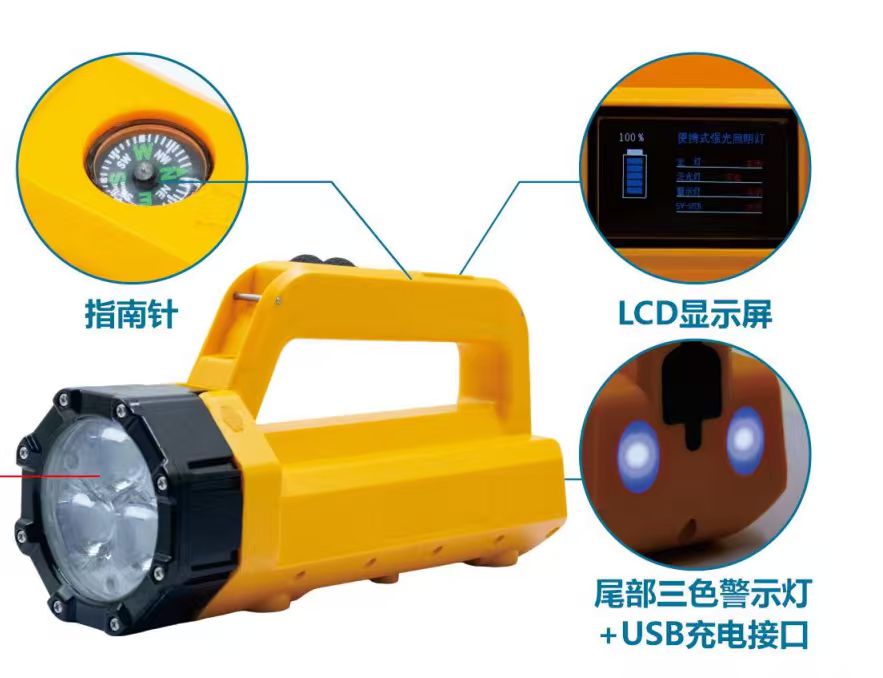
In harsh settings, fixture failure usually starts well before the LED chip itself degrades. Gaskets harden, polycarbonate lenses haze under UV, and housing coatings break down from salt spray or chemical exposure. Choosing materials that can handle these slow, cumulative attacks often matters more than adding another heat sink or pushing lumen output.
Marine-grade stainless steel or properly sealed die-cast aluminum holds up where moisture and salt would quickly pit lighter alloys. Silicone gaskets retain flexibility across wide temperature swings, while borosilicate glass or UV-stabilized polycarbonate keeps optical clarity longer. Inside the housing, thermally conductive potting compounds and gap fillers do double duty: they move heat away from the driver and block condensation from reaching sensitive connections.
The real difference comes from matching these materials to the specific environment rather than treating every outdoor or industrial site the same. A coastal installation may need 316 stainless hardware and a corrosion-resistant powder coat, while a chemical processing area might prioritize fluorosilicone seals and a fully potted driver cavity. That kind of targeted material selection extends service intervals and prevents the small, avoidable failures that take fixtures offline early.
Balancing Output Power with Runtime in Field Conditions
Field conditions rarely punish a fixed wattage number the way a bench test does. A tool that holds 600 lumens for two hours indoors may fall well short once the battery cools, voltage sags under load, and the driver pulls more current to maintain output. The balance shifts because runtime is not just capacity divided by draw; it is shaped by how much extra energy becomes heat in the cell, the contacts, and the regulation circuit.
Stepping output down as voltage drops is the practical workaround, but it can feel abrupt if the firmware waits too long or drops too far. A gentler slope keeps the device useful and predictable, while a hard cutoff protects the cell but leaves you in the dark. The more honest approach is to tune the discharge curve around the temperatures and load patterns the device will actually see outdoors, not around a room-temperature datasheet.
High-drain bursts complicate the picture further. A brief spike that demands 8 amps may only last a few seconds, yet it pulls a cold cell below its minimum voltage earlier than steady-state math suggests. Accounting for that means reserving headroom, derating the top output as the pack ages, or letting the thermal model ride along with state-of-charge. In field use, the best setting is often the one that leaves a small reserve instead of chasing the highest number on a display.
Design Choices That Reduce Failure Points in Mobile Lighting
In mobile lighting, the fastest way to invite field failures is to multiply moving parts. Fold-out hooks, rotating bezels, and telescoping stems feel convenient, but each joint introduces a wear point and a path for dust or moisture. A more durable approach often means removing the hinge entirely. A fixed lamp head with a magnetic base or a simple slide-lock bracket covers most positioning needs without the same long-term risk. Where movement is unavoidable, keep it to one axis and use a thick metal pin rather than a plastic detent.
Another common failure sits at the connection between battery, driver, and LED. Wires that pass through a hinge get pinched, and cheap spring contacts lose tension after repeated battery swaps. Instead of routing harnesses through moving joints, designers can place the driver and LED on a single rigid board and connect the battery through a short, direct path. Wide gold-plated contact pads or barrel-style connectors with strain relief survive better than thin tabs or exposed JST plugs. Potting the electronics in a soft compound also reduces solder joint fractures from drops and vibration.
Moisture intrusion and heat cycling quietly kill more mobile lights than any single impact. A fully sealed housing works until temperature changes create a vacuum that pulls water past worn O-rings. Adding a small breathable vent equalizes pressure without opening a direct path for liquid. On the thermal side, avoiding active cooling removes a motor, bearing, and power draw that can fail in dirty environments. A cast aluminum body that spreads heat across the shell keeps the LED junction cooler and eliminates the need for a fan.
How Modern Thermal Management Keeps Compact Lights Stable
Modern compact lights cram serious output into tiny housings, and without clever thermal management they would quickly cook their own electronics or scorch the user's hand. Instead of relying on bulky finned heatsinks, many designs use a metal core printed circuit board that pulls heat away from the LED junction and spreads it into the aluminum body. The body itself becomes the radiator, shedding warmth through its entire surface while remaining small enough to slip into a pocket.
Active thermal regulation adds a layer of intelligence that passive cooling alone cannot match. A sensor near the emitter monitors temperature in real time, and the driver reduces current in small steps before the light reaches a critical threshold. This avoids sudden, jarring drops in brightness and allows the flashlight to hold a higher output for longer in cold environments, then back off smoothly when airflow is limited or the light is left tail-standing on a desk.
The result is a light that feels stable rather than frantic. It does not flicker, tint-shift, or shut down unexpectedly. Users get predictable runtime, consistent beam quality, and hardware that survives repeated thermal cycles without solder fatigue or emitter degradation. Good thermal design is invisible in daily use, but it is the reason a palm-sized lamp can sustain impressive output while staying comfortable to hold.
Matching Illumination Patterns to Real-World Task Demands
A lighting plan rarely fails because there is not enough light. More often, the problem is that the same general wash is asked to support close inspection, screen work, and navigation at once. Matching illumination patterns to actual task demands means paying attention to shadow, contrast, and beam placement before adding more fixtures or raising wattage.
On an assembly line, for instance, a small component seated inside a housing may disappear under a single overhead source. The fix is not necessarily brighter light, but light arriving from two or three shallow angles so that the part edge reads clearly against its background. A control room has the opposite need: bright pools on displays create reflections, so the better pattern may be a low-level indirect wash across walls and ceiling with just enough local light for paperwork.
The practical approach is to start with the visual task itself. Look at the size of the critical detail, how long the work continues, how much contrast is available, and what happens if a mistake is missed. Those factors point to a specific pattern, whether narrow and intense for inspection or broad and even for movement through a space. Choosing the pattern first usually cuts energy use and reduces fatigue more effectively than treating every square meter the same way.
FAQ
The difference usually comes down to the housing, sealing, and power path. A durable model uses a thick machined aluminum or reinforced polymer body, keeps water and dust out around the lens and charging port, and protects the driver from shock. Ordinary lights often skip those details and fail after a few hard knocks.
They rarely run the LED at its absolute maximum. Instead, they tune the driver to hold a stable output that matches the thermal limits of the body, then add lower modes for close work. That way the light stays bright enough for the job without draining the battery in twenty minutes or burning your hand.
Look for a light that accepts removable cells like 18650 or 21700 batteries rather than a sealed pack. A USB-C charging port is convenient, but the ability to swap in a fresh battery and keep working is what matters when there is no outlet nearby. Low-voltage warnings and reverse-polarity protection also prevent common failures.
Because sustained brightness depends on how well the light sheds heat. A tiny head with no heat sinking can hit a big lumen figure for a few seconds, then step down sharply. A properly designed thermal path and finned body let the light hold a useful output for minutes or hours without damaging the LED or the battery.
IP67 is a practical baseline for rain, dust, and temporary submersion. If the light will be used in heavy washdowns, mud, or marine conditions, IP68 or IP69K makes more sense. The rating should also cover the charging port when the cover is closed, since that is one of the first places contamination gets inside.
Yes, size is not the only limit. Modern LEDs paired with a deep smooth reflector or a well-designed TIR optic can push a narrow beam a long distance from a compact head. The trade-off is usually beam width, so it helps to check the candela rating rather than focusing on lumens alone.
Ask for test data instead of promotional wording. Reliable makers can usually share drop-test heights, waterproofing depth, runtime curves, and whether the light follows ANSI/PLATO FL1 testing. Third-party reviews and documented use in hard environments also tell you more than a spec sheet.
Clean the threads and contacts periodically, replace worn O-rings before they crack, and keep the battery around half charge if the light will sit unused for months. Avoid cheap chargers and mismatched cells, and do not store the light in a hot vehicle where battery chemistry degrades faster.
Conclusion
Durability in portable high-intensity lighting is rarely the result of a single breakthrough material or component. It comes from decisions made early in the design phase, such as selecting anodized aluminum housings that resist impact without becoming excessively heavy, pairing them with polycarbonate lenses that can tolerate thermal shock, and sealing every opening with gaskets that remain pliable across a wide temperature range. Manufacturers that build for harsh environments also pay close attention to internal potting compounds and overmolded cable entry points, since vibration and repeated flexing tend to destroy lights long before the LED itself degrades. Battery packs deserve the same scrutiny: using cells with matched internal resistance, protecting them with low-voltage cutoff circuits, and allowing enough thermal headroom prevents the kind of premature capacity loss that frustrates field crews.
Beyond material choices, a dependable light balances output with runtime instead of chasing the highest possible lumen figure. Smart driver circuits can hold a useful brightness level longer, then step down gradually rather than cutting out suddenly. Reducing failure points often means simplifying the user interface, avoiding unnecessary seams, and choosing magnetic charging contacts that stay sealed when dirty or wet. Thermal management plays an equally important role, because a compact light that cannot shed heat will throttle output or shorten component life. Effective designs use direct thermal paths, fin geometry matched to real airflow, and sometimes phase-change materials to absorb short bursts of heat. Finally, beam shape matters as much as raw power: a wide flood pattern prevents tunnel vision during close-range maintenance, while a focused spot aids navigation and inspection at distance. Offering interchangeable optics or a well-judged mixed beam lets one tool adapt to different tasks, which is often more useful than adding another thousand lumens.
Contact Us
Contact Person: Kristin Zhang
Email: [email protected]
Tel/WhatsApp: +8615366239752
Website: https://www.jianghecn.com/