

Pharmaceutical Cleanroom EPC Company: Delivering Sterile, Compliant Facilities for Life-Saving Medications
2026-08-01
In the high-stakes world of pharmaceutical manufacturing, where a single contaminant can compromise an entire batch, the cleanroom is more than a room—it’s a lifeline. GENO Pharmatech doesn’t just build these spaces; they engineer sterile ecosystems that meet the strictest regulatory demands, from FDA to EU GMP Annex 1. This blog pulls back the curtain on how their end-to-end EPC approach turns complex compliance requirements into operational-ready facilities, ensuring that life-saving medications reach patients without compromise.
Why Sterility Begins Before the First Brick Is Laid
Sterility isn't a feature you can bolt onto a facility after the walls are up—it's a design philosophy that must be woven into every early decision. The layout of a cleanroom, the choice of surface materials, and even the positioning of doors and pass-throughs all determine whether contamination can be controlled. Once concrete is poured and steel erected, changing the fundamental flow of people, air, or materials becomes astronomically expensive and often introduces new risks. True sterility begins in the blueprint phase, where every square foot is planned around the movement of invisible threats.
Consider airflow, the silent guardian of any sterile environment. If a design fails to maintain proper pressure cascades or creates turbulent eddies where particles can linger, no amount of HEPA filtration later will fully compensate. Engineers must model air patterns and temperature gradients long before ductwork is installed, ensuring that clean zones remain truly clean. Retrofitting a facility to fix airflow problems almost always requires tearing into ceilings and floors—disrupting operations and compromising the very sterility you’re trying to achieve.
Human behavior is another factor that can’t be retrofitted. The way operators interact with equipment, the paths they walk, and the ergonomics of gowning procedures all hinge on early architectural choices. If a layout forces personnel to cross through a critical zone to reach a storage area, contamination is virtually guaranteed. By embedding sterility into the initial concept—through thoughtful segregation, dedicated airlocks, and intuitive workflow—you build a facility where compliance feels natural, not like a daily battle against the physical space.
The Unseen Precision That Keeps Contamination Out
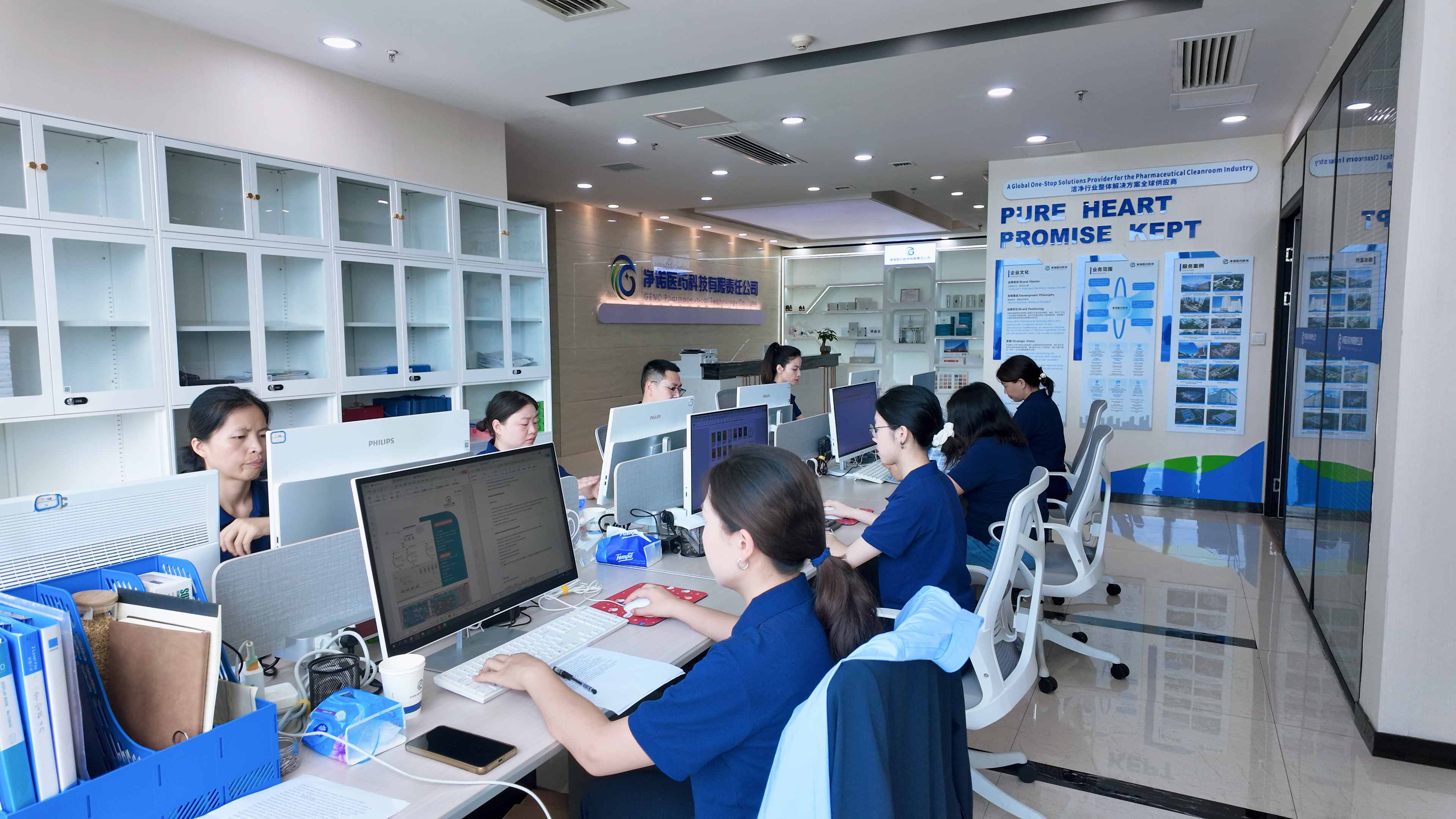
Behind every sterile surface and contaminant-free product lies a world of microscopic exactness. It's not just about wiping down benches or wearing gloves; it's about the delicate choreography of air pressure differentials, the micron-perfect seals on filtration systems, and the silent vigilance of particle counters. These elements work in concert, invisible to the naked eye, yet they form the last line of defense between purity and compromise.
Consider the precise angling of an isolator's glove ports or the calculated sweep of a unidirectional airflow—every detail is engineered to shepherd invisible threats away from the critical zone. The materials themselves become performers: non-shedding polymers, electropolished stainless steel, and specially formulated elastomers that resist chemical breakdown. It's a ballet of physics, materials science, and relentless monitoring that plays out 24 hours a day, often unnoticed until something goes wrong.
This hidden rigor doesn't just exist in high-tech labs. It's in the way a food packaging line is designed to prevent aerosol spread, or how a hospital ventilation system maintains a cascade of pressure gradients from clean to less clean areas. The precision lies not only in the machines but in the protocols—validated cleaning sequences, timed material transfers, and aseptic techniques honed through countless simulation runs. Contamination is kept at bay not by chance, but by a pervasive culture of exactitude that leaves nothing to guesswork.
How We Turn Regulatory Hurdles Into Your Competitive Edge
Most companies see compliance as a costly obstacle, something that slows them down and drains resources. But what if those same rules could actually sharpen your strategy and set you apart? By embedding regulatory understanding into the earliest stages of product design and market planning, we help clients anticipate requirements rather than react to them. This proactive stance turns potential delays into launchpad moments, giving you a head start while competitors are still deciphering the fine print.
The advantage goes deeper than just faster approvals. When you build compliance into your DNA, your products become more trustworthy, your operations more resilient, and your brand more credible in regulated markets. We work alongside your teams to not just meet standards, but to leverage them as proof points of quality and safety. The result is a reputation that attracts partners, investors, and customers who value reliability—turning what others see as red tape into your most durable differentiator.
Beyond Standard Cleanrooms: Engineering for Uncompromised Safety
True safety in controlled environments demands more than meeting baseline classifications. It requires a mindset where every system, from airflow dynamics to material selection, is scrutinized for potential failure points that standard designs overlook. Our approach integrates risk anticipation into the very blueprint, treating ISO class limits not as targets but as minimums. By layering redundant containment measures and adaptive pressure cascades, we create spaces where even improbable breach scenarios are neutralized before they can escalate, ensuring that the integrity of critical processes remains absolute.
The difference lies in how we challenge common assumptions. Where typical cleanrooms rely on static offsets and routine monitoring, we embed responsive intelligence within the infrastructure. Air handling becomes a predictive algorithm rather than a fixed setting, dynamically adjusting to thermal loads, equipment activity, or human presence in real time. Structural interfaces—from wall panels to utility penetrations—are treated as engineered seals rather than simple junctions, tested against chemical, particulate, and biological migration under stress conditions that far exceed operational norms.
This philosophy extends to the human element, often the weakest link in contamination control. Instead of imposing rigid protocols that invite workarounds, we design ergonomic workflows that make compliance intuitive. Gowning areas are not afterthoughts but highly choreographed transition zones. Material pass-throughs eliminate cross-traffic without compromising efficiency. By aligning engineering ingenuity with behavioral reality, uncompromised safety becomes not an aspiration but an inherent characteristic of the space.
What It Takes to Bring a Life-Saving Drug to a Sterile Reality
Turning a promising molecule into a sterile, injectable medicine is a painstaking journey that stretches far beyond the lab bench. It begins with rigorous formulation science, where chemists and engineers must find ways to keep the drug stable and active while eliminating any possibility of microbial contamination. This often means designing specialized manufacturing environments—cleanrooms with precisely controlled air quality, temperature, and humidity—where every surface, piece of equipment, and even the clothing of personnel must meet uncompromising sterility standards. The process isn’t just about mixing ingredients; it’s about engineering a closed, flawless system where the drug can be filled into vials or syringes without ever touching a non-sterile surface.
But the technical hurdles are only half the story. The regulatory pathway demands exhaustive validation at every step, from raw material sourcing to final packaging. Each component—whether a glass vial, a rubber stopper, or the sterilization method itself—must be proven to maintain integrity and not interact negatively with the drug over its shelf life. Teams run accelerated aging studies, challenge the process with worst-case contamination scenarios, and generate mountains of data to satisfy agencies that the product is both pure and potent. It’s a world where a single particle or invisible flaw can derail months of work, making obsessive attention to detail not just a virtue but a necessity.
Beyond the science and paperwork lies a human dimension that’s often overlooked. Sterile manufacturing demands an almost monastic discipline from operators who train for years to move deliberately within isolators or restricted-access barrier systems. They must understand that their actions—how they gown, how they handle components, how they respond to an alarm—directly affect patient safety. This culture of quality doesn’t emerge overnight; it’s built through relentless practice, peer accountability, and a shared belief that the sterile field is sacred. When a life-saving drug finally reaches a patient, it carries the weight of all these quiet, coordinated efforts that unfolded in the background, far from the public eye.
Designing for the People Behind the Medicine
Too often, healthcare design focuses on the clinical endpoint—the pill, the device, the protocol—without fully considering the humans navigating the system. But the real measure of a medical solution isn’t just its efficacy in a controlled trial; it’s how it fits into the messy, emotional, and unpredictable lives of patients and practitioners. When we design with this lens, we start by asking not just “does it work?” but “does it feel manageable, respectful, and even kind?”
This approach means recognizing that behind every prescription, there’s a person struggling with fear or fatigue, and behind every diagnostic tool, a clinician juggling time pressures and cognitive load. Designing for them involves more than usability testing—it requires empathy embedded into the process from the start. It’s about creating interfaces that reduce anxiety, packaging that speaks to dignity, and workflows that adapt to human limitations rather than ignoring them. Ultimately, when we center the experience of the people behind the medicine, we build trust and improve outcomes in ways that raw data can’t capture.
FAQ
A pharmaceutical cleanroom EPC company takes on the full responsibility of designing, engineering, procuring all necessary components, and constructing cleanroom facilities that meet the strict regulatory requirements of the pharmaceutical industry. Essentially, they deliver a fully functional, sterile environment from concept to completion, so drug manufacturers can focus on producing life-saving medications without worrying about facility compliance or performance.
Compliance is built into every stage of our process. We stay current with all major regulatory frameworks—FDA, EMA, WHO, and ISO standards—and incorporate their requirements from the initial design. Our validation protocols and documentation are comprehensive, and we conduct rigorous testing of airflow, filtration, and surface cleanliness before handover. Even after completion, we provide detailed qualification packages to support our clients during regulatory inspections.
Unlike general contractors, we specialize exclusively in controlled environments. That means we understand the critical interplay between HVAC, pressurization, material compatibility, and cleanroom classifications. We use advanced computational fluid dynamics modeling to optimize airflow and eliminate contamination risks, and we have a deep bench of engineers who have faced nearly every challenge in pharmaceutical manufacturing spaces. Plus, we only use materials and finishes that will hold up to rigorous cleaning and sterilization protocols.
Absolutely. Most pharmaceutical facilities need a combination of ISO 5, 7, and 8 spaces, for example, and we frequently design suites where the pressure cascade and material flow seamlessly move between classifications. Our team has extensive experience in creating integrated layouts that maintain purity, prevent cross-contamination, and meet the specific operational needs of aseptic filling, compounding, or API production.
Timelines vary based on complexity and size, but a medium-scale sterile manufacturing facility often takes 9 to 14 months from design approval to final certification. We can accelerate schedules through off-site prefabrication of cleanroom panels and utility modules, but we never compromise the validation steps that prove the space meets regulatory requirements. Early collaboration with the client’s process engineers is key to staying on track.
Yes, we offer maintenance contracts that include filter changes, HVAC balancing, environmental monitoring system calibrations, and periodic requalification testing. Many clients rely on us to keep their facilities in a constant state of inspection readiness, because even minor deviations can shut down a production line. Our support teams can respond quickly to any issues that might affect GMP compliance.
Cleanrooms are energy-intensive by nature, but we incorporate strategies like low-face-velocity fan filter units, demand-controlled ventilation, and high-efficiency motors and fans. We also reclaim heat from exhaust air where practical and design the HVAC layout to reduce overall air changes without compromising cleanliness. Clients appreciate that these measures lower operating costs over the life of the facility while still meeting the strictest sterility requirements.
We've worked on facilities for a broad range of products: injectable oncology drugs, cell and gene therapies, sterile vaccines, ophthalmic preparations, and biologics. Each requires unique environmental conditions and containment strategies, whether it's aseptic processing, lyophilization suites, or potent compound handling. The common thread is that every project we deliver plays a direct role in getting critical therapies to patients.
Conclusion
Sterility in pharmaceutical manufacturing doesn't begin with high-tech filtration or pressurized gowning rooms—it starts long before any construction begins. Every square foot of a cleanroom is shaped by early-phase decisions: airflow modeling, material selection, and risk assessment that anticipate contamination sources most teams never consider. The precision required to keep particulates and microbes out is embedded in seamless wall systems, flush-mounted fixtures, and HVAC designs that push air exactly where it needs to go without turbulence. We treat regulatory requirements not as obstacles but as a framework to sharpen your market position—transforming compliance milestones into faster approvals, fewer batch failures, and a reputation for quality that regulators and patients trust.
But true compliance goes beyond meeting minimum ISO classifications. It means engineering for the unexpected—backup power sequences, pressure cascade redundancies, and material transfers designed to maintain sterility even when systems fail. Turning a therapeutic breakthrough into a manufactured reality demands that every utility, every surface, and every workflow aligns with the drug’s vulnerability. Yet we don't stop at protecting the product; we design for the people who operate inside these controlled spaces day after day. Ergonomic layouts, intuitive pass-throughs, and human-centered lighting reduce fatigue and error, because the team that feels supported performs with greater precision. The result is a facility where uncompromised safety becomes second nature—and where life-saving medications are born, batch after batch, exactly as intended.
Contact Us
Contact Person: Amy Yang
Email: [email protected]
Tel/WhatsApp: 008619330882686
Website: https://www.genopharmatech.com/