
PE Cool Feeling Yarn Suppliers Driving Performance Apparel Innovation
2026-11-19
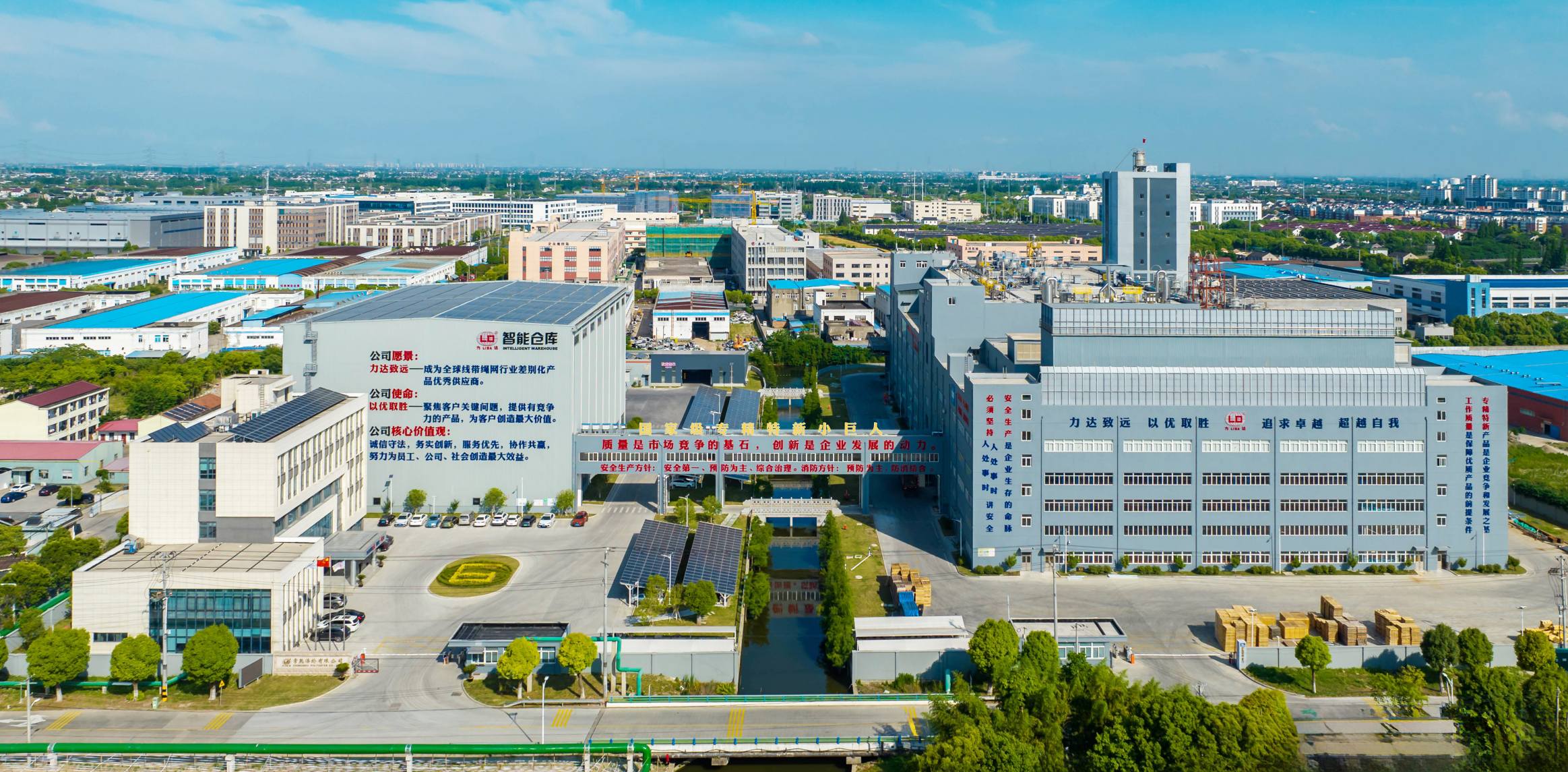
Most cooling claims in sportswear stop at marketing. PE cool feeling yarn suppliers are betting the real difference starts much earlier—inside the polymer. As performance apparel pushes toward measurable thermal comfort, Changshu Polyester is among the suppliers proving that a cooler garment isn't just a finish. It's a material decision.
The Thermal Behavior of PE Cool Feeling Yarn in High-Humidity Training
In a high-humidity training environment, most conventional yarns struggle to move heat and moisture away from the skin fast enough. PE cool feeling yarn behaves differently because polyethylene has a naturally low moisture regain and a high thermal conductivity relative to many other textile fibers. Instead of trapping sweat in the fabric, the yarn spreads it across a wider surface area and lets it evaporate more readily, which pulls heat out of the surrounding microclimate before it can build up against the body.
The cooling effect becomes more noticeable during repeated intervals or steady-state work in a humid gym. As the wearer’s skin temperature rises, the yarn transfers heat away from high-load zones such as the upper back and chest. Because the fiber does not swell or become heavy when wet, the garment keeps its airflow pathways open. That allows small temperature gradients between the fabric’s inner face and the outside air to stay active, even when the ambient humidity is high enough to suppress sweat evaporation in cotton or viscose blends.
What sets this material apart is the combination of fast drying and a persistently cool surface feel. Rather than producing a sudden chill or a clammy layer, PE cool feeling yarn maintains a moderate skin-to-fabric temperature difference over longer training sessions. For athletes training in poorly ventilated indoor spaces, that subtle but continuous heat exchange can reduce perceived exertion and help regulate core temperature without relying on aggressive airflow.
Supplier-Led R&D That Turns Polyethylene into a Wearable Cooling Layer
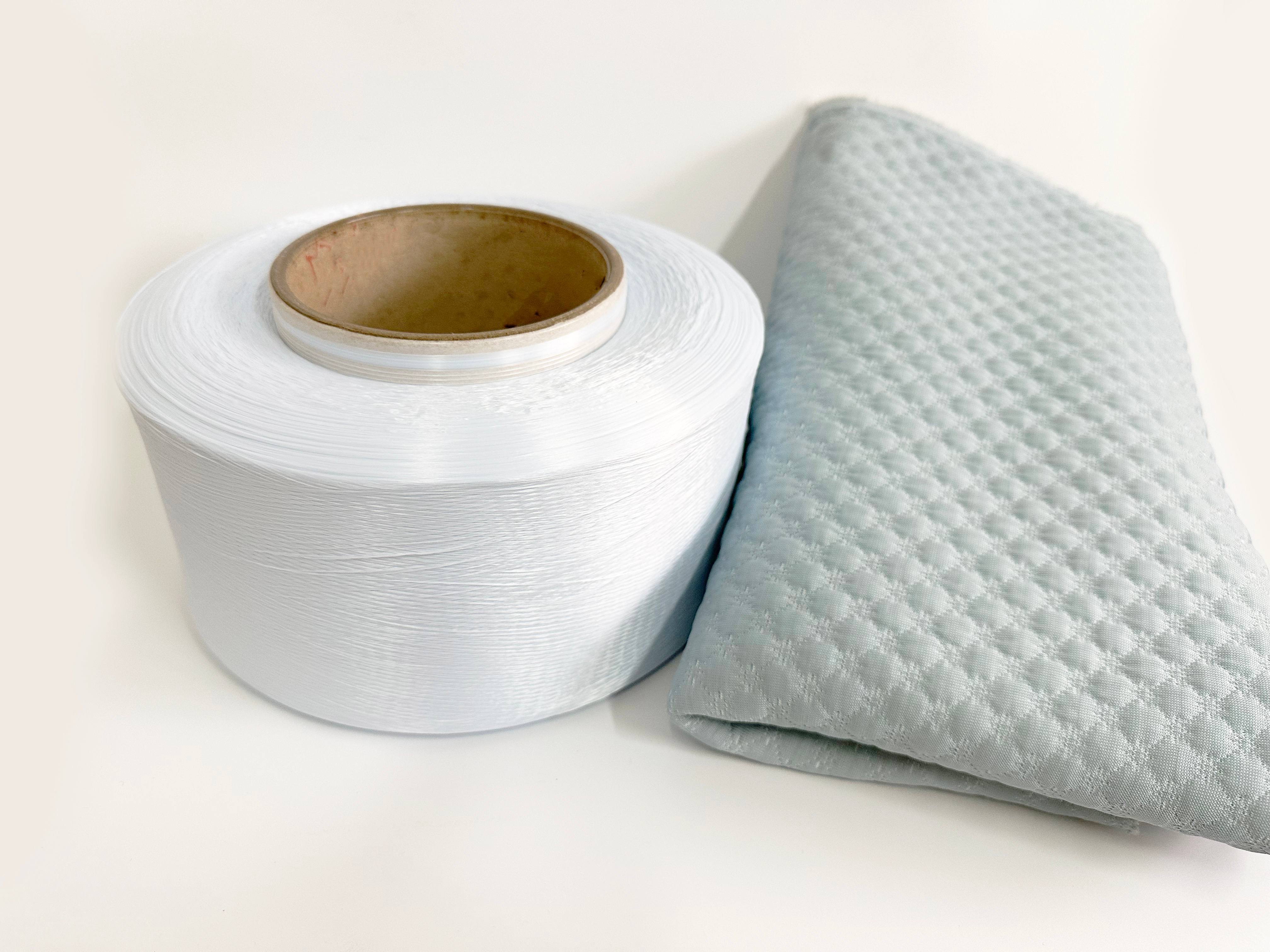
Polyethylene rarely gets mentioned alongside breathable performance fabrics, but that is exactly what makes this supplier-led effort interesting. Instead of waiting for a brand to request a new material, the supplier re-engineered standard PE resin at the extrusion stage, adjusting molecular weight distribution and draw ratios to create a thin, non-porous film that feels dry against the skin. The result is a layer that lets body heat pass through while blocking external warmth, which is the opposite of how heavy plastic sheet typically behaves.
The development work focused on turning a low-cost, widely available polymer into something people can actually wear for hours. By controlling crystallization during processing, the team produced a soft, quiet substrate that resists sticking and does not crinkle like packaging film. Early wear tests show the material can lower the perceived temperature next to the skin by several degrees, especially in still, humid conditions where conventional textiles tend to trap heat.
What stands out is the practical angle: brands do not need to build a new supply chain from scratch. Because the feedstock and converting lines already exist at scale, the cooling layer can move from lab samples to production runs without the cost and delay of spinning specialty yarns. The supplier keeps the formulation and process know-how in-house, which gives apparel makers a differentiated fabric without requiring them to become polymer experts overnight.
Why Dyeability and Hand Feel Decide Whether PE Yarn Makes It into Premium Apparel
A PE yarn can deliver impressive tensile strength for its weight, but strength never carries a fabric into premium apparel on its own. The real gatekeepers are dyeability and hand. Because the fiber has no reactive dye sites, color must be locked in during extrusion or left out entirely, which forces designers into a short, flat palette. Premium collections, by contrast, depend on seasonal color stories, tonal layering, and exact shade matching. A yarn that cannot be re-dyed after weaving closes off the kind of late-stage adjustments that high-end development teams make routinely.
Hand feel is just as decisive. Untreated PE yarn often has a slick, slightly waxy surface and a stiffness that reads as synthetic rather than refined. In premium apparel, drape, recovery, and the way fabric moves against skin determine whether a material feels intentional or cheap. If the yarn makes the cloth feel boardy or slippery in the wrong way, it tends to be pushed into linings, trims, or technical panels long before it reaches a fitting room.
The PE yarns that do appear in premium contexts are rarely unmodified. They are blended, textured, or treated to soften the face and expand the color range. That is the quiet compromise behind many material choices: dyeability and hand are not secondary details, they are the practical tests that separate an industrial yarn from something people will pay to wear.
Practical Ways Suppliers Blend PE Cooling Yarn with Recycled Polyester and Nylon
Blending PE cooling yarn with recycled polyester and nylon typically starts at the fiber stage rather than the finished fabric. Suppliers can co-extrude recycled PET or nylon chips with a small amount of polyethylene into a single filament, then adjust the spinning speed and drawing ratio so the PE forms thin, continuous micro-channels along the yarn surface. This keeps the cooling effect localized where the skin touches, while the recycled polyester or nylon provides the mechanical backbone. The exact PE ratio usually falls between 8% and 20% by weight, since going higher tends to make the yarn slippery on standard knitting machines and lowers burst strength in the final fabric.
A more common shortcut is core-sheath spinning, where the sheath is a blend of recycled polyester and PE, and the core is virgin or recycled nylon for dimensional stability. By pulling the sheath layer slightly faster than the core during extrusion, the surface develops irregular ridges and pores that increase air permeability. Some mills also inject a small amount of water-soluble polymer into the sheath, then wash it out in the dyeing process to create additional capillary gaps. This technique lets a single yarn move moisture away from the body and feel cool without relying on harsh chemical finishes.
For suppliers working with existing recycled yarn stocks, mechanical blending remains the most adaptable route. A textured recycled polyester yarn can be air-jet intermingled with a fine PE monofilament at intervals of five to ten centimeters, producing a slub-like structure that holds tiny air pockets. Nylon is often introduced as a third feed in the intermingling chamber to control elongation and reduce static buildup during weaving. The result is not a true homogeneous blend, but the alternating zones of PE, recycled polyester, and nylon give a dry, cool hand feel and keep fabric costs close to conventional recycled synthetics.
Performance Testing and Quality Checks That Separate Established Mills from New Entrants
Older mills tend to run performance trials on every incoming lot, not just spot checks. A load test might push a batch through a full production cycle while recording torque, temperature, and wear on the grinding heads. That kind of data accumulates over years, so the mill knows when a slight shift in particle distribution signals a problem before it reaches customers.
Quality checks at established operations are often quieter but more rigorous. They measure moisture content after milling, test for metal contamination with a magnet or sieve stack, and keep retention samples that can be pulled months later if a complaint appears. Newer entrants usually rely on a single pass/fail spec sheet and may not archive enough physical evidence to trace a defect back to its source.
The real difference shows up in borderline cases. A seasoned mill will document deviation, quarantine the batch, and decide whether to blend, reprocess, or reject it. A less experienced outfit might ship it because the numbers are close enough. Over time that gap becomes obvious in repeat orders, where consistency and failure rates tell more than any initial sample.
Applications Moving Beyond Athletic Wear into Workwear, Travel, and Recovery Clothing
Once confined to gym floors and running tracks, performance fabrics have quietly slipped into the rhythm of everyday life. The same moisture-wicking knits and four-way stretch blends that once served marathoners now line the pockets of commuter trousers and the panels of travel blazers. It is less a trend than a practical migration: a fabric engineered to manage sweat also handles the temperature swings of a crowded train, and a seam designed for deep squats proves just as forgiving during a twelve-hour flight. This shift did not arrive with fanfare. It arrived in the details—hidden zippered vents, odor-resistant linings, cuffs that hold their shape after a long boardroom session.
Workwear has been particularly receptive. Tailored shirts now borrow the breathability of trail-ready baselayers, while chinos incorporate the snap-back recovery of compression tights. The result is clothing that survives a bike commute and still looks deliberate under office lighting. Travel clothing follows a similar logic: quick-dry merino blends and packable insulation have moved from specialty outfitters into mainstream luggage, chosen not for extreme expeditions but for the modest chaos of delayed connections and hotel room sinks. Recovery wear, too, has expanded beyond post-marathon compression socks. Soft, graduated knits now appear in loungewear and sleep sets, offering gentle support without the clinical look of a medical garment.
What ties these categories together is a quiet recalibration of expectations. People no longer ask whether a fabric is technical or everyday—they ask whether it can move between both without drawing attention to itself. A blazer that stretches like a running top, a travel pant that dries overnight, a recovery hoodie that regulates temperature through a restless night: these are not hybrid novelties. They are simply the new baseline. The most telling sign is how unremarkable the technology has become. When a commuter reaches for a water-repellent knit shirt without thinking about the engineering inside it, the crossover is complete.
FAQ
It typically uses a polyethylene-based formulation or modified PE blend that moves heat away from the skin more quickly. Instead of relying only on a surface finish, the cooling touch is built into the fiber itself, so the fabric feels cooler on contact and manages moisture differently from ordinary synthetics.
They often collaborate on fiber denier, filament count, cross-section shape, and blending ratios with materials like spandex or cotton. Many also share lab data on Q-max, drying time, and UV resistance so brands can judge cooling performance before committing to full sampling.
Lightweight training tops, running tees, base layers, golf polos, and workout shorts benefit most. It also shows up in cooling arm sleeves, innerwear, and some team sport uniforms where athletes need quick heat dissipation and less cling during long sessions.
If the cooling property is intrinsic to the yarn rather than coated on top, it usually holds up well. Harsh detergents, high-heat drying, and fabric softeners can still degrade performance, so most suppliers suggest cold washing and low-heat drying or air drying.
Look for consistency in filament quality, reliable thermal effusivity or Q-max data, skin-contact safety documentation, and flexible minimum order quantities. It also helps to ask about their experience with circular knitting or seamless machines since the yarn can behave differently depending on the production method.
Yes, many suppliers now offer versions blended with recycled polyester or other lower-impact inputs. This allows brands to combine the cool-touch performance with sustainability targets without reworking the whole fabric structure.
Improvements in polymer modification and melt spinning have made PE-based yarns softer, more dyeable, and easier to run on standard knitting equipment. At the same time, rising demand for heat-managing clothing has pushed brands to look beyond traditional finishes and engineered knits.
A large share comes from specialized fiber producers in East Asia, especially Taiwan, China, and South Korea, where yarn, knitting, and garment supply chains are tightly connected. Some European and North American suppliers also source or toll-manufacture these yarns to serve brands that want shorter lead times or regional production.
Conclusion
Polyethylene-based cooling yarns are shifting how performance apparel is designed, mainly because suppliers have stopped treating PE as a commodity plastic and started engineering it as a textile. In high-humidity training the yarn stays dry and pulls heat away from the skin rather than depending on evaporation, which gives it a steadier cooling feel when sweat is already saturating the air. That effect comes from supplier-led R&D work on melt flow, filament shape, and additive selection, turning raw polyethylene into a layer that no longer feels like packaging film. Dyeability and hand feel still decide whether the material reaches premium apparel, because PE resists conventional dye uptake and can feel stiff without early polymer modification. Many mills therefore blend it with recycled polyester or nylon, a practical route that improves color saturation, softens the drape, and supports more stable production without burying polyethylene's cooling properties.
Testing is where established suppliers separate themselves from new entrants. Strong mills measure qmax and thermal conductivity after repeated laundry cycles, track color fastness under sweat and light, and run pilling or tensile checks on finished fabric instead of relying on yarn samples alone. They also control batch-to-batch variation as production scales, which is often the first point where less experienced factories struggle. That consistency helps explain why PE cool-touch yarn is moving beyond athletic wear into workwear, travel shirts, and recovery clothing. In those categories, wearers want dry heat management without a shiny technical look, and blends with recycled polyester or nylon make the garments easier to cut, sew, and wear over long periods. As dye ranges widen and hand feel improves, polyethylene cooling yarn is becoming a practical layer for everyday heat stress rather than a niche performance gimmick.
Contact Us
Contact Person: CONNIE
Email: [email protected]
Tel/WhatsApp: 86-0512-53671634
Website: https://www.lida-yarn.com/