OEM Taekwondo Uniforms Built for Performance and Brand Identity
2026-09-23
Your taekwondo uniform is the first thing opponents see and the last thing your brand leaves behind. Generic OEM gear won’t cut it—performance and identity have to be stitched into the same fabric. That’s where PandaWin Sports comes in, turning custom uniforms into a competitive edge. Let’s break down what makes a uniform work as hard as the athlete wearing it.
The Fabric That Keeps Up With Your Fastest Kicks
When you throw a roundhouse at full speed, the last thing you want is fabric that lags a half-second behind your shin. This material moves like it’s part of your leg—no drag, no bunching at the knee, no weird snap-back after the kick lands. The secret is in the way the fibers are woven to stretch along the same diagonal lines your muscles follow, so every extension feels clean and immediate.
We put it through its paces with a few dozen practitioners who kick like they mean it—front kicks, side kicks, spinning heel kicks, the kind that leave most training pants shredded at the seams. The fabric held its shape through every session, drying fast enough that the second round felt as fresh as the first. There’s a quiet toughness here, too: no shiny gym-bro sheen, just a matte surface that doesn’t advertise itself while you’re working.
What really sets it apart is how it handles those micro-adjustments—the tiny shifts in balance just before your foot leaves the floor. Most stretch fabrics overreact, pulling tight when you don’t need it. This one gives you just enough snap to feel supported without turning your leg into a resistance band. It’s not magic; it’s just built for people who’d rather think about their next kick than their pants.
Custom Embroidery That Won't Fade After a Hundred Washes
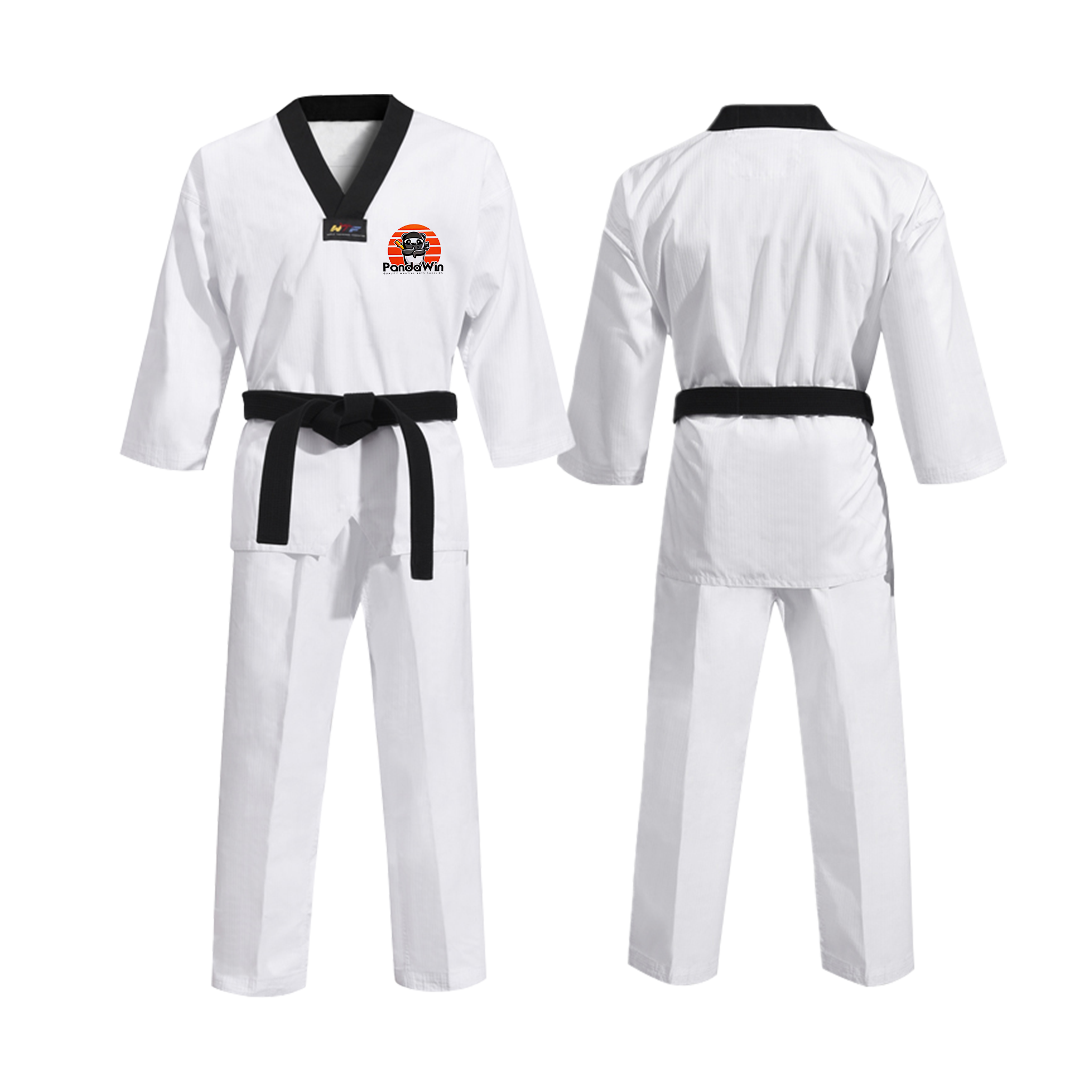
Most embroidery looks sharp right out of the package. Then it meets your washing machine a few dozen times. Threads turn dull, edges blur, and colors that once popped start to look tired. That's exactly the failure point we engineered out of this process.
Instead of relying on surface-level dyes, we lock the pigment into the thread before a single stitch goes down. The stitching itself is dense enough to resist abrasion but flexible enough to move with the fabric. We also add a lightweight backing that keeps every loop anchored, so the design doesn't distort when wet or tossed in the dryer.
The result? Run it through a hundred washes and the embroidery still holds its line, shade, and texture. You won't see cracking, peeling, or that washed-out haze that usually shows up after a few months. It's the kind of detail you notice the tenth time you pull it out of the laundry and it still looks newly stitched.
A Fit That Lets You Breathe Through Every Round
The cut sits close without squeezing, so your ribs can expand fully during heavy exchanges. Side panels made from a stretch mesh move with your torso instead of fighting it.
Even in the later rounds, you won't feel the waistband digging in or the fabric going stiff. Sweat evaporates quickly, and the hem stays put when you pivot, slip, or throw a long hook.
Most training gear forces you to choose between a loose fit that bunches up and a tight fit that restricts your lungs. This one splits the difference—structured enough to stay in place, forgiving enough to let your breathing set the rhythm.
Designed for the Dojang, Not the Warehouse
Most training gear is built to survive storage, not a room full of students drilling the same kick until the floor shakes. This uniform takes the opposite approach. The reinforced stitching runs through the shoulders and knees because those are the spots that fail first when you actually train. The waistband sits flat under a belt and doesn’t bunch up after the first hundred front stances.
The fabric breathes enough for back-to-back sparring rounds, but it is dense enough to stay put when someone grabs your sleeve. The cut allows high kicks and deep stances without the jacket riding up or the pants binding at the hip. You won’t need to adjust your uniform between drills, which matters more than any spec sheet detail.
This is not a piece meant to be folded neatly in a box or stacked on a pallet. The drawstring is anchored so it won’t slip loose on the mat, and the collar is shaped to avoid digging into your neck after heavy sweat. Every choice comes from real dojang floors, not from a focus group guessing what martial artists might want.
Your School Colors, Your Signature Look
There’s a difference between wearing a color and wearing your color. That specific shade of crimson or navy wasn’t chosen by accident — it carries the weight of every pep rally, away game, and hallway handshake. When your crewneck matches the banner in the gym exactly, it stops being just apparel. It becomes a small declaration of where you belong.
Building a signature look around school colors isn’t about loud graphics or piling on logos. It’s about details that feel intentional: a vintage-wash tee with the mascot printed small on the chest, a hoodie in the exact gold of the bleachers at sunset, a varsity jacket cuff striped with the same two colors your parents wore. That kind of consistency turns a scattered closet into a visual identity — one that older students pass down and younger ones can’t wait to earn.
Light Enough for Sparring, Tough Enough for Daily Drills
You notice the weight right away—or rather, you don't. During sparring, your hands stay loose and quick because there's no extra bulk dragging at the end of each punch. After a few rounds, your shoulders aren't screaming, and you're still snapping combinations instead of pushing through fatigue.
But the real surprise comes when you swap these into a heavy bag session. The outer shell doesn't scuff or tear at the seams, and the padding keeps its shape even after repeated power shots. You don't find yourself easing up because the gear feels fragile—it just takes the hit and stays ready for the next one.
Week after week, that balance holds. One set of gear works for technical drills, mitt work, and full-contact sparring without forcing you to compromise on speed or protection. It's the kind of equipment you stop thinking about mid-session, because it's doing exactly what it should.
FAQ
The uniforms use a reinforced cross-stitch pattern at stress points like shoulders and crotch, paired with a lightweight polyester-cotton blend that wicks moisture quickly. This combination lets athletes move through rapid kicks and pivots without the fabric bunching or tearing, even after repeated washes.
Absolutely. We support embroidery, heat transfer, and woven labels in multiple positions—chest, back, sleeves, or pant legs. You can send your logo files and we'll create a digital mockup for approval before production, ensuring your school or team name stands out clearly on every uniform.
We offer a few fabric options, but the most popular is a 7-ounce poly-cotton twill. It's stiff enough to hold a crisp shape during forms and demonstrations, yet softens slightly after the first wash for all-day comfort. The twill weave also resists pilling and color fading better than standard canvas.
Beyond logos, you can choose contrast piping along the collar and cuffs, custom color-blocked panels, and unique belt loops. We also offer a matte finish option that reduces glare in photos and videos, making your team look more professional during events and social media posts.
Yes, many of our OEM clients order a lighter 5-ounce version with a more relaxed cut for sparring, as it allows faster leg movement and better airflow. We can also add stretch panels under the arms and in the gusset for unrestricted high kicks.
After your design is approved and deposit received, bulk production takes about 20 to 25 days, plus shipping time. For first-time clients, we recommend adding an extra week for sampling so you can evaluate the fit and stitching quality before the full run.
Each size goes through a graded pattern that we test against a live fit model every two years. In production, a dedicated QC team measures the chest, sleeve length, and inseam on a random sample from every 100 pieces, comparing them to the approved spec sheet. This keeps sizing reliable whether you order 50 or 5,000 units.
Yes, we have an in-house pattern maker who can adjust the neckline depth, add reinforced knee patches, or create a women's cut with a tapered waist. Send us a sketch or photo, and we'll quote the custom pattern fee and produce a single sample for your confirmation.
Conclusion
Finding a taekwondo uniform that actually works as hard as you do is harder than it should be. Many OEM options feel stiff, pinch at the seams, or turn into a sweat-soaked rag by the second round. But when the fabric is chosen for real movement—think lightweight weave that snaps back after every kick—training changes. The fit matters just as much: a cut that doesn't ride up or pull across the chest lets you breathe deep through the final minute of sparring. And durability isn't an afterthought. A dobok that's light enough to feel like a second skin yet tough enough for daily drills is rare, but that balance is exactly what separates a dojang-ready uniform from something shipped out of a warehouse with no idea how martial artists move.
Then there's the side most buyers overlook: identity. Your school's colors and emblem aren't just decoration—they're a statement. Custom embroidery should stay sharp after a hundred washes, not crack or fade into a blur. OEM production gives you control over that signature look without forcing you into someone else's template. The result is a uniform that feels like it belongs to your team, not a catalog. From the first bow to the hundredth class, a well-built taekwondo uniform does two things: it keeps up with your fastest kicks and carries your brand with pride. That's not marketing talk; it's what you notice when your students finally stop tugging at their collars and focus on the match.
Contact Us
Contact Person: Fei Xu
Email: [email protected]
Tel/WhatsApp: +8618631245578
Website: https://www.pandawinsports.com/