

OEM Nickel Tabs for Custom Battery Packs and What Designers Need to Know
2026-11-17
Most designers treat nickel tabs as an afterthought—until a custom battery pack runs hot, sags under load, or refuses to weld cleanly. The right OEM nickel tabs change that equation. Material purity, grain structure, width, thickness, and surface finish all shape how current flows, how cells connect, and how long the pack survives real-world use. This post breaks down what designers actually need to evaluate before specifying tabs for a build. From sizing and form factors to sourcing partners like BOSI, here’s how to avoid the failures that show up only after production.
Why Nickel Tabs Keep Showing Up in Custom Battery Packs
Nickel earns its place in custom packs mostly because it welds cleanly and consistently. Spot welding copper directly to cell terminals is trickier than it looks—copper pulls heat away fast and often demands more aggressive settings, which raises the chance of scorching a cell or leaving a weak join. Nickel has just enough electrical resistance to heat locally and form a solid bond without roasting the internals, so builders can repeat the same weld across dozens of cells without drifting into guesswork.
The mechanical side matters just as much. Nickel stays ductile after repeated temperature swings and doesn't turn brittle the way some cheaper nickel-plated steel strips do. In a pack that gets jostled, charged, discharged, and occasionally rebuilt, that bit of give means tabs are less likely to crack near the weld and more likely to survive a pack that gets opened up for repairs or upgrades.
Corrosion resistance also keeps nickel in the mix. Battery terminals and nearby connections can sit in mildly humid or slightly acidic conditions, especially in packs used outdoors or in tools. Nickel forms a stable surface layer that resists oxidation without adding much contact resistance. It's not the flashiest material, but for small-batch pack building, it removes a handful of long-term failure points that are hard to spot until a pack starts acting tired.
Material Tradeoffs That Don't Always Show Up on the Datasheet
Tensile modulus and a UL94 rating can make two compounds look interchangeable at a glance, but the real differences usually surface on the shop floor. One grade flows beautifully in a thin-wall mold yet warps after a humid weekend; another holds dimensions but chews through tooling at twice the expected rate. Those behaviors rarely appear in standardized test tables because they depend on gate location, cooling time, regrind percentage, and the habits of a particular molding line.
Field history often reveals more than any single specification sheet. Ask how the material behaves after twelve months of thermal cycling, or what happens to snap-fit retention once a plasticizer starts migrating inside a hot enclosure. These are not exotic concerns. They are ordinary failure patterns that emerge only after a product leaves reliability testing and enters real homes, vehicles, or outdoor installations.
Cost comparisons can be just as deceptive when they stop at price per kilogram. A cheaper resin that requires pre-drying, slower cycles, higher scrap, or more frequent mold maintenance can quietly erase the apparent savings. The smarter call usually comes from looking at total part cost, including reject rates, energy input, and the engineering time spent chasing intermittent defects that a datasheet was never designed to explain.
The Dimensions That Decide How Hot a Tab Gets
A tab rarely heats up because of one single culprit. More often, it is the total weight of everything pulled into the page: heavy scripts that fire on load, ad frameworks running in the background, tracking snippets that phone home at regular intervals, and large media files that keep decoding long after they are visible. When those pieces stack up, the browser has to maintain multiple execution contexts at once, and that sustained processing drives CPU usage upward far more than the page's HTML alone would suggest.
Rendering style also has a direct hand in how much energy a tab burns. Pages built on continuous animations, oversized hero images, inline video loops, and infinite scroll feeds force the compositor and painting engine to do repeated work with every frame. Even small visual touches, when they trigger layout recalculations across a long page, can keep a tab running warmer than a simpler static layout would.
Then there is the hidden layer of behavior that keeps working after you click away. Timers, WebSocket listeners, service workers, and autoplay carousels often remain active in the background unless the page is careful about throttling. A tab that is minimized or behind another window can still be consuming cycles if those routines are not paused, which is why closing a few heavy tabs often cools a machine down faster than closing a dozen lightweight ones.
Welding Setups That Make or Break Long-Term Reliability
Most weld failures that show up years later are not caused by a single bad pass. They start with a setup that seems close enough. A slight mismatch in travel speed, a root gap that was never measured, or a contact tip that should have been replaced two jobs ago quietly changes the solidification pattern and leaves a flaw that goes unnoticed until load cycles find it.
Preheat and interpass temperature are often treated as paperwork, but they determine how hydrogen moves out of the joint and how the heat-affected zone hardens. On thick sections or high-restraint joints, skipping a proper preheat because the shop floor is warm can lock in residual stress that shortens service life. Gas coverage also matters more than the wire feed setting. A barely adequate flow rate may pass visual inspection while allowing oxidation at the weld edges, which becomes a starting point for cracking under vibration or thermal cycling.
The setups that hold up over time share a common trait: they are built around the actual joint restraint, material condition, and service environment rather than a generic procedure. Small, deliberate choices like cleaning the base metal back to bright steel, confirming the shielding gas blend for the specific transfer mode, and using run-off tabs on critical seams tend to separate welds that survive from those that merely pass a first-day check.
Common Design Oversights That Surface After Assembly
Once the first full unit goes together, the gaps between CAD confidence and physical reality tend to show up in predictable places. Fasteners that looked perfectly serviceable in a section view often turn out to be unreachable without a ball-end driver, a mirror, or a partial teardown. Minor dimensional drift across several stacked parts compounds into a panel that closes under tension or a bracket that needs a washer stack to stop rattling.
Other oversights only appear when the assembled item has to live in its actual environment. Cables routed neatly on the bench get pinched when a cover is fitted, or they rub against a sharp edge after a few thermal cycles. Drain holes specified without thinking about how the unit sits in use end up in the wrong corner, and labels get hidden behind mating components because their placement was checked only on an isolated subassembly.
These late discoveries are rarely caused by a single bad decision. They come from reviewing parts and subassemblies in isolation instead of walking through the final stack-up, service routine, and real operating posture together. Treating the first assembly as a design review rather than a production milestone catches most of them before they become expensive revisions.
What to Check Before Locking In an OEM Nickel Tab Supplier
Start with the strip itself. Ask for the exact alloy and temper, not just "nickel" — plenty of shops will quote pure nickel when the drawing actually calls for nickel-plated steel or a lower-grade alloy. Request mill certificates for each lot and compare the stated composition against what your battery tab welding process can tolerate. If they hesitate to share traceability paperwork, treat that as a red flag.
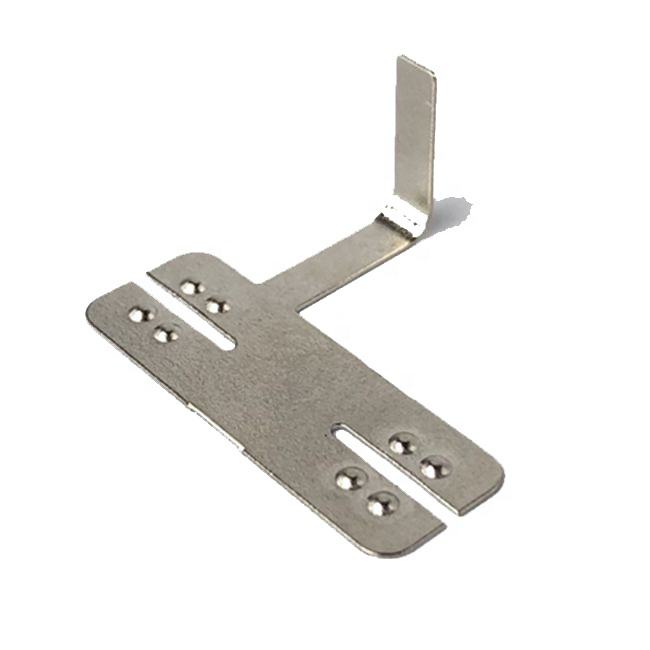
Then move to dimensional control. Tabs are thin and narrow, and a drift of a few microns in thickness or a burr along the slit edge will show up downstream as inconsistent weld energy, cracked joints, or feeding problems on automated lines. Ask how they measure, how often they inspect, and whether they can hold the same tolerance across a full production run — not just on the initial samples.
Finally, look at how the supplier handles surface condition and packaging. Oxidation, residual rolling oil, or fingerprint contamination can quietly ruin weld strength. A supplier that understands battery applications will usually specify cleaning processes, use non-shedding interleaving materials, and pack in a way that keeps the tabs flat and clean until they reach your floor. If they cannot explain those steps clearly, keep looking.
FAQ
Nickel balances conductivity, weldability, and corrosion resistance. Copper carries more current but is harder to spot-weld reliably, while steel is cheaper but adds resistance and can rust at the cell connection.
Pure nickel is typically the safer choice for higher current and long service life. Nickel-plated steel can work for low-current packs where cost is the main constraint, but the plating thickness and base steel quality need to be controlled or you may see hot spots and early corrosion.
Most custom packs use 0.15 to 0.3 mm strip. Thicker material lowers resistance but demands more weld energy and can be harder to shape. For high current, widening the tab or stacking two thinner layers often gives better weld reliability than one very thick strip.
Full custom profiles are common. Suppliers can punch, slit, bend, and plate tabs from a drawing. That said, using a near-standard width or simple geometry can shorten lead time and reduce cost, so it is worth checking what tooling already exists.
Burrs and rough edges can concentrate current, cause weak welds, or even damage separator material during assembly. A deburred or rounded edge is not just cosmetic; it improves repeatability and reduces scrap in production.
Yes, but the process setup differs. Resistance welding likes clean, flat surfaces and consistent thickness. Laser welding can be faster but nickel's reflectivity means you may need surface treatment or pulse shaping to get a stable keyhole and avoid porosity.
Cross-sectional area sets the current-carrying capacity and therefore local heating. Slots and relief cuts let the pack flex without fatiguing the weld joints. In a short circuit, the tab should either carry the fault current long enough for protection to act or act as a predictable fuse if that is part of the design.
Include the alloy grade or purity, thickness tolerance, width or drawing, temper, edge condition, surface finish, packaging format, estimated annual volume, and any required certifications. Incomplete specs usually lead to a quote that is either too conservative or unusable.
Conclusion
Nickel tabs keep showing up in custom battery packs because they weld cleanly, resist corrosion, and help keep internal resistance predictable. But treating them as simple stamped strips often hides the material tradeoffs that never appear on a standard datasheet. Plating thickness, grain structure, and temper can shift how a tab behaves under repeated pulse loads, while small changes in width, thickness, and cross-section decide whether a high-current path runs cool or becomes a localized hot spot. Those choices are locked in during assembly, so welding setups matter as much as cell selection. Uneven pressure, undersized weld nuggets, or slight electrode misalignment can pass an initial continuity test and still weaken after hundreds of cycles. Once packs are built, the hidden flaws tend to surface as cracks near rigid joints, interference with busbars, or fatigue from vibration and thermal expansion. Checking bend radius, tab orientation, and strain relief early avoids rework that costs far more than the nickel itself.
Before committing to an OEM nickel tab supplier, designers should look beyond basic dimensional tolerances and material certificates. Batch-to-batch plating consistency, burr control, edge finish, and a supplier's willingness to provide weld test coupons usually reveal more than a clean quote. A dependable source is one that understands how their part behaves in the full current path, not just whether it meets a drawing. When the tab is treated as part of the electrical and mechanical system rather than a commodity connector, packs tend to stay cooler, weld more consistently, and last through the product's actual service life.
Contact Us
Contact Person: Kristy Wu
Email: [email protected]
Tel/WhatsApp: 8613826954049
Website: https://www.dgbosi.com/