

OEM Car Ozone Generator: A Complete Guide to Cleaner Vehicle Air
2026-10-10
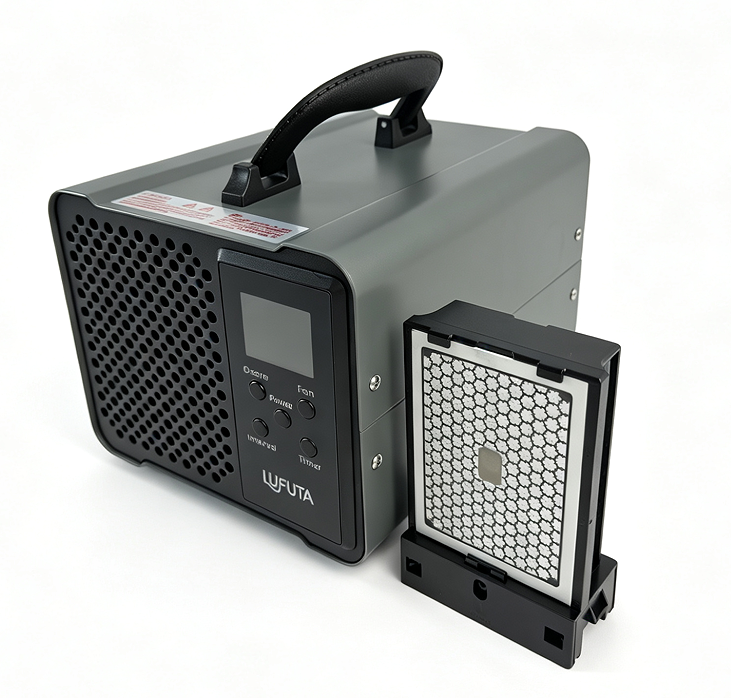
You know that stale odor that clings to your car after a rainy week or a forgotten gym bag? It’s not just unpleasant—it’s a sign your vehicle’s air could use a serious reset. That’s where OEM car ozone generators come in, and this guide walks you through everything from how they work to choosing the right build for your brand. At LUFUTATECH, we’ve seen firsthand how the right ozone tech transforms cabins from musty to fresh—ready to dive in?
Why More Automakers Are Turning to Ozone for Cabin Air
For years, carmakers treated cabin odors as a finishing problem, spraying fragrance compounds that tended to fade before the first service interval. Ozone offers a different mechanism. The gas, an unstable form of oxygen, collides with the volatile organic compounds released by plastics, adhesives, and textile coatings and breaks them into simpler, largely inert molecules. Because the reaction happens throughout the sealed cabin, it reaches areas that wipe-downs and sprays miss: inside air ducts, behind the dashboard, and deep in seat foam. The result is not a masked smell but a lower overall emission load.
A second reason is biological. Air conditioning evaporators stay damp after the compressor shuts off, and that moisture feeds mold and bacteria that produce the musty odor many drivers notice on startup. Ozone passes through the same ductwork and oxidizes the cell walls of those microbes. Once the treatment ends, the ozone reverts to ordinary oxygen, so there is no chemical film left on controls, glass, or upholstery. For assembly plants, this means a cabin can be treated without adding a rinse or drying step, keeping the line moving.
Tighter cabin air quality rules are also pushing the change. Several major markets now cap formaldehyde and other interior emissions at delivery, and ozone provides a repeatable, recordable way to bring a vehicle under those thresholds before it leaves the factory. Instead of reformulating every adhesive and plastic upfront, automakers can run a post-assembly oxidation cycle and verify the result with a handheld sensor. That combination of speed, measurable output, and broad coverage is making ozone a default step in more plants.
The Chemistry Behind Odor Elimination Without Masking
Most sprays and fresheners simply layer a stronger scent over the offending one. True elimination works differently. It targets the volatile compounds responsible for the smell and changes their molecular structure so they can no longer bind to olfactory receptors in your nose.
One common route is oxidation. Reactive molecules such as chlorine dioxide or activated oxygen steal electrons from odor-causing sulfides and amines, breaking them into odorless salts or carbon dioxide and water. Another is hydrolysis: enzymes like proteases and lipases cut the proteins and fats that harbor odors into smaller, non-volatile fragments. The chemistry is fast but selective—unlike heat or perfume, it doesn't just scatter the problem; it dismantles it.
Adsorption plays a supporting role. Porous materials like activated carbon or zeolites trap odorants inside microscopic channels before they reach the air. Because the pores are shaped to hold specific molecular sizes, this method can remove stubborn compounds without releasing any scent of its own. The result is air that smells simply neutral, not covered.
Calculating the Right Ozone Output for Your Vehicle
Getting the ozone output right isn't about guessing a number that sounds powerful. It starts with treating your vehicle's interior volume as the baseline. Measure the cabin space in cubic feet or meters, then think about how saturated the air needs to become. Ozone works by oxidation, so a slightly higher concentration can cut treatment time, but too much leaves a lingering harsh smell and can stress rubber or plastic trims. A practical rule of thumb: for every 100 cubic feet of cabin air, aim for roughly 500 to 800 milligrams per hour of ozone output if you want a moderate 30-minute shock treatment. For a heavy smoker's car or a persistent mildew issue, you might push that to 1,000 milligrams per hour, but only if you're prepared to air the vehicle out thoroughly afterward.
Another angle is to match the output to the job's intensity rather than the car's size alone. A compact sedan with light odors from groceries or wet floor mats can often be handled with a portable unit rated at 3,000 to 5,000 mg/h running for just 15 to 20 minutes. On the flip side, a full-size SUV that's been locked up with damp carpets and pet hair may need 10,000 mg/h or more, but you'd break that into shorter cycles with ventilation breaks in between. The key is to watch how the material reacts: if you notice a sharp, metallic tang in the air that doesn't fade after rolling down the windows, you've likely overshot the output. Lower the setting and extend the time—ozone is cumulative, not instant.
Finally, factor in your machine's actual delivery, not just the label. Many generators rate their maximum output under ideal lab conditions, but real-world humidity, temperature, and airflow inside a closed car can reduce that by 20 to 30 percent. Use a simple ozone test strip or an inexpensive meter placed on the dashboard during a trial run. Start at 60 percent of the manufacturer's claimed output, check the reading after ten minutes, and adjust upward until you hit the sweet spot between 1 and 3 parts per million for typical deodorizing. That hands-on calibration beats any one-size-fits-all chart, and it prevents the headache of over-treating one section while the trunk still smells like yesterday's gym bag.
Timing and Ventilation: Keeping Ozone Levels in Check
Timing matters more than most people assume. Running an ozone generator while you're sleeping or working in the same space defeats the purpose — and can irritate your lungs. Best approach: set the unit on a timer and let it run in an empty room for 30 to 90 minutes, depending on the square footage and the ozone output. Early evening works well because you can air the room out before bedtime.
Ventilation is the other half of the equation. Once the machine shuts off, open windows and doors on opposite sides of the room to create a cross breeze. A box fan placed near a window can pull fresh air in and push stale air out much faster than waiting for natural diffusion. In humid conditions, allow extra time — ozone breaks down more slowly when the air is heavy.
A good rule of thumb is to wait at least two to three hours after the generator stops before re-entering the room, and longer if you can still smell that sharp, chlorine-like odor. If you need the room sooner, run an exhaust fan or set up a portable air circulator for 20 minutes while you stay outside. Small adjustments to timing and airflow make the difference between a safe reset and an unnecessary respiratory risk.
Hidden Placement Options for a Factory Look
Achieving a factory look often means hiding aftermarket components so well that even a trained eye might miss them. The key is to use existing voids and trim panels that can be removed without visible modification. Many vehicles have unused space behind the dashboard, under the center console, or inside the spare tire well that can house amplifiers, signal processors, or even a compact subwoofer without sacrificing cabin space.
One clever approach is to mount small devices inside the glove box or armrest storage, running wires through factory grommets to keep everything tidy. For radar detectors or dash cameras, consider tucking the main unit behind the rearview mirror and routing power to the fuse box using a hardwire kit, eliminating dangling cords. Some installers have even hidden control modules inside the overhead console or behind the kick panels, where they are completely out of sight yet still accessible for adjustments.
Another often-overlooked spot is the area behind the front bumper cover or inside the fender liners, which works well for external sensors or antennas. Just be sure to use corrosion-resistant mounting brackets and leave slack in the wiring for future maintenance. By combining these hidden placement options with factory-matched connectors and loom tape, you can achieve an installation that blends seamlessly with the original vehicle design.
What Most Guides Get Wrong About Ozone Safety
Plenty of guides present ozone as if it were a stronger cousin of the air freshener—set it, leave for an hour, come back to a clean-smelling space. That framing misses the core hazard. Ozone is a reactive gas that irritates lung tissue at concentrations far below what you can smell. A room treated with an ozone generator isn’t simply “deodorized”; it’s temporarily filled with a substance that can trigger coughing, chest tightness, and reduced lung function. The correct approach is to treat the space as off-limits until ozone levels have decayed, not until the odor fades.
Another common error is treating ozone decay as a fixed timer. Most guides say “wait two hours” as if every room behaves the same. In reality, humidity, temperature, and the materials in the room change how quickly ozone breaks down. Dry air and cool surfaces can keep ozone lingering much longer. Worse, ozone doesn’t just vanish; it reacts with carpets, rubber, and certain paints, producing secondary irritants like aldehydes and ultrafine particles. Those byproducts can remain long after the ozone itself is gone, so ventilation and a longer re-entry delay are often necessary.
What also gets lost is the difference between surface disinfection and air cleaning. Ozone at high concentrations can sanitize surfaces, but running a generator while people or pets are present to “purify the air” is a misuse. Guides that blur this line invite dangerous habits, like using a low-level ozone plate in a bedroom all night. If the goal is safer breathing, filtration and source removal outperform ozone. If the goal is disinfection, the protocol needs unoccupied space, controlled humidity, and active off-gassing afterward—not a one-size-fits-all wait time.
FAQ
Instead of masking smells with perfume, it releases ozone that oxidizes odor-causing molecules at their source. This breaks down bacteria, mold spores, and volatile organic compounds trapped in upholstery and air vents, leaving the cabin genuinely neutral rather than temporarily scented.
Yes, as long as you follow the golden rule: treat the empty car, not the occupied one. Ozone is a lung irritant, so you should run the unit with doors and windows closed, then air out the vehicle thoroughly for 20-30 minutes before getting back in. No residual ozone should remain if the process is done correctly.
For heavy smoke or pet odors, a single 30-45 minute treatment often does the job, but deeply embedded tar residue may need two or three sessions spaced a day apart. Avoid running it for hours on end; shorter repeated exposures are more effective and gentler on interior materials.
Most OEM-style units are designed to be plug-and-play, connecting to the 12V power socket or a simple fuse tap. If your vehicle already has a dedicated mounting location or wiring harness, it's a straightforward DIY job. You only need a professional if you're integrating it into the climate control system or want automatic activation with the ignition.
Focus on three things: output rating measured in mg/h, which should match your cabin volume; the connector type and mounting footprint for a true OEM fit; and whether the unit has a built-in timer or auto-shutoff to prevent overexposure. Avoid generic devices that claim to fit all cars but lack the proper brackets or airflow routing.
Repeated excessive exposure can dry out leather and make some plastics brittle, but occasional correct use won't harm modern automotive materials. Electronics are generally unaffected by short-term ozone at typical cabin concentrations. To be safe, condition leather surfaces after a strong treatment and keep sessions under one hour.
For most drivers, a single 20-30 minute session every one to two months is enough. If you regularly carry pets, eat in the car, or deal with high humidity, you might go to once every two weeks. The goal is preventing odor buildup, not chasing perfection after it's already settled into the fibers.
Conclusion
Modern vehicles trap more than just heat; they hold onto odors from spills, pets, and everyday use that conventional cleaners simply mask. That's why a growing number of automakers are integrating ozone generators directly into cabin air systems. Unlike air fresheners, ozone works by oxidizing odor molecules at the source, breaking them down into harmless compounds instead of covering them up. Getting the dosage right matters, though. A unit sized for a compact sedan won't be right for a full-size SUV, and overdoing it can leave behind a sharp, metallic smell while underdosing fails to neutralize stubborn smells. The sweet spot typically falls between 0.5 and 1.0 grams per hour per cubic meter of cabin air, but you'll need to factor in upholstery and headliner material, which can absorb ozone and reduce its effectiveness.
Placement and timing are just as important as output. Many OEM-style installations tuck the generator behind the glovebox or under the seat, keeping the factory look intact while allowing ozone to circulate through existing vents. Run cycles should stay short—often 15 to 30 minutes—followed by thorough ventilation before anyone enters the vehicle. A common mistake is assuming ozone is harmless because it is just oxygen. In reality, high concentrations irritate the lungs and can damage rubber seals or interior plastics if used too often. Safety guides often gloss over this, but the real rule is simple: treat ozone as a tool, not an air freshener. Used correctly, an OEM car ozone generator delivers clean, odor-free air without a trace of chemical perfume.
Contact Us
Contact Person: Paul Luo
Email: [email protected]
Tel/WhatsApp: 0086-19966314501
Website: https://www.lufutatech.com