

NS3304 Seamless Pipe Company Delivers High-Strength Alloy Tubing for Critical Applications
2026-11-16
A single leak in a high-pressure chemical line can cost millions—and worse. That's why NS3304 seamless pipe is no longer just a spec on a drawing; it's a lifeline for critical applications where standard alloys fail. JILAIDA knows this better than most, and their recent delivery of high-strength alloy tubing proves it. Here's what sets their approach apart.
How NS3304 Seamless Wall Stands Up to Acid, Heat, and Pressure Cycling
NS3304无缝壁在酸性介质中的表现并非依赖单一防护层,而是源于镍铬钼组合在表面快速形成的多层钝化膜。这层膜对氯离子引起的点蚀和缝隙腐蚀有很强的抑制作用,即使在沸腾的混合酸里浸泡数百小时,壁厚损失也保持在极低水平。实际使用中,焊缝往往是腐蚀的起点,而NS3304的无缝结构直接消除了这条薄弱路径,让整个接触面以均匀的速率缓慢减薄,而不是局部穿孔。
高温下,NS3304的奥氏体基体保持稳定,不会像普通不锈钢那样在敏化温度区间析出大量碳化物导致晶间腐蚀。它的抗拉强度在600°C以上仍能维持较高比例,蠕变速率低,这意味着设备在反复升降温过程中不容易发生永久变形。同时,表面生成的氧化层致密且附着性好,减缓了进一步氧化,这对于需要长期暴露在热酸性气体中的部件尤其关键。
压力循环带来的疲劳损伤通常是管壁失效的隐形推手。NS3304无缝管壁没有纵向或螺旋焊缝的应力集中点,在内压波动时应力分布更均匀。加上材料本身具有较好的延展性和应变硬化能力,可以吸收微小的塑性变形而不萌生裂纹。即使在酸性与高温叠加的苛刻条件下,它的疲劳寿命仍明显优于焊接管,延长了检修间隔。
Inside the Seamless Forming Process That Keeps Wall Thickness Even
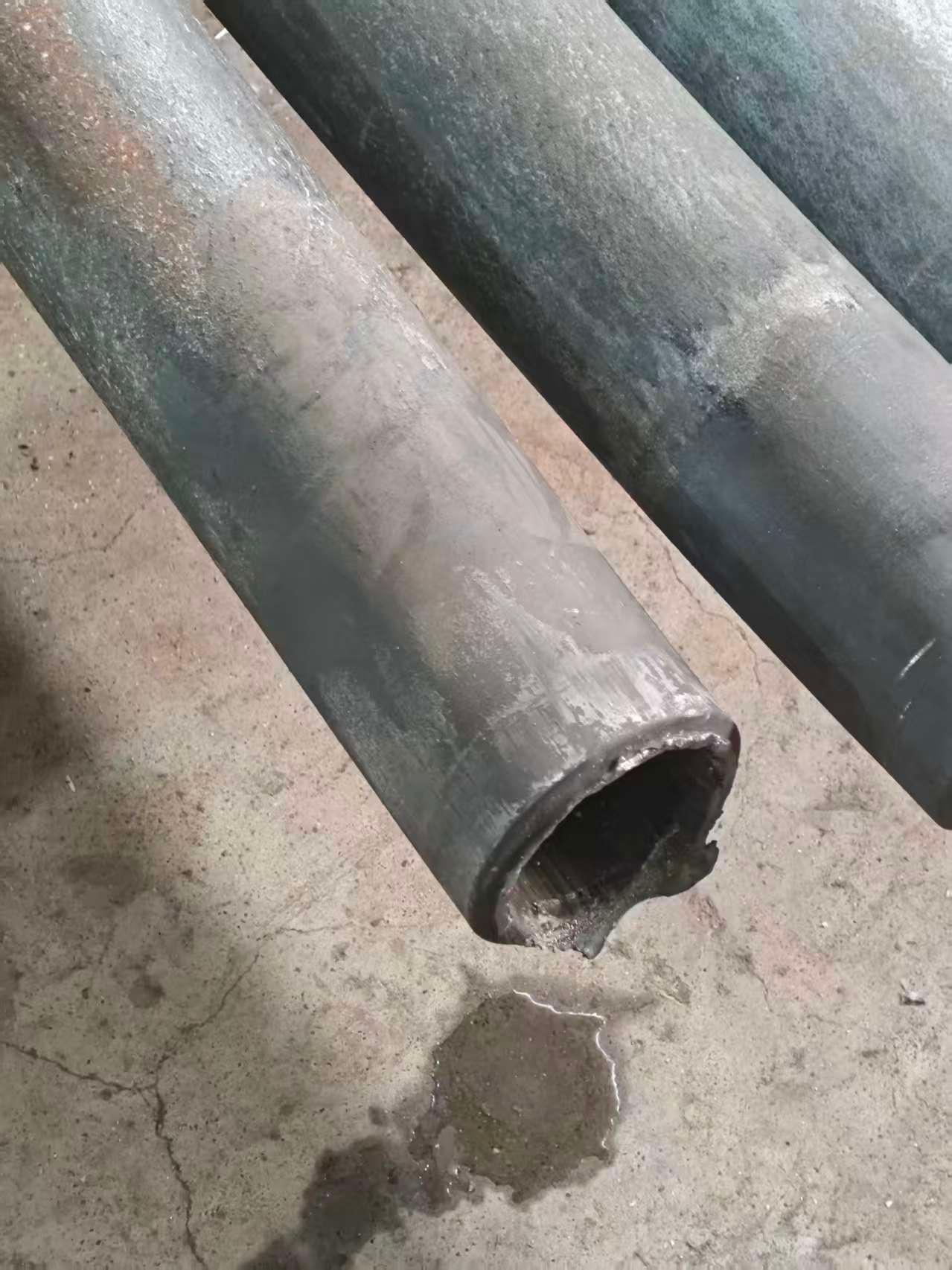
The push for uniform wall thickness in seamless forming often comes down to how the material flows under pressure rather than any single machine setting. Instead of cutting or welding, the process relies on rotary piercing and elongation, where a heated billet is worked over a mandrel. The mandrel itself acts as a moving internal die, preventing the wall from collapsing inward while the outer rolls squeeze the metal outward. This simultaneous internal support and external reduction is what keeps the wall from thinning unpredictably at bends or transitions.
Temperature control plays a quieter but equally decisive role. If the billet cools unevenly before entering the piercing mill, the metal resists deformation at different rates, and that resistance shows up as thickness variation later. Skilled operators watch the glow of the steel and adjust the roll gap in real time, compensating for slight differences in billet diameter or furnace recovery time. The result is a tube or pipe that measures within a few thousandths of an inch from end to end, even before any cold drawing or sizing pass.
After the hot forming stage, a cold pilgering step often refines the wall further. Here, the tube is fed over a tapered mandrel while grooved dies rock back and forth, compressing the wall in small increments. Because the mandrel taper is matched to the die groove profile, the metal is displaced rather than cut, and the wall thickness becomes more consistent with each stroke. It’s a slow, rhythmic process that rewards patience—the kind of detail that separates a dependable pressure vessel from one that might fail under fatigue.
Every Pipe Passes These Nondestructive Tests Before Leaving the Plant
Before any length of pipe earns its way onto a delivery truck, it runs through a battery of checks that leave no room for guesswork. Ultrasonic probes sweep the full circumference to flag internal cracks and inclusions thinner than a human hair. Eddy current sensors then trace the surface for pitting, seams, or shallow laps that a visual pass might miss. Each signal is logged against the pipe's unique heat number, so the final report isn't just a pass/fail stamp—it's a map of exactly what was tested and where.
Pressure integrity gets its own trial. Pipes are capped and filled with water, then held well above their rated working pressure for a set duration. The test crew watches digital gauges for the slightest drop, and any weeping at the joints or body of the pipe sends it straight to the reject rack. This step isn't about proving the pipe can handle normal service; it's about proving it won't surprise anyone later.
Only after these records are reviewed by a second inspector does the pipe receive its final marking and protective end caps. If a flaw shows up in any test, the piece is removed from the lot before shipping—no rework, no exceptions. That's why the test reports travel with the shipment: the plant's name is on the line with every joint that leaves the yard.
Where These Alloy Pipes End Up in Chemical, Power, and Offshore Systems
In chemical plants, alloy pipes rarely sit in plain view—they snake through reactor feed lines, acid transfer headers, and high-temperature heat exchangers. A single corrosion-resistant alloy like Inconel 625 or duplex 2205 might carry aggressive media such as sulfuric acid or chlorinated solvents, where a standard carbon steel pipe would fail within months. These pipes often end up in the most unforgiving spots: downstream of cracking furnaces, inside quench systems, or wrapped around distillation columns where thermal cycling plus chemical attack demands both strength and metallurgical stability.
Power generation pushes alloy pipes into a different set of pressure-temperature extremes. Supercritical steam circuits, boiler superheater sections, and turbine bypass lines rely on creep-resistant alloys like P91 or T92. Here the pipe's job is not just to contain pressure but to survive years of continuous exposure to steam at 600°C and beyond, where oxidation and graphitization slowly eat away at lesser materials. In nuclear plants, zirconium-niobium and nickel-based alloys show up in fuel cladding and primary coolant loops, selected for their neutron transparency and resistance to stress corrosion cracking in high-purity water.
Offshore systems add salt spray, wave fatigue, and remote maintenance into the mix. Alloy pipes on platforms and subsea templates often end up in produced water reinjection lines, gas lift risers, and methanol injection spools. Duplex and super duplex stainless steels dominate here because they tolerate chloride-rich seawater without pitting, while resisting hydrogen sulfide in sour service. A subsea manifold might route 25% Cr super duplex pipe through wellhead jumpers and flowline connections, where every weld must hold against both internal sour fluids and external cathodic protection currents. In FPSO topsides, alloy 825 or 625 appears in flare knock-out drums and gas dehydration units—places where shutdowns are costly and a failed pipe could trigger a full platform evacuation.
Custom Sizes and End Finishes Without Padding Lead Times
Custom sizes here don't mean choosing from a longer list of stock options. You can specify an exact OD, ID, wall thickness, and length, and the shop cuts and machines from pre-qualified bar or tube stock to match your drawing. A 22.7 mm outside diameter with a 1.6 mm wall and a 6 mm ID chamfer isn't treated as a special one-off; it's just the next setup on the machine. That keeps small-batch custom work from carrying the cost or delay of a dedicated production run.
The same applies to end finishes. Plain cut, deburred, threaded, flared, grooved, or polished ends are specified directly on the order, and most are completed in the same work cell rather than sent out for secondary processing. Because the schedule is built around actual machine hours and available stock, you get the finish and dimensions you asked for without a hidden buffer tacked onto the delivery date.
Heat-Number Traceability and Mill Test Reports That Simplify Buyer Checks
Every heat of steel carries a unique identifier that links a finished product back to its exact production batch. This heat-number traceability isn't just a paperwork formality; it allows buyers to follow a material's journey from furnace to final form. Instead of sorting through generic specs, you can pull up the precise chemistry, mechanical properties, and processing history tied to that specific heat. This level of detail means fewer assumptions during incoming inspection and faster resolution when questions come up later.
Mill test reports (MTRs) often vary wildly in layout and clarity. A well-structured MTR puts the critical data up front — yield strength, tensile strength, elongation, and any supplementary testing — without burying it in dense tables. When heat numbers on the report match the stamped numbers on the material itself, buyer checks become a matter of a quick visual scan rather than a cross-referencing headache. Some suppliers even include a direct link to a digital copy, so you're not chasing down a faxed document from three weeks ago.
The real advantage shows up during audits and supplier evaluations. You can compare performance across multiple heats, spot trends in chemistry drift, or confirm that a specific batch really did meet the stated impact toughness at low temperature. This isn't about adding more paperwork; it's about making the paperwork work for you. When traceability is clean and MTRs are designed for quick reference, the whole inspection cycle gets shorter, and that frees up time for actual problem-solving rather than document chasing.
FAQ
The proprietary nickel-chromium-molybdenum composition of NS3304, combined with cold-working during seamless production, creates a refined grain structure that resists deformation under extreme stress.
This tubing is commonly used in desalination plants, chemical processing reactors, offshore oil and gas extraction, and aerospace hydraulic systems where failure is not an option.
Without a welded seam, the pipe eliminates the weakest point found in conventional tubing, allowing uniform wall thickness and smoother internal surfaces that prevent crevice corrosion and stress cracking.
NS3304 performs reliably from cryogenic conditions down to -196°C up to 650°C, maintaining toughness and oxidation resistance across that entire spectrum.
Custom outside diameters from 6 mm to 273 mm and wall thicknesses from 0.5 mm to 20 mm are available, with length cutting and end finishing tailored to project specifications.
NS3304 contains significantly more molybdenum and nickel, giving it far better resistance to pitting, chloride-induced stress corrosion cracking, and sulfuric acid attack than 316L.
Every heat is subjected to hydrostatic testing, eddy current inspection, ultrasonic wall measurement, and a full chemical analysis, with material certificates supplied as standard.
Yes, a dedicated rapid-response inventory of common NS3304 sizes is held in stock, and the mill can prioritize production to ship within 10 days for emergency outages.
Conclusion
The NS3304 seamless pipe program starts with a single focus: producing tubing that will not quit when acids, thermal swings, and pressure cycles try to tear it apart. Because the forming process keeps wall thickness even from end to end, the pipe handles stress more predictably than welded alternatives. Each order goes through a full battery of nondestructive tests—ultrasonic, eddy current, hydrostatic—before it leaves the plant, so defects that could shorten service life are caught early instead of in the field. Buyers also get heat-number traceability on every length, which means a mill test report can be matched to the exact coil or billet without guesswork.
That same practicality carries into how the company handles custom requests. Odd diameters, nonstandard wall schedules, and special end finishes are treated as normal work rather than exceptions, and lead times stay realistic because the mill keeps a deep in-process inventory of NS3304 billets. Downstream, these pipes end up in places where failure is expensive: reactor feed lines in chemical plants, superheater tubes in power stations, and hydraulic control runs on offshore platforms. The mill test report isn't a formality—it gives corrosion allowances, mechanical properties, and test results in a single document that procurement teams can check in minutes. Overall, the material's resistance, tight dimensional control, and documentation discipline make NS3304 a practical choice for critical alloy tubing.
Contact Us
Contact Person: Chenji Li
Email: 521 Zhonghui Road, Huishan Economic Development Zone
Tel/WhatsApp: +86 83112233
Website: https://www.jldnickelalloy.com/