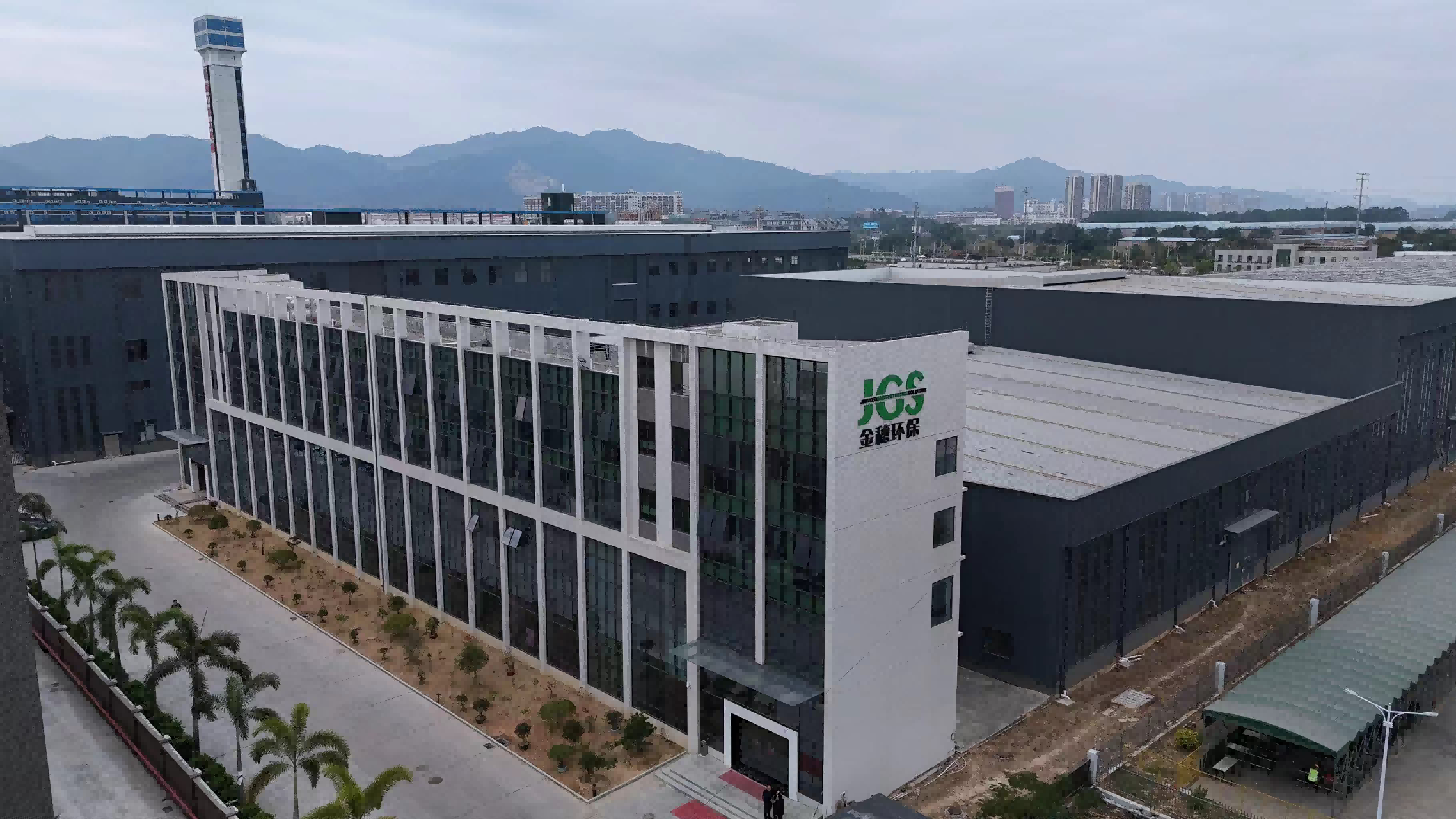

Non Woven Geotextile Fabric Exporter: Choosing the Right Partner for Your Project
2026-09-20
Choosing the right non woven geotextile fabric exporter can make or break your project’s timeline, budget, and long-term performance. Too many buyers focus only on price, overlooking critical factors like production consistency, quality certifications, and after-sales support. That’s where a trusted partner like JInseed Geosynthetics Solution stands out—not just as a supplier, but as a collaborator committed to your project’s success. In this guide, we’ll walk through the key questions to ask before signing a contract, and why your choice of exporter matters more than you might think.
Defining Quality: What Actually Matters in Non Woven Geotextile Fabric
When you unroll a non woven geotextile fabric on a job site, the first thing everyone checks is thickness. But thickness alone tells you almost nothing about how the fabric will hold up under stress. What actually matters is the combination of puncture resistance, grab tensile strength, and elongation at break. A fabric that stretches too much loses its separation function; one that’s too stiff cracks during installation. Look for a balance where the fabric can absorb sharp stone impacts without failing, and where the seam strength approaches the base material strength rather than being an afterthought.
Another overlooked quality metric is the manufacturing process itself. Needle punched non wovens with consistent fiber distribution perform far better than those with visible thin spots or clumps. Run your hand over the surface—any rough patches or uneven density suggest poor carding or needle board maintenance. The best fabrics have a uniform cloud-like texture with no hard lines, and they resist delamination when you try to peel layers apart. This structural integrity is what keeps the fabric functional after truck loads, UV exposure, and repeated wet-dry cycles.
Finally, pay attention to long-term filtration behavior without getting lost in pore size numbers. A quality non woven geotextile should allow water to pass while retaining fine soil particles, but the real test is whether it clogs over time. Fabrics with a wider fiber diameter range and higher loft tend to build a natural filter cake that keeps flowing, whereas overly dense, paper-like fabrics blind within months. Ask for test data from actual field installations, not just lab permeability on clean water. That’s where the difference between a cheap fabric and a durable one becomes painfully obvious.
How to Evaluate an Exporter Without Visiting the Factory

Start by digging into their paperwork like a forensic accountant. Ask for their business license, export registration, and any recent customs declarations. Cross-check these against official databases in the exporter's country — many governments keep public records of registered trading companies. A legitimate exporter won't hesitate to share copies of their bank reference letter or past bills of lading. Pay attention to small inconsistencies: if the company name on the license differs from the one on their invoice template, that's a red flag worth chasing.
Next, force them into a live video tour, but don't settle for a pre-recorded walkthrough. Schedule a real-time call and ask them to start at the factory entrance, pan to the production line, and show the shipping area with today's date visible on a whiteboard or a worker's phone screen. Request to see specific machinery you'd expect for your product type, and ask them to zoom in on raw material stocks. If they fumble with angles or claim the Wi-Fi is bad in the workshop, that hesitation often tells you more than a polished video ever could.
Finally, validate through third parties who have no skin in the game. Hire an independent inspection firm to pull a random sample from their current inventory, even if it means paying a couple hundred dollars out of pocket. Contact two or three of their previous buyers directly — not via the references they give you, but by searching import records or industry forums. Ask specific questions: how did the exporter handle a quality dispute? Did the goods match the pre-shipment photos? A single honest conversation with a past customer can replace a week of factory-site guesswork.
The Role of Customization in Large-Scale Infrastructure Projects
Customization rarely appears in the early brief for a new bridge, port expansion, or high-speed rail corridor. Initial designs lean on proven geometries, standard materials, and repeatable construction sequences because they promise lower risk and predictable budgets. Yet the moment a project intersects with an unstable riverbed, a protected wetland, or a community that refuses to lose its waterfront, off-the-shelf solutions begin to crack. Engineers and owners learn that no two megaprojects face identical constraints, and the most expensive delays often stem from forcing a generic template onto a site that resists it.
What separates successful large-scale infrastructure from troubled ones is not the absence of standardization but the strategic placement of bespoke elements. A tunnel boring machine may be standard, but the cutterhead configuration adjusted for unexpected boulder fields is a customization. A port’s crane rail spacing may follow global norms, but the foundation system designed around tidal scour and legacy buried structures becomes a unique response. These tailored choices typically consume a small fraction of the total budget, yet they determine whether a project opens on time or drowns in change orders. The skill lies in identifying early which components demand local adaptation and which can remain unchanged.
The quiet advantage of thoughtful customization is resilience. A power transmission line redesigned to avoid a migratory bird corridor may cost more upfront but avoids years of litigation and retrofitting. A wastewater treatment plant customized for variable industrial discharge patterns performs reliably where a standard design would require constant manual override. When owners treat customization as a design tool rather than an exception, they shift from reacting to site surprises to anticipating them. The result is infrastructure that does not simply meet a specification—it fits the landscape, the community, and the operational reality it was built to serve.
Navigating International Shipping Without the Usual Headaches
Nobody enjoys staring at a customs declaration form for the first time. The forms ask for harmonized codes, country of origin, and value details that can trip up even seasoned sellers. I once had a package sit in customs for nine days because the commercial invoice said 'gift' when it clearly wasn't—the officer wasn't amused. Since then, I treat paperwork as a checklist rather than a puzzle. Keep a master document with your product details, weight, and tariff codes ready to copy, and double-check the invoice against what's actually in the box. That habit eliminates most border delays before they start.
Carrier choice matters more than price. A budget courier might hand your package off to a local partner that lacks real-time tracking or clear delivery confirmation. I've watched a parcel disappear for ten days after the handoff, only to resurface with a delivery attempt at the wrong address. Now I always ask who handles the last mile in the destination country before I book anything. A few extra dollars beats chasing a missing parcel across time zones.
Finally, set expectations with the buyer before you ship. Tell them about typical customs hold times, possible import taxes, and how long delivery normally takes. If something gets stuck, you'll have already primed them for patience. And if you ship regularly to the same countries, keep a small collection of past customs issues and how you solved them—it becomes your personal playbook for the next shipment. That kind of proactive communication turns international shipping from a gamble into a routine.
Red Flags That Signal a Supplier Is Not Ready for Export
When a supplier can’t produce a certificate of origin, a proper packing list, or the compliance documents your target market demands, that’s usually a sign they haven’t handled real international orders. Some factories don’t even know their own HS codes, or they expect you to sort out every piece of paperwork on your own.
Packaging tells you a lot too. If a sample or trial order shows up in flimsy boxes with no English labeling, no moisture protection, and no thought given to long-haul shipping, they’re not ready for the reality of cross-border logistics. Even worse is when they have zero familiarity with the voltage, certification, or environmental rules in the country you’re selling to.
Communication habits expose the same gap. Emails that take days to get a vague reply, confusion over basic Incoterms, payment terms that keep shifting, or an inability to share a single existing export customer reference—all of that points to a supplier that hasn’t worked through the fundamentals of foreign trade yet.
Why the Best Exporter Acts More Like a Project Consultant
The real difference shows up when a shipment hits a snag. A typical exporter waits for the buyer to notice the delay or the missing document. A consultant-minded exporter has already flagged the issue, called the freight forwarder, and sent three options before the buyer finishes their morning coffee. That shift from reacting to anticipating is what turns a supplier into a partner.
It also changes how questions get answered. Instead of replying with a price and a lead time, this kind of exporter asks about installation constraints, local certification rules, and who actually signs for the goods on site. That context lets them recommend the right packaging, suggest a different port, or tweak the load plan to avoid a costly last-mile surprise. The buyer stops thinking about “my supplier” and starts thinking about “the person who keeps my project on track.”
Over time, that posture compounds. Buyers route more complex orders to the exporter who asks the awkward questions early, because those are the ones that save schedules. It’s not about being agreeable; it’s about being useful in the places where projects usually leak time and money.
FAQ
Look beyond the glossy website. Ask for production capacity, recent inspection reports, and the names of past projects. A quick video call showing their warehouse and quality lab often tells you more than a brochure.
Request a pre-shipment sample and have it tested independently for tensile strength, puncture resistance, and water permeability. Also ask for batch-level third-party test reports from accredited labs.
Yes, sometimes more than the unit price. A factory near a major port can reduce inland trucking and waiting time. Check sailing schedules and ask whether they can load containers directly at the factory.
Expect flexibility in roll width, length, weight, color, and packaging. The better suppliers will also adjust the fiber blend or add UV stabilizers if your project in a harsh climate demands it.
Ask for a cost breakdown that separates product price, packing, inland freight, port charges, and any bank fees. A trustworthy exporter will be upfront about Incoterms and won't change numbers after the proforma invoice.
ISO 9001 for quality management and CE marking if you are shipping to Europe are standard. For many projects, ASTM or EN test reports carry more weight than a wall of certificates.
Ask about minimum order quantity, lead time, sample policy, and how they handle a quality dispute. Their willingness to share detailed answers usually mirrors how they will treat you later.
Conclusion
Choosing the right non woven geotextile fabric exporter goes well beyond comparing price lists or catalogue images. The first thing to pin down is what quality actually means for your specific application. A fabric that works under a highway subgrade may be overkill or completely wrong for a coastal erosion project. Ask for detailed specifications on fiber type, mass per unit area, tensile and puncture strength, and hydraulic properties. If an exporter hesitates to share batch-level test reports or raw material sourcing details, that's a signal to move on. For large-scale infrastructure work, customization also matters far more than many buyers expect. Standard roll sizes often create costly waste or field joints in the wrong places. The right partner will adjust roll widths, lengths, and packaging to fit your construction sequence, not just ship whatever is sitting in the warehouse.
Evaluating a supplier without visiting the factory is not only possible but necessary for many international projects. Request live or recorded video of the production line, ask about their quality control steps between needle punching and winding, and talk to previous clients who handled similar soil conditions or project scales. Shipping experience is equally important. A competent exporter knows how to prepare export documentation, choose the right incoterms, and load containers to avoid moisture damage or roll deformation. Be wary of red flags such as evasive answers about third-party testing, no clear return or claim process, or slow and inconsistent communication. The best exporter acts less like a salesperson and more like a project consultant. They ask about your subgrade conditions, recommend realistic fabric specifications, help with customs clearance, and stay reachable after the goods arrive. That level of involvement turns a one-time purchase into a dependable supply relationship for future phases.
Contact Us
Contact Person: Jerry Qiu
Email: [email protected]
Tel/WhatsApp: +65 84265294
Website: https://www.jinseed-geo.com