

Leading Silicon Carbide Powder Manufacturer for Advanced Ceramic and Abrasive Applications
2026-09-14
When it comes to advanced ceramics and high-performance abrasives, the quality of silicon carbide powder can make or break your final product. Yet finding a supplier that consistently delivers purity, consistency, and technical expertise is surprisingly rare. That’s where HUAYI TECH comes in—a leading manufacturer that has quietly become the go-to partner for engineers and material scientists worldwide. In this post, we’ll explore what sets their SiC powder apart and why it might be the missing piece in your manufacturing puzzle.
Purity Specs That Decide Final Ceramic Strength
The mechanical ceiling of a sintered ceramic is rarely set by its primary phase. In alumina and zirconia bodies, the difference between a 400 MPa flexural part and a 650 MPa part often comes down to a few hundred parts per million of silica, alkali oxides, or iron. These impurities gather at grain boundaries during firing, forming thin glassy films that weaken interfacial bonding. Once that film exceeds a few nanometers, cracks follow the boundary instead of cutting through grains, which lowers both flexural strength and fracture toughness.
Tight purity specs work as a microstructural gate. For high-strength alumina, keeping SiO2 below 100 ppm and total alkali metals below 50 ppm suppresses abnormal grain growth and stops residual glass pockets from pinning the fired structure. A matching limit on iron and titania—often under 20 ppm combined—prevents hard inclusions from acting as stress concentrators. When those limits are held batch after batch, the grain boundaries stay clean enough to force fracture through the crystal lattice, which is the slower, higher-energy path that standard strength tests actually measure.
Particle Size Curves for Controlled Abrasive Cutting
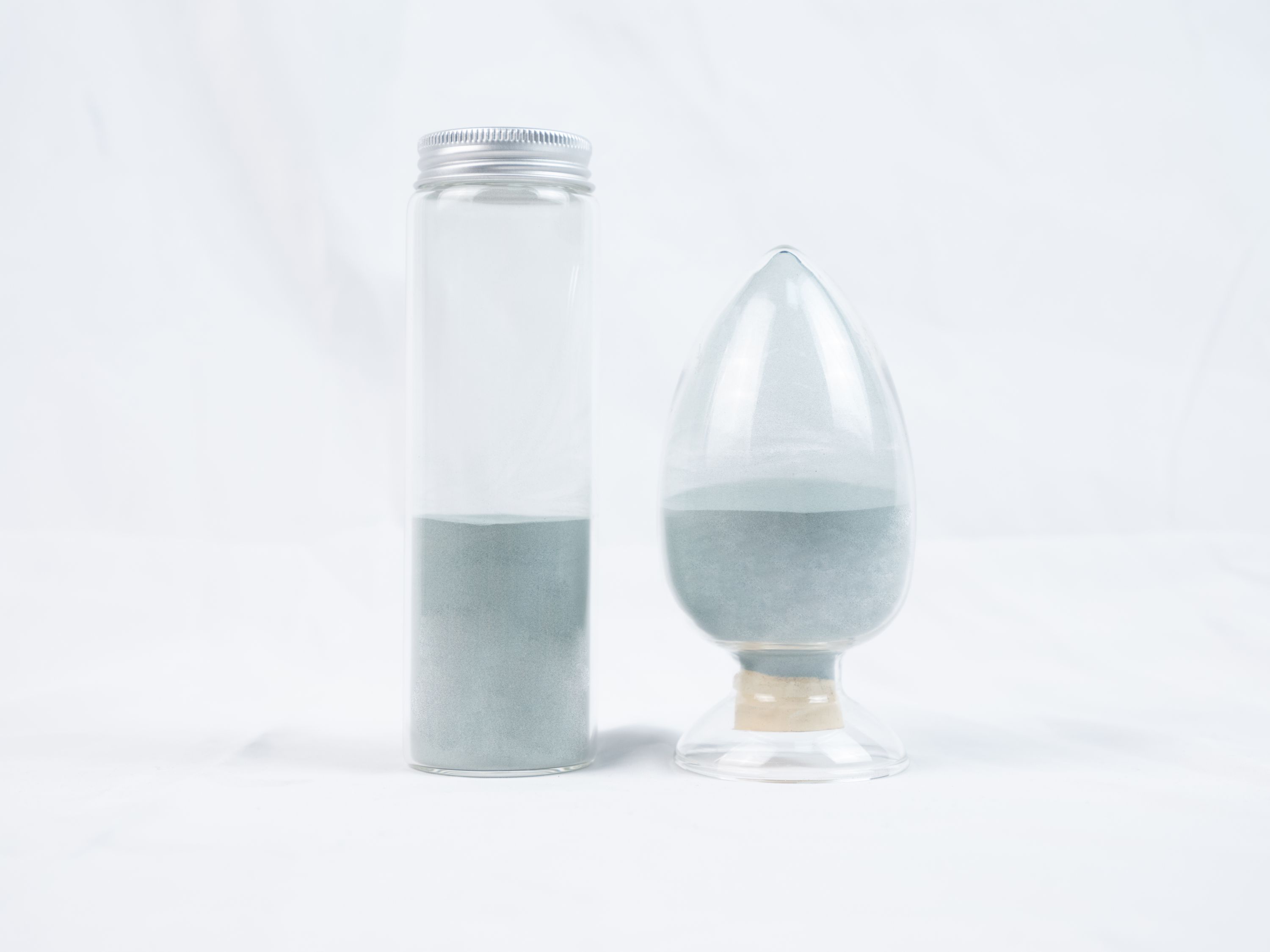
Abrasive cutting performance hinges on the shape of the particle size distribution, not just the average grit diameter. When the curve skews toward coarser fractions, the cut rate climbs but the surface finish suffers—deep scratches and embedded grit become harder to avoid. Conversely, a curve weighted toward fines slows material removal and can glaze the wheel face, generating excessive heat. The sweet spot sits where the tail on the fine side stays short enough to prevent loading, while the coarse tail contributes just enough aggressive edges to maintain a steady chip formation.
Plotting cumulative percent passing against sieve size reveals whether the blend will behave predictably under load. A steep curve indicates a narrow size band, which produces uniform cutting action but may lack the free-cutting voids that a broader distribution provides. A shallow, spread-out curve often means the abrasive was blended from multiple sources or recycled grain, and that can introduce rogue particles that plow rather than cut. For controlled abrasive cutting, operators typically target a distribution where the d90/d10 ratio stays within a factor of two to three, ensuring the coarsest and finest particles don't fight each other during the cut.
Interpreting these curves in the context of the workpiece matters more than chasing a universal ideal. On hardened steel, a slightly bimodal curve often outperforms a smooth Gaussian because the fine fraction fills the valleys between larger cutting points, stabilizing the abrasive layer. On soft metals, that same bimodal shape can cause smearing and clogging. The practical approach is to run a short test with the exact batch, overlay the measured curve on the specification envelope, then adjust feed pressure or wheel speed based on where the curve departs from the expected profile.
Sintering Behavior Across Pressureless and Hot-Press Routes
The sintering trajectory of a ceramic body varies sharply with the applied pressure regime, and reconciling the pressureless and hot-press responses requires careful attention to densification kinetics and microstructural evolution. In the pressureless route, particle rearrangement and surface diffusion dominate early-stage neck growth, leading to a gradual shrinkage that is highly sensitive to green density, temperature ramp rate, and atmosphere. Pore elimination proceeds via grain boundary diffusion and lattice diffusion, but the driving force remains purely capillary, so prolonged holds are often needed to reach near-theoretical density. The resulting microstructure typically retains a fraction of isolated spherical pores, especially when grain growth outpaces densification late in the cycle.
Under hot-press conditions, the superimposed uniaxial stress alters the effective chemical potential at grain contacts, enabling plastic yielding, enhanced diffusional creep, and particle sliding to operate simultaneously. Densification accelerates sharply once the temperature crosses the threshold for viscous or power-law creep, and the final stage often exhibits near-complete pore closure even at relatively short dwell times. However, the pressure-induced anisotropy can produce preferred crystallographic orientation or elongated grains perpendicular to the loading direction if the stress is not carefully managed. Comparing the two routes reveals that identical final densities can mask dissimilar pore size distributions: pressureless samples tend to retain finer, more uniformly dispersed residual porosity, whereas hot-pressed bodies may show localized regions of transient liquid phase or stress-assisted grain boundary migration.
A practical implication is that switching from pressureless to hot-press sintering without re-optimizing heating schedule and pressure profile frequently leads to exaggerated grain growth or trapped gas pockets near the die walls. The most robust approach involves mapping the shrinkage-rate versus temperature curves for both routes, then adjusting the pressure application window to overlap with the period of maximum densification sensitivity. This comparative framework also helps explain why some compositions densify fully under pressureless conditions but display unstable microstructures under hot pressing, while others remain porous under pressureless sintering yet reach full density with only a modest applied load.
From Pilot Lots to Production Volumes Without Recipe Changes
Scaling a process from pilot batches to full production often tempts engineers to tweak the formulation. Yet keeping the recipe identical—down to the exact percentage of each input—is entirely achievable when the focus shifts to equipment geometry and mixing dynamics. A pilot mixer with a 50-liter bowl behaves differently at 2,000 liters, but that difference does not require altering the ingredient ratios. Instead, the same recipe can be run by matching tip speed, shear rate, and temperature profile across scales. This means investing time in upfront characterization: measuring how the dough or slurry moves in both vessels, adjusting impeller position or baffle count, and validating that the final product’s viscosity, particle distribution, and stability match the pilot reference. No extra stabilizer, no modified starch, no hidden tweak—just mechanical equivalence.
The path to high-volume output without recipe changes runs through a few deliberate steps. First, run a series of small-scale experiments that mimic the production unit’s energy input per unit mass. If the pilot batch heats up at a certain rate due to friction, the production mixer must replicate that rate, not by changing the formula but by controlling jacket temperature or rotor speed. Second, adopt inline analytics—near-infrared or particle size probes—so operators can verify that the in-process state matches the pilot’s critical quality attributes. When a deviation appears, the response is not to add a pinch of something; it is to adjust the process parameter (residence time, back pressure, or cooling duty) that restores equivalence. Finally, document everything. A robust scale-up report proves to regulators and customers that the recipe remains untouched from the first approved lot to the ten-thousandth production unit, preserving the product’s identity while meeting demand.
Surface Chemistry Adjustments for Slurry Stability and Binder Wetting
Surface chemistry adjustments start with identifying acidic or basic sites on the active material. For oxide cathodes, residual lithium compounds raise pH and can destabilize PVDF binder or cause gelation. Washing or mild acid treatment removes surface carbonates while preserving the bulk structure. Alternatively, adding a small amount of phosphoric acid or an organic acid buffers the slurry to a range where binder adsorption remains stable.
Grafting or coating particles with silane coupling agents or polymeric dispersants changes wettability. Hydrophilic groups like carboxyl or hydroxyl improve water-based binder wetting on hydrophobic carbon or silicon surfaces. A thin polar layer reduces contact angle and prevents particle agglomeration, which benefits slurry flow and coating uniformity. Surface oxidation via ozone or plasma can create these functional groups without heavy solvent use.
The adjustment must match the binder chemistry. For PVDF, fluorinated surfactants or fluorosilanes can enhance compatibility, while for CMC/SBR aqueous systems, charged groups that repel each other help maintain dispersion. Monitoring zeta potential and rheology after each surface modification gives direct feedback on whether the change improves stability or hurts binder adhesion. Small empirical batches often reveal that a combination of pH buffering and polar surface treatment works better than either alone.
In-Process Checks That Catch Contamination Before Firing
A lot of contamination never announces itself until the kiln doors open, which is why the smartest checks happen long before the first flame. On any pressing line, wiping down the die cavity and the surrounding frame with a clean, lint-free cloth between strokes catches the obvious stuff—stray grains, dust from a nearby grinding station, even a stray eyelash. But real in-process control goes further: some operators apply a short strip of clear packing tape to the tool face, press it lightly, then peel it back under a desk lamp. If the tape shows anything beyond the raw body material, that press pauses until the source is found.
For slip-based work, a 60- or 80-mesh test sieve placed over a clean bucket after blunging will reveal lumps, paper fibers from storage bags, or bits of dried scrap that slipped back into the reclaim system. It takes less than a minute and saves hours of glaze-defect chasing later. Another trick is to keep a pair of white cotton gloves near the casting area and rub one over the inside of a just-drained mold; any gritty or colored residue that shouldn’t be there warns of mold breakdown or contaminated slip before the piece ever reaches the dryer.
Dry pressing and granulate processes have their own blind spots. A handheld moisture meter used on three or four random granulate samples per shift can catch a wet pocket that would otherwise cause lamination or bloating during firing. Likewise, checking green density with a simple Archimedes setup—even on just one part per hour—can flag contamination that changes packing behavior, like fine metal wear particles from a mixer blade or a new batch of organics that doesn’t burn out cleanly. These are not high-tech inspections, but they intercept problems while the material is still forgiving.
FAQ
Our silicon carbide powder is engineered with consistent particle size distribution and high purity, which ensures uniform sintering and excellent mechanical strength in ceramic parts used for demanding applications.
We use rigorous in-process monitoring and final testing, including checks for hardness, particle shape, and chemical composition, so every batch delivers reliable cutting performance.
Yes, we offer a range of grit sizes from coarse to ultra-fine, and our technical team can work with you to tailor the powder to specific bonding systems and finishing requirements.
Customers in automotive, aerospace, electronics, and industrial grinding sectors use our powder for components like seals, bearings, armor tiles, and precision abrasives.
We supply powders with purity levels up to 99.5% or higher, with low iron and free carbon content, which helps minimize defects in sintered ceramics.
Our production line uses automated feeding and classification systems, and each batch is sampled and tested against strict internal standards before release.
Yes, our powder formulations are optimized to work well in both sintering methods, providing high density and fine grain structure in the final ceramic products.
Conclusion
In advanced ceramics and precision abrasives, the real differentiator often comes down to how a silicon carbide supplier handles the details that no one sees on a certificate. A leading manufacturer starts with raw feedstock purification that goes beyond nominal SiC content, targeting the specific metal and oxide traces that undermine sintered density or weaken grain boundaries under thermal stress. Equally important is the shape and spread of the particle size distribution. For abrasive cutting tools, a tightly controlled FEPA curve translates into repeatable stock removal rates and surface finishes; for ceramic bodies, a deliberate bimodal or trimodal pack improves green density before firing. That same lot-to-lot discipline shows up when a formulation moves between pressureless sintering and hot pressing. If the powder's crystallite size, agglomerate strength, and oxygen pickup stay fixed, the densification window remains predictable, so a furnace recipe does not need to be re-tuned after every delivery.
Scaling from pilot trials to full production is where many powder suppliers stumble, but a leader treats the first kilogram and the thousandth kilogram as one continuous process. Surface chemistry adjustments, whether through silane coupling agents or controlled oxidation layers, keep aqueous and solvent-based slurries stable long enough for uniform binder wetting and spray-dried granule formation. This prevents hard agglomerates and sedimentation that can cause voids or uneven abrasive loading. Before any batch is released, in-process checks screen for cross-contamination from crushers, mills, and classifiers, catching low-level metallic wear particles and foreign ceramic debris before they reach a customer's kiln. By combining these safeguards with raw material traceability, the manufacturer gives ceramic and abrasive formulators a powder that behaves as expected under pressure, heat, and slurry shear, without last-minute compensation on the production floor.
Contact Us
Contact Person: Junting Leo
Email: [email protected]
Tel/WhatsApp: +86 18615009766
Website: https://www.huayimaterial-china.com/