

International Export Import Data Business: Unlocking Global Trade Opportunities
2026-05-17
In a world where borders are no longer barriers but gateways, international trade data has become the compass for businesses navigating the complexities of global commerce. Every shipment, every transaction tells a story—yet without the right insights, those stories remain untold. That's where Tendata steps in, transforming raw trade intelligence into actionable strategies. This blog explores how the international export import data business is unlocking global trade opportunities, revealing new markets, optimizing supply chains, and giving companies the edge they need to thrive. Whether you're a seasoned trader or just stepping onto the global stage, understanding this data-driven landscape could be the key to your next breakthrough.
Navigating the Data-Driven World of Global Trade
Modern global trade thrives on a constant stream of information—think shipment tracking updates, customs clearance data, and real-time market demand signals. Companies that once relied on intuition now lean heavily on analytics to manage supply chains, predict delays, and reroute goods before problems escalate. This shift turns raw data into a strategic asset, allowing businesses to react faster than ever to disruptions like port congestion or sudden tariff changes.
Data isn't just about logistics; it reshapes how trade finance and compliance operate. Banks and insurers use transaction patterns to assess risk and offer dynamic pricing, while regulatory tech automates paperwork that used to take days. Small exporters, armed with the same dashboards as multinationals, can spot emerging markets or avoid partners with a history of late payments, leveling a playing field that was once reserved for giants.
The real edge comes from blending diverse data sources—satellite imagery of crop yields, social sentiment about brands, even weather forecasts—to make smarter sourcing decisions. But navigating this landscape demands a culture that questions algorithms and values human oversight. After all, a dashboard might flag a cheap supplier, but only an experienced buyer notices that the last three shipments arrived just in time for peak season, hinting at hidden reliability.
Turning Raw Data into Profitable Trade Insights
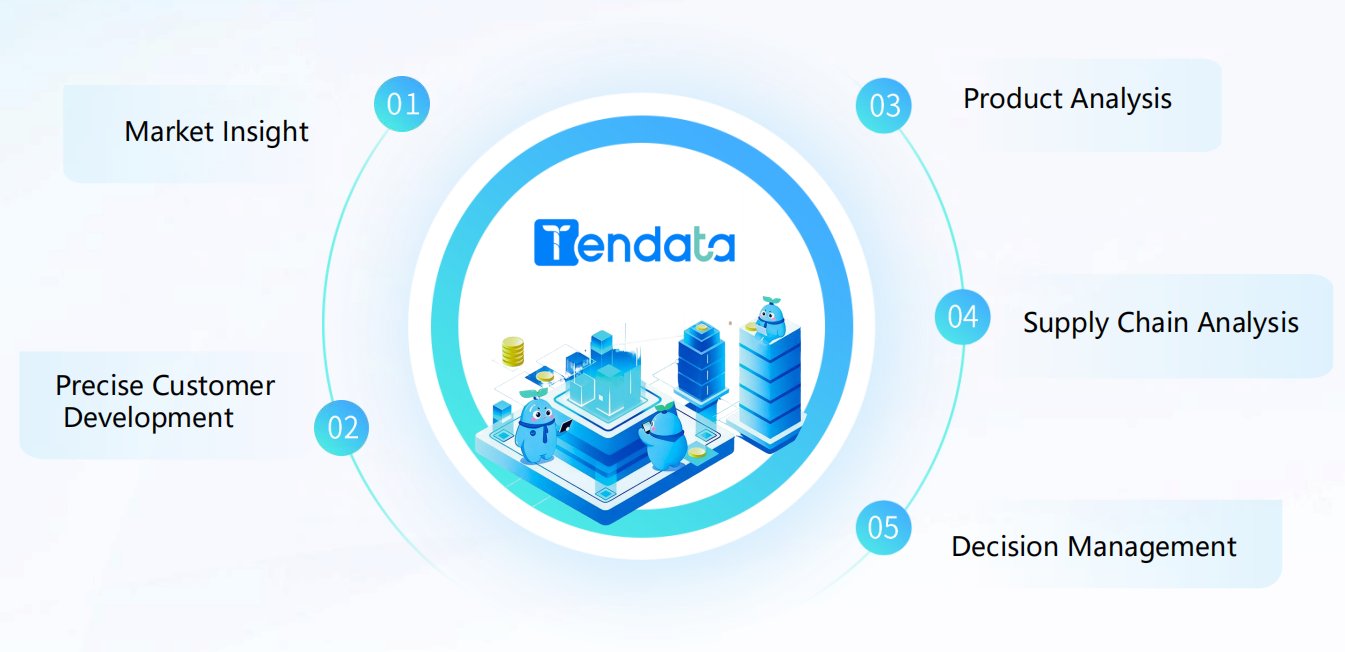
The challenge isn't access to data—it's what you do with it. Most traders drown in metrics, charts, and real-time feeds without a clear method to separate signal from noise. The real edge comes from building a systematic process that sifts through chaotic information and surfaces patterns that repeat with enough consistency to act on.
We focus on turning messy datasets into clean, directional trade ideas. By applying a blend of quantitative filtering and contextual judgment, we identify moments when price action, volume anomalies, and sentiment shifts converge. These aren't black-box signals; they're transparent, repeatable setups that align with how markets actually move.
What matters is not just finding an edge, but understanding its lifespan. Markets adapt, and yesterday's alpha becomes today's noise. Our approach continuously stress-tests assumptions, discarding what no longer works and refining what does—keeping the insights profitable and the decisions timely.
How Smart Businesses Identify Emerging Markets
Smart businesses don't just stumble into emerging markets by chance. They maintain a constant pulse on shifting consumer behaviors, often leveraging granular data from loyalty programs, social listening, and on-the-ground observations. Rather than relying solely on broad economic reports, they decode subtle signals—like a sudden uptick in demand for a niche product category or a geographic cluster of early adopters—to trace the faint outlines of future demand before it becomes obvious.
Once a whisper of opportunity is detected, the next move is immersion, not armchair analysis. Leaders spend time in local ecosystems, meeting with suppliers, regulators, and potential customers to absorb unspoken needs and cultural nuances that spreadsheets miss. This human-centric reconnaissance helps them distinguish between a temporary fad and a sustainable shift, enabling investments in the right capabilities and partnerships long before the market is fully formed.
Finally, the boldest companies treat market entry as a series of small, reversible experiments rather than a massive launch. They might pilot with a minimal offering via a digital channel, using real-time feedback loops to adjust positioning and pricing on the fly. This iterative learning approach reduces the cost of being wrong while accelerating the path to product-market fit, turning the fog of an emerging market into a canvas for innovation.
Risk Proofing Your Supply Chain with Real-World Intelligence
Supply chains today don’t stumble on just one predictable weak link—they fracture under a cascade of seemingly distant events. A port strike in one hemisphere, a sudden weather shift in another, or a regulatory change halfway across the world can set off a ripple effect that leaves your inventory stranded and your customers waiting. Real-world intelligence pulls all those scattered signals together, transforming fragmented news feeds and on-the-ground chatter into a coherent picture. Instead of reacting after the fact, you start seeing the build-up—protests escalating, shipping routes altering, supplier financials wobbling—and can reroute or restock before the disruption even has a name.
Tapping into this kind of intelligence means moving beyond internal dashboards and into the messy, raw data that actually shapes logistics. Satellite imagery, social sentiment, cargo tracking data, and local news aren’t just bonus information—they’re the early warning system that your spreadsheet was never built to be. The real value isn’t in hoarding more data, but in connecting the dots between a political rally in one country and the availability of a critical component two tiers down your supplier chain. That’s how you stop chasing disruptions and start hardening your operations against them—by seeing the world as it truly is, not as the quarterly report said it would be.
The Hidden Patterns That Shape Import and Export Decisions
Trade flows rarely follow the neat lines economists draw. Beneath the surface, decisions hinge on a tangle of invisible threads—personal relationships forged at a trade fair years ago, a shared language that cuts negotiation time in half, or the quiet comfort of dealing with a country that shares your legal traditions. These hidden patterns often outweigh formal trade agreements. A manufacturer might choose a supplier not because of tariff rates but because the factory owner's family has done business with their own for three generations. When you map actual shipments against rational models, the gaps tell a story about trust, inertia, and the gravitational pull of familiarity.
Cultural rhythms play an outsized role too. Gift-giving customs can seal a deal or kill it; understanding the unspoken hierarchy in a meeting determines whether a contract gets signed. Importers gravitate toward markets where business etiquette feels intuitive, shying away from places where missteps come easy. This isn't written in any handbook, yet it steers billions of dollars. Time zones matter more than we admit—a four-hour overlap means real-time problem-solving, while a twelve-hour gap leaves issues to fester overnight. Even the way a country celebrates holidays can disrupt supply chains in ways spreadsheets never predict.
Then there's the echo of history. Colonial ties still channel trade along old routes; diaspora communities create informal bridges that no trade mission can replicate. A seemingly irrational decision to export to a smaller, less lucrative market often masks a personal connection—an uncle who emigrated, a college friend who became a distributor. These are the patterns that data tools miss. When a company suddenly shifts its entire sourcing strategy, the catalyst is rarely a price change. More often, it's a story that starts with 'someone knew someone,' a moment of serendipity that reshapes balance sheets. Ignoring these undercurrents is like navigating with a map that only shows half the land.
From Numbers to Negotiation: Mastering Market Entry
Breaking into a fresh market often begins with a deluge of data—demographics, pricing trends, competitive landscapes. But savvy entrants know that raw figures only paint part of the picture. The real challenge is translating those statistics into a narrative that resonates with local stakeholders, whose motivations and fears rarely show up in a spreadsheet. It's the silent signals, like hesitation in a voice or a sudden change in a partner's priorities, that can pivot a strategy overnight.
Once the groundwork is laid, the focus shifts to the bargaining table, where preparation meets improvisation. Here, financial models serve as guardrails rather than scripts; they inform your limits and aspirations but leave room for the fluidity demanded by human interaction. A successful negotiator listens as intently as they calculate, using pauses and probing questions to uncover hidden interests that can reshape deals. This rhythm between analysis and empathy is what turns a standard pitch into a tailored agreement.
Mastery comes from treating market entry as a continuous loop rather than a linear sequence. Each conversation feeds back into your numbers, refining assumptions and exposing blind spots. Over time, you develop an instinct for when to lean on hard data and when to let relationship-building take the lead. The result is not just a market presence, but a reputation for approachability and acumen that opens doors long after the ink dries.
FAQ
Trade data reveals which products are in demand across different regions, who the key buyers and suppliers are, and how pricing trends shift. Without it, companies operate blindly, missing out on lucrative opportunities or entering markets that are already oversaturated.
By analyzing shipment records, a small business can identify importers that consistently buy similar products. It can then tailor its pitch based on the importer’s purchase patterns, volume, and even seasonal fluctuations, making that first cold outreach far more targeted.
Beyond just product and quantity, customs data often includes details about the port of origin, shipment value, and freight terms. This helps you map entire supply chains, spot regulatory bottlenecks, and benchmark your costs against competitors.
Absolutely. Since shipments leave a paper trail, you can reconstruct a competitor’s supplier network, volume trends, and even new market entries. It’s like having a radar that picks up their logistics activity in real time.
Modern platforms clean and harmonize disparate customs data, apply predictive analytics, and visualize trade flows on interactive maps. This transforms raw numbers into actionable strategies, like forecasting demand dips or spotting emerging trade corridors.
Many treat HS codes too loosely, ignore re-exports, or fail to cross-reference with other economic indicators. Data without context can mislead—for instance, a spike in exports might be a one-off due to a large project, not sustainable demand.
Yes, it often highlights demand for complementary services like logistics, warehousing, or quality certification. A surge in exports of perishables, for example, signals a need for cold chain solutions.
Conclusion
The international export-import data business has transformed how companies discover and seize global trade opportunities. Instead of relying on intuition or outdated reports, enterprises now navigate a data-driven world where every shipment, tariff change, and market shift can be tracked in real time. By turning raw customs records, shipping manifests, and trade statistics into profitable insights, businesses can pinpoint emerging markets long before they become obvious. This proactive approach allows them to anticipate demand shifts, identify reliable partners, and optimize pricing strategies—turning information asymmetry into a competitive advantage.
Beyond opportunity spotting, intelligent trade data is essential for risk-proofing supply chains and mastering market entry. Companies analyze hidden patterns—such as seasonal fluctuations, port congestion trends, or supplier reliability metrics—to make decisions that minimize disruptions. This intelligence feeds directly into negotiation strategies, enabling firms to enter new markets with confidence, backed by verifiable evidence rather than guesswork. In a landscape where margins are thin and volatility is high, the ability to convert numbers into actionable negotiation tactics separates successful global traders from the rest. Ultimately, the integration of real-world intelligence into every stage of import-export planning unlocks sustainable growth and resilience in an interconnected economy.
Contact Us
Contact Person: Grace
Email: [email protected]
Tel/WhatsApp: +86 18721992033
Website: https://www.tendata.com