

Intelligent Electric Wheelchair OEM Manufacturing for Smarter Mobility
2026-11-19
What if a wheelchair could do more than just move you from one room to another? For years, electric wheelchairs have been stuck in a cycle of bulky frames, limited range, and controls that feel anything but intuitive. Then we started asking a different question: how can intelligent engineering actually improve daily independence, not just add another gadget? That question led us to Freedomchair—a brand built around the idea that smarter mobility should be simpler, safer, and more responsive to real life. In this post, we’re pulling back the curtain on the OEM manufacturing process behind the Freedomchair, from sensor integration and battery optimization to the small design decisions that make a big difference on uneven sidewalks or tight indoor corners. Whether you’re researching a reliable supplier, comparing wheelchair specs, or simply curious about what makes modern electric mobility truly intelligent, you’ll find a closer look at how thoughtful manufacturing turns everyday movement into genuine freedom.
Making Sense of Torque, Terrain, and Battery Life in One Wheelchair Frame
Peak torque numbers rarely tell you how a chair behaves pulling away from a curb or crawling over a door threshold. What matters more is how early the motor builds useful twist and whether the controller eases it in without a lurch. A well-sorted frame treats the motor, gear reduction, and rear wheel placement as one system, so the push feels progressive rather than abrupt. On a slick ramp, too much low-speed bite can spin a tire just as easily as too little can stall the climb.
Terrain clearance gets oversimplified as a single obstacle height. In practice, front caster size, wheelbase, and where the battery sits change how the frame tilts over uneven ground. A chair that pops over a sidewalk crack may still feel nervous on gravel if the front end goes light or the rear end wallows. Testing on mixed surfaces matters because the same geometry that protects your feet on a root can make a steep driveway feel tippy.
Battery range depends less on the cell capacity than on how often the motors are asked to surge. Stop-and-start city use often drains a pack slower than long grass or a day of repeated ramps, even if the distance travelled is shorter. Useful range is better read as a curve across assist levels and terrain types. Smoothing out acceleration and carrying momentum through flat sections usually buys more real-world time than adding another amp-hour.
When an OEM Partner Actually Understands Daily Wheelchair Use
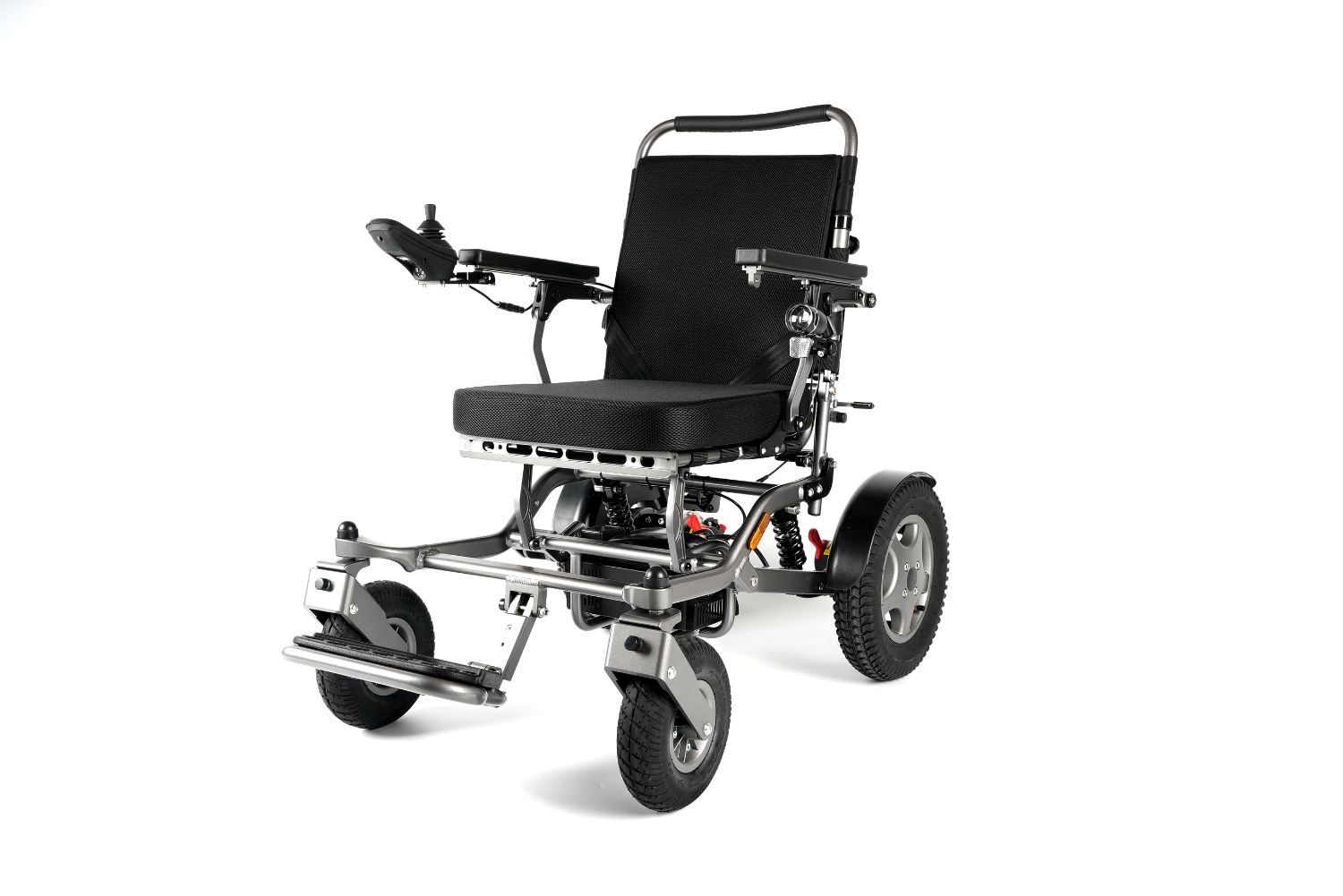
Real daily wheelchair use rarely looks like a spec sheet. It is balancing a grocery bag on your lap while rolling over a cracked curb, snagging a controller cable on a door frame, or waiting in the rain because the ramp is blocked. When an OEM partner actually understands this, the small decisions change: cable routing avoids pinch points, the armrest does not dig into your side during a long reach, and the joystick stays responsive even with damp hands.
Range and handling have to survive real routes, not just test loops. A chair might claim a certain distance, but the number that matters is whether it still has enough reserve after detours around construction, a steep driveway, and a headwind on the way home. An OEM partner that gets daily use will put the charging port somewhere you can reach without leaning dangerously, make the battery indicator honest before the last bar disappears, and tune the suspension so sidewalk gaps do not leave your spine remembering them for hours.
There is also the quiet work of living with a chair: folding it into a car boot, wiping mud off the frame, noticing a loose bolt before it becomes a fall. Thoughtful daily-use design shows up in replaceable wear strips, clearly marked torque points, and fabrics that do not fray after a few weeks of transfers. That kind of understanding is not advertised loudly, but it is felt every time the chair simply does what the day asks of it.
Small Frame Decisions That Quietly Improve Stability and Range
Small frame choices rarely show up on a spec sheet, but they change how a bike carries speed. Lowering the bottom bracket just a few millimeters drops your center of mass enough to calm low-speed steering without making the wheelbase lazy. That lower stance also takes some fight out of rough pavement, letting the tires do their job instead of transferring every hit through your shoulders.
Where the battery sits matters more than its capacity on rolling terrain. A pack tucked low into the downtube keeps the front wheel weighted and reduces the small arm corrections that eat energy over the course of an hour. It is not the kind of thing you notice in the first five minutes, but it shows up later as less fatigue and a few extra miles from the same charge.
Cable routing gets overlooked because it is boring, yet tight bends and rubbing near the headset can add drag and make the steering feel sticky. Giving internal lines a smoother path means the bike tracks truer through sweepers and you are not constantly chasing the handlebar. None of these decisions are loud, but together they make the bike feel planted and stretch range without a bigger battery.
Custom Controls That Respect Real User Habits
Many so-called custom controls force users to relearn basic interactions, which quickly turns a simple task into a guessing game. A well-designed custom component should borrow from established patterns while still feeling natural. For instance, if a slider replaces a dropdown, it needs to support keyboard arrows, touch dragging, and clear focus states without relying on a hidden tooltip. The moment a user pauses to figure out how to operate a control, the design has already failed.
Respecting real habits means observing how people actually move through a form or settings panel under time pressure. They might click a label expecting it to select an option, or press Escape to close a popover, or use the mouse wheel to adjust a value. Custom controls that ignore these everyday behaviors tend to get abandoned or worked around. Small details matter: preserving tab order, allowing click on the entire row rather than a tiny radio dot, and giving immediate feedback when a value changes.
The goal isn't to mimic native elements pixel-for-pixel, but to avoid unnecessary friction. A custom toggle that responds to Space, Enter, and tap without trapping focus feels invisible the way good tools should. When a control behaves the way users expect from years of interacting with interfaces, they don't notice it at all — and that's exactly the point.
The Testing Rigors Behind a Wheelchair That Ships With Confidence
Every frame leaves the plant only after rolling drum cycles, curb-drop impacts, and static overload checks have pushed the crossbrace and caster stems past their rated limits. The point is not a clean test report; it is catching the slow fatigue cracks that appear only after thousands of small shocks.
Brake assemblies are tested with the chair loaded, not clamped in a bare fixture. We drag a weighted chair across an incline, cycle the wheel locks until the lever action begins to degrade, then strip the mechanism to see where the wear actually occurred. Fastener torque is recorded against the serial number after vibration testing, so any loosening becomes a build problem to correct rather than a surprise for the rider.
Only when the frame, brakes, upholstery, and folding hardware pass those repeated rounds does the chair get packed. The box may look unremarkable, but the chair inside has already taken more abuse in testing than most will ever face in daily use.
Software That Fades Into the Background Until Needed
Most software demands attention; this one earns it by staying out of the way. The interface recedes once you settle into a task, leaving only the faintest traces of its presence—a small icon, a keyboard shortcut, a subtle pulse when something needs your eye. You stop thinking about the tool and start thinking with it.
That quietness is deliberate. Notifications are trimmed to the essentials, menus vanish until you ask for them, and the screen stays clean enough to hold a single thought. The software doesn’t disappear out of neglect; it steps back so your work can breathe. When a feature is needed, it surfaces without ceremony, then slips away again.
Users often describe the effect as a kind of relief—a sense that the machine is no longer interrupting. It feels less like running an application and more like having a capable assistant who reads the room and knows when to stay silent.
FAQ
We work with brushless hub motors, gyroscope-assisted balance control, obstacle detection via ultrasonic or lidar, remote diagnostics, and app-based controls. The exact stack depends on your target users and budget, but the goal is always smoother navigation and fewer manual corrections.
Yes. Our team supports industrial design, frame engineering, electronics integration, prototyping, compliance testing, and batch assembly. You can bring a finished spec or just a rough idea; we will turn it into a production-ready model without handing you off between multiple vendors.
Quite flexible. We adjust seat dimensions, folding mechanisms, control interfaces, battery capacity, colorways, and packaging based on regional requirements. We also adapt to different voltage standards and certification paths so the wheelchair fits the market instead of forcing the market to fit the product.
Every unit goes through motor load testing, battery cycle checks, brake response verification, frame stress tests, and a full electric safety inspection. We also do random endurance runs and record the data per batch. If a component fails during the run, we trace it back to the supplier and rework the line before shipping.
We focus on modular design and shared platforms. That means fewer custom molds, faster assembly, and better negotiation power on components. The visible parts such as armrests, joystick covers, and seat fabric still get a premium finish, while the savings come from hidden structural and electronic modules.
A first sample usually takes about 35 to 45 days if the design is already frozen. New tooling or major frame changes can push that to 60 days or more. After sample approval, mass production typically runs 25 to 35 days depending on order size and component availability.
We can prepare documentation and design for CE, FDA, and other regional standards, and coordinate with testing labs. That includes electromagnetic compatibility, battery safety, and mechanical durability. It is best to share your target markets early so the design accounts for those requirements from day one.
Conclusion
Intelligent electric wheelchair OEM manufacturing is less about loading a frame with sensors and more about coordinating torque, terrain response, and battery life in ways that match real movement. A partner who understands daily wheelchair use will design for sidewalk cracks, thick carpet, and long ramps instead of treating every surface as a flat test track. Small frame decisions carry outsized weight: shifting the battery lower can reduce tipping on cambered paths, while adjusting caster trail can improve straight-line tracking and overall range. Custom controls then build on that stability by respecting how different users brake, accelerate, and rest their hands during a trip, so the interface does not demand constant relearning.
Before any unit ships, test routines should stress the complete system through uneven loading, repeated curb drops, and wide temperature swings rather than checking components in isolation. This is where software earns its place. It should stay quiet during ordinary driving, reading motor load, incline, and cell balance behind the scenes, and only interrupt when the rider actually needs to adjust speed or plan a charge. When frame choices, control mapping, and background monitoring are treated as one continuous problem, the finished chair feels less like a prototype and more like a dependable daily tool.
Contact Us
Contact Person: Calvin Fan
Email: [email protected]
Tel/WhatsApp: 8618913265607
Website: www.freedom-chair.com