

Industrial Y Strainer Guide for Efficient Filtration Systems
2026-11-16
If your filtration system has ever been crippled by debris clogging valves or damaging downstream equipment, you already know the quiet value of a well-placed industrial Y strainer. But choosing the right one isn’t just about pipe size—it’s about flow dynamics, mesh precision, and maintenance realities that most guides gloss over. In this post, we’ll break down what actually makes a Y strainer efficient in demanding industrial settings, from pressure drop pitfalls to screen selection secrets. Whether you’re retrofitting an old line or specifying from scratch, getting this right saves downtime and extends the life of everything downstream. And when it comes to reliable, field-tested options, UPTAI builds Y strainers that handle the grit without the guesswork. Let’s dig into the details that separate a true workhorse from a simple pipe fitting.
Why a Y Strainer Belongs in Your Pipeline
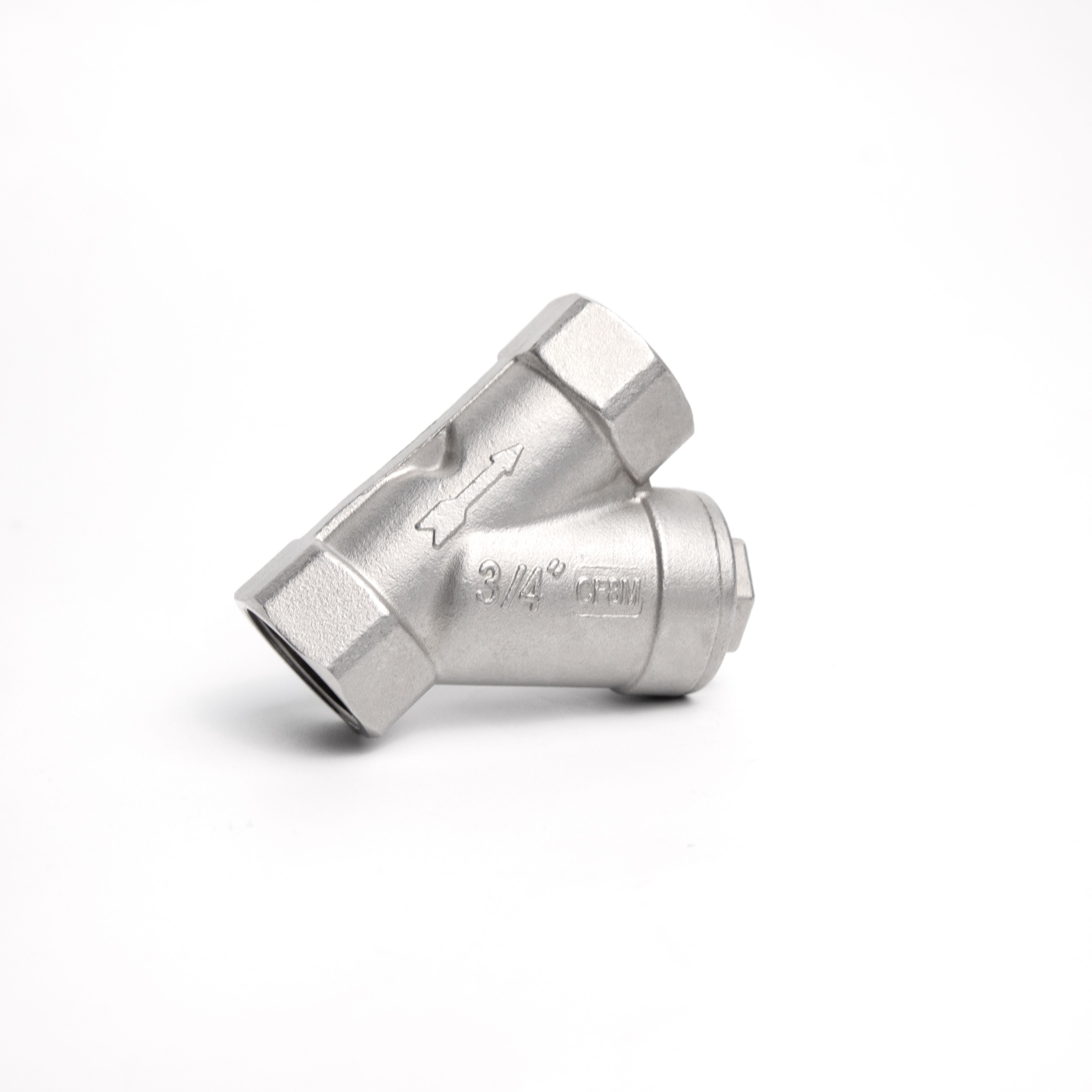
A Y strainer quietly does a job that most pipeline components overlook: it catches the debris that would otherwise chew up valves, clog spray nozzles, or scar pump internals. Its angled screen sits in the flow path like a well-placed net, letting liquid pass while solids drop into the collection leg. Without one, you are essentially inviting every speck of rust, weld slag, or scale from upstream work to travel downstream and cause expensive wear. The Y shape is not just for looks—it creates a low-turbulence zone where particles lose momentum and settle, giving you a simple mechanical defense that needs no power, no sensors, and no routine software updates.
What often gets overlooked is how forgiving the Y strainer is in tight spaces. Unlike basket strainers that demand a straight run and a large housing, the compact angled body fits into elbows, vertical drops, or crowded mechanical rooms without forcing a repipe. Maintenance is equally practical: isolate the line, unscrew the cap, and pull the screen for a rinse. You do not need special tools or a shutdown crew. That ease of access means the strainer actually gets cleaned, which is half the battle in any system. A strainer left untouched becomes a restriction, but a Y strainer’s design makes the cleaning ritual feel less like a chore and more like a quick filter swap.
Beyond protection, a Y strainer gives you a cheap diagnostic window. When you open that cap and see a handful of gasket fragments or pipe scale, you know something upstream is degrading before it becomes a catastrophic failure. It turns a passive fitting into an early-warning device. And because it works on steam, water, oil, or mild chemicals, the same strainer spec can often be reused across different parts of a plant, simplifying spare parts inventory. The real value is not just catching junk—it is reducing the frequency of unplanned downtime, extending the life of expensive control valves, and giving maintenance teams one less emergency call at 2 a.m.
Choosing the Right Mesh Size Without Overcomplicating It
Most people overthink mesh size because they assume bigger always means better. That's rarely the case. A mesh that's too coarse lets fine particles slip through, while one that's overly fine can clog, slow down your process, or simply cost more than you need to spend. The real trick is matching the opening to the largest particle you're willing to let pass—and nothing more.
Start by asking what you're trying to separate. If you're sifting flour for baking, a 30 to 60 mesh range works without turning your kitchen into a dust storm. On the other hand, straining seeds from a sauce might only need a 16 to 20 mesh. The moment you define the upper size limit of what should pass, the correct mesh number practically picks itself.
Ignore the urge to compare every micron chart side by side. Instead, test a small batch with the coarsest option that seems reasonable, then move finer only if you see unwanted particles in the result. You'll save time, avoid frustration, and likely discover that the simplest choice was the right one all along.
Installation Angles That Actually Prevent Clogging
Most clogs don't start in the middle of a straight run—they form at connection points where the angle interrupts flow. If you're using a hard 90-degree elbow right after a fixture drain, you're asking for trouble. Solids lose momentum at the sharp turn and settle against the fitting wall. A better approach is to split that turn into two 45-degree fittings with a short nipple between them, or use a long-sweep elbow. The gradual change keeps waste moving instead of piling up at the corner.
On horizontal drains, slope matters more than many people realize, but steeper isn't always better. A pipe pitched too steeply lets water race ahead and strands solids behind, where they dry and harden. For typical 1.5-inch or 2-inch branch drains, aim for a quarter inch of fall per foot. For 3-inch or larger mains, an eighth inch per foot is often plenty. Check the bubble on your level at multiple points along the run—don't trust your eye or the existing hangers.
Pay attention to how branches tie into a vertical stack. A standard sanitary tee works for vertical-to-horizontal transitions, but when you're joining a horizontal branch to a vertical drain, a wye plus a 45-degree elbow (or a combination fitting) directs flow downward at a gentler angle. This prevents the splash-back and turbulence that make solids drop out of suspension at the joint. Also make sure the branch enters the main in the direction of flow, never against it.
Reading Pressure Drop to Predict Maintenance Needs
Tracking pressure drop across a filter or heat exchanger gives you a direct view into how much resistance is building up inside the system. As particles collect on a filter media or scale forms on tube walls, the differential pressure climbs in a fairly predictable way. By logging these readings at regular intervals, maintenance teams can spot the early signs of fouling long before flow rates drop or energy costs spike.
A gradual upward trend usually points to normal contaminant loading, while a sudden jump might indicate a torn filter, a stuck valve, or a slug of debris hitting the system. Instead of replacing components on a fixed calendar schedule, you can use the shape of the pressure drop curve to schedule work only when the data says it is needed. This keeps healthy parts in service longer and prevents surprise failures during peak demand.
For practical implementation, compare current readings against a clean-system baseline at the same flow rate. Many plants set a threshold—say a 15 to 20 percent increase over baseline—as the trigger for inspection or replacement. Pairing pressure drop data with temperature and vibration readings adds another layer of confidence, turning a simple gauge into a reliable predictor of upcoming maintenance needs.
Material Pairings for Aggressive or High-Temperature Media
Choosing the right material pairings for aggressive or high-temperature media is rarely as simple as picking two corrosion-resistant metals. The real challenge lies in understanding how different materials interact under sustained thermal cycling, chemical attack, and mechanical stress. In many process environments, a single flawed pairing leads to galvanic corrosion or differential expansion failures long before either material would fail on its own.
A practical starting point is to evaluate the electrochemical potential difference between candidate alloys. For high-temperature oxidizing acids, pairing a high-nickel alloy like Hastelloy C-276 with a titanium grade can work, but only if the titanium is not exposed to reducing conditions where it passivates poorly. Similarly, PTFE-lined components often outperform exotic metals in concentrated hydrochloric acid service, yet the liner's thermal expansion can create crevices at sealing faces when mated with rigid stainless steel flanges.
When designing for aggressive media, consider not just the wetted surfaces but also the non-wetted interfaces. For instance, using a molybdenum-rich alloy for a valve body but a standard 316 stainless steel stem nut invites crevice corrosion at the thread contact. Instead, matching the stem material to the body or adding a sacrificial bushing made of a more anodic alloy can extend service life. Ultimately, the best pairings are those validated by field history or simulated process tests, not merely by individual corrosion charts.
When to Choose a Y Strainer Over a Basket Strainer
When installation space is tight or the line needs a change in direction, a Y strainer often makes more sense. It can be fitted directly into vertical or horizontal piping without demanding the large clearance that a basket strainer requires for lid removal. If the service involves gas, steam, or high-pressure liquid, the compact body of a Y strainer typically handles pressure ratings more gracefully than a basket design. Field experience shows that on lines smaller than 2 inches, the Y pattern is almost the default choice because it slips into tight spots without forcing a repipe.
Maintenance frequency and downtime constraints are another trigger. The screen on a Y strainer can be pulled quickly, and many designs allow blowdown or partial cleaning without fully draining the line. If your system cannot tolerate long shutdowns, or if the debris is mostly fine particles rather than heavy solids loading, choosing a Y strainer cuts cleanup time and spare parts cost. A basket strainer may hold more dirt, but every cleaning means opening a larger lid and wrestling with more hardware, which eats into labor hours and floor space.
There are also piping configurations where the Y strainer doubles as an elbow, eliminating an extra fitting and reducing potential leak points. This is particularly useful in cramped mechanical rooms or skid-mounted equipment. However, if you expect high flow with coarse debris, a basket strainer still earns its place—so match the strainer to the actual solids load and access limits rather than defaulting to one type.
FAQ
It's a mechanical filter installed in pipelines to catch debris and protect downstream equipment like pumps, valves, and meters. The Y shape allows the straining element to sit at an angle, creating a larger screen area while keeping the unit compact enough to fit into tight piping runs.
Start by identifying the smallest particle your downstream equipment can tolerate. For most general industrial applications, a 20-mesh screen (about 840 microns) works fine. If you're protecting sensitive components like spray nozzles or heat exchangers, go finer—40 or 60 mesh. Just remember that finer mesh means more frequent cleaning, so don't over-filter unless you actually need it.
Yes, but orientation matters for performance. In horizontal lines, the strainer leg should point downward so debris collects in the pocket. In vertical lines, install it so the leg angles downward against the flow—this lets gravity help trap particles. Avoid installing it with the leg pointing upward, because debris can fall back into the main flow when the system shuts down.
Y strainers are compact and work well for smaller line sizes and lower debris loads. Basket strainers hold more debris and are easier to clean because you simply lift out the basket, but they're bulkier and more expensive. If you have a tight space and occasional debris, choose a Y strainer. For continuous heavy contamination, a basket strainer is worth the extra cost.
There's no universal schedule—it depends on your process. Start by checking the pressure drop across the strainer. When it reaches 5-10 psi above the clean baseline, it's time to clean. For systems with known debris levels, you can set a calendar-based routine, but always verify with pressure readings. Neglecting cleaning can cause the screen to collapse or force debris through.
The body is usually cast iron, carbon steel, stainless steel, or bronze, depending on the fluid and pressure. Screens are commonly stainless steel mesh, but for aggressive chemicals you might need Monel or Hastelloy. Always match the material to your process fluid—using a cast iron body with corrosive media will fail quickly, no matter how good the screen is.
Yes, but you need the right configuration. Steam Y strainers should have a stainless steel screen and be installed with the blowdown valve on the leg for quick cleaning. The screen must withstand high temperature and velocity. Also, install the strainer on its side in steam lines to prevent condensate from pooling in the pocket and causing water hammer.
Screen collapse usually happens from excessive differential pressure—either too much debris buildup or the strainer was undersized from the start. To prevent it, size the strainer for the maximum flow rate, use a screen support or perforated backing for fine mesh, and monitor pressure drop regularly. A collapsed screen sends debris straight into your expensive equipment, so don't skip the gauge.
Conclusion
A Y strainer earns its place in almost any industrial pipeline where downstream equipment has to be protected from solid debris, pipe scale, or weld slag. Unlike some inline filters, it keeps a compact profile while providing continuous flow, which makes it a practical first line of defense for pumps, control valves, and heat exchangers. The way you mount it matters more than many operators assume. For horizontal runs, angle the strainer so the screen leg points downward; for vertical lines, install it only when flow runs downward. This lets gravity pull trapped particles into the collection chamber instead of letting them pack around the screen. Choosing a mesh size does not have to be complicated. Start with the smallest particle your downstream equipment can tolerate, then go one step coarser rather than one step finer. A screen that is too fine raises pressure drop quickly, forces more frequent cleaning, and often does nothing useful because the debris in the line is already larger than the openings.
Watching pressure drop is the cheapest way to know when maintenance is due. As the screen loads up, differential pressure climbs, and a gauge or two pressure taps across the strainer will show you exactly when cleaning is required instead of relying on a schedule. Material selection should follow the fluid, not just the pipe cost. Stainless steel covers many aggressive or high-temperature services, but carbon steel is fine for non-corrosive water or oil, and bronze is common in smaller low-pressure systems. For strong acids or chlorides, alloys such as Hastelloy or duplex stainless are worth the extra money. When you compare a Y strainer with a basket strainer, the decision usually comes down to debris volume and available space. A Y strainer handles high-pressure lines and tight installations well because of its narrow, angled body. A basket strainer, however, offers a larger dirt-holding capacity and easier screen removal for heavy solids loading, so choose the Y when debris is fine or moderate and pressure is high, but switch to a basket for heavy, frequent particulate loads.
Contact Us
Contact Person: Adonis
Email: [email protected]
Tel/WhatsApp: 8615858822657
Website: https://www.uptaivalve.com