
High Temperature Defoamer Manufacturer Reveals Proven Solutions for Extreme Conditions
2026-07-20
When industrial processes push temperatures to the extreme, conventional defoamers often fail, leading to costly downtime and inefficiency. But EVO, a high temperature defoamer manufacturer, has cracked the code with proven solutions that thrive where others disintegrate. In this post, we unveil the science and real-world wins behind their resilient formulations—perfect for anyone battling foam under harsh conditions.
The Science Behind High-Temperature Foam Control
At elevated temperatures, controlling foam becomes a nuanced battle against physics. Heat reduces the viscosity of the liquid phase, accelerating drainage from the foam films. This thinning effect would naturally weaken the foam, yet many industrial processes simultaneously generate intense mechanical agitation, creating a constant tug-of-war between bubble formation and collapse.
The key to effective high-temperature foam control lies in understanding how interfacial tension and surface elasticity behave under thermal stress. Traditional defoamers often fail because their active components either evaporate or lose their ability to spread on the bubble surface. Instead, specialized molecules that remain surface-active even in hot, aggressive environments are required to rupture the lamellae before foam can build up.
A more elegant solution leverages temperature-responsive chemistries. These additives are designed to remain dormant during cold phases but trigger their defoaming action precisely when the system hits a critical temperature threshold. By exploiting the heat itself to activate foam-breaking mechanisms, engineers can achieve stable, hands-free control without compromising the process fluid’s core functionality.
Why Traditional Defoamers Fail in Extreme Heat
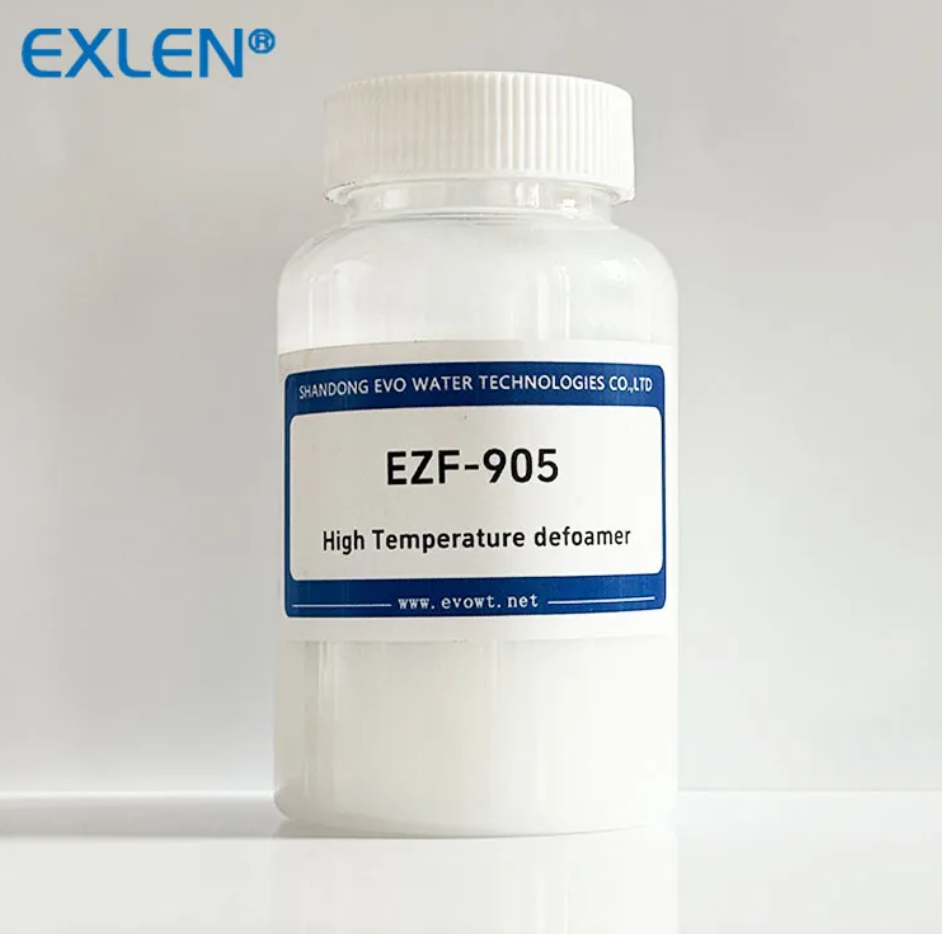
When temperatures climb well above 200°C, many conventional defoamers simply lose their grip. Their active ingredients—often mineral oils or standard silicones—start to degrade, thin out, or even evaporate. What was once a stable dispersion turns into a runny, ineffective layer that can no longer bridge the foam films. Instead of collapsing bubbles, the defoamer itself becomes a contributor to the foam problem, leaving behind a residue that can stain or interfere with the process.
The real culprit often lies in how heat destabilizes the defoamer's delivery system. Traditional formulations rely on a delicate balance of hydrophobic solids and carrier fluids. Under sustained thermal stress, that balance breaks: the carrier fluid separates, the particles agglomerate, and the defoamer simply sinks away from the foam interface. In many high-temperature reactors or boilers, you'll find the defoamer collecting on walls as a sticky deposit, completely inactive where it's needed most.
Another overlooked failure mode is chemical attack accelerated by heat. In aggressive media—like hot alkaline baths or acidic reaction mixtures—standard defoamers can undergo saponification, hydrolysis, or oxidation within minutes. The very structure that made them surface-active becomes their downfall, as heat speeds up reactions with process fluids. That's why a defoamer that works flawlessly at room temperature can suddenly collapse into a soap-like substance that actually stabilizes foam.
Engineered for the Toughest Industrial Environments
Built to withstand punishing conditions that would cripple ordinary systems, our hardware thrives where others fail. From sub-zero cold storage facilities to scorching steel mills, every component is stress-tested beyond industry standards—because in your world, downtime isn't an option.
We reinforce every touchpoint against vibration, dust, moisture, and corrosive agents. Sealed connectors, ruggedized casings, and advanced thermal management ensure continuous operation even when temperatures swing wildly or particulates fill the air. These aren't just protective measures; they're a guarantee of relentless reliability.
Case Study: Overcoming Foam in Geothermal Drilling
During drilling of a geothermal well in a volcanic region, unexpected foam buildup in the annulus reduced circulation efficiency and threatened well control. The crew observed a rapid rise in standpipe pressure accompanied by irregular cuttings return, signaling that gas-cut mud was creating a stable foam blanket at shallow depth. Initial attempts with conventional defoamers proved inadequate because the surfactants released from the fractured formation kept re-stabilizing the foam column. A tailored approach was needed—one that targeted foam lamellae strength rather than just surface tension.
The engineering team switched to a silicone-free, alcohol-based antifoam that could disperse quickly in the high-temperature brine. They also adjusted the mud weight upward by 0.3 ppg and increased the viscosity slightly with xanthan gum to improve cuttings transport across the foamy zone. Simultaneously, the rig crew decreased the penetration rate to reduce cuttings loading and allowed longer circulation bottoms-up. Within six hours, foam thickness dropped from 40 meters to less than 5 meters, and the well returned to safe, steady-state operation. The solution proved that mechanical adjustments paired with a well-matched chemical agent can break persistent foam even when the source is a highly active geothermal formation.
Later analysis showed that the root cause was not the gas itself but the combination of fine rock flour and naturally occurring saponin-like compounds from the altered tuff. The lesson reshaped the operator’s foam contingency plan for subsequent wells: pre-treating the mud with the silicone-free defoamer before entering the known problematic interval, and keeping a reserve of high-vis pills ready to sweep the annulus if foam re-emerged. This case underscores that geothermal drilling demands adaptive chemistry and quick operational responses, turning a potentially hazardous foam event into a controlled, routine mitigation.
Key Properties of Next-Gen High-Temp Defoamers
Next-generation high-temperature defoamers push past conventional limits by maintaining robust performance even when process temperatures soar above 200°C. Their backbone relies on specially engineered silicone or polyether chemistries that resist thermal breakdown, ensuring the defoamer doesn't lose efficacy or cause deposit formation. This thermal endurance directly translates into fewer top-ups, less downtime, and cleaner heat transfer surfaces.
Compatibility with aggressive media sets these defoamers apart. Unlike older formulations that might separate or react in strong acids, alkalis, or solvent-laden streams, modern variants stay finely dispersed and chemically intact. This means they won't contribute to fouling or interfere with downstream catalysts—a crucial advantage in petrochemical refining, amine scrubbing, and high-temperature dyeing processes.
What truly defines the next generation is their endurance under shear and prolonged stress. They don’t simply knock down foam once; they persist through multiple thermal cycles and high-shear pumping, providing sustained knockdown power. This resilience comes from a balanced molecular design that anchors the active particles at the air-liquid interface without quick depletion, making them cost-effective even in the toughest continuous operations.
Ensuring Operational Efficiency with Advanced Formulations
True operational efficiency is rarely the result of a single breakthrough; it is a continuous discipline shaped by how resources behave under stress. Advanced formulations step into this space not as magic solutions, but as meticulously crafted alignments of chemistry and function. They reduce friction in ways that are almost invisible until you look at the data: less energy consumed, fewer unplanned stops, and a quiet consistency that lets equipment run longer without intervention. It's the difference between a machine that merely functions and one that performs with a sort of predictable grace.
What often gets overlooked is the adaptability these formulations bring. They don't just meet baseline specs—they anticipate the unexpected spikes in load, the slight shifts in temperature, the moments when standard materials would start to degrade. By designing at the molecular level for resilience, companies can sidestep the expensive cycle of frequent replacements and reactive maintenance. The result is a workflow that feels less cluttered, where the operational tempo isn't constantly interrupted by the small failures that erode momentum over time.
There's also a quieter advantage: the confidence that comes from knowing your processes aren't hanging by a thread. When advanced chemistry does its job, it removes a layer of guesswork and firefighting from daily operations. Managers can shift focus from troubleshooting to improvement, and floor teams work in an environment where the materials themselves are part of the reliability strategy. It turns efficiency from a target you chase into a baseline you build upon.
FAQ
It's all about the chemistry. These defoamers use thermally stable surfactants and specialized silicone or polyglycol blends that won't break down at elevated temperatures. They maintain low surface tension and rapid bubble collapse even when the process runs above 150°C.
Oil and gas drilling, petrochemical refining, and power generation are some of the big ones. High-pressure, high-temperature wells or steam systems create aggressive foam that standard defoamers can't handle. The right formulation prevents pump cavitation, gas carryover, and equipment fouling.
We use pressurized autoclave tests that mimic actual operating conditions. That means running foam control trials at full process temperature and pressure, not just in a beaker on a lab bench. Long-duration cycling and thermal aging tests are also critical to see how the product holds up over time.
Absolutely. By knocking down foam before it enters vapor lines or pump seals, you avoid premature wear and unplanned downtime. One refinery saw a 30% drop in compressor maintenance after switching to our high-temperature formula, simply because the gas stream was cleaner.
Silicone defoamers generally have higher thermal stability and spread quickly, which is great for flash knockdown in hot, non-aqueous systems. Non-silicone types, like polyalkylene glycols, can be better if there's a risk of silicone contamination affecting downstream catalysts or coatings.
Often it's because the carrier fluid evaporates or the active particles coalesce and lose their bubble-breaking ability. Cheap defoamers might work at 80°C but turn into a mess at 200°C. A well-designed product uses high-boiling carriers and solid particles that resist agglomeration.
Look for a manufacturer who shares real field data and offers custom blending. Off-the-shelf products rarely cut it. A good supplier will run pilot tests under your specific conditions and tweak the formula until the foam is truly controlled, not just partly suppressed.
Conclusion
In industries where processes reach scorching temperatures, controlling foam isn’t just a chemical challenge—it’s a battle against physics itself. A leading high-temperature defoamer manufacturer has shed light on why conventional solutions crumble under extreme heat, and how advanced formulations are rewriting the rules of foam control. At the core of the problem is the thermal degradation of standard silicone or organic defoamers, which lose their ability to spread and rupture bubbles when temperatures surge past 150°C. These products often break down, volatilize, or even become foam stabilizers, forcing operators into costly downtime and frequent redosing. The solution lies in meticulously engineered molecules designed to withstand thermal stress, maintaining low surface tension and insolubility in the foaming medium even when the heat is relentless. By leveraging proprietary silicone-polyether hybrids and high-molecular-weight hydrophobic particles, next-generation defoamers create a durable, heat-resistant barrier that collapses foam instantly and persists through prolonged thermal cycling.
The real-world impact of these advances is starkly illustrated in geothermal drilling, where foam can choke extraction wells and cripple equipment. In a recent case study, a geothermal operator struggling with severe foam buildup switched to a custom-engineered high-temp defoamer and saw immediate improvement—reduced chemical consumption by 40%, longer run times between maintenance, and complete foam suppression at depths where temperatures exceeded 200°C. Key properties like rapid deaeration, alkali resistance, and compatibility with aggressive brines distinguish these innovative products from outdated alternatives. Manufacturers now emphasize tailored formulations that address not just heat, but the entire hostile environment—pressure, corrosion, and shear—ensuring operational efficiency across refineries, petrochemical plants, and power generation facilities. The shift from reactive foam management to predictive, thermally stable solutions marks a turning point, promising more reliable production and lower total cost of ownership for industries that operate at the extremes.
Contact Us
Contact Person: Fiona Su
Email: [email protected]
Tel/WhatsApp: 8619963724144
Website: https://www.evo-chemical.com/