

High-Quality Prefab Concrete House Moulds: Your Essential Guide
2026-06-26
Prefab concrete homes are reshaping the construction landscape with speed, efficiency, and sustainability. But behind every sturdy panel is a critical component: the mould. This guide explores how high-quality moulds make all the difference—and why LugongMachinery stands out for builders who refuse to compromise on precision and durability.
Why Precision Engineering Matters in Concrete House Moulds
In the world of concrete house moulds, even a fraction of a millimeter can spell the difference between a flawless finish and costly rework. Precision engineering ensures that every panel, corner, and joint aligns perfectly, eliminating gaps that lead to leaks, structural weaknesses, or unsightly blemishes. When moulds are crafted with exacting tolerances, the concrete flows and settles uniformly, curing into a monolithic shell that stands up to decades of weather and wear without warping or cracking at the seams.
Beyond basic accuracy, precision-engineered moulds unlock architectural possibilities that would otherwise be impossible. Complex curves, sharp edges, and intricate textures can be replicated with stunning fidelity, allowing for homes that feel bespoke rather than mass-produced. This level of detail eliminates the need for extensive post-pour finishing work, saving time on site and reducing the risk of human error during grinding or patching. It’s not just about dimensional correctness—it’s about turning engineering intent directly into architectural reality.
On a practical level, meticulous mould design also streamlines the entire building process. Components fit together like a well-machined clock, meaning faster assembly and fewer adjustments on site. This reliability translates to lower labor costs and minimal material waste, as there’s no need to compensate for misalignments with extra concrete or sealants. In the end, precision isn’t a luxury—it’s the backbone of durable, efficient, and beautiful concrete housing.
Material Choices That Define Long-Lasting Formwork
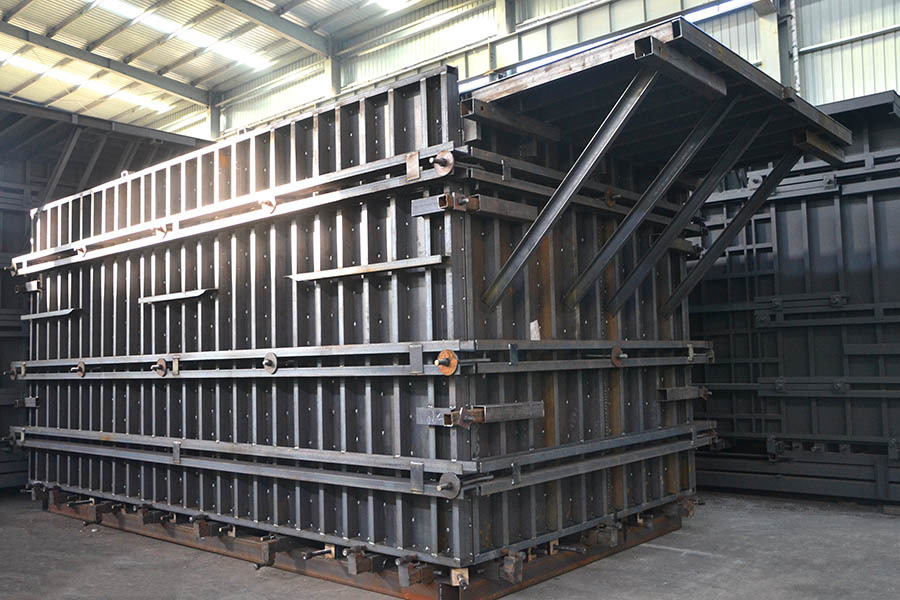
The longevity of formwork starts with the raw materials selected. While plywood remains a common choice, its durability hinges on the quality of the face veneer and the bonding adhesives used. Birch plywood with a phenolic film coating, for instance, resists moisture and abrasion far better than standard alternatives, reducing the risk of warping or delamination after repeated pours. Engineers are increasingly turning to aluminum alloys for their unmatched strength-to-weight ratio and natural corrosion resistance, especially in projects with complex geometries or high reuse targets. These alloys maintain dimensional stability under heavy loads, ensuring that the formwork stays true from first pour to last.
Steel, another stalwart, offers exceptional rigidity and can be fabricated into modular systems that withstand hundreds of cycles, yet it demands careful protection against rust. Galvanized coatings or weathering steel compositions can extend service life significantly, though the initial investment often dictates whether a contractor opts for treated timber, plastic composites, or hybrid solutions. Plastic formwork, particularly fiberglass-reinforced polymers, has carved out a niche where chemical resistance and lightweight handling are critical. Unlike wood, it doesn’t absorb water or swell, and it can be molded into intricate shapes that would be cost-prohibitive in metal, making it a smart pick for decorative concrete elements.
The interplay between material choice and job site conditions can’t be overstated. In marine environments, stainless steel or high-grade aluminum might be the only viable options to avoid premature corrosion. For large flat slabs, laminated veneer lumber with high-density overlay might outperform steel simply because it’s easier to handle and less prone to denting. Ultimately, the smartest selections balance structural demands, reusability, and local supply chains—a good formwork engineer will often blend materials, using steel frames with plywood panels or aluminum beams with plastic caps, to get the best of all worlds without overspending.
Design Flexibility Without Compromising Structural Integrity
True design flexibility means being able to explore bold forms, open spans, and unconventional layouts without constantly second-guessing their viability. Many architects run into a wall where a striking visual concept gets diluted or abandoned because the engineering can’t keep pace with the vision. The sweet spot lies in using material and connection strategies that inherently support wide-ranging geometries while carrying loads efficiently. Instead of treating the skeleton as a constraint, it becomes a collaborator—allowing cantilevers, curves, and soaring atriums to exist without ballooning the budget or burying the site in excessive reinforcement.
Getting this right requires a deliberate blurring of the lines between architecture and engineering from day one. When structural rationalization happens in parallel with design development, you avoid the painful back-and-forth that often waters down a project. Something as simple as choosing a floor system that works with an irregular column grid, or detailing connections that can absorb movement without clutter, can keep the original spatial experience intact. It’s not about working around limitations—it’s about adopting systems that don’t present those limitations in the first place, leaving more room for the design to breathe.
The payoff goes beyond aesthetics. A cohesive structural approach can cut material waste, shorten construction timelines, and eliminate the visual noise of added bracing or oversized members that were never part of the initial concept. When the building stands exactly as it was imagined—clean lines, honest expression of forces, no apologies—it proves that design freedom and robust performance aren’t opposing ideas. They’re two sides of the same coin, minted through early collaboration and a willingness to step away from generic, one-size-fits-all solutions.
Streamlining On-Site Assembly with Smart Mould Systems
On-site assembly often bogs down under the weight of manual adjustments and piece-by-piece alignment. Smart mould systems cut through this chaos by embedding intelligence directly into the forming process. Instead of relying on workers to constantly measure and correct, the moulds adapt on the fly, shaving hours off each build stage. It’s not just faster—it’s a shift toward assembly that feels almost intuitive, where the heavy lifting of precision is handled by the equipment itself.
What sets these systems apart is their ability to communicate. Sensors within the mould track temperature, pressure, and alignment in real time, feeding data to a central controller. This means operators can catch deviations before they become defects, reducing the back-and-forth that typically eats into schedules. Jobs that used to demand constant supervision now run with a quiet confidence, freeing crews to focus on other critical tasks.
Over time, the data these moulds collect builds a blueprint for continuous improvement. Patterns emerge—which materials stress under which conditions, where delays creep in—and the system learns to preempt them. The result is not just a speedier project but a leaner one, with fewer wasted materials and less need for rework. In an industry where margins are carved out in hours and inches, that kind of repeatable efficiency is hard to ignore.
Cost-Effective Customisation for Unique Architectural Projects
Creating truly distinctive architectural spaces doesn't have to drain the budget. The secret lies in rethinking standard approaches—not by settling for off-the-shelf solutions, but by discovering clever, often overlooked ways to tailor every element. When you treat constraints as a catalyst rather than a roadblock, you begin to see opportunities in unexpected materials, adaptive reuse, and streamlined construction methods that still deliver a one-of-a-kind result.
One practical avenue is embracing hybrid techniques that merge local craftsmanship with precision digital fabrication. Instead of importing expensive, custom-made components, designers can collaborate with regional artisans to produce personalized details at a fraction of the cost. Pairing hand-finished textures with modular structural systems, for example, allows for rapid assembly while retaining bespoke character—cutting both material waste and labor hours without compromising the project's singularity.
Another angle involves revisiting the design process itself. By involving clients and builders early in a fluid, iterative dialogue, you sidestep the expensive detours of rigid, top-down planning. Small-scale mock-ups, on-site adjustments, and a willingness to substitute materials intuitively often yield a final product that feels more authentic and intimately tailored. In the end, cost-effective customisation is less about cheapening the vision and more about sharpening it—letting resourcefulness, rather than the bottom line, drive the innovation.
Maintenance Secrets to Extend Your Mould Investment
It's easy to overlook the subtle signs of wear until a mould fails mid-run, leaving you with costly downtime. Getting more life from your tooling starts with documenting every detail of its use—track cycle counts, note any resin changes, and log even minor issues immediately. When your team writes down what they see, patterns emerge that let you address problems like micro-cracks or uneven heating long before they escalate.
Cleaning is not just a wipe-down; it's a diagnostic routine. Use soft copper scrapers rather than steel on delicate surfaces, and during each cleaning session, inspect venting channels and ejector sleeves for residue buildup that can gradually shift part dimensions. A fuzzy picture can tell you more than a checklist: snap a quick photo of the cavity after every 50,000 shots to compare subtle changes over time—something often missed when just relying on memory.
Storage conditions eat into lifespan more than most realise. Bare steel left in a damp corner will flash-rust overnight, wrecking polished surfaces. Instead, coat your moulds with a vapour-phase inhibitor wrap and store them upright in labelled racking, not stacked where alignment pins can get bent. Rotate through your inventory regularly even during slow periods, cycling each tool under heat for a few dry runs to keep lubrication distributed and seals from taking a set.
FAQ
Prefab concrete house moulds are reusable forms or frameworks used to cast concrete panels and structural elements off-site in a controlled environment. They function by shaping wet concrete into precise, uniform components like walls, floors, and roofs. Once cured, these pieces are transported to the building site for rapid assembly, much like putting together a life-sized puzzle. The moulds themselves are typically made from steel or reinforced plastic to withstand repeated use and deliver consistent results.
Cheaper moulds often lead to dimensional inaccuracies, rough finishes, and a shorter lifespan, which can cause delays, extra finishing work, and structural issues down the line. High-quality moulds, on the other hand, ensure each panel fits perfectly, reducing on-site adjustments and waste. They also withstand more casting cycles without warping, offering better long-term value and a more professional end result that holds up to weather and time.
The three main types are battery moulds, tilting tables, and fixed forms. Battery moulds are vertical casting systems that produce multiple panels simultaneously, ideal for large-scale projects. Tilting tables are versatile and allow for horizontal casting with easy demoulding via hydraulic tilt. Fixed moulds are simpler, used for specific shapes like stairs or lintels, and are often custom-built. Each type serves a different production volume and design complexity.
Start by defining your project's scale, panel design, and required output speed. For repetitive, high-volume production, automated battery moulds make sense. If you need frequent design changes, a tilting table offers flexibility. Also, consider the mould material — steel lasts longer but costs more upfront, while reinforced plastic may be lighter and sufficient for smaller runs. Always match the mould’s precision level to your architectural demands, and if possible, visit a manufacturer to see the equipment in action.
Absolutely, customization is a major advantage of modern prefab moulds. Many manufacturers offer tailored solutions, creating moulds that can produce curved walls, special window openings, surface textures, and even integrated insulation channels. You provide the architectural drawings, and the mould is engineered to replicate those details repeatedly. This flexibility allows prefab construction to break away from the ‘boxy’ stereotype and embrace more creative, individualized home designs.
Regular cleaning is non-negotiable — concrete residue must be removed after each pour to prevent buildup that affects panel surfaces. Apply a release agent before casting to ease demoulding and protect the mould face. Check bolts, hinges, and hydraulic systems periodically for wear, and tighten or replace them as needed. Store moulds in a dry, covered area to prevent rust or deformation. With consistent care, a high-quality mould can last for thousands of casts without losing accuracy.
Yes, and they go beyond the obvious. First, precise moulds drastically reduce material waste because you cast exactly what’s needed, with almost no cutting or trimming on site. Second, the controlled factory setting allows better insulation integration and tighter seals, boosting the home’s energy efficiency for decades. Additionally, the moulds themselves are reused potentially thousands of times, cutting down on raw resource consumption compared to traditional formwork that’s often discarded after one use.
Conclusion
Prefab concrete houses are no longer a niche curiosity—they’re redefining how we think about construction speed, durability, and design freedom. At the heart of every successful project lies a set of moulds that does far more than shape wet concrete. Precision engineering is the silent enabler here: when tolerances are measured in fractions of a millimetre, panels fit together seamlessly on site, eliminating the grinding, shimming, and patching that plague low-cost formwork. But precision alone isn’t enough. The materials you choose for the moulds themselves dictate how many cycles they’ll survive. High-grade steels, aerospace‑grade aluminium alloys, and robust plywood with phenolic film facings each have their sweet spot—balancing cost, weight, thermal behaviour, and resistance to the alkalinity of concrete. Pairing the right material with the right release agents and a controlled welding process keeps the mould surface pristine, pour after pour, so the architectural finish comes out clean and uniform without extra labour.
What makes today’s high‑quality moulds truly transformative, though, is how they let architects push boundaries without inviting structural compromise. Cantilevers, double‑height voids, curved facades—all are achievable because modular mould systems are engineered to lock together in countless configurations while maintaining the rigidity needed for a monolithic pour. On the jobsite, smart design features like indexed connections, integrated lifting anchors, and magnetic side‑rail systems slash assembly time, turning a complex wall into a one‑day operation for a small crew. Customisation doesn’t have to blow the budget, either. Many manufacturers now offer hybrid mould packages where standard components do the heavy lifting and bespoke inserts handle unique features, keeping costs in line with conventional construction. Even the best system, however, won’t pay off if it’s neglected. Simple maintenance routines—immediate cleaning after stripping, checking bolt torques, and storing panels flat under cover—can double a mould’s service life. A sound investment in high‑quality formwork, backed by a solid care plan, rewards you with a building envelope that remains true to both the design intent and your financial projections.
Contact Us
Contact Person: Zhang Zhenlai
Email: [email protected]
Tel/WhatsApp: 8618563210000
Website: https://en.lugongmachinery.com/