

High-Quality Electric Wheelchair for the Disabled: Essential Features and Buying Guide
2026-08-17
Choosing an electric wheelchair isn’t just about getting from point A to point B—it’s about reclaiming independence, comfort, and confidence in everyday life. But with so many models on the market, how do you know which features actually matter and which are just marketing noise? In this guide, we cut through the clutter to highlight the essential elements of a high-quality electric wheelchair for people with disabilities, from battery range and seating ergonomics to safety certifications and real-world durability. Whether you’re buying for yourself or a loved one, you’ll learn what separates a chair that simply moves from one that truly supports your lifestyle. And if you’re looking for a brand that puts user experience first, Freedomchair is worth exploring—not just for its build quality, but for its focus on practical, everyday freedom.
What Counts as “High-Quality” in an Electric Wheelchair?
You can’t judge a power chair by its brochure photos. A high-quality electric wheelchair shows itself in the welds that stay tight after months of curb drops, in a powder-coated frame that doesn’t flake when you scrape a doorway, and in a base that refuses to flex under shifting weight. The drive system matters just as much: good motors and gearboxes pull away smoothly instead of lurching, stay quiet on hills, and keep their cool during long outdoor runs. Battery packs built from reputable cells hold a usable range through winter and after hundreds of charge cycles—cheaper packs often fade within the first year.
Comfort is where high-quality chairs earn their keep. Fine-grained adjustments for seat depth, backrest angle, and footplate height let you dial in a posture that supports your spine instead of forcing a generic slump. The cushion should spread pressure evenly enough to prevent sores during all-day use, not just feel soft for five minutes in a showroom. Controller response needs to be intuitive and immediate—no lag, no sudden jumps—and the joystick or alternative input should sit where your hand naturally rests. Even minor details like snag-free cable routing and a charger port you can reach without bending sideways indicate the designer actually uses wheelchairs.
Long-term serviceability often separates a quality chair from a disposable one. Look for a manufacturer that keeps replacement parts in stock for years, not just the current model cycle, and a dealer network that can diagnose problems rather than guess. Real-world evidence counts too: crash-test ratings, water-resistance certification, and feedback from users with similar mobility needs reveal how a chair handles rain, gravel, and daily transfers. A chair that stays rattle-free and predictable after a year of hard use is worth far more than a spec sheet crowded with impressive but untested numbers.
Seat Width, Depth, and Adjustability That Actually Fit
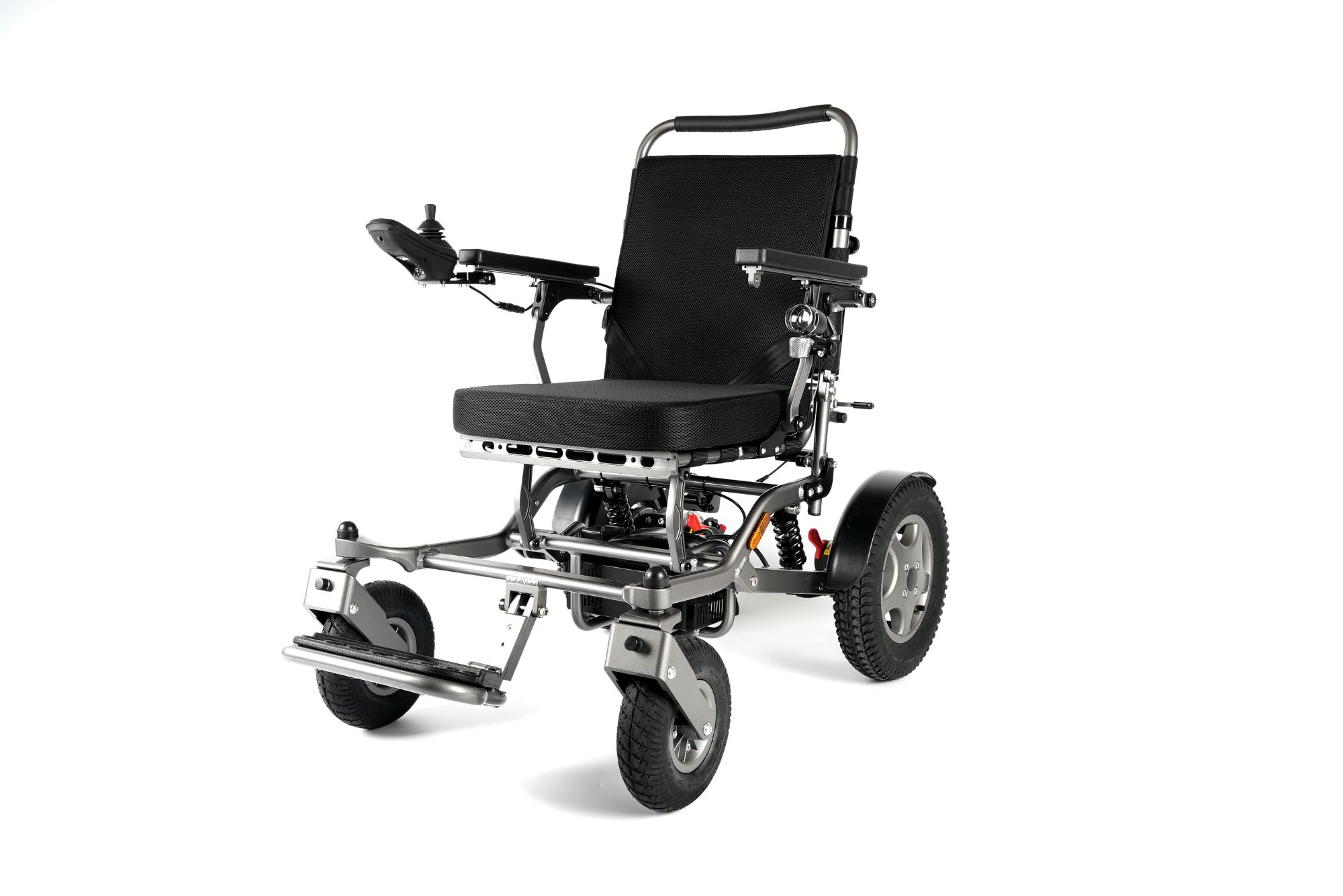
Most chair specs look fine on a chart and then fail the moment you sit down. A seat that truly fits doesn't just meet a width number; it gives your thighs room without forcing your arms outward, and it won't leave you perching on the front edge or slouching to reach the backrest. Small mismatches here can undo even the best lumbar support.
Seat width deserves more attention than it usually gets. If the frame or armrests press against your hips, you end up twisting and shifting all day just to find a tolerable position. The right width varies by body, but you should be able to sit with your legs relaxed and a little clearance on both sides, not feel locked into a narrow slot.
Depth adjustability is where fit becomes personal. A sliding seat pan with enough travel lets you plant your back against the backrest and still keep a couple of fingers of space behind your knees. That sounds minor, but it's the difference between supported thighs and constant pressure. The mechanism should move smoothly while seated and stay put once you find the right spot, no tools or wrestling required.
Real-World Battery Range and Charging Habits
Most EV drivers quickly learn that the official range figure is a best-case scenario. Cold weather, highway speeds, and aggressive acceleration can each shave off double-digit percentages. In daily use, many owners report getting between 80% and 90% of the advertised range in mild conditions, while winter commutes might dip closer to 70%. Understanding this variability is key to avoiding range anxiety.
Charging habits are just as personal as driving style. Some people plug in every night at home, treating the car like a smartphone. Others rely on workplace chargers or fast-charging stations only when the battery drops below 30%. A growing number of drivers with access to off-peak electricity rates time their charging sessions to start after midnight, saving money while still waking up to a full battery.
Battery longevity also shapes daily routines. Repeatedly charging to 100% and draining to near zero can accelerate degradation, so many manufacturers recommend keeping the state of charge between 20% and 80% for routine use. This habit might mean more frequent but shorter charging sessions—a trade-off that preserves capacity over the long term and keeps the car ready for unexpected trips.
Drive Wheel Configuration and Indoor vs. Outdoor Handling
The way drive wheels are arranged changes how a machine behaves the moment it crosses a threshold. A centered pair of drive wheels with casters at the front and rear gives tight indoor turning, but outdoors that same setup can struggle on grass or gravel. You feel it immediately: the casters dig in, the drive wheels lose grip, and a puddle that was nothing indoors becomes a real obstacle.
For outdoor work, many designs move to larger drive wheels with a wider track or switch to a differential setup that keeps both wheels on the ground over uneven terrain. Indoor-only models often sacrifice ground clearance for a lower center of gravity, which is fine on smooth floors but punishing on cracked pavement. The tire compound matters too. Soft rubber works well inside but wears quickly on abrasive concrete; harder treads handle outdoor grit but can scuff polished floors and transmit more vibration.
If you need a machine for both, look for one that balances wheel diameter and caster placement instead of simply adding more power. A slightly larger rear drive wheel paired with front casters that can swivel freely works surprisingly well in both environments, provided the chassis doesn't bottom out on door thresholds or curb cuts.
Cushioning, Back Support, and Tilt Functions Worth Considering
A seat that feels plush in the showroom can turn punishing by hour three. Look for multi-density foam—firmer around the edges to keep you from sliding, softer under the sit bones to reduce pressure. If the cushion compresses more than half an inch under hand pressure, it probably won't hold up over a full workday.
The backrest should follow the natural S-curve, not simply push against the lower spine. Adjustable lumbar depth beats fixed lumbar height because it lets you position the support where your curve actually sits. A tall backrest with a slight flex can be better than a rigid one, allowing your shoulders to relax without losing support.
Tilt functions fall into a few camps: simple seat-pan tilt, backrest tilt, and synchronized tilt where the seat and back move together. The sync mechanism usually wins for long hours because your feet stay planted while your back opens up. Avoid cheap mechanisms that let the backrest drop with a clunk; smooth, controlled recline is the sign of decent engineering.
Maintenance, Repairs, and What Most Sellers Won’t Tell You
Every house has a story, and most of it lives in the bones you can't see. Sellers will happily point out fresh paint and new light fixtures, but they're not going to volunteer that the water heater is on its last legs or that the roof has been patched three times in the past decade. Before you fall in love with a property, pull back the curtain on its maintenance history. Ask for utility bills, look for signs of deferred care, and don't be afraid to get under the sink with a flashlight. The real cost of a home often hides in the repairs nobody mentioned.
Foundation cracks, outdated wiring, and aging HVAC systems are rarely mentioned in the listing. That's why a thorough inspection is non-negotiable, but even inspectors can miss what sellers actively conceal. A fresh coat of paint can hide water stains, and strategically placed furniture might cover a patch of uneven flooring. Talk to neighbors if you can—they often know which houses have flooded or which owners were constantly fixing things. The goal isn't to find a perfect house; it's to walk in with your eyes open and your budget realistic.
Smart buyers budget for maintenance before they ever make an offer. A good rule of thumb is to set aside one to three percent of the home's value each year for upkeep and surprises. If the seller won't share repair records or seems evasive about past issues, that's a red flag worth heeding. Sometimes the most honest answer is the one you have to dig for yourself. After all, the house will tell you its problems eventually—better to discover them before the mortgage is signed.
FAQ
Look at the frame welds and the type of motor gearing. A chair with a reinforced steel or aluminum frame, sealed brushless motors, and metal connectors in the joystick wiring will typically outlast models with plastic housings and exposed belts. Also check whether the manufacturer publishes a weight capacity with a safety margin—many quality chairs are rated for at least 300 pounds even if the user is lighter, because repeated curb drops stress the frame.
Not necessarily. Larger batteries add weight and can make the chair harder to transport, while a very small pack may leave you stranded. A good approach is to match the range to your longest typical day plus 20% for battery aging. For most users, a 20-30 mile range is practical if charging can happen nightly. Also ask whether the batteries are user-replaceable and whether the charger shuts off automatically to prevent overcharging.
Pressure relief comes from more than just a thick cushion. Look for a seat that allows tilt-in-space of at least 10 degrees, an adjustable backrest angle, and a cushion with a contoured foam or air-cell design that redistributes weight away from the sitting bones. Removable, washable covers matter too, because moisture buildup accelerates skin breakdown. Avoid chairs with fixed backrests that keep the pelvis tilted backward for long periods.
Measure the tightest doorway, hallway, and bathroom entry before shopping. Then compare those widths to the chair's overall width, not just the seat width. For most homes, a chair with a turning radius under 25 inches works, but if you have a 90-degree turn into a narrow bathroom, look for mid-wheel drive models—they can pivot within their own footprint. Also consider the height of the footrests when reclined, since they can swing into door frames.
Yes. Look for anti-rollback systems that engage automatically on slopes, electromagnetic brakes that hold the chair still when the power is off, and a freewheel lever that is difficult to engage accidentally. Another overlooked feature is a seatbelt with a sensor that cuts motor power if it is unbuckled while driving—useful for users with cognitive changes. Also make sure the control joystick has a delay setting so a sudden hand spasm doesn't send the chair lurching.
For sidewalks, gravel paths, or uneven pavement, six-wheel designs with two pairs of caster wheels plus drive wheels usually feel more stable than four-wheel models. Look for spring or rubber suspension on the drive wheels and casters that are at least 8 inches in diameter. Pneumatic tires give a softer ride but need air; foam-filled tires are lower maintenance but firmer. If you regularly cross grass or dirt, a higher ground clearance of 3 inches or more helps avoid getting hung up.
For many people, yes. A programmable controller lets you adjust acceleration, top speed, and braking sensitivity. This matters if you have tremors, limited hand strength, or share the chair with a caregiver. Some systems also allow driving via sip-and-puff, head array, or attendant control. Even if you don't need those now, a chair with an expandable control system can adapt if your condition changes, saving you from buying a new chair later.
Ask how they handle warranty repairs and whether they stock common parts like joysticks, chargers, and casters. A good dealer will offer a home demonstration, not just a showroom test, so you can try the chair on your own ramps, carpets, and thresholds. Also ask about loaner chairs during service. If the dealer cannot provide a clear written estimate for annual maintenance costs or makes you feel rushed, keep looking.
Conclusion
A truly high-quality electric wheelchair rarely reveals itself on a spec sheet. What matters first is how the seat fits your body over hours, not minutes. Look for models that let you adjust seat width, depth, and even back angle instead of forcing you into a one-size-fits-all shell. Battery claims on paper often fall flat in real use, so ask owners about their actual range after a year of daily charging rather than trusting the manufacturer’s ideal test loop. Drive wheel placement changes everything indoors and out: mid-wheel chairs turn tight in a kitchen, while rear-wheel designs feel more stable at speed on pavement but can be clumsy in elevators.
Beyond the frame, the parts that touch your skin decide whether you can sit comfortably for a full day. A cushion that looks plush in a photo may bottom out within weeks, and back support that lacks lateral contouring can cause pressure points or postural drift. Tilt and recline features are not luxury add-ons if you spend long hours seated, since they shift pressure and let you rest without sliding. Finally, ask a seller what a replacement motor, joystick, or battery actually costs and how long you will wait for service. Many buyers discover too late that a 'budget' chair becomes expensive once proprietary parts and hidden repair fees show up.
Contact Us
Contact Person: Calvin Fan
Email: [email protected]
Tel/WhatsApp: 8618913265607
Website: www.freedom-chair.com