

Flexible Stone Recommendations for a Modern, Durable Home
2026-11-16
A modern home should feel polished, not precious. That's where flexible stone comes in—it gives you the look of natural stone without the brittleness that makes traditional surfaces crack or chip under everyday pressure. In this guide, we'll walk through practical tips for choosing and installing flexible stone, along with recommendations from Magic Stone to help you create a home that's equal parts style and staying power.
Rethinking Feature Walls With Lightweight Stone
A feature wall once meant hauling in heavy slabs, bracing the structure, and committing to a look that was nearly impossible to undo. Lightweight stone flips that assumption. Thin veneers and composite panels now deliver the same tactile depth and organic variation as quarried rock, yet they hang like oversized tiles and cut with standard woodworking tools. That shift in weight changes everything about how a room can be composed.
The real appeal is not just ease of installation. Because the material is no longer a structural burden, it can wrap corners, climb ceilings, or stop mid wall without awkward transitions. You can layer it behind open shelving, frame a fireplace with a continuous run, or use it to define a reading nook in an open plan. The stone becomes a flexible design element rather than a permanent monument.
There is also an honesty to the lighter approach. Without the need for heavy mortar beds or steel reinforcement, the wall feels less like a forced statement and more like a considered texture. Maintenance is simpler, and if tastes change, the panels can be removed or refinished with far less waste. Rethinking the feature wall means treating stone as something to arrange, not just endure.
How Flexible Stone Holds Up Around Busy Entryways
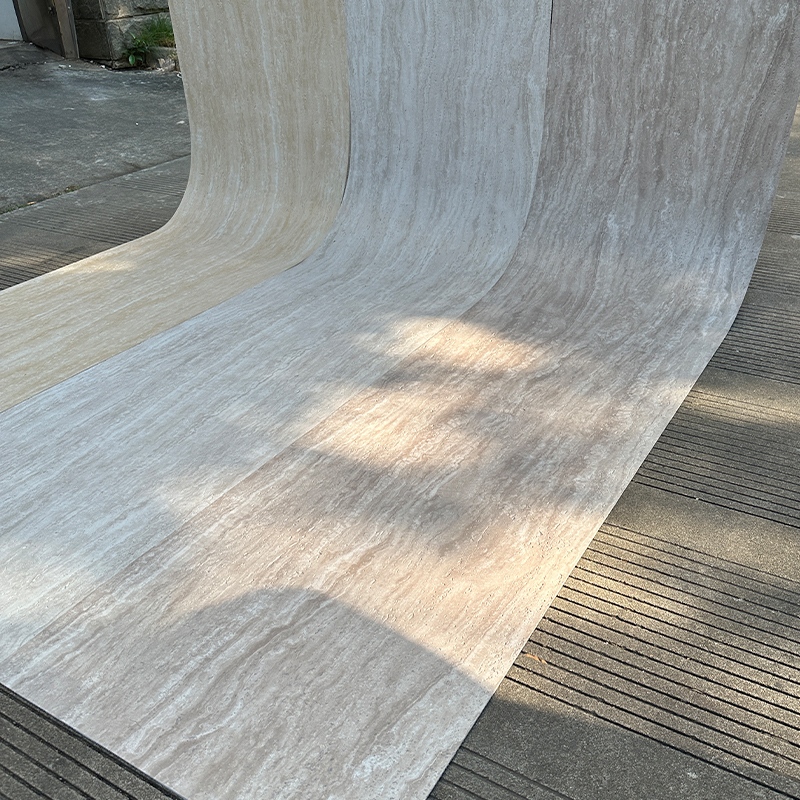
Entryways take more abuse than almost any other surface in a home or commercial building. Constant foot traffic, dragged luggage, wet shoes, and the occasional dropped key or box all land on the same few square feet every day. Flexible stone handles this without showing the stress. Its thin, resilient veneer doesn't crack under the weight of a heavy suitcase rolling across it, and scuffs from boots or sneakers tend to blend into the natural texture rather than stand out as blemishes.
The material's flexibility is particularly useful in older buildings where door frames and subfloors shift with temperature and humidity. Rigid tiles would pop or snap under that movement, but flexible stone moves with the structure and stays intact. Even after a winter of salt, slush, and grit tracked in from outside, a quick sweep and damp mop restore the surface without leaving permanent stains or worn patches. In busy entryways, that combination of toughness and low maintenance keeps the space looking sharp long after conventional flooring would have needed refinishing.
The Case for Using Stone Veneer in Small Bathrooms
The biggest problem in a small bathroom is that the eye reads the whole space in one pass. Repeated tile grids or large slabs let your gaze slide right through, but stone veneer's uneven grain and mineral specks force a half-second pause. That slower visual rhythm adds depth even in three square meters. Apply it to just the wall behind the vanity, and the bathroom shifts from a pass-through into a room with a focal point.
Thickness is another underrated factor. Natural stone slabs are often two centimeters or more, which a compact room can't afford. Stone veneer runs just a few millimeters thick and mounts directly onto the existing wall, eating up no usable floor area. Its joints are simpler to seal than a full stone wall, and once sealed it stands up to shower steam. Compared to wallpaper or waterproof paint, it won't peel or mold during humid seasons, saving you from repeated patching.
Many people assume small spaces need slick, reflective surfaces to feel larger, but too much gloss turns into a harsh box. Stone veneer carries a low-saturation matte finish that softens the light, so early mornings or late nights don't feel cold or clinical. Add a warm sconce beside it, and the rough stone absorbs just enough light to create layered shadows. That kind of warmth is something polished marble can't offer.
Choosing Grout-Free Finishes for a Cleaner Look
Grout lines have a habit of collecting dust, soap scum, and mildew in ways that make even a freshly cleaned bathroom feel tired. Choosing a grout-free finish removes that ongoing maintenance headache from the start, leaving you with surfaces that simply wipe clean.
Large-format porcelain panels and solid surface materials like quartz or solid acrylic offer a smooth, uninterrupted plane that visually expands a space. Without the grid of grout lines, the eye moves freely across the wall or floor, creating a calmer, more streamlined atmosphere that feels modern without trying too hard.
Installation methods matter here. Tight seams with color-matched adhesives or mechanical locking systems can achieve a nearly invisible joint, whereas traditional tile spacing always leaves a visible line. For anyone prioritizing a low-effort, high-impact aesthetic, skipping grout altogether is the quiet upgrade most people notice without knowing why.
What Makes a Flexible Stone Panel Truly Durable
Durability in a flexible stone panel starts at the bond line, not just the visible surface. The thin veneer of real stone is attached to a resilient backing through a process that lets the two layers move together during bending and temperature shifts. If that interface were rigid, the panel would crack or delaminate after a few seasons. Instead, the adhesive and backing are chosen to absorb stress gradually, so the stone flexes without losing its grip on the substrate.
The surface treatment matters just as much as the core structure. A quality panel carries a UV-stable clear coat that prevents the stone from turning chalky or pale under direct sun. At the same time, the coating is breathable enough to let trapped moisture escape rather than pushing the finish off from underneath. That balance keeps freeze-thaw cycles from causing pitting or flaking, even in climates where rain soaks the wall and then temperatures drop below zero.
After installation, long-term performance comes down to impact resistance and edge integrity. Flexible stone panels may look delicate, but the composite build distributes point loads across a wider area, which means a stray ladder or hail strike is less likely to leave a visible scar. The edges, often the first point of failure on rigid cladding, remain stable because the panel can move slightly with the building. Over years of direct sun, wind-driven rain, and seasonal movement, the panel keeps its flat profile and color instead of bowing or fading.
Blending Stone With Concrete and Metal Accents
Natural stone has a quiet, weathered presence that feels grounded, while concrete brings an almost monolithic calm. When you introduce metal accents—brushed steel, blackened iron, or warm brass—the combination begins to shift. The stone's irregular edges and subtle color shifts sit comfortably against concrete's flat, mineral surface. Metal then interrupts that softness with a precise line or a reflective gleam, creating a tension that keeps the eye moving.
The trick is to let each material hold its own without forcing them into a formula. A rough limestone wall might meet a polished concrete floor, with a slim steel reveal marking the transition. Or a cast concrete fireplace surround can frame a single slab of slate, while an iron mantel adds just enough darkness to anchor the composition. Even small touches—hairpin legs on a stone-topped table, a copper faucet against a concrete basin—give the space a sense of deliberate contrast rather than thematic clutter.
FAQ
Flexible stone is made from a thin layer of real stone bonded to a flexible backing, so it bends and curves without cracking. Traditional stone veneer is much thicker, heavier, and rigid, which makes it harder to install on rounded surfaces or in tight corners.
It shines on feature walls, kitchen backsplashes, bathroom vanities, and fireplace surrounds. Because it can wrap around columns and curved walls, it lets you add natural stone texture in places where standard slabs or tiles would be a headache.
Yes, as long as you seal it properly after installation. It holds up well to everyday wear and moisture, which makes it suitable for kitchens and bathrooms. Just avoid dragging sharp objects directly across the surface.
Most flexible stone products come with a peel-and-stick backing or can be applied with standard tile adhesive. You cut the panels with a utility knife, press them onto a clean, primed surface, and roll over them to remove air bubbles. It is a realistic DIY project for a weekend.
Some versions are rated for exterior use, especially on covered patios or outdoor kitchen surrounds. Check the manufacturer's guidelines and make sure to seal all edges thoroughly to protect against moisture and UV exposure.
It is pretty low-maintenance. Wipe it down with a soft cloth and mild soap when needed, and reseal the surface every few years to keep its water resistance and color depth. Avoid acidic or abrasive cleaners.
Look for subtle, fine-grained textures in light gray, warm beige, or soft white. Large, dramatic veining can overwhelm a minimalist room, so grab a few small samples and see how they look under your actual lighting before committing.
Not at all. The surface layer is genuine stone, so it has the same cool touch and natural variation as a solid slab. It is just much thinner and lighter, which is why it feels more like a high-end wallcovering than a plastic imitation.
Conclusion
For a home that balances clean lines with real resilience, flexible stone panels deserve a closer look than traditional cladding. Instead of heavy slabs that demand structural planning, these lightweight veneers let you rethink feature walls without sacrificing that tactile, mineral-rich surface. Around busy entryways, they shrug off scuffs, moisture, and daily collisions far better than painted drywall, and because many designs are grout-free, you skip the staining and scrubbing that plague tiled surfaces. In small bathrooms, the slim profile and seamless installation open up visual space while still delivering the cool, grounded feel of natural stone—perfect for a shower surround or a vanity backsplash that needs to work hard without looking busy.
What truly makes a flexible stone panel durable isn't just the surface layer; it's the reinforced backing and the way the stone is sliced thin enough to flex but dense enough to resist chips. Pair that with matte concrete floors or brushed metal shelving, and you get a layered, modern aesthetic that doesn't rely on polished perfection. The panels age gracefully, developing a subtle patina in high-touch zones rather than showing wear. When you choose a finish with low porosity and a stone veneer that's been tested for impact and UV stability, you're not just decorating—you're building a home that can handle pets, kids, and shifting humidity without losing its architectural calm. That's the real recommendation: use flexible stone where real stone would crack, and let its imperfections become part of the story.
Contact Us
Contact Person: Vito
Email: [email protected]
Tel/WhatsApp: 86 13088879266
Website: https://www.magicstonemcm.com