

Flexible Stone Innovations Reshaping Industry Standards and Design Possibilities
2026-07-30
The world of interior design and architecture is witnessing a quiet revolution, one that bends, curves, and adapts like never before. Magic Stone is at the forefront of this shift, turning rigid expectations on their head with flexible stone innovations that are redefining what's possible. Forget the heavy, brittle slabs of the past—today's flexible stone veneers are lightweight, versatile, and durable, opening up a realm of design possibilities that were once unthinkable. From wrapping columns to creating seamless curved walls, this material is challenging industry standards and inviting designers to reimagine spaces. If you thought stone couldn't dance, it's time to see how it moves.
Breaking the Mold: How Flexible Stone Defies Conventional Material Limits
Flexible stone challenges the very notion of what a stone veneer can be, transforming a material known for its rigidity into something pliable and surprisingly lightweight. Imagine a surface that retains the authentic texture and color variations of natural slate or quartzite, yet can be cut with a utility knife, rolled up for transport, and applied to curved walls or columns without cracking. This isn't a synthetic approximation; it's real stone, sliced so thin from larger slabs that it gains a suppleness more akin to heavy fabric than a brittle tile.
The secret lies in how it's made: layers of metamorphic or sedimentary rock are stripped down to a fraction of an inch, then backed with a composite of resins and flexible carriers. The result is a material that shrugs off impacts that would shatter conventional stone, resists water and frost without sealing, and installs without the need for heavy mortar or specialized tools. Even intricate architectural details—rounded edges, undulating feature walls, wraparound pillars—become achievable without the time-consuming masonry work that once made such designs prohibitively expensive.
Beyond its bendability, flexible stone sidesteps the environmental weight of quarrying and shipping dense, heavy blocks. Its thin profile means a single slab of source material yields exponentially more coverage, and its lightness cuts transportation energy dramatically. Designers and builders are beginning to treat it less as a novelty and more as a pragmatic solution, breathing new life into projects where traditional stone would be too cumbersome, too costly, or simply impossible. It's a quiet rebellion against the limitations of the past, proving that even something as ancient as stone can learn new tricks.
Designers Embrace Thin Stone Veneers for Seamless, Curvaceous Interiors
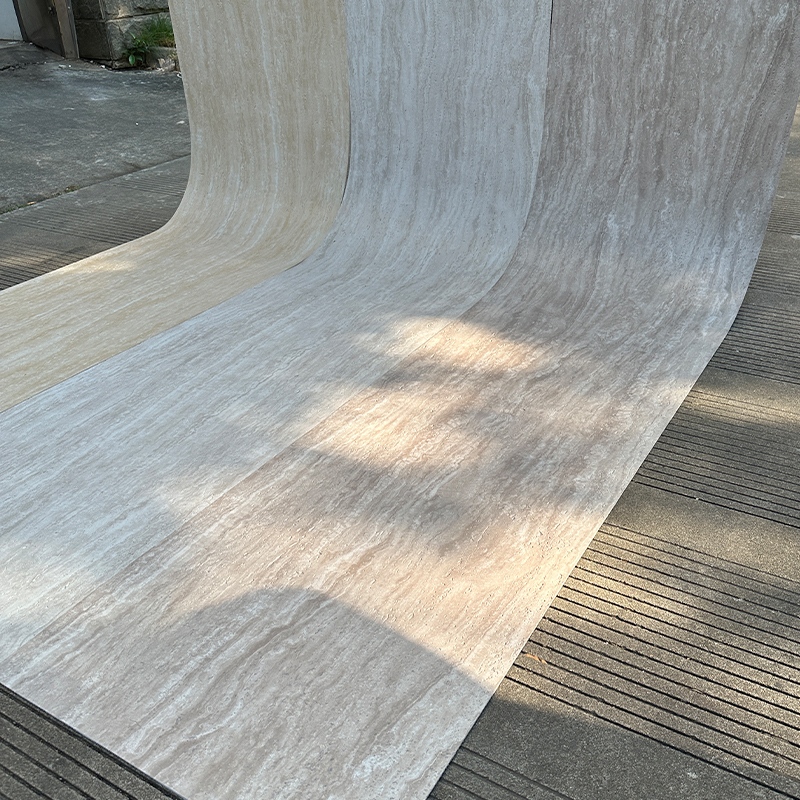
The allure of thin stone veneers lies in their ability to mimic the solidity and texture of natural rock while offering remarkable flexibility. Designers are increasingly drawn to these materials for crafting interiors that feel both organic and refined. The lightweight nature of the veneers allows them to be applied to curved walls, arched doorways, and even furniture, breaking free from the rigid, flat planes that traditional stone demands. This adaptability opens up a world of sculptural possibilities, where spaces seem to flow without interruption, clad in a continuous skin of stone that appears impossibly thin yet incredibly durable.
A key advantage of these veneers is the seamless finish they provide. Unlike thicker stone slabs that require visible joints and heavy structural support, thin veneers can be carefully bookmatched and installed with minimal gaps. The result is a nearly monolithic surface that wraps around contours smoothly, catching light in subtle, shifting patterns. From residential fireplace surrounds that curve gently into the room to boutique hotel lobbies with undulating feature walls, the material brings a tactile warmth that cold, synthetic alternatives cannot replicate. Designers often play with various finishes—honed, leathered, or raw—to enhance the depth and character of the stone, ensuring each installation tells its own story.
Beyond aesthetics, the practical benefits are significant. Thin stone veneers reduce the overall weight and cost of a project, making it feasible to clad large areas without compromising structural integrity. This efficiency does not sacrifice the timelessness of natural stone; if anything, it amplifies its relevance in modern construction. By blending age-old material with contemporary engineering, designers can create interiors that feel both grounded and innovative. The rise of these veneers signals a shift toward architecture that values experiential surfaces—where the boundary between wall and art, structure and sculpture, gracefully dissolves.
The Sustainability Edge: Why Flexible Stone Is Becoming a Green Building Staple
Flexible stone is quietly reshaping the conversation around eco-conscious construction. Unlike traditional cladding materials that demand energy-intensive extraction and processing, it starts with a deceptively simple base: thin layers of genuine stone veneer bonded to a flexible backing. This approach dramatically reduces the amount of quarried material needed per square foot, slashing the carbon footprint before installation even begins. What's more, its lightweight nature means less fuel burned during transport and less structural support required, allowing builders to rethink designs without the environmental penalty of heavy masonry.
The green credentials extend beyond production. Flexible stone often incorporates recycled content in its backing, and its durability reduces the cycle of replacement that plagues less resilient materials. In hot climates, its natural stone surface stays cooler than synthetic alternatives, easing the load on air conditioning systems. On the human health front, it breathes better than many engineered products, resisting moisture buildup and the mold issues that come with it. These subtle but tangible benefits are winning over architects who want their projects to perform sustainably without sacrificing aesthetics or budget.
What truly sets it apart is how it challenges the false choice between beauty and responsibility. Designers are drawn to its authentic texture and the way it can wrap curves or irregular surfaces that rigid slabs can't handle. By extending the lifespan of interiors and exteriors with minimal upkeep, flexible stone embodies a quiet, practical sustainability that doesn't demand constant attention or replacement. It’s this blend of understated efficiency and genuine material integrity that’s making it a go-to for projects aiming to meet rigorous green certifications without compromise.
From Quarry to Curve: The Rapid Rise of Bendable Stone in Modern Architecture
Stone has long been a symbol of permanence and rigidity, yet a quiet revolution is reshaping its identity. Through advanced fabrication methods, quarried slabs are now being transformed into thin, flexible veneers that can curve around columns, cascade across facades, and defy traditional expectations. This shift isn’t just about novelty—it’s a practical response to the growing demand for organic, sculptural forms in contemporary buildings, where hard edges often feel out of place.
The process typically begins with slicing natural stone into ultra-thin layers, sometimes as slim as a few millimeters, and bonding them to lightweight backings like fiberglass or aluminum honeycomb. The result retains the authentic texture and grain of the original rock while gaining a pliability that allows it to be bent, folded, or wrapped onto complex geometries. Architects are seizing this chance to merge durability with fluidity, creating spaces that feel both grounded and dynamic.
Projects around the world now feature these bendable surfaces in striking ways—from undulating interior walls that mimic wind-sculpted dunes to exterior cladding that sweeps seamlessly from roof to ground. The material’s reduced weight also simplifies installation and cuts structural requirements, making it an appealing choice for renovations where adding heavy masonry isn’t feasible. As the technology evolves, the once unyielding stone is quietly becoming a vehicle for movement and grace.
Unlocking New Dimensions: Flexible Stone’s Role in Indoor-Outdoor Harmony
Flexible stone surfaces are rewriting the rules of architectural continuity, dissolving the rigid boundary between interior comfort and exterior rawness. Unlike traditional masonry that anchors you to one aesthetic, this material slips through thresholds with a seamless grace—cladding a living room accent wall, then flowing onto a patio facade without a visual hiccup. Its lightweight, bendable nature allows it to hug curves and wrap pillars, mimicking the organic flow of natural landscapes while maintaining a tactile warmth that feels equally at home under a chandelier or the open sky.
What truly sets flexible stone apart is its chameleon-like ability to adapt to contrasting environments without compromising its integrity. Rain, UV rays, and temperature swings mean little to its durable composition, yet it softens the acoustics indoors with a gentle, porous texture. Designers are leveraging this duality to craft spaces that breathe together—think kitchen backsplashes that extend into a garden bar, or bathroom walls that continue into an outdoor shower, each transition so smooth it feels less like a boundary and more like a whispered invitation between realms.
Beyond aesthetics, this material inspires a more intuitive way of living, where the home no longer turns its back on nature but embraces it through texture. The subtle variances in its stone veneer—no two sheets quite alike—echo the unpredictability of weathered rock, grounding modern minimalism in a story of timelessness. It’s not about forcing the indoors out or the outdoors in, but about letting them coexist in a quiet, tactile dialogue that enriches both, turning everyday spaces into experiences that linger on the fingertips long after you’ve passed through.
Industry Voices: How Flexible Stone Is Shifting Standards Without Compromise
When you talk to contractors who’ve made the switch, they’ll tell you flexible stone isn’t just another veneer—it’s a complete rethink of what a surface material can do. They point to projects where traditional stone would have required steel reinforcement and a crew of four, but with flexible stone, two people handled the installation in half the time. The fact that it doesn’t sacrifice authenticity for convenience keeps architects coming back; the texture and variation are indistinguishable from quarried slabs once it’s on the wall.
What really stands out in these conversations is how the material is forcing a reevaluation of durability standards. One fabricator mentioned putting a sample through freeze-thaw cycles, impact tests, and UV exposure—things that would usually degrade engineered surfaces—and seeing no delamination or fading. It’s not about meeting existing benchmarks; it’s about setting new ones that don’t ask designers to choose between performance and aesthetics. As more firms adopt it, the old arguments against lightweight stone are starting to sound dated.
FAQ
Flexible stone is essentially a paper-thin layer of genuine stone—slate, mica, marble, or quartzite—bonded to a polymer or fiberglass backing that lets it bend and roll without cracking. Traditional stone comes in heavy, rigid slabs that demand structural support, while flexible stone is lightweight, can be cut with a utility knife, and conforms to curved surfaces. It’s not a faux finish; it’s real stone, just freed from the stiffness that limits its use.
The core process involves extracting thin layers from natural stone strata and bonding them to a flexible substrate using advanced adhesives. Recent innovations center around improving adhesion under environmental stress, developing thinner yet stronger backings, and refining the extraction to minimize waste. Some newer methods also incorporate recycled stone dust, making production more resource-efficient while maintaining the authentic texture and grain of the quarried stone.
It allows architects to wrap stone around complex geometries—curved walls, columns, furniture fronts, and even ceiling domes—without heavy framing or specialized labor. Designers are using it for interior feature walls, lightweight acoustic panels, updated storefronts, and nautical interiors where weight is critical. Its translucency when backlit also creates striking visual effects that solid stone can’t achieve, adding a new dimension to lighting design.
Installation is dramatically simpler. The product arrives in rolls or sheets, can be cut with scissors or a knife, and applied using standard construction adhesives or contact cement—no mortar, grouting, or heavy equipment needed. A couple of workers can finish a feature wall in a day, whereas the same surface in traditional stone might take a week and require specialized masons. This time saving often offsets the material cost for many projects.
Yes, but with caveats. Quality flexible stone with UV-stable resins and proper sealants performs well outdoors, resisting rain, freeze-thaw cycles, and temperature swings. It’s tested for abrasion and impact, though it’s not as abuse-resistant as a solid stone slab. For flooring, it’s typically a decorative accent rather than a load-bearing surface. When installed correctly with appropriate edge detailing, it holds up in commercial lobbies and exterior façades.
Material-wise, flexible stone is often cheaper per square foot than quarried slabs because it uses far less raw stone. But the real savings are in labor, transportation, and structural support. Eliminating the need for reinforced framing, heavy machinery, and masons can cut total project costs by 30–50%. That said, for very large flat surfaces, traditional stone might remain cost-effective; the value proposition shines on curved or weight-sensitive applications.
Regulatory acceptance varies by region, but several standards bodies are beginning to address thin stone veneers as a distinct product class. The innovations are pushing updates to test methods for adhesion, wind load resistance, and fire rating. Without the need for mechanical anchoring, it is challenging old assumptions about what constitutes a durable stone cladding. As adoption grows, code revisions are following, though it’s still a patchwork of approvals rather than a unified mandate.
Conclusion
For decades, the rigidity of natural stone dictated the boundaries of architectural design, confining builders to angular forms and heavy structural supports. The arrival of flexible stone veneers has shattered these constraints, offering a material so thin and pliable that it can wrap around pillars, cascade across curved walls, and line arched ceilings without seams or joints. Designers are no longer forced to choose between the authentic texture of stone and the fluidity demanded by modern aesthetics; instead, they use these lightweight sheets to craft interiors that feel both organic and luxurious. This shift isn't merely stylistic—it fundamentally alters how projects are planned, as the reduced weight simplifies logistics and opens up possibilities for retrofitting historic buildings where load-bearing capacity is limited.
Beyond aesthetics, flexible stone is rapidly gaining traction as a green building staple thanks to its surprisingly eco-friendly production process, which repurposes raw stone into razor-thin layers, dramatically reducing quarry waste and transportation emissions. Industry experts highlight how this innovation doesn't compromise on durability or safety, meeting rigorous fire resistance and structural standards without synthetic binders. The material's ability to seamlessly transition from indoor feature walls to outdoor facades blurs the line between built environments and nature, fostering a harmonious flow that rigid stone panels could never achieve. As more architects experiment with bendable stone, feedback from the field confirms that it’s not a niche trend but a practical standard-shifter—proving that sustainability and stunning design can advance hand in hand.
Contact Us
Contact Person: Vito
Email: [email protected]
Tel/WhatsApp: 86 13088879266
Website: https://www.magicstonemcm.com