

Fire-Resistant Silicone Sealant Factory Quality and Safety Standards
2026-11-16
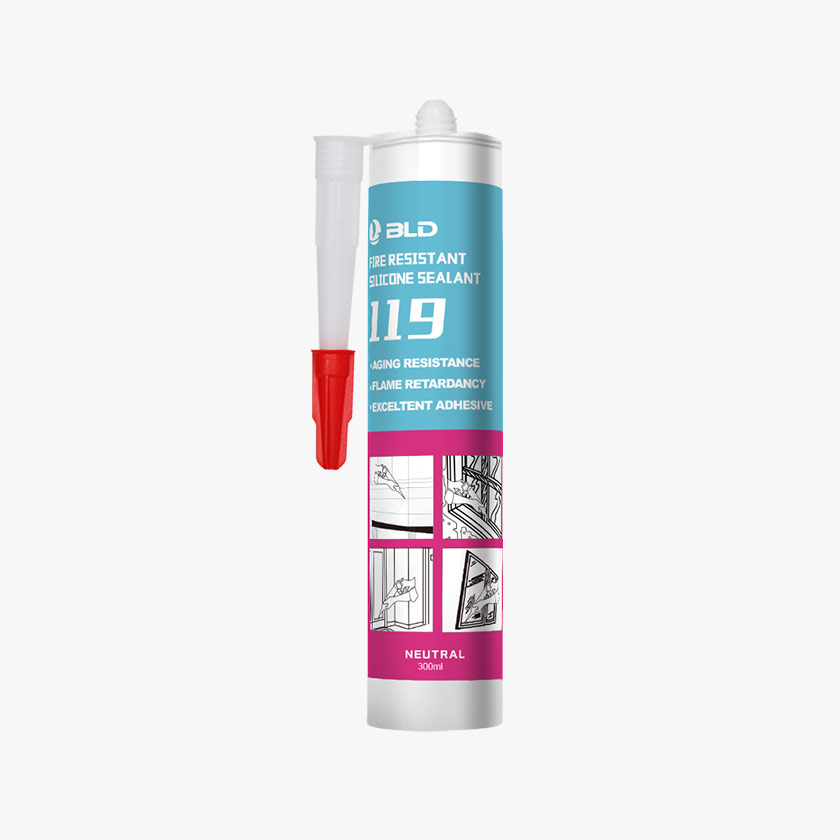
Most fire-resistant silicone sealants look identical on the shelf, but the difference is invisible until it matters most. Behind every reliable product is a factory where quality and safety standards aren't optional extras—they're the core of production. At Baolongda Group, those standards shape everything from raw material checks to final fire-performance testing. In this post, we'll break down what to look for in a fire-resistant sealant factory and why these protocols are critical for real-world protection.
Sourcing and Vetting Raw Silicone Polymers
Finding dependable raw silicone polymer suppliers goes far beyond a simple price comparison. The real work starts with verifying the polymer's backbone structure and chain length distribution, because these factors dictate how the material will behave during compounding and curing. A reputable source should willingly share detailed technical data sheets that include viscosity curves, volatile content, and residual catalyst levels. Without that transparency, you risk buying a batch that passes a basic visual check but fails under heat aging or repeated flex testing.
Vetting each lot means pulling samples before committing to volume. Run your own checks for Shore hardness after full cure, tensile strength, elongation at break, and tear resistance. Pay attention to how consistently the polymer accepts fillers and pigments, since subtle differences in surface chemistry can cause uneven dispersion or premature gelling. It also helps to ask for traceability documentation that links the material back to its production run, so any future quality drift can be isolated quickly.
Long-term relationships with suppliers who invest in clean reactor maintenance and rigorous batch testing will save you from costly reformulation work. A good partner won't just send a certificate of analysis; they'll discuss how storage conditions, shipping temperatures, and even drum lining materials can affect the polymer's stability over time. That level of practical insight is what separates a transactional vendor from a source you can actually build a production line around.
Real-Time Viscosity and Cure Monitoring on the Line
Inline viscosity sensors embedded directly into the dispensing or coating head eliminate the guesswork that comes with batch sampling. Instead of pulling material off the line for a lab rheometer, the process reacts to live data streams. A sudden drop in viscosity can signal a missed catalyst addition, while a steady climb might point to premature crosslinking in the reservoir. Operators see these shifts as they happen, not after a rack of parts has already cured out of spec.
Cure state is tracked through dielectric or ultrasonic signatures that change as the resin network builds. Early in the cycle the signal stays flat, then rises sharply once gelation begins. By mapping that transition against known time-temperature profiles, the system flags parts that are still green or overbaked before they reach the next station. This beats a fixed timer because it accounts for line speed changes, oven hot spots, and batch-to-batch resin variability without extra manual checks.
The real value shows up in high-mix production where one line runs epoxies, urethanes, and silicones in the same shift. A single inline setup adapts to each material's cure signature, reducing setup time and scrap from residual tack or brittleness. Maintenance teams also appreciate the trend logs: a slow drift in baseline viscosity often reveals a worn pump seal or a clogged filter days before it would trigger a hard fault.
Fire Endurance Testing That Goes Beyond Minimum Specs
Most labs stop the clock the moment a specimen hits the code-mandated temperature rise or flame passage. That approach leaves a dangerous gap between pass/fail and actual building performance. Our endurance runs deliberately push assemblies past the prescribed limits—holding them at peak furnace temperatures, introducing cyclic heating and cooling, and applying mechanical load throughout the entire exposure. The result is a clearer picture of how connections, joints, and protective layers behave when a real fire refuses to follow a tidy time-temperature curve.
Rather than relying solely on standard cellulosic curves, we tailor the heat input to match likely fuel loads in the intended occupancy. A storage room full of plastics burns differently than an office corridor, so the test should reflect that. We also instrument the unexposed face with dense thermocouple arrays and measure deflection continuously, capturing the moment when insulation or structural adequacy begins to degrade—often long before the official failure threshold. This approach reveals weak points that a minimum-spec test would never flag.
The added rigor translates directly into safer margins. Design teams receive data on residual strength after exposure, post-fire cooling behavior, and the true time available for evacuation or firefighter entry. It’s the difference between meeting a code checkbox and knowing your assembly will hold when the unexpected happens.
Daily Shift Audits for Contamination Control
Daily shift audits turn contamination control from a set of written rules into something people actually do. Instead of waiting for a monthly inspection or a quality manager walkthrough, each shift takes a few minutes to check high-touch surfaces, verify that cleaning logs are filled in correctly, and confirm that materials are stored away from open product areas. This routine catches small slips before they become bigger problems, like a forgotten sanitizer bottle on a prep table or a trash bin left uncovered near an air intake.
The audit itself doesn't need to be complicated. A simple checklist works best: Are handwashing stations stocked and accessible? Are wiping cloths stored in the right sanitizing solution? Is there any visible residue or spillage around equipment legs or floor drains? When a shift finds something off, the fix happens right then, not at the end of the week. This immediate correction loop makes contamination control feel less like a paperwork burden and more like a shared habit.
Over time, daily shift audits also reveal patterns. Maybe the second shift consistently struggles with keeping the loading dock doors closed, or the early morning crew forgets to check the pH of the sanitizer. Once you see those patterns, you can adjust training or move resources where they're needed. The result is a plant or kitchen where contamination risks are caught early, fixed on the spot, and understood by everyone who works there, not just the quality team.
Hands-On Safety Drills for Sealant Handling Crews
A crew that only watches videos forgets half of what they see by the next shift. Drills that force your hands through the motions—opening a stuck cartridge, controlling a runaway bead, cleaning up a spill before it slicks the walkway—turn abstract caution into muscle memory. Start with a timed exercise where each worker must stop a simulated leak using only the materials at a standard workstation. No talking, no help. The pressure of the clock exposes bad habits faster than any checklist.
Rotate roles so no one hides behind the same easy task. One day a worker mixes the sealant, the next day they handle the dispensing gun while wearing chemical-resistant gloves and a face shield. Have them kneel, reach overhead, and work in tight corners with a partner spotting them. The person watching learns to spot early signs of wrist strain or glove degradation, while the person working feels what a safe pace actually is. After each drill, gather the crew and ask one question: what would you do differently if this happened on a real job with wind, dust, and a deadline?
Keep the drills short but irregular. A surprise fifteen-minute session on a Wednesday beats a two-hour annual refresher. Use expired sealant cartridges for realism—let the crew deal with hardened nozzles and split casings. Track who struggles and pair them with someone who doesn’t, but don’t make it a punishment. The goal is to build a crew that corrects each other without embarrassment and reaches for the right tool before the supervisor has to say a word.
Emergency Shutdown and Spill Containment Protocols
In the event of an unplanned release or equipment failure, the first priority is to isolate the energy source. Operators are trained to hit the nearest emergency stop station, which cuts power to pumps, compressors, and transfer lines within milliseconds. This immediate action minimizes the volume of material escaping and prevents cascading failures. Once the system is in a safe state, the spill response team takes over with pre-staged kits located at every critical junction.
Spill containment follows a tiered approach. Small drips and seepages are handled with absorbent socks and drain covers, while larger breaches trigger the deployment of portable berms and inflatable bladders. For tank farm incidents, the secondary containment dike is inspected to confirm its integrity before any product is allowed to accumulate. All containment measures are logged in real time, and a designated safety officer verifies that no material has reached storm drains or unprotected soil.
After the immediate threat is controlled, a post-incident review is mandatory. The team photographs the area, documents the sequence of events, and collects samples if the released substance is unknown. This information feeds into a corrective action plan, which often includes adjusting valve lockout procedures or upgrading gasket materials. Drills are run quarterly using non-hazardous simulants to keep the response muscle memory sharp, ensuring that every operator can execute the shutdown and containment steps without hesitation.
FAQ
We run a full-scale fire endurance test on samples from every production lot, exposing cured sealant beads to temperatures above 1000°C for up to four hours. The seal must hold its integrity and prevent flame penetration, and we log the exact time-to-failure for traceability.
Each incoming shipment of silicone polymer, filler, and fire-retardant additives is quarantined until lab analysis confirms viscosity, particle size distribution, and moisture content within tight specs. Any lot showing drift from the reference standard is rejected on the spot.
Yes, the powder dispensing area is fully enclosed with negative air pressure, and operators wear powered air-purifying respirators. We also rotate staff every two hours to limit exposure and run monthly air sampling to verify dust levels stay under 0.5 mg/m³.
We use separate mixing vessels, dedicated transfer hoses, and color-coded tooling for fire-rated products. After any standard run, the line goes through a hot detergent flush followed by a silicone oil rinse, and we swab-test surfaces for residual additives before switching back.
Each pallet ships with a batch certificate listing the fire-resistance rating, cure time, tensile strength, and elongation at break. We also include a safety data sheet and a signed declaration that the batch passed our internal burn test and VOC emission screening.
We conduct a full internal fire-safety audit every quarter, plus unannounced spot checks by the site safety officer at least twice a month. Sprinkler heads, foam suppression tanks, and emergency ventilation dampers are tested weekly because we would rather find a weak point ourselves than have a regulator find it for us.
After extrusion, we cure sample joints in a controlled chamber at 23°C and 50% relative humidity for 28 days, then subject them to both a fire test and a cyclic movement test. Only sealants that keep their adhesion and insulation integrity after 500 movement cycles and a 2-hour fire exposure get released.
We maintain EN 1366-4 and ASTM E814 listings, with annual surveillance audits by a notified body. The factory itself is ISO 9001 and ISO 14001 certified, and our fire-test lab follows ISO 17025 for all burn data reported to customers.
Conclusion
At the heart of the factory's fire-resistant silicone sealant operation is a disciplined raw material pipeline. Every batch of silicone polymer is sourced only from audited suppliers, with incoming lots sampled and tested for purity, molecular weight distribution, and trace metal content before they ever reach the mixing floor. Once production begins, inline viscometers and cure-profile sensors track the material's behavior in real time, automatically flagging any drift from the target curve so operators can adjust catalyst levels or shear rates on the fly. This tight coupling between material sourcing and process monitoring means a batch that leaves the line has already been checked dozens of times, not just at the final QC gate.
Fire endurance testing here is not a rubber-stamp exercise. Samples from each production shift are cast into joints and subjected to furnace conditions that exceed the minimum temperature and duration required by common building codes, with post-burn adhesion and intumescence checked before the lot is released. On the floor, daily shift audits cover everything from clean-room garment protocols to wiping down mixing blades and nozzle tips, reducing the risk of contamination that could compromise fire performance. Safety is built through repetition rather than posters: crews run hands-on drills for sealant handling, including proper PPE use and solvent exposure response. Meanwhile, emergency shutdown sequences and spill containment kits are inspected weekly, with team members assigned clear roles for isolating power, shutting off feed lines, and deploying absorbent barriers around active workstations. The result is a production environment where quality and safety standards are enforced by habit, not by exception.
Contact Us
Contact Person: Charles
Email: [email protected]
Tel/WhatsApp: +86-0536-3350888
Website: https://www.baolongda.com/