

EPDM Granule Production Line Factory: A Complete Overview of Manufacturing Processes
2026-11-22
Most buyers assume all EPDM granules are made the same way—until they see how much can go wrong between mixing, extrusion, and curing. A well-designed EPDM granule production line does more than shape rubber; it controls particle consistency, color stability, and output efficiency at every stage. In this overview, we walk through the key manufacturing processes behind a modern factory setup and highlight how SFC equipment addresses the production challenges most often overlooked in supplier comparisons.
Getting the EPDM Base Right Before Mixing
A lot of EPDM mixing problems are decided long before the internal mixer is turned on. The base polymer’s molecular weight, ethylene content, and diene level shape how it accepts filler, oil, and curatives, and ignoring those differences is how you end up with a batch that fights itself. For example, a high-ethylene grade may look attractive for green strength, but it can stiffen quickly under shear and make oil addition slower than expected. Knowing whether the base tends to crumble or band on a cold mill tells you more than a generic viscosity target.
Temperature and bale preparation also matter more than they get credit for. EPDM stored in a cold warehouse can arrive at the mixer hard and uneven, so the first few minutes are spent just tearing it apart instead of developing dispersion. Letting the polymer come up to room temperature, or at least slicing it into consistent pieces before charging, gives the rotors a predictable bite. That consistency shows up later as fewer white specks, less variability in viscosity, and a shorter window between batches.
The real goal is to bring the base into the mix in a state that lets the whole formulation work without corrective moves. If the polymer, filler, and extender oil are matched from the start, you are not chasing the batch with extra oil or a second pass just to hit the right Mooney. That early discipline matters most in extrusion and calendering, where a base that is slightly too nervous or too dry will show up as poor edges, scorch, or dimensional drift. Sorting the base out before mixing keeps those problems from becoming a daily routine.
How Internal Mixing Shapes Batch Uniformity
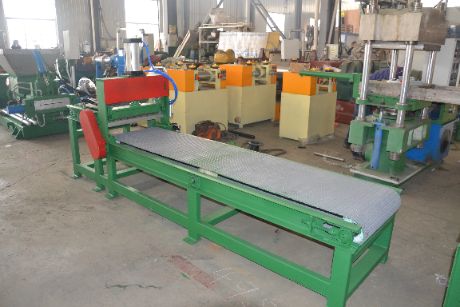
Internal mixing affects batch uniformity through the way material moves between rotor tips and chamber walls. Fill factor, rotor speed, and ram pressure all change how much shear reaches each part of the compound. When those conditions shift even slightly, additives may disperse well in one region but remain as soft agglomerates in another, leaving the batch with uneven rheology or inconsistent cure behavior.
Heat history also plays a direct role. If the temperature climbs faster near the chamber walls than in the center, local viscosity drops and mixing intensity changes with it. Operators can adjust rotor speed or ram position to bring the batch back into balance, but the correction often arrives after some material has already seen a different shear history. The result is a compound that may appear uniform at discharge while still carrying subtle inconsistencies.
Ingredient timing shapes uniformity just as much as mechanical settings. Adding process oil too early can lubricate the metal surfaces and reduce shear when dispersion is still needed, while adding it too late leaves dry pockets that never fully incorporate. A well-designed internal mixing cycle relies on the mixer's own flow patterns to fold these streams together, so the final batch develops a consistent structure instead of a collection of localized variations.
Forming Sheets That Feed the Granulation Line
In dry granulation, the sheet is not just an intermediate shape; it is the bridge between compaction and particle size control. The roller compactor presses pre-blended powder into a continuous, dense sheet or ribbon that feeds directly into the granulation line. A uniform sheet thickness, consistent density, and clean edges matter more than they might appear at a glance because downstream milling performance inherits whatever irregularities are locked into that strip of material.
When the sheet forms unevenly, operators typically see a wider particle size spread, excessive fines, or fluctuating mill loads. Controlling roll force, roll speed, and feed screw behavior keeps the powder from being overworked or slipping through too loosely. Small adjustments to the gap, side seals, or vacuum de-aeration can change how the sheet behaves as it travels forward, so it is worth monitoring the sheet's surface and edge quality rather than relying only on instrument readings.
A stable sheet has a practical effect on granulation line rhythm. It prevents the surges and starved periods that force downstream equipment to compensate, and it gives the milling step a predictable starting point. Operators who learn to read the sheet's texture and firmness can often catch feed inconsistencies early, before they become quality problems in the final granules.
The Vulcanization Step Behind Rebound and Tear Strength
Vulcanization is rarely just a curing step; it is the moment a rubber compound decides how much energy it will give back and how far it will stretch before tearing. The crosslinks formed between polymer chains during this stage act like a network of tiny springs. Too few, and the material feels dead, absorbing impact without returning it. Too many, and the chains lose their ability to slide past one another, making the rubber stiff and prone to cracking under sudden stress.
The relationship between crosslink density and rebound is not linear. As sulfur bridges increase, the compound initially gains resilience because the network snaps back more efficiently. But push past an optimum point, and the rebound actually drops. The chains become so tightly bound that internal friction rises, converting kinetic energy into heat instead of motion. Tear strength follows a similar curve, peaking where controlled chain mobility allows stress to distribute across many bonds rather than concentrating at a single weak point.
Practical control of this balance often hinges on the cure system itself. Conventional sulfur systems with higher polysulfidic crosslinks give better tear resistance but lower heat aging stability. Efficient or semi-efficient systems produce shorter, more thermally stable crosslinks, improving rebound retention over time at the cost of some initial tear strength. Adjusting accelerator ratios or using post-cure annealing shifts this trade-off, letting compounders tailor the final product for a shoe sole that springs back or an industrial part that resists tearing under load.
Granule Cutting and Multi-Stage Size Separation
Cutting is rarely the hard part. The granules leave the cutter with a shape that looks uniform enough, but the moment you screen a representative sample, the size spread becomes obvious. Multi-stage separation works because it does not try to force one screen to handle both coarse tails and fine dust in a single pass.
Putting a coarse scalping deck ahead of the main separation changes how the bed behaves. Instead of blinding the fine mesh with oversize flakes, the top deck removes them while they still carry momentum from the cutter. The middle deck then sees a narrower distribution, which allows sharper cut points and reduces the amount of near-size material that bounces between decks.
A practical way to keep the process stable is to monitor the mass pulled off at each stage rather than the average particle size alone. When the coarse fraction starts growing while the fines stay steady, it usually points back to blade wear or strand cooling rather than a screening problem. Reading those shifts across stages gives a much earlier warning than waiting for the final blend to fall out of specification.
Cooling, Quality Checks, and Packing for Transport
Once the product leaves the main processing line, its temperature still dictates how well it will hold up later. We move batches into a staged cooling area where air moves slowly enough to avoid surface cracking but steadily enough to pull residual heat out within the target window. Readings are logged at several points rather than relying on a single spot check, because a pallet centre can stay warm long after the outer layer feels cool.
Quality checks happen before anything is sealed. Operators look for moisture variation, edge damage, uneven colour, and any sign that a batch cooled too quickly. Small samples are pulled from different layers of the load, not just the top, and anything borderline is set aside for a second pass. The aim is less about rejecting product and more about catching a drift in the line before it becomes a full shift worth of rework.
Packing for transport depends on how far the order is travelling and how it will be unloaded. Stack patterns are adjusted so weight sits evenly, and liners or separators are used only where they actually reduce rub marks or condensation. Labels go on last, after the packed load has settled, so the final check matches the condition of the product that actually leaves the floor.
FAQ
The main ingredient is EPDM rubber, usually supplied in bale or pellet form. It is blended with processing oils, mineral fillers such as calcium carbonate or silica, curing agents, pigments, and sometimes reclaimed EPDM scrap. The exact recipe is adjusted depending on whether the granules will be used for playground surfacing, sports tracks, or molded tiles.
Mixing normally takes place in an internal mixer or kneader where the rubber and additives are worked under controlled shear and temperature. The compounded batch is then sheeted out on an open mill or through an extruder so it can be fed smoothly into the curing stage.
Vulcanization is the key step. Sulfur or peroxide curing systems create permanent cross-links between the EPDM polymer chains when the material is heated under pressure. This transforms a soft compound into a tough, elastic sheet or strip that can be ground into granules without losing its mechanical properties.
The size range directly affects how a finished surface drains water, absorbs impact, and looks once installed. After grinding, the granules pass through a series of vibrating screens that separate them into fractions such as 0.5–1.5 mm, 1–3 mm, and 2–4 mm, which gives customers the right grade for their project.
Most plants keep dedicated mixing lines for common colors, and they follow strict cleaning procedures between runs. Separate storage bins, hoppers, and sometimes separate granulators are used for light and dark shades. Color consistency is checked against approved reference samples before a batch leaves the line.
Samples from each batch are tested for particle size distribution, moisture content, bulk density, tensile strength, elongation at break, and color fastness. Depending on the intended use, the lab may also check heavy metals and other restricted substances against the relevant safety standards.
Yes. Modern lines include dust collection systems at grinding and screening stations, closed-loop water cooling, and recycling loops that return off-spec granules or edge trimmings to the mixer. Some factories also incorporate post-industrial EPDM scrap, which lowers raw material consumption and keeps production cleaner.
The most common options are moisture-resistant 25 kg bags and large FIBC bulk bags. Custom bag sizes and private-label printing are often available. Packaging is usually fitted with an inner liner to protect the granules from dampness during storage and transport.
Conclusion
Before raw EPDM reaches the mixer, the base polymer, carbon black, process oils, zinc oxide, and curatives are weighed and staged in a controlled environment. Small deviations in oil absorption or filler dispersion at this point tend to persist through the entire batch, so the pre-mix stage is less about chemistry and more about repeatability. Inside the internal mixer, shear and temperature rise are balanced against cycle time. Operators watch ram position and torque rather than relying on a fixed clock; dumping too early leaves undispersed agglomerates, while holding too long risks scorching the compound. The discharged stock is then sheeted on a two-roll mill or calender to a set thickness. That sheet profile matters because it later determines the feed rate and cutting behavior of the granulation line. Vulcanization follows with heat and pressure to build the crosslink network behind rebound, compression set, and tear strength.
After curing, the sheets are fed into rotary granulators that produce irregular chips with high surface area. Multi-stage screening then separates oversize, target fractions, and fines, with oversized material recirculated for further cutting. Warm granules are cooled before classification because residual heat causes clumping and false screen readings. Quality checks run on particle size distribution, bulk density, moisture uptake, and rebound resilience, alongside a visual sweep for metal or fiber contamination. Approved material is packed into lined bags or bulk sacks and prepared for transport. In practice, the line works as a continuous chain: a slight change in mixing energy shifts sheet hardness, which changes granule shape, which in turn affects screening yield and final packing density. Each stage therefore has to be adjusted as a system rather than treated as an isolated operation.
Contact Us
Contact Person: Chen Zhengwei
Email: [email protected]
Tel/WhatsApp: +86-13963975727
Website: https://www.sfcrubbermachine.com