
Customized Diaper Machinery: Revolutionizing Production with Tailored Solutions
2026-05-08
In an industry where agility and precision dictate success, generic diaper machinery can leave manufacturers struggling to keep pace with shifting market demands. Womeng challenges this status quo by delivering truly customized solutions—machines engineered not just to produce, but to adapt, scale, and outperform. What if your production line could evolve as fast as your business does? This is the promise of tailored diaper machinery, and it's reshaping the future of manufacturing.
Crafting Unique Production Lines for Distinct Diaper Designs
Building a production line that can switch between ultra-thin daytime diapers and high-absorbency overnight versions isn’t about tweaking a few settings—it requires rethinking material flow entirely. Each design demands a specific sequence of elastic application, pad placement, and folding precision, which means the machinery must be reconfigured at a structural level rather than just digitally.
We’ve moved away from fixed conveyor systems toward modular stations that can be rearranged like building blocks. For a contoured swim diaper, for instance, side-panel bonding units might need to angle in from the left, while a pull-up training pant requires a central stretch-film inserter. These physical variations mean that tooling must be swappable, not just programmable, and operators need quick-reference guides to realign tension rollers without guesswork.
The real trick is bridging the gap between prototype creativity and full-scale production. Designers often present novel shapes that aren’t immediately compatible with existing feeders or ultrasonic welders. Instead of forcing the design to fit the line, we engineer custom jigs and sensor arrays that interpret the new geometry in real time, allowing the machine to adapt to the diaper rather than the other way around.
Integrating Smart Engineering into Every Custom Machine
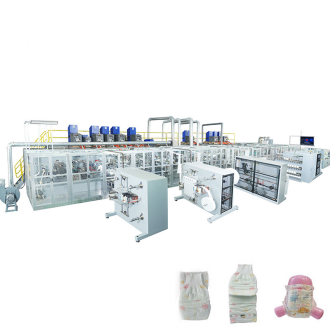
Smart engineering isn’t about cramming sensors and software into a machine and calling it a day. It starts with a deep dive into the actual production challenges our clients face—talking to operators, watching workflows, and figuring out where intelligence can actually make a difference. Then we bake that insight into the custom build from the ground up, not as an afterthought. This means control systems that adapt to real-time material variations, user interfaces that simplify complex setups, and built-in diagnostics that flag issues before they become breakdowns. Every decision ties back to making the machine more intuitive and resilient in its specific environment.
What sets this approach apart is how it reshapes maintenance and uptime. Instead of relying on generic schedules, the machine learns its own usage patterns and nudges operators when attention is needed—no unnecessary downtime, no guesswork. We also integrate seamlessly with in-house networks, so production data flows easily into existing dashboards without requiring a degree in IT. The result is equipment that feels like a natural extension of the team, not a black box that demands constant hand-holding.
The real magic happens during the design phase, where we work side by side with the people who’ll use the machine every day. That collaboration uncovers small but critical details—like a glove-friendly touchpoint or a notification that reduces scrap without slowing the cycle. We keep the tech invisible where it should be and prominent where it helps, always prioritising reliability over flash. By anchoring every feature in real-world use, we deliver machines that evolve with the business and rarely need a manual.
Meeting Niche Market Demands with Agile Manufacturing Systems
Traditional mass production often stumbles when trying to serve specialized markets, where customer preferences can shift overnight. Agile manufacturing steps in by making it economically viable to produce smaller, tailored runs without sacrificing speed or quality. Instead of being locked into fixed assembly lines, factories use modular workstations and cross-trained teams that can pivot quickly. This means a company can test a niche product idea, gather real feedback, and refine the design in weeks rather than months.
Technology plays a quiet but powerful role here. With smart software and reconfigurable machinery, changeovers that once took days now happen in hours. Digital twins let engineers simulate production flows before touching a physical machine, catching bottlenecks early. For niche buyers who value uniqueness, this blend of digital precision and human oversight ensures that even limited-edition items meet strict consistency standards without the usual premium cost.
Ultimately, agile manufacturing transforms supply chain vulnerability into competitive advantage. By keeping inventory lean and production closely tied to actual demand signals, businesses can respond to micro-trends without overcommitting resources. It’s a mindset that treats every niche not as a one-time gamble but as an ongoing conversation with a community, where each batch reflects the latest insights. That kind of responsiveness builds loyalty in markets where off-the-shelf solutions simply can’t compete.
Transforming Factory Floors with Modular Machinery Solutions
Factory floors are undergoing a quiet revolution, and it’s not just about adding more robots. Instead of ripping out entire production lines every time a new product needs to be made, modular machinery solutions let you snap together different processing units like building blocks, reconfiguring workflows in hours rather than weeks. This adaptability means a single factory can switch from automotive parts to consumer electronics without the usual downtime and capital expenditure.
Think of it like a high-tech kitchen where you can rearrange the stove, fridge, and prep stations depending on the menu—except here, the modules are self-contained, plug-and-play machines that handle specific tasks like filling, capping, or labeling. They communicate over standardized digital interfaces, so when you physically move a module, its software automatically integrates with the new layout. Maintenance becomes simpler too; if one unit fails, it can be pulled out and swapped without halting the entire operation, reducing the pressure on spare parts inventories.
Beyond flexibility, these systems turn data into a currency on the plant floor. Each module continuously streams performance metrics, letting plant managers spot bottlenecks before they escalate and experiment with different configurations in a digital twin. This isn’t about replacing workers; experienced operators often enjoy the challenge of orchestrating these live puzzles, tweaking the sequence to shave seconds off cycle times or responding to sudden shifts in orders. The result is a factory that feels less like a monument to fixed infrastructure and more like a living organism, constantly evolving to meet what tomorrow’s market demands.
Precision-Engineered Machinery for Uncompromised Quality
Every component of our machinery is crafted with an obsessive attention to detail, utilizing advanced CNC machining and rigorous tolerances that ensure flawless operation. From the initial design phase to final assembly, we prioritize durability and performance, leaving no room for compromise.
Our engineers employ state-of-the-art simulation tools and real-world stress testing to refine each mechanism, guaranteeing that every machine delivers consistent results under the most demanding conditions. This relentless pursuit of perfection is what sets our equipment apart.
Built with premium-grade materials and subjected to multi-stage quality checks, our machines are designed to outlast and outperform. We believe that true quality isn’t just measured in microns—it’s felt in every seamless motion and reliable output.
Future-Proofing Production Through Adaptive Automation
Adaptive automation isn’t just about swapping rigid processes for flexible ones—it’s about designing systems that learn and adjust in real time. By embedding sensors, real-time analytics, and machine learning models into production lines, manufacturers can now anticipate shifts in demand, material variability, or equipment wear without manual oversight. This creates a responsive backbone where changes occur fluidly, eliminating the lag between detection and correction.
What sets this approach apart is its capacity to handle unstructured variation. Traditional automation excels with predictable, high-volume tasks, but adaptive systems thrive in environments where product mixes shift daily or customization is the norm. For instance, a cell that assembles both medical devices and consumer electronics on the same floor can reconfigure tooling, recalibrate torque settings, and reroute material flows on the fly. Operators become supervisors of exceptions rather than slaves to the line, focusing their expertise where it truly counts.
Future-proofing, then, becomes a matter of building in optionality—not just against known risks, but against the unknown. Adaptive automation treats every production run as a data-generating opportunity, feeding back into design, sourcing, and maintenance loops. The result is a factory that doesn’t just react to change but evolves alongside it, turning volatility from a threat into a competitive lever.
FAQ
It refers to equipment built specifically for a manufacturer's unique product specs, materials, and output goals. Rather than using a generic, one-size-fits-all machine, the entire system—from unwinding to packaging—is engineered to match the exact diaper design, absorbency level, size range, and even regional market preferences.
They minimize material waste by fine-tuning cutting and assembly processes, reduce downtime through components that match real-world usage patterns, and speed up changeovers between product variants. Since the machine isn't running at a compromised setting, overall OEE improves noticeably.
It allows for modular upgrades, letting factories adapt to new diaper features like wetness indicators or elastic ear panels without replacing entire lines. This approach also shortens time-to-market for innovative designs and makes small-batch specialty production economically viable.
One example is adjustable forming pockets that handle both standard and ultra-thin cores without mechanical swaps. Another is integrated sensors for real-time thickness monitoring, which automatically adjust glue application patterns. Some systems include quick-release modules for adult incontinence products versus baby diapers.
Beyond baby care, adult incontinence and feminine hygiene segments gain a lot—these products often have very specific absorbency zones and materials. Nursing homes and hospitals requiring high-absorbency briefs with odor control layers also see benefits, as do brands targeting eco-friendly, compostable diaper lines.
Initial investment is higher, but the payback comes through less scrap, lower energy use due to optimized drives, and fewer man-hours for maintenance. Plus, the ability to quickly pivot to new trends means you avoid costly retrofits later.
Start with a clear definition of your critical product variables—core design, elastic placement, material caliper. Involve operators early in the machinery design phase since their insights prevent over-engineering. Also, check whether the supplier offers remote diagnostics and local service support for the customized modules.
Conclusion
In the evolving landscape of hygiene product manufacturing, the shift toward customized diaper machinery marks a decisive break from one-size-fits-all automation. Rather than forcing unique product designs into rigid production frameworks, tailored lines now craft distinct diaper geometries—from ultra-thin pull-ups to contoured newborn sizes—by rethinking every module around the specific end product. This agility rests on smart engineering that embeds adaptive sensors and self-correcting drives directly into the machine architecture, allowing a single line to pivot between niche specifications without sacrificing speed or consistency. The result is a manufacturing philosophy where the equipment itself becomes an expression of the brand's market niche, whether targeting eco-conscious materials or clinical incontinence needs.
On the factory floor, modular machinery solutions break traditional monolithic systems into recombinable stations, enabling rapid reconfiguration as demands shift. Precision-engineered cutting, bonding, and folding units maintain uncompromised quality even at high throughput, with real-time feedback loops that eliminate drift before a defective unit emerges. Looking forward, these adaptive automation platforms are built with open interfaces and upgradeable cores, so production capacity evolves alongside raw material innovations and packaging trends. Instead of periodic overhauls, manufacturers gain a living system that absorbs new capabilities through software-defined modules and quick-change tooling. This convergence of customization and resilience is not just improving efficiency—it is fundamentally redefining how diaper factories respond to a fragmented, fast-moving global market.
Contact Us
Contact Person: Jessie Lai
Email: [email protected]
Tel/WhatsApp: 86-188594442931
Website: https://www.wm-machinery.com