

Chinese Gorras Are Redefining Modern Cap Style with Cultural Flair
2026-09-10
Chinese gorras are quietly rewriting the rules of modern cap style, blending embroidery, symbolism, and heritage fabrics with street-ready silhouettes. It’s not just ornamentation—it’s a cultural statement that feels both rooted and radically new. At 4ugear, we’ve been tracking this shift, and the designs we’ve seen are impossible to ignore. Here’s why these caps are about to become your next obsession.
Silk, Satin, and the Slow Death of the Plain Ball Cap
The ball cap used to be the great equalizer—cotton twill, a curved brim, maybe a team logo or a faded stain from a summer job. Nobody thought much about it. Then silk crept in, not loudly but steadily, like a rumor at a rooftop party. First it was the lining, a whisper of luxury against the forehead. Then satin panels started showing up on the crown, catching light in a way that made the old cotton versions look like they belonged in a gym bag. The shift wasn't announced; it just happened, one five-panel at a time, until the plain cap felt less like a choice and more like a surrender.
There's a particular kind of person who still reaches for the basic cap—the one with the adjustable plastic strap and the pre-curved brim that's gone soft from too many washes. That person isn't making a fashion statement; they're just trying to keep the sun out of their eyes. But the market has moved on. Walk through any downtown on a Saturday and the caps that turn heads are cut from fabrics that shimmer, drape, or catch the wind differently. Silk charmeuse in a muted olive. Satin with a subtle sheen that reads almost metallic under streetlights. Even the snapback has been reimagined in a blend that feels less like workwear and more like lounge attire for people who never quite clock out.
None of this means the plain ball cap is dead—not yet. It still hangs on hooks in gas stations, still gets tossed into beach bags and back seats. But its cultural weight has thinned. The same way a handwritten letter feels precious now precisely because it's rare, the old cap has become a relic of a time when practicality didn't need an upgrade. Silk and satin didn't kill it with a single blow. They just made it look tired, and in fashion, tired is often worse than gone.
Dragons on Brims: Myth Meets Modern Streetwear
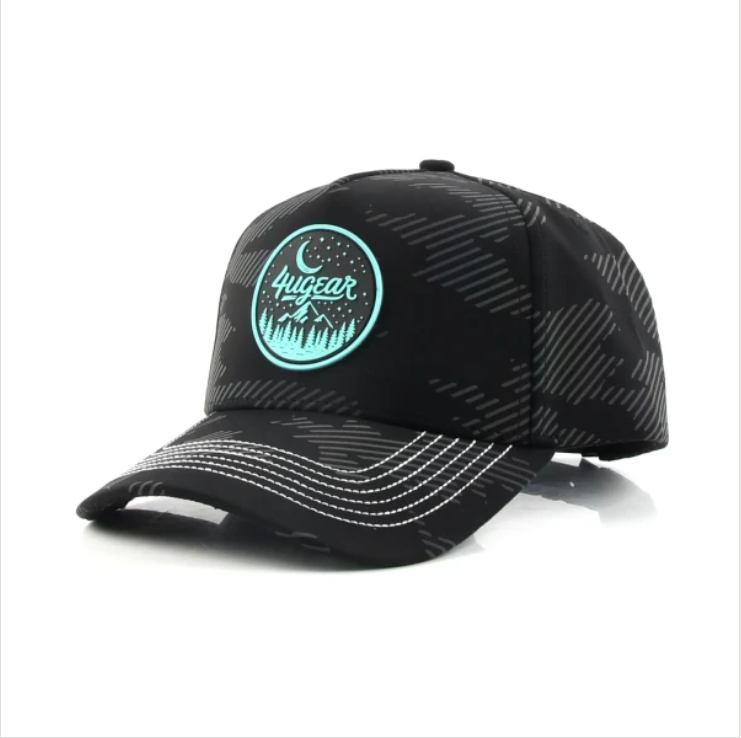
The brim of a cap used to be little more than a sun guard, a blank strip of fabric that most brands ignored. Now it's becoming a narrow canvas, and dragons are taking over. Stitched or printed along that curved edge, these creatures don't sit still—they coil, snap, or unfurl across the visor, turning a simple accessory into a piece of wearable folklore. It's not about loud logos or cartoon fire; the detail is often tight and surprisingly subtle, meant for people who notice craftsmanship before colorway.
Streetwear has always borrowed from old symbols, but the brim dragon feels different. A dragon wrapped around the brim suggests movement and pressure, as if the cap itself is holding something restless in check. Wear it with a plain hoodie or a technical jacket, and the myth does the talking. The mix of ancient serpentine forms with modern materials—nylon, ripstop, trucker mesh—gives the design a tension that generic embroidery can't fake.
What keeps this from being a gimmick is restraint. The best versions use a single thread color, maybe tonal on tonal, or a tight satin stitch that catches light only when you tilt your head. That way, the dragon isn't shouting; it's waiting. It's the kind of detail that rewards a second glance, blurring the line between streetwear and storytelling without making a fuss about either.
When a Cap Becomes a Wearable Scroll
A cap turns into a wearable scroll the moment its fabric stops being mere shade and starts holding a sequence of words, symbols, or stitch-marks that demand to be read in order. The brim behaves like a rolled edge; the seams suggest ruled margins; the sweatband becomes the hidden colophon. You tilt your head, and the text unfurls.
Sailors once carried tide tables inside their caps, and pilgrims tucked folded prayers under the lining. Today a cap might hold a fragment of a late-night argument, a line from a bus ticket, or the coordinates of a place that no longer exists. Wearing it is less about fashion than about keeping a record close to the skull, where memory is warm and slightly damp.
The Artisans Quietly Rewiring Cap Culture
On dead-end blocks in Osaka and cramped studio flats above London laundromats, a handful of sewists have stopped treating the baseball cap as a blank billboard. They pull apart vintage five-panels, trace sun-faded twill, and rebuild brims with horsehair canvas usually reserved for tailored jackets. The result is less streetwear, more heirloom: a cap that breaks in like a leather glove, its crown wrinkled from daily grab-and-go.
This shift isn't loud. There are no drop notifications, no collab countdowns. Instead, makers post grainy photos of stitching tests and fabric swatches dyed in kitchen sinks. Buyers send measurements of their head shape, not just a size tag. In return, they get a cap with a hand-punched eyelet that sits slightly off-center, a deliberate imperfection that marks it as worked rather than warehoused. Cap culture, for these artisans, is being rewired one seam at a time.
Chinese Characters That Don't Just Spell—They Speak
The moment you see 休, a person leaning against a tree, you don't need a dictionary to feel the pause. Chinese characters often work like tiny visual scenes: the roof sheltering a pig in 家 once meant a settled home, not just a building. These forms carry the logic of everyday life—where you rest, what makes a household, how people once understood safety and belonging.
明 pairs sun and moon side by side, and brightness stops being abstract. 安 places a woman under a roof, and the old ideal of peace becomes visible. Even a simple verb like 看—a hand above an eye—turns looking into a gesture you can almost perform. That's why learners don't merely memorize strokes; they inherit a way of seeing.
Over centuries, scripts simplified and meanings shifted, but the habit of packing experience into a square remains. A well-chosen character can still carry a scene, an emotion, or a whole cultural assumption in a few strokes. That's what it means for a writing system to speak: the shapes themselves have something to say.
From Forbidden City Palettes to Urban Fits
The deep cinnabar of lacquered pillars and the soft gold of imperial robes don't belong in a museum case — not anymore. Once reserved for dragon thrones and temple eaves, those saturated vermilions, jade greens, and muted yellows have quietly slipped off the palace walls and onto city sidewalks. You see them now on a bomber jacket lining, a sock stripe, the inner fold of a hoodie. Not costume, not cosplay. Just a color memory worn against concrete.
This shift isn't about slapping a dragon motif on a tee. It's the palette itself doing the work: the way a dusty turquoise works with washed denim, how an oxidized bronze tone reads as a neutral against black nylon, why a flash of palace red can anchor an otherwise monochrome outfit. The hues are old, but the fit is now — oversized silhouettes, technical fabrics, the kind of layering that belongs on a subway platform, not a silk scroll.
Urban fashion keeps chasing rare earth tones and faded pastels, but the Forbidden City's color logic runs deeper. It understands contrast — bright against matte, warm against cool, saturated against raw. So a pair of cargo pants in faded imperial yellow doesn't look like a costume; it looks like a deliberate choice. The distance between a throne room palette and a street fit is shorter than you'd think. It just takes leaving the gilding behind and keeping the color sense tight.
FAQ
Most baseball caps lean on logos or plain hues, but Chinese gorras weave in embroidery, silk brocade panels, and motifs like dragons, clouds, or auspicious characters. The brim often stays classic, while the crown carries the story—think of it as wearable heritage rather than just headwear.
You'll frequently see dragons for strength, phoenixes for rebirth, lotus flowers for purity, and Chinese characters representing fortune, longevity, or double happiness. Some designs borrow from imperial patterns or Peking opera masks, giving each cap a distinct narrative.
It depends on the price point. Many independent studios hand-embroider details on small batches, especially when using silk threads or metallic accents. Larger manufacturers may use machine embroidery to keep costs down, but the best pieces often have slight irregularities that signal handwork.
Let the cap be the focal point. Pair it with neutral tones—off-white, black, denim, or olive—and avoid other busy patterns above the waist. If the cap has bright embroidery, echo one accent color in your shoes or bag, but stop there.
There's a growing appetite for pieces that mix heritage with everyday silhouettes. A Chinese gorra fits streetwear's love of bold statements but adds a layer of storytelling that generic logos can't. Social media has also amplified Asian designers who blend tradition with street style.
Silk, satin, brocade, and cotton-linen blends dominate. Some caps feature jade or metal buttons on top, while inner bands might use soft bamboo fabric for breathability. The brim can be covered with matching fabric or left as a subtle contrast.
Absolutely. The adjustable back makes them unisex, and the styling range is wide—oversized streetwear outfits, casual dresses, or even smart-casual looks. The key is choosing a motif and color that align with your personal vibe rather than gender.
Check the embroidery density on the front—loose threads or uneven stitching are red flags. The fabric should feel substantial, not thin or shiny-plastic. If the cap claims to be silk but has a chemical smell or stiff drape, it's likely a polyester blend. Reputable sellers often show close-up photos of the stitching and inner seams.
Conclusion
The plain ball cap is losing its grip. Silk and satin have slipped into the brim, giving Chinese gorras a luster that feels less like streetwear and more like a piece of draped history. Dragons coil across the visors, not as cheap embroidery but as deliberate myth-making—scales catching light while the rest of the cap stays unexpectedly understated. It’s a slow, quiet takeover of a garment once ruled by cotton and logos. Wear one, and you’re not just shading your eyes; you’re carrying a compressed narrative, a wearable scroll where every stitch hints at something older than the city block you’re walking down.
Behind this shift are artisans working without loud announcements, swapping factory loops for hand-finished seams and hand-painted calligraphy. Chinese characters appear on the crown and side panels, chosen not for decoration but for what they say—verbs of arrival, nouns of persistence, phrases that read like small poems stitched into fabric. The color palette borrows from the Forbidden City’s lacquered reds, jade greens, and imperial golds, then gets dragged into an urban fit: a bomber jacket, wide pants, sneakers scuffed from actual walking. The result is less a trend than a translation—old visual language spoken fluently in the grammar of now.
Contact Us
Contact Person: Tommy
Email: [email protected]
Tel/WhatsApp: 8613546956008
Website: https://www.4ugearsupply.com/