

Chinese Digital Printing Machines: How Innovation Is Reshaping Modern Print Technology
2026-05-29
Step into any modern print shop in China today and you'll witness a quiet revolution—machines that once chugged along mechanically are now humming with digital intelligence. The shift from traditional methods to advanced digital printing is not just a trend; it's a complete reimagining of what's possible in speed, precision, and customization. At the heart of this transformation are homegrown innovators like Danmajet, whose breakthroughs are rewriting the rules of ink-on-paper. In this post, we explore how Chinese digital printing machines are setting new global standards, blending cutting-edge technology with practical ingenuity to solve real-world challenges.
The Speed Surge in Chinese Inkjet Technology
The sheer pace of progress in Chinese inkjet printing has caught global attention. Manufacturers aren't just tweaking old designs—they're reinventing printhead arrays and ink delivery systems to achieve speeds that rival traditional offset presses. A few years back, the idea of firing millions of droplets per second with pinpoint accuracy seemed futuristic. Now, it's a routine factory-floor reality.
This surge isn't just about hardware. Software-driven waveform control and real-time clog prevention let printers sustain breakneck velocities without sacrificing image quality. The shift to single-pass systems, where paper zooms by while thousands of nozzles fire simultaneously, has slashed production times. What used to take hours now wraps up in minutes, reshaping how packaging, textiles, and commercial prints get made.
How Smart Systems Are Redefining Print Accuracy
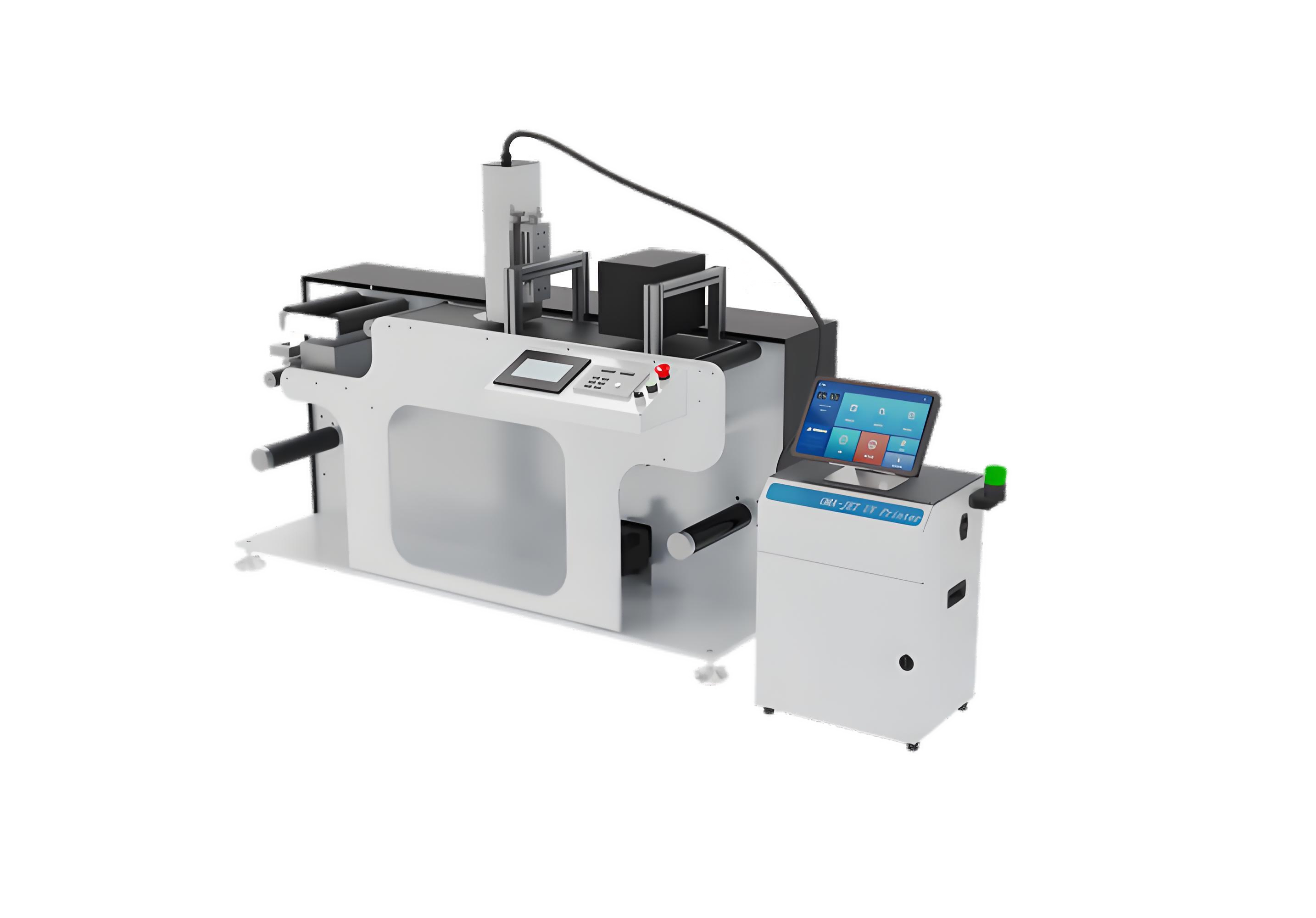
Modern printing presses no longer rely solely on preset calibrations that drift over a run. Instead, embedded sensors and on-the-fly feedback loops give them the ability to sense and correct tiny misregistrations as they happen. A slight stretch in the substrate or a subtle shift in color density triggers an immediate counter-action, often before a human eye would spot the defect.
At the core of this precision are vision systems that compare every impression to a digital master at blinding speeds. Machine learning algorithms trained on countless print samples can distinguish between acceptable variation and genuine flaws, adjusting plate positions, ink keys, or dryer temperatures without pausing the press. The result is a coherence across thousands of copies that feels almost hand-tuned, but happens in milliseconds.
What this means in practice is less wasted stock and far fewer manual interventions. Operators aren’t babysitting dials—they’re overseeing a conversation between hardware and software that keeps output within microns of the target. Color consistency from sheet to sheet and job to job becomes a reliable baseline, freeing up teams to focus on creative refinement rather than firefighting mechanical drift.
China’s Quiet Push Toward Sustainable Printing
In recent years, Chinese manufacturers have quietly shifted toward greener production methods, with soy-based inks and waterless printing gaining traction. This transition, while low-key, reflects a broader commitment to reducing volatile organic compounds and water waste in the printing process. Factories in provinces like Guangdong are now retrofitting facilities to meet stricter environmental standards, often ahead of regulatory deadlines.
A notable driver has been the rise of eco-conscious brands demanding certified supply chains. Many printers now hold FSC and Greenguard certifications, allowing them to tap into premium export markets. This has also spurred domestic innovation in recycled paper grades that balance brightness and durability without excessive bleaching.
Perhaps most striking is how local governments are incentivizing these shifts through tax breaks and land allocation, turning sustainable printing into a quiet pillar of regional industrial policy. It’s a departure from the breakneck, cost-first mindset that long defined the sector, and it’s slowly reshaping global perceptions of Chinese manufacturing.
The Personalization Boom Fueled by Digital Presses
Digital presses have unleashed a wave of hyper-customization that traditional offset methods could never handle efficiently. From wedding invitations featuring individually tailored details to packaging printed with unique serialized QR codes, the technology transforms static designs into dynamic one-on-one communications. Variable data printing, once a niche offering, now fuels entire marketing campaigns where each piece speaks directly to a single recipient, weaving personal names, localized offers, or past purchase references seamlessly into the layout.
The appetite for personalization keeps growing as consumers increasingly expect brands to recognize them as individuals. Short-run digital production makes it economically viable to produce hundreds of versions of a postcard or brochure—each with distinct images, copy, and promotions matched to data-driven segments. This granularity extends beyond simple mail merges; today's presses combine with AI-driven tools to generate real-time content variations, adjusting tone and visuals on the fly for different demographics, locations, or behavioral triggers. The result feels less like mass communication and more like a curated experience.
Behind the scenes, digital presses also simplify the logistics of personalized projects. There is no need for separate plates per version or lengthy setup times. Designers upload a master template linked to a database, and the machine pulls content row by row, collating finished pieces in one pass. This streamlined workflow compresses production cycles and encourages experimentation—brands can A/B test creative concepts or seasonal messaging without breaking the budget. The personalization boom isn't just a trend; it's a structural shift enabled by the speed and flexibility of digital print technology.
Digital Printing’s Unlikely Conquest of Textiles and Packaging
For decades, digital printing was dismissed as a niche technology—too slow, too expensive, and incapable of handling the rugged demands of textiles and packaging. Yet quietly, almost imperceptibly, it has rewritten the rules. Today, high-speed inkjet systems churn out vibrant fabric prints with a level of detail that analog methods can only dream of, while electrophotographic presses bring photo-quality images to corrugated boxes. The conquest is not just about mimicking what came before; it’s about unlocking entirely new possibilities: mass customization, zero-inventory supply chains, and designs that shift from screen to substrate in a matter of minutes.
What makes this transformation jarring is the sheer improbability of it all. Textile printing, for instance, has traditionally been a world of heavy screens, toxic dyes, and vast water consumption. Packaging, meanwhile, has relied on flexo and offset presses that are optimized for long, unchanging runs. Digital printing elbowed its way into both arenas by solving problems no one else had addressed: the fashion brand that wants to test a new pattern without committing to thousands of meters of cloth, the startup that needs 500 bespoke boxes for a product launch. In doing so, it has turned the economics of short runs upside down and forced legacy manufacturers to rethink what “printing” even means.
Perhaps the most intriguing part of this conquest is how understated it remains. There are no headlines screaming about the death of screen printing; no dramatic plant closures announced. Instead, digital’s advance has been a steady creep—starting in sampling departments, moving into small-scale production, and now elbowing into markets once considered off-limits. The machines have gotten faster, the inks more durable, and the substrates more receptive. What was once an unlikely contender is fast becoming the default choice, not by displacing the old guard in a single blow, but by proving its worth in the cracks and crevices of an industry that never saw it coming.
Why Chinese Print Machines Are Gaining Global Ground
For years, the printer market was dominated by a handful of established names, but Chinese manufacturers are steadily rewriting that narrative. Their rise isn’t based on a single factor; instead, it’s the result of a calculated blend of aggressive pricing, surprisingly robust technology, and an ability to adapt quickly. Where legacy brands once leaned on brand loyalty, Chinese companies have focused on delivering high-volume, reliable machines that undercut competitors without sacrificing the features small and medium businesses actually need. This shift has been particularly evident in emerging markets, where price sensitivity often outweighs brand prestige.
Another overlooked driver is the sheer agility of China’s manufacturing ecosystem. Proximity to component suppliers and a culture of rapid prototyping allow companies to compress development cycles dramatically. While traditional players might take years to refine a new model, Chinese firms frequently release updated versions with improved print speeds, wireless connectivity, or integrated scanning within months. This cadence means they can respond almost in real time to shifting work environments—like the recent surge in demand for compact, multifunction devices suited to hybrid offices. The result is a product line that feels less like a rigid catalog and more like a constantly evolving toolkit.
Perhaps most telling is how these manufacturers are approaching after-sales support and localization. Instead of offering a one-size-fits-all solution, they’ve invested in regional service centers and tailored software interfaces for different markets. A print machine sold in Southeast Asia might come with humidity-resistant paper handling and support for local invoice formats right out of the box. This attention to practical detail, combined with a willingness to listen to distributor feedback, has turned many first-time buyers into loyal customers. As global supply chains continue to recalibrate, Chinese print machines are no longer seen as a budget compromise—they’re increasingly the smart, forward-thinking choice.
FAQ
Digital printing transfers electronic files directly onto substrates, skipping plates and setups. Unlike offset, it handles variable data effortlessly—think personalized packaging or short-run books. The real shift is agility: jobs that once took days now finish in hours, with less waste and lower upfront costs.
It isn't sudden. Companies like Hanglory and Atexco have spent years refining high-speed inkjet heads and precision media handling. They focused on cost efficiency and modular designs, making digital presses accessible to mid-sized print shops. Domestic demand for customization—from personalized labels to on-demand textiles—also fueled rapid R&D cycles foreign rivals couldn't match.
Modern Chinese digital presses use advanced ink formulations and adjustable print head arrays. They print on corrugated cardboard, fabrics, rigid boards, even metal foils. For instance, UV-curable inks bond instantly to non-porous surfaces, while pigment inks work on cotton and polyester blends without pretreatment. This versatility turns a single printer into a multi-line production tool.
They drastically reduce chemical and water usage compared to screen printing. On-demand production cuts overstock and landfill waste. Many models feature closed-loop ink systems and energy-efficient curing, aligning with tighter emission standards. A textile printer using cradle-to-gate analysis shows 60% lower carbon footprint per item than analog methods.
Absolutely. Entry-level models from companies like Locor or HanGlobal come under $20,000 with straightforward operation. Cloud connectivity lets owners run jobs from a phone. Training takes days, not weeks. Subscription-based ink plans eliminate upfront consumable costs, making digital adoption viable even for shops handling 200 T-shirts a week or short-run wedding invitations.
One example is piezoelectric inkjet nozzles capable of 1,200 dpi at 100 meters per minute. Another is inline spectrophotometers that auto-calibrate color during runs. Manufacturers also embed AI algorithms that adjust droplet size and drying temperature based on material thickness—preventing banding without manual intervention. These were once exclusive to six-figure industrial machines.
Expect deeper integration with smart factories: automated file-to-finish workflows and predictive maintenance via IoT sensors. Expansion into packaging and tissue printing will accelerate. Liquid metal inks for flexible electronics and bio-inks for medical patches are nearing commercial viability. The focus will be on total production ecosystems rather than standalone printers.
Conclusion
China’s digital printing machines are undergoing a quiet revolution, driven by raw speed and smarter precision. Inkjet systems now push boundaries that once seemed unreachable, slashing production times while holding razor-sharp accuracy through embedded intelligence. These smart systems monitor and adjust in real time, correcting errors before they happen and enabling full variable-data runs without sacrificing detail or consistency. The result is a new breed of agile production lines where speed and quality no longer compete—they reinforce each other.
This leap is not just about mechanics; it’s reshaping entire industries. A surge in personalized printing—from custom packaging to on-demand textiles—has turned short runs into profitable ventures, opening doors that traditional analog could never enter. Chinese manufacturers are also weaving sustainability into this shift, cutting waste, reducing water and chemical use, and embracing cleaner processes without fanfare. Together with an expanding footprint in textiles and packaging, these machines are now winning global trust, quietly proving that innovation, practicality, and environmental sense are no longer separate battles in print technology.
Contact Us
Contact Person: Jacky
Email: [email protected]
Tel/WhatsApp: 086 15000607053
Website: https://www.danmajet.com