

China Self Adhesive Protective Film Manufacturer Insights for Durable Surface Protection
2026-11-18
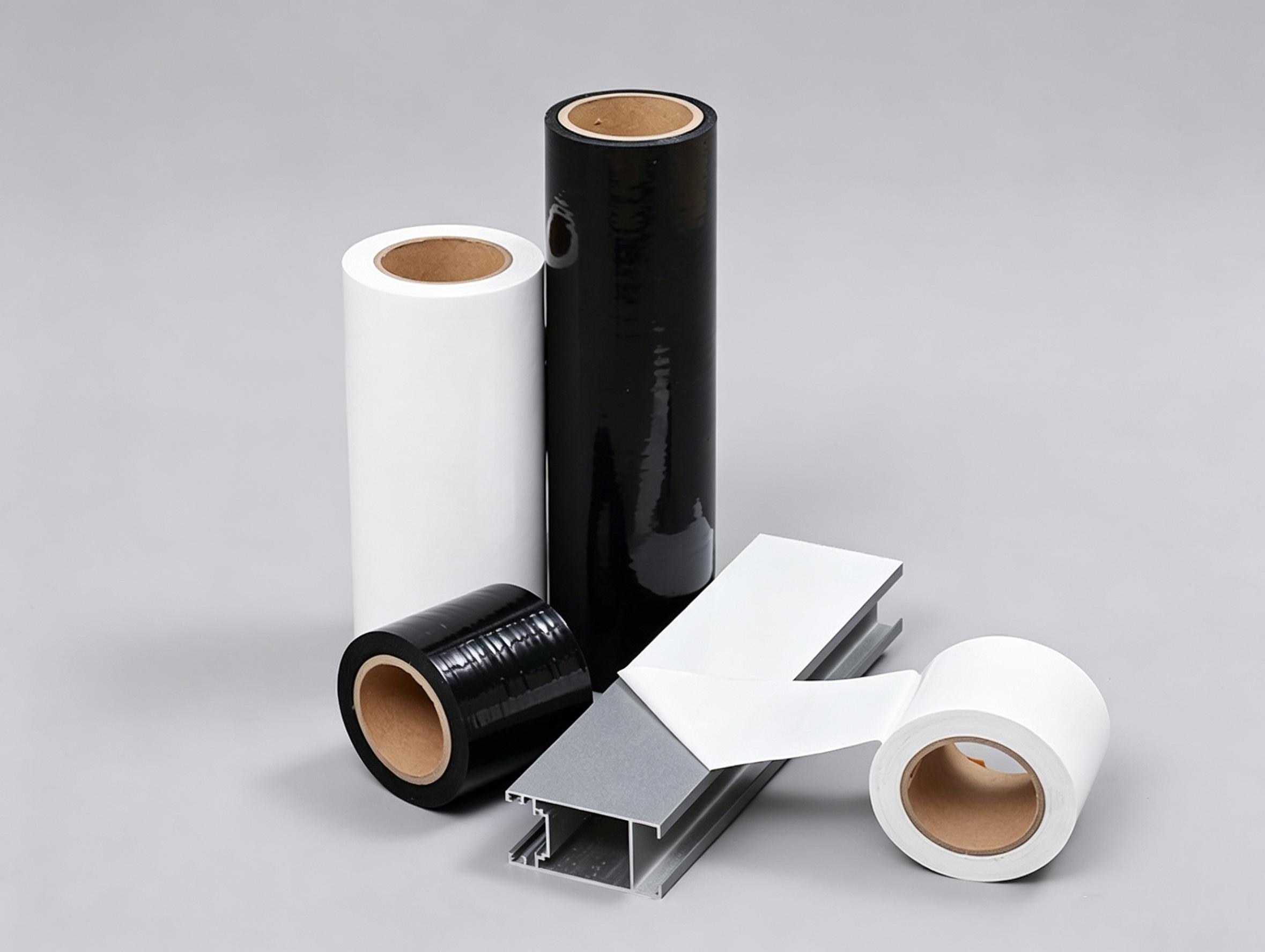
Surface damage doesn’t announce itself, but the cost of ignoring it shows up in scratched panels, dust-filled edges, and rejected finishes. For buyers and project managers who rely on temporary protective films, choosing the right China self adhesive protective film manufacturer often decides whether protection works invisibly or fails at the worst moment. Shire has spent years turning that pressure into practical material science, offering Shire self adhesive protective film solutions designed for durable surface protection across demanding production and installation environments. This guide breaks down the material choices, adhesive behavior, and manufacturing details that make the difference between a film that peels cleanly after months and one that leaves residue behind.
Why Film Thickness Claims Rarely Tell the Whole Story
Film thickness numbers look impressive on a spec sheet, but they rarely reflect what actually ends up on the surface. Application method, curing conditions, and surface texture can all cause the real-world thickness to vary by a surprising margin. A product advertised at 50 microns might measure closer to 30 in low spots or over rough substrates, simply because the liquid flows, shrinks, or wicks away before it sets.
Even when the wet film is applied exactly as directed, the dry film tells a different story. Solvent evaporation, crosslinking shrinkage, and pigment settling all change the final profile. Two coatings with identical stated thickness can behave completely differently in corrosion resistance or abrasion performance, depending on how they form a continuous barrier at the microscopic level.
A better approach is to look past the headline number and ask how thickness is verified in practice. Dry film gauges, destructive cross-section tests, and simple visual checks often reveal that uniformity matters far more than an average. In many cases, a thinner but continuous and well-adhered film outperforms a thicker one that is riddled with pinholes and thin edges.
Matching Adhesive Strength to Finished Surfaces Without Guesswork
Adhesive selection often fails when the focus stays on raw bond strength alone. What matters just as much is how the adhesive interacts with the specific surface finish it will touch. A glossy, sealed panel and a porous, unsealed edge board call for very different tack, open time, and curing behavior—yet many projects treat them as interchangeable surfaces. By checking the finish type first, you avoid the guesswork that leads to peeling edges, ghosting, or delayed bond failure under temperature shifts.
Start by identifying whether the finished surface is film-forming, penetrating, or bare. Film finishes like lacquer or polyurethane sit on top and need an adhesive that can grip a smooth, low-porosity layer without solvents that craze the coating. Penetrating oils or hard wax oils leave the surface more open, so a thicker adhesive with a longer open time may soak in too much and starve the bond line. A quick wipe with mineral spirits on an inconspicuous spot can reveal how sealed the surface really is: if the liquid beads, treat it as non-porous; if it darkens and spreads, expect more absorption.
Rather than chasing the highest psi number on a datasheet, test a small sample with the exact finish schedule you plan to use—same number of coats, same cure time, same sheen. Press two offcuts together, let them sit overnight, then pull them apart. The way the bond fails tells you more than the label: a clean split at the glue line means the adhesive never locked into the finish, while wood fiber tearing out on both sides says the match is working with the surface, not against it. That simple check removes most of the uncertainty before a single clamp goes on.
Edge Lift as the First Warning Sign of a Weak Bond
Edge lift often gets treated like a minor cosmetic annoyance, but it is usually the earliest visible clue that a bond is losing its grip. When a bonded edge starts to curl or peel away, the adhesive has already begun to fail at the point where stress concentrates most. Temperature swings, humidity, and repeated handling all work against that exposed edge, gradually turning a tiny separation into a wider path for contamination.
Weak bonds rarely fail all at once. The process more often starts with an almost invisible break along the outer perimeter, where surface preparation was slightly off or where adhesive thickness was inconsistent. Once that edge lifts, air and moisture slip underneath, and the bond line weakens from the outside in. A quick physical check with a fingertip or a thin card can reveal the early movement long before the part feels loose.
Treating edge lift as a maintenance signal rather than a surface flaw changes how problems get caught. Instead of pressing the lifted area back down and hoping it holds, the better response is to inspect the substrate, clean the exposed surfaces, and re-bond the edge properly. That small intervention is far less disruptive than waiting for the entire assembly to begin shifting or rattling.
The Shift Toward Multi-Season Weathering Tests in Chinese Plants
A few years ago, a 1,000-hour xenon arc cycle was enough to call a coating or polymer qualified in many Chinese plants. That has quietly changed. Manufacturers now move sample racks between high-altitude sites in Qinghai, humid coastal yards in Hainan, and inland stations with sharp overnight frosts, because a single summer exposure was missing too many late-failure complaints from customers in northern Europe and the Middle East.
The real difference appears in sequencing. Instead of extending the same UV dose, test programs run panels through autumn dew, winter thermal shock, and spring humidity before the strong summer irradiance returns. Sealants crack at different points, backsheets delaminate earlier, and powder coatings lose gloss in a pattern that accelerated cabinets rarely reproduce. Engineers in some plants now treat the multi-season result as the primary data, and use lab aging only to screen early batches.
Not every factory has the same rhythm. Some rely on leased exposure racks and courier samples back every six weeks; others have set up rooftop platforms above the production line to catch real industrial pollution along with weather. The common shift is that a certificate from one climate chamber is no longer enough to close a quality argument.
Slitting and Roll Tension Decisions That Avoid Field Tears
Tearing in the field rarely starts with the film itself. It usually traces back to how the roll was wound. When slitting narrow widths, a winding tension that feels acceptable on the parent roll can easily become destructive once the web is cut into smaller strips. The outer wraps may look smooth, but the inner layers near the core are often carrying residual stress that only shows up later as a burst edge or a propagating tear during packaging. A better decision is to run slightly lower tension at the core and step it down gently across the diameter, rather than holding one constant value.
Roll hardness is the real quality indicator, not the tension setpoint on a screen. Two rolls can be wound at the same tension and still behave differently if the nip pressure, blade condition, or core concentricity is off. A dull slitting blade can create a ragged edge that concentrates stress, while excessive nip load can compress the layers unevenly and lock in strain. Checking hardness with a simple durometer or tap test at several points across the roll often reveals a problem before the roll leaves the plant.
For products prone to field tears, the safest approach is to make small, deliberate changes and track the results. Reduce tension at the core by five to ten percent, adjust taper so the outer wraps are not overly tight, and verify that the rewound roll does not show star bursts or edge puckering. If a roll will sit in storage or travel through temperature swings, leaving a little extra slack near the core is usually less risky than trying to make the roll feel firm throughout.
Questions That Uncover a Manufacturer’s Real Quality Control
Most factory audits stop at the surface: a tidy workspace, a binder full of certificates, and a quality manual that looks impressive. But the real question is how the manufacturer behaves when nobody is watching. Ask about the last three customer complaints, not just the summary report. Find out who owns the corrective action process and whether that person has authority to halt a shipment. A plant that can walk you through specific failures — and what changed afterward — is far more telling than one that claims zero defects.
Incoming material checks deserve more than a yes-or-no answer. Request the actual sampling plan for raw materials and the records of rejected lots from the past six months. If the manufacturer cannot produce those quickly, the inspection data may not be driving daily decisions. Also ask how they qualify and re-qualify suppliers, especially when a supplier changes a subcomponent or process. Quality starts before the production line, and weak links there rarely show up in a final audit.
Finally, look for evidence of statistical process control rather than a wall chart. Have them explain the control limits on one current production line and what triggers a stop. Ask to see nonconformance tags, rework areas, and the log of deviations. The goal is not to find perfection; it is to find a manufacturer that detects problems early, records them honestly, and fixes the root cause instead of polishing the surface.
FAQ
Most experienced plants build the construction around the surface energy of the substrate and the expected weather window. A common outdoor-grade product uses a cast PE or modified PP film with a clean-room coated acrylic adhesive instead of a bulk-rolled hot melt. The adhesive thickness is usually kept between 12 and 20 microns, and the backing film is stabilized with UV inhibitors rather than relying on heavy pigmentation. That combination reduces edge lift and prevents the film from becoming brittle after repeated heat and rain cycles.
The key is not just initial tack but the peel growth after application. For low-energy metal finishes, a low to medium peel force in the 30–80 g/25 mm range is safer than a high-tack product. The adhesive should be designed for clean removal at 180° after a few weeks of storage, not just at 90° on the day of application. Ask for aging data at 60°C and 90% relative humidity for at least 72 hours, and request samples that have been applied to the actual finish, not only to standard mirror stainless steel.
Ghosting usually comes from a mismatch between the adhesive's migration tendency and the coating's cure level. Powder coatings with low cross-link density can absorb small molecules from aggressive acrylic adhesives, especially in warm storage. A better-matched product uses a high-purity monomer system and a slightly lower acid value. It also helps to specify a shorter indoor or covered storage period before the film is stripped, because heat accelerates migration even if the film itself does not tear.
For raw glass and window units, 40–60 microns is the practical range. Below 40 microns, the film tends to tear when workers reposition large sheets; above 60 microns, the roll becomes stiff and the film may bridge over slight surface texture, leaving unprotected channels. Many glazing suppliers choose a 50-micron blue or black-and-white film with a rubber-modified adhesive, but for tinted or low-E glass the adhesive must be tested for compatibility because some tackifiers can interact with coatings under sunlight.
Most established suppliers keep master rolls in standard widths of 1,020 mm, 1,250 mm, and 1,500 mm and slit to order. Custom widths within 15–1,500 mm are usually cut from existing stock, so the added time is one to three days rather than a full production cycle. The real delay appears when the buyer requests a non-standard core size, a printed logo, or a specific unwind direction. Those changes often require a separate slitting run and a rewinding step, so confirming core and unwind orientation early keeps the order moving.
In temperate conditions, a properly formulated PE film with UV stabilizers can usually protect surfaces for four to eight months before removal becomes difficult. Six months is a reasonable design target. Beyond that, the film may still look intact, but the adhesive can shift from clean peel to high peel, especially on south-facing panels. For longer exposure, it is usually better to switch to a co-extruded film with a UV-blocking outer layer or plan a scheduled removal window rather than simply increasing adhesive strength.
The critical test is stress cracking resistance. Acrylic and polycarbonate can craze when certain adhesive components, especially some solvents or plasticizers, come into contact with the surface under stress. A reliable supplier will provide tensile bar or bent-sheet test results using the actual substrate, not just a PET test panel. Also ask for a low and stable peel force after seven days at 50°C, and check that the film unwinds smoothly at low humidity to avoid static buildup that attracts dust.
Conclusion
Thickness figures on a datasheet can create a false sense of security because they rarely reflect how evenly the adhesive layer is coated or how the film behaves once it stretches around a curved edge. A 50-micron product from one Chinese manufacturer may feel stiff and lift within days, while another plant's 45-micron film holds through temperature swings because the adhesive was matched to the specific surface energy of the substrate, not chosen from a generic tack chart. Edge lift is usually the first visible sign that something in that matching process was skipped, appearing at corners and cutouts before the middle of the sheet ever fails. Chinese factories that treat this as a coating problem rather than a film problem tend to produce more predictable results for painted metal, powder-coated panels, and textured plastics.
The more useful suppliers have moved beyond short-term peel tests and now run multi-season weathering cycles that alternate humidity, UV exposure, and freeze-thaw conditions, which exposes weak adhesion long before field complaints arrive. Slitting tension and roll winding are equally telling: overly tight rolls can stretch the film at the core and cause splitting during application, while inconsistent tension leaves soft edges that telescope in transit. Asking about these details, along with how a plant isolates contaminated batches or logs adhesive lot changes, reveals more about real quality control than any certificate alone. A manufacturer that can explain its roll profile decisions and weathering failure modes is generally the one whose protective film stays flat and clean until removal.
Contact Us
Contact Person: Jack Xu
Email: [email protected]
Tel/WhatsApp: 8615257328825
Website: https://www.temporaryprotectivefilm.com/