
China Port Dredging Supplier: Reliable Solutions for Modern Waterway Infrastructure
2026-05-21
Global shipping lanes are the lifeblood of commerce, yet their untold story starts beneath the surface. Ports are only as strong as the channels that feed them, and keeping those arteries clear demands expertise you can trust. Enter YaKai Dredger — a China port dredging supplier fusing engineering precision with decades of on-the-water know‑how. From silt-choked berths to ambitious deepening projects, the right dredging technology doesn’t just move sediment; it unlocks a port’s true potential. Discover what sets modern waterway infrastructure apart and why industry leaders are turning to YaKai Dredger for solutions that stay ahead of the tide.
Meeting the Depth Demands of Mega-Ships
As container vessels continue to balloon in size, ports around the world are scrambling to accommodate their ever-deepening drafts. Modern mega-ships, some stretching over 400 meters and carrying more than 20,000 TEUs, require water depths of at least 16 meters—and often more when fully laden. This has triggered a wave of dredging projects and infrastructure overhauls, forcing ports to dig deeper approach channels, turning basins, and berths just to stay relevant in global trade lanes.
The challenge goes beyond simply scooping out more seabed. Maintaining these depths in high-traffic areas means dealing with constant siltation, where currents redeposit sediment almost as fast as it's removed. Facilities are investing in advanced monitoring systems and more powerful dredgers that can work around the clock without disrupting port operations. Some are even reshaping entire harbor designs to minimize maintenance costs and ensure safe passage for vessels that dwarf most landmarks.
But deeper water is only the start—quay walls must be reinforced to handle the massive loads, crane outreach extended, and turning circles widened. Without these adjustments, ports risk losing their hub status, as shipping alliances consolidate routes to fewer, deeper gateways. It’s an expensive race with no finish line, especially as speculation grows about 24,000-TEU ships and beyond, pushing the limits of what current infrastructure can handle.
Smarter Dredging Through Real-Time Data
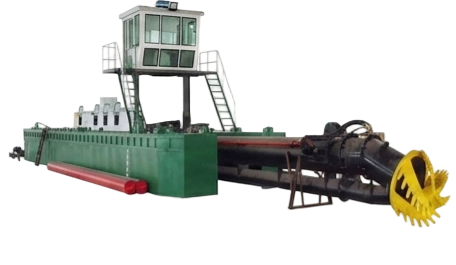
Real-time data transforms dredging operations by replacing guesswork with precise, moment-to-moment visibility. Instead of relying on periodic soundings or pre-survey charts, operators now see live depth readings, sediment density profiles, and pump performance metrics. This immediate information allows them to adjust cutter suction pressure, swing speed, and slurry concentration on the fly—ensuring the draghead stays at the optimal cut depth and minimizing both fuel waste and wear on equipment.
Positioning data from GNSS and inertial navigation systems feeds into dynamic positioning algorithms, keeping the dredger locked onto its intended path even in currents or swell. Combining this with real-time kinematic tidal corrections prevents over-dredging, a costly mistake that consumes extra time and budget. Vibration and temperature sensors on critical components like winches and suction pipes further warn of potential failures, so maintenance can be scheduled without halting the project.
Environmental oversight becomes proactive rather than reactive. Turbidity sensors trailing the discharge plume instantly detect any spike in suspended sediments, triggering automatic reductions in dredge output until levels normalize. This closed-loop control not only safeguards marine habitats but also satisfies regulatory requirements around the clock. The result is a leaner, more responsive operation where every cubic meter of material is removed with data-driven intent.
Navigating Tight Timelines in Busy Ports
Every minute counts when your vessel is stacked in a queue outside a congested hub like Shanghai or Rotterdam. Port rotations rarely go exactly to plan—berth windows shrink, customs inspections drag, and a single crane breakdown can cascade into a delay that costs thousands per hour. Experienced operators know that the real art is not just building a buffer into the schedule, but having a network of pre-vetted local agents who can expedite pilotage, tug services, and cargo handling the moment a slot opens up. Without that on-the-ground agility, even the most carefully choreographed itinerary can unravel before noon.
Surprises are inevitable: a late-arriving feeder vessel, a sudden weather closure, or a port authority shifting priorities without warning. What separates a routine call from a costly detour is the ability to make decisions before all the data is perfect. Captains who rely solely on standard port communication channels often find themselves reacting too late. Instead, smart ship managers tap into real-time AIS tracking, terminals’ internal berthing projections, and informal intel from pilots who know the local rhythm. That kind of insight doesn’t come from a dashboard; it comes from relationships built over years. It’s the difference between catching the last tide window and waiting an extra twelve hours at anchor.
Then there’s the paperwork labyrinth. Even in digital-first ports, a misplaced certificate or a minor discrepancy in the cargo manifest can stall clearance, eating into your narrow time envelope. Forward-thinking shipping companies now push for pre-clearance wherever possible, uploading documents before arrival and keeping a dedicated compliance officer on call. These small steps might seem mundane, but they shorten the turnaround time more than any engine upgrade. In a busy port, the clock never stops, and neither should your preparation.
Eco-Conscious Sediment Handling and Reuse
Sediment management in waterways has traditionally been viewed through a narrow lens of disposal, often overlooking its potential as a resource. By shifting focus toward eco-conscious handling, we begin to see dredged material not as waste but as a valuable component of natural cycles. This approach prioritizes methods that minimize disturbance to aquatic ecosystems while capturing the beneficial properties of sediment. From riverbeds to harbors, every scoop removed can be assessed for its physical and chemical suitability in downstream applications, turning a necessary maintenance activity into a restorative practice.
Reuse strategies are as diverse as the sediment sources themselves. Fine-grained clays might be shaped into erosion-control barriers or liners for constructed wetlands, while coarser sands can nourish depleted beaches or support habitat creation projects. In agricultural settings, nutrient-rich sediments can replenish overworked soils, reducing the need for synthetic fertilizers. The key lies in matching the material's characteristics with site-specific needs—a process that requires careful testing but pays off by closing loops and reducing demand for virgin resources. Each successful reuse project not only diverts material from landfills but also strengthens the argument for a circular economy in waterway management.
Implementing these practices at scale demands collaboration among engineers, ecologists, and local communities. Transportation logistics and contamination risks must be addressed through transparent monitoring and adaptive management plans. When done right, the result is a visible improvement in both waterway function and surrounding landscapes. Public perception shifts when people see dredged material repurposed into parks, levees, or restored floodplains—spaces that directly enhance their quality of life. Ultimately, eco-conscious sediment handling transforms an operational cost into a community and environmental asset, proving that what we once discarded can be reimagined as a foundation for renewal.
How We Tackle Challenging Soil Conditions
Dealing with tricky soil isn’t just about brute force—it’s about understanding what’s happening underground before a single shovel hits the dirt. We start by pulling detailed soil samples and analyzing everything from compaction layers to moisture content. This data gives us a clear picture of the challenges, whether it’s expansive clay, loose sand, or hidden debris.
Once we know what we’re up against, we tailor our approach. For unstable ground, we might use deep foundations like helical piers or micro-piles that bypass the problem zone entirely. When dealing with poor drainage, we integrate subsurface drains or amend the soil structure to direct water away from critical areas. The key is matching the solution to the specific condition, not applying a one-size-fits-all fix.
In extreme cases, we’ve even engineered custom soil blends—mixing native material with stabilizers like lime or cement—to create a stable base capable of supporting heavy loads. This hands-on, adaptive strategy turns potential deal-breakers into manageable parts of the project, without unnecessary delays or budget blowouts.
Long-Term Partnerships for Waterway Maintenance
Sustaining navigable waterways demands more than occasional dredging or spot repairs. It calls for enduring alliances between public agencies, private operators, and local communities. These long-term partnerships anchor maintenance in shared responsibility, ensuring that rivers, canals, and ports remain safe and efficient over decades.
When stakeholders commit to multi-year agreements, they can pool resources for advanced monitoring, predictive upkeep, and rapid emergency response. This collaborative approach reduces downtime, cuts costs, and fosters innovation. For example, a port authority working closely with tug and barge companies can coordinate seasonal dredging schedules to minimize disruption, while environmental groups help integrate habitat restoration into routine works.
Beyond infrastructure, such partnerships build trust and institutional knowledge. They create a feedback loop where lessons from one flood season inform upgrades for the next, and early warning systems evolve through continuous dialogue. By making waterway stewardship a collective, enduring mission, these alliances transform a utilitarian task into a resilient ecosystem service that supports commerce, ecology, and communities alike.
FAQ
They handle the removal of sediment and debris that naturally accumulate in harbors, access channels, and turning basins, ensuring enough depth for cargo ships and tankers. It’s a mix of engineering, logistics, and environmental management.
Their track record speaks volumes—combining massive project experience from domestic mega-ports with competitive pricing, rapid mobilization, and a knack for tackling challenging conditions like heavy siltation or tight timelines.
It comes down to meticulous planning, regular equipment overhauls, and real-time monitoring of dredge performance. Many also run backup vessels and have contingency protocols to avoid delays if something breaks down.
Beyond traditional port deepening, they handle land reclamation, beach nourishment, river training, industrial water supply channels, and even environmental dredging for contaminated sediments.
They’re not just scooping mud—they’re using technologies like eco-sensitive cutter heads, automated positioning, and data-driven volume tracking to minimize waste, save fuel, and reduce harm to marine life.
Yes, and they often do. Many suppliers tailor equipment spreads to the job scale, offer phased execution plans, and even assist with financing or maintenance training so a small port doesn’t get overwhelmed.
By incorporating tools like silt curtains, real-time turbidity sensors, and beneficial reuse strategies that turn dredged material into construction fill or wetland restoration, they typically go beyond basic compliance.
It’s never one-size-fits-all—a minor channel touch-up might take a few weeks while a new deepwater berth could span a couple of years—but with round-the-clock shifts and efficient spoil disposal, many medium-scale jobs wrap up in under six months.
Conclusion
Modern waterway infrastructure demands a partner who not only understands the scale of global shipping but also brings precise, adaptive engineering to every project. Our approach to port dredging begins with the challenge of accommodating mega-ships—deepening and widening channels so that the next generation of container vessels can call without restriction. This isn't simply about removing material; it's about reading the seabed in real time. By integrating sensor networks and survey data directly into cutter suction and trailing suction hopper operations, we adjust on the fly, avoiding over-dredging and staying precisely within design tolerances. That same intelligence proves critical when working in active ports, where a narrow weather window or a berthing schedule can compress the work envelope. We've refined our logistics and staging so that dredging progresses around vessel movements, often completing critical sections during brief port pauses without disrupting trade.
Environmental stewardship runs parallel to operational speed. Sediment, once regarded as spoil, is now treated as a resource: we analyze its composition and, when clean, repurpose it for land reclamation, beach nourishment, or habitat construction. When contaminants are present, our sealed transport and dewatering systems contain and treat material safely. Challenging soil layers—from stiff clays to weathered rock—are managed with purpose-built cutter heads and, where needed, auxiliary mechanical breakup tools, reducing reliance on blasting and keeping projects moving. All of this happens within a framework of long-term collaboration. Many of our relationships are measured in decades, built on transparent reporting, shared technology roadmaps, and a genuine commitment to keeping waterways safe and economically vital. It's this blend of adaptive capability and lasting partnership that ensures a navigable future, one carefully managed depth at a time.
Contact Us
Contact Person: Nancy
Email: [email protected]
Tel/WhatsApp: (+86) 13869631558
Website: https://www.yakaidredger.com/