

China Pharmaceutical Facility Innovations Driving Global Healthcare Standards
2026-09-14
Walk through any modern pharmaceutical facility in China today and you'll see a quiet revolution taking shape. Beyond the gleaming stainless steel and automated lines, a deeper shift is underway: Chinese manufacturers are no longer just scaling production—they're redefining what global quality means. At the forefront of this change is GENO Pharmatech, a name increasingly synonymous with facility innovations that challenge long-held assumptions about cost, compliance, and speed. What exactly are these innovations, and why are regulators and partners from Basel to Boston starting to pay close attention? The answers lie in a blend of engineering grit, digital foresight, and a willingness to build for tomorrow's standards, not yesterday's.
Chinese Pharma Plants Are Moving From Fast Follower to Standard Setter
For decades Chinese drug plants were known for copying approved molecules and meeting price benchmarks set elsewhere. Now a growing cluster of facilities in Shanghai, Suzhou, and Guangzhou handle process development, sterile filling, continuous manufacturing, and regulatory dossiers that foreign partners adopt as reference standards. The shift is visible in monoclonal antibody titers, ADC conjugation yields, and lyophilization protocols exceeding current USP and EP monographs.
The change didn't come from branding. It came from engineers who rebuilt quality systems after the 2015 drug registration reforms and from heavy investment in single-use bioreactors, isolator filling lines, and real-time release testing. Some local plants now audit their European and American clients' older sites, because their own deviation rates and batch rejection metrics are lower. That inversion, not marketing, is what makes standard setter accurate.
The next test is whether these plants can write guidance for novel modalities such as cell therapy, mRNA, and radiopharmaceuticals before legacy regulators finish their own drafts. Several Chinese CDMOs have already published process performance qualification data for allogeneic CAR-T and circular RNA that overseas developers use to structure their INDs. If that continues, standard setter will become an operational fact rather than an ambition.
Drug Facility Design in China Now Balances Speed, Cost, and Sterility Differently
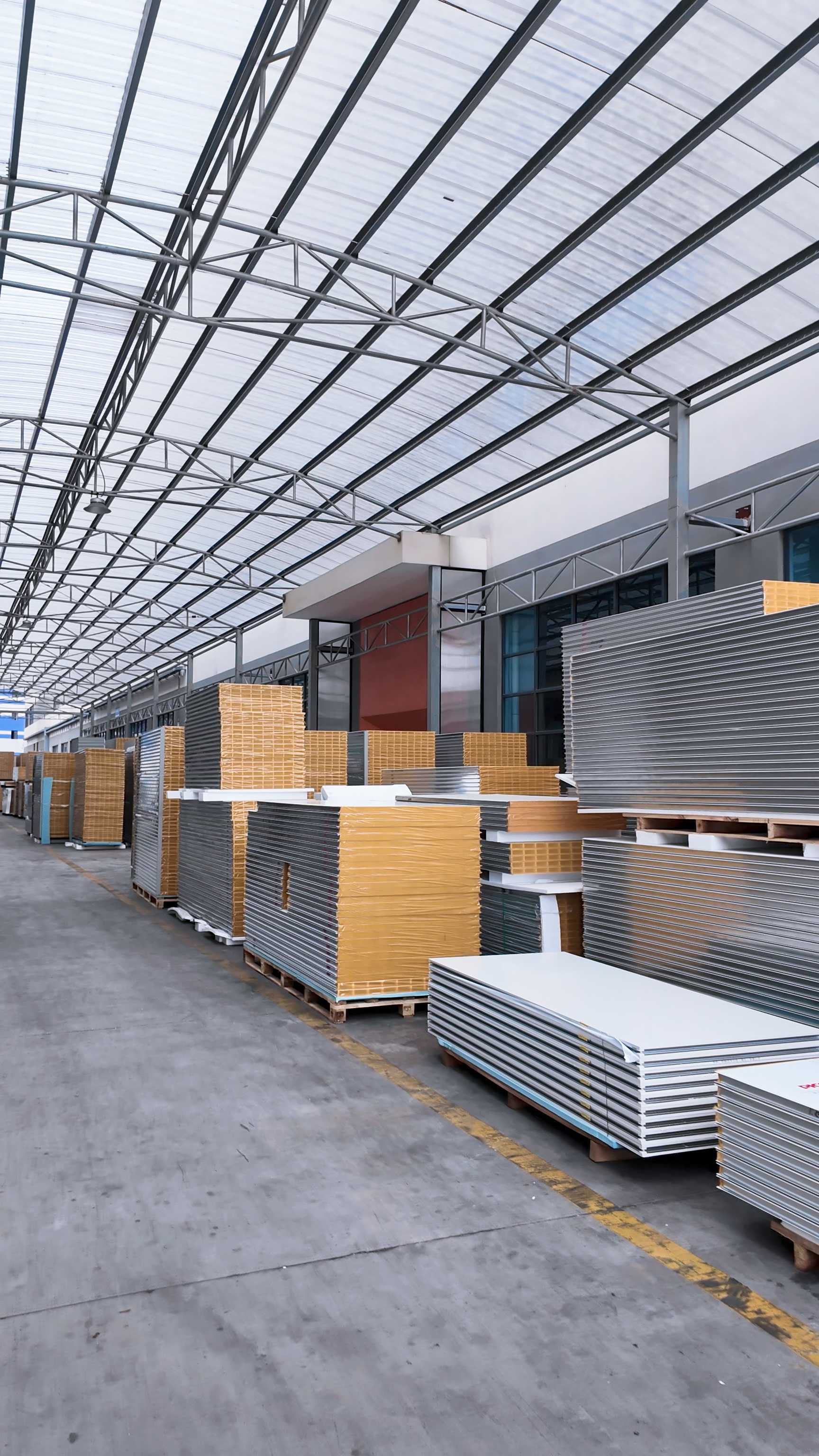
In Chinese drug facility design, the old race to build the fastest and cheapest cleanroom has given way to a more negotiated approach. Engineers now weigh speed and capital expenditure against sterility assurance not as fixed priorities but as variables that shift with each product's risk profile. A facility for terminal-sterilized small-molecule injectables may still prioritize rapid modular construction, while a biologics line handling live cells will accept longer timelines and higher spend to preserve aseptic integrity.
This recalibration shows up in physical layouts, too. Rather than defaulting to broad ISO 7 suites with uniform air change rates, designers increasingly zone areas by contamination risk and operational rhythm. High-traffic material transfer corridors get more robust airlocks and pressure cascades, while low-risk support spaces use simpler finishes and reduced airflow. The result is a patchwork of sterility measures that follows actual process needs, not a blanket specification.
Cost and speed have not disappeared from the conversation; they have just been reordered. Modular wall systems and prefabricated utility skids cut construction time, but only where they do not compromise cleanability or pressure differentials. In some recent projects, owners are willing to pay a premium for single-use fluid paths that shrink cleaning validation and reduce cross-contamination risk, even if the consumables cost more over time. That trade-off marks a departure from the earlier fixation on lowest upfront capital.
Digital Twins and Modular Cleanrooms Cut Validation Time and Raise Trust
Validation used to be a bottleneck that everyone accepted as unavoidable. With a digital twin mirroring the cleanroom's airflow, particulate levels, and pressure cascades in real time, engineers can now run "what-if" scenarios before a single physical sensor is installed. The model doesn't replace the final on-site testing, but it does compress the early design qualification from weeks to days, because most layout flaws are caught while the room still exists only as a dataset.
Modular cleanrooms change the equation further. Because the wall panels, fan filter units, and utility chases arrive as pre-qualified subassemblies, the onsite work shifts from construction to assembly. When the digital twin is built from the same manufacturer's component library, the as-built model and the as-designed model stay in sync with far less manual reconciliation. That consistency is what regulators notice—fewer gaps between documentation and physical reality means fewer questions during an audit.
Trust doesn't come from a glossy validation report. It comes from seeing how the system behaves under failure: a blocked return air path, a power dip on one fan bank, a door left open during a shift change. Digital twins let operators rehearse those events and record the simulated recovery times before the cleanroom is even certified. Paired with modular construction that eliminates many onsite variables, the result is a validation package that reads less like a promise and more like a record of what already happened.
Automation Inside Chinese Manufacturing Is Shifting Global Audit Expectations
Walk through a modern Chinese electronics plant and you'll notice the quiet. Sensor arrays embedded in assembly lines stream torque readings, thermal profiles, and optical inspection results straight into centralized databases. Auditors no longer flip through dog-eared logbooks or chase down shift supervisors for missing paperwork. Instead, they query real-time dashboards that show every weld, every screw torque, every rejected component from the past six months. This shift from episodic sampling to continuous data capture means the old question—"did they follow procedure?"—gets replaced by a sharper one: "can the system itself prove consistency without human testimony?"
The ripple effect reaches far beyond factory floors. Global buyers once accepted a two-day onsite audit with a pre-announced schedule and a binder full of ISO certificates. Now they expect Chinese suppliers to expose machine-level telemetry showing uptime, maintenance alerts, and defect rates over weeks, not hours. A textile mill in Zhejiang now grants its European retail clients read-only access to loom performance logs, letting them verify dye lot uniformity without ever booking a flight. This blurring of boundaries between internal production data and external assurance is forcing audit firms to rethink what evidence actually looks like.
Audit protocols are quietly evolving to match. Leading certification bodies have started training assessors in SQL queries and PLC log interpretation, treating a robot's error code history as more persuasive than a manager's verbal assurance. Some multinationals now write "continuous monitoring clauses" into supplier contracts, requiring real-time API feeds from MES systems rather than quarterly summary reports. The consequence is a new audit landscape where the most trusted Chinese factories are not those with the shiniest visitor centers, but those whose automation infrastructure allows outsiders to see exactly how every product came to be.
Green Utility Systems in Chinese Facilities Are Becoming a Supply Chain Benchmark
Across China's industrial zones, the shift toward green utility systems has quietly moved from pilot projects to baseline expectations. Facility managers once treated energy and water as fixed operational costs; now they are recalibrating boilers, compressors, and wastewater loops as strategic levers for supply chain resilience. A textile mill in Zhejiang province, for instance, reuses 87% of its process water after installing a closed-loop filtration system, reducing not only its own costs but also stabilizing input availability for downstream garment exporters who face tightening environmental audits from European buyers.
What makes this trend a benchmark rather than a one-off improvement is the way green utilities now ripple through procurement contracts. Chinese electronics assemblers, automotive parts suppliers, and even cold-chain logistics providers are being scored on the carbon intensity of their steam, chilled water, and compressed air. Third-party auditors increasingly inspect not just the final product but the utility room itself—checking heat recovery ratios, variable frequency drives on pumps, and whether a facility's rooftop solar feeds directly into its manufacturing lines. A Guangdong-based PCB fabricator recently won a multi-year contract specifically because its on-site trigeneration system lowered the buyer's Scope 3 emissions by 4.2% compared to the nearest competitor.
Underneath this shift is a less glamorous but decisive factor: aging grid infrastructure and volatile energy pricing. Chinese facilities that generate or recover their own thermal and electrical loads buffer themselves from peak-hour surcharges and provincial power rationing, which in turn makes their delivery schedules more dependable. That dependability, more than any sustainability slogan, is what procurement teams in Europe and North America now treat as a hard filter. As one sourcing director for a German industrial group put it during a supplier audit in Suzhou: "We don't ask if you have green utilities. We ask how many hours of production you can guarantee without tapping the municipal grid." That question, asked in dozens of factory corridors each quarter, is what turns a local retrofit into a supply chain benchmark.
How China’s Fill-Finish Investments Are Reshaping Global Vaccine and Biologic Capacity
China's push into fill-finish has moved beyond simple vialing lines. State-backed bioparks and contract manufacturers like WuXi Biologics and Joinn Laboratories have installed high-speed isolator-based filling suites capable of handling both liquid and lyophilized vaccines. These lines integrate single-use assemblies, automated visual inspection, and serialization—features once concentrated in Europe and North America. The result is a rapid expansion of sterile capacity that can be repurposed from seasonal flu to pandemic vaccines within weeks.
This build-out is altering contract manufacturing economics. A fill-finish run in Shanghai or Suzhou now often undercuts Western quotes by 30-40%, even after accounting for cold-chain logistics and regulatory audits. Multinationals, facing margin pressure on older vaccines, are starting to book slots in Chinese facilities for regional supply. At the same time, CDMOs in India and South Korea are feeling the squeeze, as Chinese sites offer comparable quality documentation with faster tech transfer.
Longer term, the shift raises uncomfortable questions about supply security. If a substantial share of global sterile filling sits in China, trade disruptions or export controls could ripple through routine immunization programs. Some Western governments are quietly working to diversify fill-finish away from single-country dependence, while Chinese firms pursue overseas fill-finish acquisitions to place capacity inside key markets. The interplay between cost advantage and resilience will define the next decade of vaccine manufacturing.
FAQ
Continuous manufacturing lines, single-use bioreactors, and highly automated aseptic filling suites are probably the most visible. Chinese plants have moved beyond simply copying established designs and are now installing modular cleanrooms with real-time environmental monitoring, digital twins for process simulation, and isolator technology that reduces human intervention. These changes cut production costs and shorten lead times, which ripples through global supply chains.
The short answer is they invest heavily in quality-by-design from the start. Many newer facilities are built around process analytical technology and electronic batch records, so scaling up does not mean loosening control. Teams often benchmark against FDA and EMA inspection findings before they ever file, and some plants bring in former regulators or overseas quality consultants to pressure-test their systems.
A big shift is the move toward flexible, multi-product lines that can switch between sterile injectables and biologics without major reconstruction. Combined with digital tracking from raw material to finished dose, this gives buyers more confidence in continuity. During recent shortages of critical oncology drugs and antibiotics, Chinese facilities were able to repurpose capacity quickly, which changed how Western procurement teams view them.
They are not just adding robots for show. Predictive maintenance models flag equipment drift before it causes batch failure, and machine vision systems inspect every vial or syringe at speeds no human line could match. More importantly, data historians link process parameters to quality outcomes, allowing real-time release testing in some cases. That level of control used to be rare outside a handful of multinational sites.
There are several. A number of injectable facilities in Jiangsu and Zhejiang have passed FDA pre-approval inspections with no form 483 observations, and at least one large biologics CDMO near Shanghai has received EMA GMP certification for monoclonal antibody production. These are not one-off victories; the pattern now includes sterile oncology products and complex generics shipped directly to US and EU hospitals.
Data integrity remains a stubborn issue in older plants, though the newest facilities rarely struggle with it. There is also a shortage of seasoned engineers who understand both Chinese manufacturing culture and Western regulatory logic. Some sites still depend on imported single-use components and analytical instruments, which creates vulnerability. And moving from a cost-driven mindset to a quality-first culture takes longer than installing new equipment.
China's regulator, NMPA, has been working inside ICH for several years now, and its inspectors are generating more data on continuous manufacturing and digital quality systems. As these approaches become standard in Chinese plants, other regulators may feel pressure to harmonize guidance. It would not be surprising to see China's experience with real-time release and automated deviation management cited in future annexes or technical reports.
Conclusion
China’s pharmaceutical plants have moved beyond mere capacity expansion. Digital twin simulations and modular cleanrooms now cut validation timelines substantially, while engineers balance speed, cost, and sterility in ways that differ from legacy Western models. This shift has pushed many Chinese facilities from fast followers to standard setters, as their practical approaches to containment and process control attract attention from regulators in Europe and North America. Automation has also changed the tone of global audits: inspectors increasingly expect real-time data integrity and closed-loop process control rather than paper-based retrospective checks.
At the same time, green utility systems are becoming a supply chain benchmark, not just a compliance checkbox. Multinational buyers now evaluate Chinese contract manufacturers partly on energy efficiency, water recovery, and carbon footprint per batch. China’s large-scale fill-finish investments have also redistributed global vaccine and biologic capacity, making Chinese sites a credible fallback for high-demand sterile production. These combined shifts mean that facility design choices in China are now influencing how global healthcare standards are written, with emphasis on data transparency, environmental performance, and rapid but reliable delivery.
Contact Us
Contact Person: Amy Yang
Email: [email protected]
Tel/WhatsApp: 008619330882686
Website: https://www.genopharmatech.com/