

China Handheld Explosion-Proof Searchlight Critical Safety Features for Hazardous Work Zones
2026-11-24
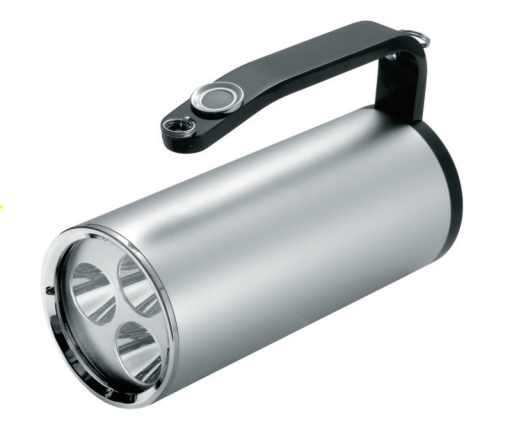
Most safety failures in hazardous work zones don't begin with a spark—they begin with assuming a rugged-looking flashlight is safe for an explosive atmosphere. A genuinely reliable China handheld explosion-proof searchlight has to do much more than throw a bright beam. This guide looks at the critical safety features that separate certified designs from ordinary industrial lights, from sealed housings to battery and thermal controls. For teams working in confined spaces, gas plants, or flood response, Jianghe Flood Prevention provides a closer look at how the right searchlight can reduce risk before it ever becomes visible.
What Stops a Spark Before It Starts
A spark usually dies before anyone notices it because the surrounding air was never prepared for it. The first fragile sign of interest, curiosity, or attraction meets a flat response, and within seconds the moment too small to defend itself is gone. It is not rejection in the loud sense; it is the absence of enough oxygen to keep the beginning alive.
Another common stopper is the habit of demanding a final shape from something that has only just appeared. When a fresh thought is immediately asked to prove its value, justify its timing, or explain how it will end, the energy that might have become motion is spent on self-defense instead. Early sparks need room to wobble, not a list of requirements.
Sometimes the pause before a spark is filled by old caution dressed as wisdom. The same voice that says "wait until you're sure" also closes the window where uncertainty could have turned into discovery. What stops the spark, then, is rarely a lack of heat. It is the well-intentioned instinct to control the flame before it has even learned to burn.
Battery Housing That Keeps Its Cool Under Load
As current surges through the pack during hard acceleration or rapid charging, the enclosure does more than hold cells in place—it has to move heat away before it pools between modules. The lower tray uses a network of internal ribs that double as coolant channels, letting glycol pull thermal energy from the contact face without adding a separate cold plate. That keeps the temperature gradient across the pack narrow enough to avoid hot spots near the busbars.
Material choice matters just as much as plumbing. A high-silicon aluminum alloy gives the housing enough stiffness to resist twisting on rough pavement while still conducting heat away from the cell floor. Around the side skirts, thin-wall sections are thickened only where mounting loads concentrate, so the shell doesn’t become a thermal bottleneck at the edges where airflow is already limited.
Under sustained load, the housing’s outer skin is designed to shed heat rather than trap it. A matte surface finish with a slight texture increases the exposed area just enough to improve convection, while small drainage channels from the casting process are repurposed to guide air across the lower surface. The result is a pack enclosure that stays within a predictable operating window even when the cells are working at their peak.
A Lens Built for Impact Before It Meets the Beam
The glass blank gets sorted long before it earns a place in the housing. Edge chips, micro-fractures, and coating inconsistencies are pulled from the line while the material is still raw. That early rejection is not waste; it is the first layer of impact resistance. By the time a beam enters the lens, every surface has already survived pressures and thermal shifts that would expose weaker glass in the field.
Coatings are deposited in gradual passes, with each layer checked under oblique light rather than waiting for final inspection. This catches the kind of faint veiling that spec sheets miss. The result is a lens that does not rely on a single protective layer to save it from damage. The whole stack, from substrate to outermost coat, was built to handle sudden temperature swings and stray debris before it ever sees a focused beam.
No extra polish can rescue a lens that started with the wrong internal geometry. Here, the curve is shaped to manage thermal expansion unevenness, so the center does not fight the edges under load. That is the quiet difference: impact survival is not added after the fact, but priced into the blank, the coating schedule, and the first alignment pass.
Seals That Take Solvents, Salt, and Sudden Storms
A seal on a coastal chemical terminal rarely gets a single stress at a time. One shift it sits in a ketone-based cleaner, the next it faces a salt-laden gust ahead of a squall. The part still has to hold a flange face without hardening, swelling, or taking a set.
That combination eats away at ordinary rubber parts quickly. Solvents pull out plasticizers. Salt crusts wedge into small clearances and become abrasive once the wind picks up. A sudden storm adds a pressure spike that tests the seal's rebound. Good designs get around this by keeping the outer jacket chemically dull and the core mechanically lively, so the seal does not react to the process fluid or turn brittle after a cold front.
Repair logs from offshore platforms and fuel docks show the same pattern: the failures are not always dramatic, just a slight lip deformation or a tiny extrusion gap after a rough weather window. The fix is rarely a thicker part. More often it means moving to a perfluoroelastomer or a PTFE-based composite with a corrosion-resistant metal ring, and then letting the seal manage all three stresses without a planned replacement every season.
Beam Tuning for Real Work Zones, Not White Walls
Tuning against a flat white wall tends to reward a clean-looking cutoff that falls apart the moment the truck rolls onto uneven pavement. A parked machine, a stack of barriers, or a slight crown in the lot tells you more about where the beam actually lands than any painted line indoors.
Set up in the kind of space the vehicle will work in. Mark the center of the beam on the ground, then walk the edges of the pattern with a cone or a coworker in a reflective vest. Watch how the light hits low obstacles and whether the hot spot is washing out the area just in front of the grille instead of reaching the work face.
Small corrections matter more than perfect symmetry. A half-turn down on one side or a slight nudge toward the shoulder can keep glare out of oncoming traffic and put usable light on tools, trip hazards, and crew members. Do the final check with the truck loaded the way it normally leaves the yard.
Switch Design That Avoids Arcs by Default
Most switch contacts are designed to break a circuit by pulling two metal surfaces apart, but that separation creates an electrical arc when current keeps flowing across the gap. The cleanest way to avoid arcs by default is to make sure a hot gap never forms in open air. Designers can submerge the contacts in a dielectric fluid, place them inside a vacuum interrupter, or use a semiconductor switch that has no physical gap to ionize. These choices remove the conditions an arc needs before the switch is ever asked to interrupt current.
A timing strategy can also make arc suppression part of the normal switching cycle. In a hybrid design, a mechanical contact is paired with a solid-state path. The semiconductor takes over the current just before the contacts separate, so the mechanical gap opens with almost no voltage across it. Once that gap is wide enough to block the full system voltage, the solid-state path turns off. The result is galvanic isolation from a mechanical switch without relying on air as the primary interruption medium.
For AC systems, zero-crossing detection offers a simpler route. The control circuit waits for the current waveform to pass through zero before commanding the contacts to move, or it uses a fast actuator that opens near that natural null. Since arc energy depends heavily on the amount of current being interrupted, opening at the zero crossing leaves very little current available to sustain an arc. The switching event becomes a coordinated electrical decision rather than a purely mechanical race.
FAQ
It needs to be certified for the specific gas or dust environment, with an enclosure that can contain any internal spark or heat. Look for ATEX or IECEx markings, plus an impact-resistant housing and a lens that won't shatter easily.
For international use, confirm IECEx and ATEX certification. For China domestic use, check for CNEX or CCC Ex markings. The certification plate should state the zone classification, gas group, and temperature class.
Temperature class indicates the maximum surface temperature the light can reach. In areas with flammable gases, the light's temperature must stay below the ignition point of the specific gas. T6 is the coolest and safest for highly sensitive atmospheres.
LED modules produce less heat and draw less current, which reduces the risk of hot spots. They also have longer runtime and are more resistant to vibration, which makes them preferable in tough industrial settings.
Look for protected lithium-ion packs with overcharge, over-discharge, and short-circuit protection. A sealed battery compartment prevents contact with flammable vapors, and charging should only be done outside the hazardous area unless the charger is certified for the same zone.
The housing should be made from reinforced engineering plastic or aluminum alloy with a high impact rating. A tempered glass lens and double O-ring seals help protect against drops, water ingress, and dust.
A focused spot beam with a wide spill is useful for navigating dark equipment areas. Some models allow adjusting the beam from spot to flood, but the focusing mechanism must not compromise the explosion-proof sealing.
Inspect the lens, housing, and seals before each shift. Clean with a damp cloth, never use abrasive chemicals that could damage the flamepath. Any repair or battery replacement should be done with manufacturer-approved parts and by trained personnel.
Conclusion
The safety margin in a handheld explosion-proof searchlight starts with what is not there: an arc waiting to happen. On well-built Chinese units, the switch assembly is arranged so contact separation occurs inside a sealed chamber, away from any gas or dust that might be present. That design choice pairs with a battery compartment that uses thick-walled aluminum or stainless steel and a thermal path that pulls heat away from the cells during extended runs. Instead of letting the housing turn into a heat reservoir, the body dissipates enough energy to keep surface temperatures below the ignition thresholds for common solvents. In front of that housing, the lens is not just a window. It is typically a tempered or polycarbonate element set behind a deep bezel, chosen to survive drops and flying debris before the beam ever reaches the work zone.
Environmental sealing is equally deliberate. Gaskets and O-rings have to hold against salt spray, diesel, cleaning solvents, and the kind of sudden downpour that turns a construction trench into a channel. The best designs avoid a single seal at the lens and battery cap; they use redundant contact points so a nicked edge does not open a direct path into the electronics. Beam performance is tuned for utility rather than a smooth white-wall pattern. The hotspot is broad enough to read valve tags and gauge faces at close range, but the spill retains enough reach to pick out pipe racks or scaffold edges across a darkened site. That balance matters because operators in hazardous zones need to see obstacles early without constantly shifting the light. Together these details keep the searchlight predictable under conditions where the cost of failure is measured in injuries, downtime, or worse.
Contact Us
Contact Person: Kristin Zhang
Email: [email protected]
Tel/WhatsApp: +8615366239752
Website: https://www.jianghecn.com/