

China Ecklonia Maxima Extract Which One Is Good for You?
2026-10-03
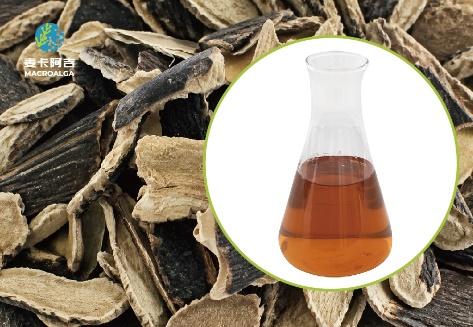
If you've been searching for a top-tier Ecklonia maxima extract in China, you know the options can feel overwhelming. This brown seaweed, prized for its rich polyphenols and potential health benefits, varies widely in quality depending on sourcing and processing. So how do you choose the one that actually works for you? At MacroAlga, we cut through the noise by focusing on purity, potency, and traceable origins—so you don't have to guess. Keep reading to discover what truly separates a mediocre extract from a genuinely effective one.
Why Most Ecklonia Maxima Extracts in China Miss the Mark
Ecklonia maxima, the giant kelp found off South Africa’s cold Atlantic coast, holds a compelling profile of phlorotannins and polysaccharides. In China, however, many suppliers treat it as a commodity, extracting under aggressive heat or alkaline conditions that strip away the delicate polyphenolic backbone. The result is a brown powder that looks right on paper but lacks the molecular diversity needed for meaningful bioactivity. Buyers often compare certificates of analysis instead of actual efficacy, and that blind spot lets mediocre material dominate the market.
Another recurring issue is source traceability. Ecklonia maxima grows slowly and is sensitive to harvesting pressure, yet some Chinese operations blend it with cheaper kelp species or use spent biomass from alginic acid production. The dry weight of phlorotannins may still meet a generic specification, but the specific oligomeric structures that drive anti-inflammatory or antioxidant pathways are long gone. Without careful cold-water extraction and rapid drying, the extract ends up as little more than filler for cosmetic or nutraceutical formulas pretending to offer marine polyphenol benefits.
Quality differentiation comes down to process control and honest batch testing. A handful of Chinese manufacturers now use subcritical water or enzyme-assisted extraction at low temperatures, then verify molecular weight distribution and total phlorotannin content by HPLC. These extracts perform differently in cell assays and sensory panels. If you are sourcing Ecklonia maxima in China, asking for a detailed extraction log and a chromatographic fingerprint will separate the few serious suppliers from the many who simply repackage cheap seaweed powder.
The Sourcing Factor Nobody Talks About
Every buyer checks the main factory's audit scores and sample quality, but almost no one asks about the third shift's coffee machine. The real sourcing risk sits with the subcontractors who handle cutting, plating, or special stitching. When their machines go down for unplanned maintenance, your order waits behind three other brands that happened to place orders a week earlier. That queue order—not the contract terms—decides your actual ship date.
I once traced a two-week delay back to a small zipper supplier whose owner had taken a personal loan to buy a second injection-molding machine. The machine worked fine during the day, but the night operator couldn't run it properly because the manual was only in German. Nobody at the main factory mentioned this because they didn't want to sound unreliable. If you don't ask to see the sub-tier production schedule and the names of the people who run each shift, you're basically sourcing blind.
Reading a Label Without Falling for Marketing Hype
Most shoppers spend less than ten seconds scanning a package, which is exactly what marketers count on. Words like "natural," "wholesome," or "made with real fruit" are carefully chosen to trigger trust, but they often say nothing about the actual nutritional value. Instead of getting caught up in the front-of-package promises, turn the box around. The real story lives on the back, in the ingredient list and the nutrition facts panel. Once you start reading those, the hype tends to fade fast.
The ingredient list doesn't lie, but it does require a bit of decoding. Ingredients are listed by weight, so the first three items are what you're really buying. If sugar—or one of its many disguises like corn syrup, dextrose, or evaporated cane juice—shows up early, that product is basically a treat, no matter how many oat or honey illustrations decorate the label. Also watch for long lists of things you wouldn't keep in your own kitchen; they usually signal heavy processing rather than hidden nutrition.
Even the nutrition facts panel can be misleading if you skip the serving size. A bag of chips might boast "only 100 calories per serving," but if the serving is just a handful and the bag holds four, you're not eating 100 calories. Check the number of servings per container and do the quick math. And don't let eye-catching terms like "low fat" or "zero sugar" blind you—those products often compensate with extra sodium, starches, or artificial sweeteners. A label is only useful when you read it with a skeptic's eye.
How to Match the Extract Form to Your Actual Routine
Powdered extracts make sense only if your mornings already involve blending something. If you eat oatmeal, yogurt, or a smoothie at least five days a week, the extra measuring and stirring won't feel like a chore. But if your breakfast is a granola bar in the car, you'll either skip the powder or end up with clumps in cold coffee. Look at what you actually do, not what you plan to do on Sunday night.
Capsules and softgels are the zero-friction option for irregular schedules. They don't need water temperature, taste masking, or a clean spoon. The trade-off is usually a slower onset and sometimes more filler per milligram of active extract. That's fine if you're consistent with daily use. But if you want to feel something within twenty minutes before a workout or a stressful meeting, a liquid extract under the tongue beats waiting for a capsule to dissolve.
Tinctures and glycerites sit between the two. They're portable enough for a desk drawer, but the dropper and alcohol or glycerin base make them awkward on a plane or in a shared office fridge. Match the form to the two or three places you spend most of your week: home kitchen, car, gym bag, office. If an extract won't survive those spots, it won't survive your routine.
The Price Gap Between Cheap and Effective—What's Really Different
A cheap product often skips the invisible work: fewer rounds of testing, thinner materials, and a supply chain optimized for speed over consistency. You notice it when the seams start pulling after three washes, or when the “same” ingredient list behaves differently on your skin. Effectiveness isn’t magic—it’s usually the result of repeated refinement, tighter tolerances, and a willingness to discard batches that don’t meet a higher bar.
Where the money goes matters more than the total amount. A premium version might spend heavily on stable packaging, clinical validation, or customer support that actually answers questions. The cheaper option, meanwhile, can look nearly identical on a shelf but cut corners in ways that only reveal themselves later: a less durable adhesive, a slightly weaker motor, a smaller sample size in testing. You’re rarely paying for the label alone—you’re paying for the parts nobody thinks to check.
That said, price and quality don’t move in lockstep forever. Some mid-range products close the gap by simplifying design or selling directly to you, while a few expensive ones lean on brand prestige instead of real improvements. The difference between cheap and effective often comes down to whether the maker treats the product as a race to the bottom or as a problem worth solving thoroughly. Reading reviews for failure points—not just star ratings—usually tells you which one you’re looking at.
Three Quick Checks to Avoid a Wasted Purchase
A wasted purchase usually starts with a story you tell yourself: “I’ll use it all the time.” Pause before checkout and run it through a simple reality filter. If this exact item had been out of stock for the last month, would you have even noticed? Let the cart sit for a day. The things you still remember tomorrow are the ones worth a second look.
Open the drawer or closet where it would live and count what’s already there. That bread maker, those running shorts, the extra charger—most purchases overlap with something you already own but forgot about. Use the old one once. If it does the job, the new one is just clutter with a price tag.
Do the cost-per-use math without rounding up. Estimate how many times you’ll actually reach for it over the next three months, not how many times you hope to. A $90 jacket worn twice is $45 an outing; the $45 jacket you grab weekly costs less than a dollar per wear before the season ends. If the number feels high, it’s not a bargain—it’s a pass.
FAQ
Look beyond the marketing. Ask for the phlorotannin percentage and polyphenol content on the certificate of analysis, and confirm the extraction solvent—ethanol-water blends tend to preserve more active compounds than harsh chemical processes. A reliable supplier will also share batch-specific heavy metal and microbial reports without hesitation.
Yes, mainly in convenience and stability. Liquid extracts are easier to blend into cosmetic formulations but often need preservatives and have a shorter shelf life. Powdered extracts usually offer higher concentration per gram, ship more cheaply, and remain stable longer if kept dry and cool.
Genuine extracts have a distinct marine, slightly briny aroma and a dark olive to brown color depending on concentration. Ask for an HPLC or UV-Vis fingerprint profile of phlorotannins. If the price seems too low for the claimed potency, request a sample and test the water solubility—pure extracts disperse evenly while diluted products may leave heavy residue.
For targeted antioxidant and anti-inflammatory action, a standardized high-phlorotannin extract works well, often at 10–30% phlorotannin content. For overall skin barrier support and gentle exfoliation, a full-spectrum extract that retains fucoidans and alginates may be more beneficial. Your choice depends on the final formulation goal.
Most established manufacturers offer sample quantities from 100g to 1kg, sometimes free but with shipping covered by the buyer. Use the trial to test solubility, color stability, and irritation potential in your base formula. A supplier that refuses any sample request should be treated with caution.
Vague documentation, refusal to provide a COA, inconsistent color or odor between batches, and claims of miraculous results are all warning signs. Also be wary if the extract is priced far below the region's typical range for genuine Ecklonia maxima—quality raw material has a production cost floor.
Absolutely. For oral supplements, water or ethanol-water extraction is common and leaves a safe, water-soluble powder. For cosmetics, supercritical CO2 or gentle ethanol extraction may better preserve lipophilic compounds that support skin penetration. Always confirm the method because it changes the final functionality.
Conclusion
Most Ecklonia maxima extracts sold across China fall short because they're built on vague sourcing and aggressive processing. A low price usually means the seaweed was harvested from waters with poor oversight, then treated with harsh solvents or high heat that strips out the phlorotannins and fucoidans you're actually paying for. Labels will still say 'high purity' or 'premium extract,' but without a clear extraction ratio or a named source region, that means almost nothing. The sourcing factor is the quiet differentiator: wild-harvested Ecklonia maxima from cold, clean South African coastal zones tends to carry a fuller polyphenol profile than farmed or cheaper mixed batches. If you're comparing products, skip the front-label claims and flip to the fine print. Look for the Latin name, the part used, and whether the extract is standardized to a specific compound rather than just 'seaweed powder.'
Matching the form to your routine matters more than brand popularity. A fine powder blends easily into drinks or capsules, while a liquid tincture may be convenient but can include preservatives that dilute the active load. Also, the price gap between cheap and effective extracts isn't just markup—it reflects the difference between a crude 4:1 extract and a properly standardized phlorotannin concentrate, often requiring enzymatic or supercritical CO2 methods. Before you buy, run three quick checks: confirm the extraction solvent and method are listed, look for a batch-specific third-party lab result, and reject anything that uses only the generic term 'seaweed extract' without Ecklonia maxima or its key actives. These steps filter out most wasted purchases. Good options feel less flashy: plain labeling, a stated concentration, and a form you'll actually use daily. That's the practical difference between chasing hype and getting a product that delivers.
Contact Us
Contact Person: Kevin ZHANG
Email: [email protected]
Tel/WhatsApp: 8613505438449
Website: https://www.macroalga.com/