

China Commercial Energy HVAC Systems: Smart Strategies for Building Efficiency
2026-10-10
In China's commercial buildings, HVAC systems quietly consume up to 50% of total energy—yet most efficiency discussions stop at equipment upgrades. The real leverage lies in smart strategies that turn everyday operations into measurable savings. From demand-based ventilation to predictive load shifting, forward-thinking facility managers are rewriting the rules of building performance. At the heart of this shift is Tongbaote, a name increasingly tied to practical, data-driven HVAC optimization across Chinese commercial properties. What if your building’s biggest energy waste isn’t the chiller—but the way it’s told to run? The following insights reveal why ‘smart’ isn’t a luxury; it’s the new baseline for staying competitive.
Why China's Commercial Buildings Still Waste So Much HVAC Energy Despite Efficiency Upgrades
Walk through any modern office tower in Shanghai or Shenzhen and you will find the latest variable refrigerant flow systems, high-efficiency chillers, and building automation platforms humming away. Yet utility bills and submeter data often tell a different story: actual HVAC energy use per square meter remains stubbornly high, sometimes double or triple the design estimate. The gap is rarely caused by poor equipment. Instead, it lives in the messy space between installation and daily operation, where sensors drift, control sequences get overridden, and nobody owns the long-term performance.
A common culprit is sensor decay. Temperature, humidity, and CO2 probes are installed during construction and then forgotten. Within a year or two, many have shifted calibration or become fully disconnected. The building management system, trusting these faulty readings, commands excessive cooling or heating to compensate. Meanwhile, facility teams often disable automatic demand-controlled ventilation because tenants complain about stuffiness, not realizing the original issue was a single bad zone damper. Manual overrides become permanent, and the carefully designed sequences of operation quietly fall apart.
Another layer is the split incentive between property developers, building operators, and tenants. Upfront efficiency upgrades look good on paper for green certification, but after handover, no single party is accountable for measured energy performance. Operators prioritize comfort complaints over kilowatt-hours, while tenants with fixed rents have no reason to adjust behavior. Without continuous commissioning, transparent submetering feedback, and a clear operations contract tied to actual consumption, even the most advanced HVAC system will keep wasting energy in plain sight.
Smart Sensors Alone Won't Cool China's Office Towers: The Case for Controls Retrofits
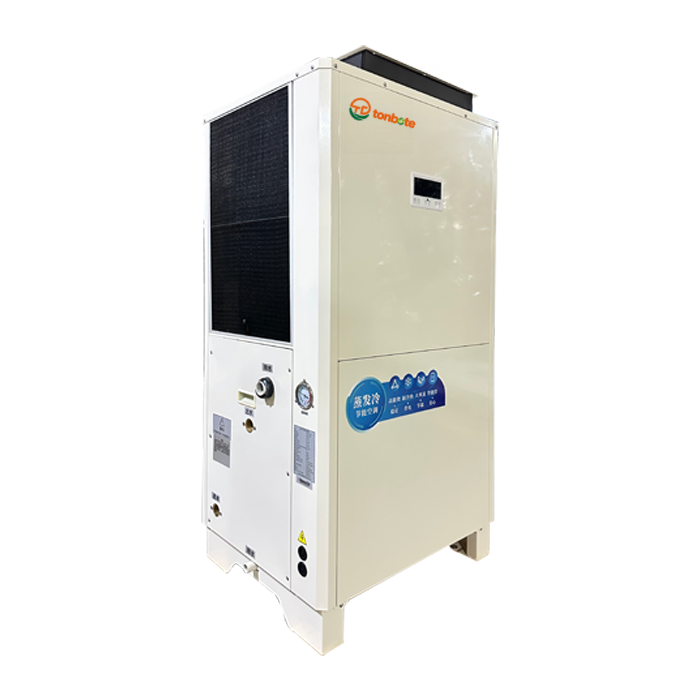
China's commercial building sector has eagerly adopted smart sensor technology, with many office towers now boasting hundreds of wireless temperature, occupancy, and light sensors. These devices generate impressive dashboards and real-time data streams, giving facility managers the illusion of precision control. Yet behind the glowing screens, the actual cooling systems remain stubbornly inefficient. The reason is simple: sensors only observe. They cannot change how a chiller ramps up, how a valve modulates, or how an air handling unit sequences its dampers. Without upgrading the underlying control logic and mechanical actuators, all that sensor data amounts to little more than expensive decoration.
The core problem in many Chinese high-rises lies in legacy building automation systems that were installed during the construction boom of the 2000s and early 2010s. These systems often rely on fixed setpoints, rudimentary PID loops, and patchwork programming that has never been re-commissioned. Adding smart sensors on top is like attaching a modern cockpit display to a car with a worn-out engine and loose steering. The chiller plant will still short-cycle, fans will still run at full speed regardless of demand, and thermal comfort will continue to fluctuate wildly from floor to floor. What these buildings actually need is a controls retrofit—a systematic overhaul of the sequences of operation, the replacement of failed actuators and sensors with high-quality instruments, and the implementation of demand-based reset strategies that respond dynamically to actual loads.
A controls retrofit, unlike a sensor-only overlay, directly addresses the actuators and logic that govern energy use. For example, retrofitting a chilled water system with variable speed drives on pumps, coupled with a new control sequence that adjusts differential pressure based on the most open valve, can reduce pumping energy by 40 percent or more. Similarly, replacing old pneumatic or on-off valve actuators with modulating electronic ones allows precise coil control, eliminating the wasteful reheating that occurs when cooling and heating fight each other. The investment in such retrofits is often recovered within two to four years in China's hot southern climates, where cooling dominates electricity bills. Smart sensors can play a supporting role by providing better inputs, but they are not a substitute for the hard, unglamorous work of fixing the actual control infrastructure.
Humidity Is the Silent Load: Designing HVAC for Shanghai, Guangzhou, and Shenzhen
In Shanghai, Guangzhou, and Shenzhen, humidity operates as a hidden thermal load that standard cooling calculations often underestimate. The latent energy needed to condense moisture out of fresh air and infiltration can rival, and sometimes exceed, the sensible load during long stretches of the year. A design that chases only dry-bulb temperature will leave occupants clammy and force compressors to run longer than necessary, because the coil must first wring water from the air before it can lower the temperature meaningfully.
A more effective approach separates humidity control from space cooling. Dedicated outdoor air systems with deep cooling coils or desiccant wheels can handle the bulk of the latent load, allowing the main air handlers to operate at warmer coil temperatures and higher sensible heat ratios. For these coastal cities, selecting equipment based solely on nominal capacity is risky; the part-load dehumidification performance at typical dew points of 24°C or higher matters far more. Lower chilled water supply temperatures, hot gas reheat, and enthalpy-based economizer lockouts are practical tools that keep moisture from sneaking back into the space.
Envelope details also play a quiet but critical role. In high-humidity climates, vapor retarders, continuous air barriers, and slightly positive building pressurization prevent moist outdoor air from infiltrating through cracks and gaps. Supply air temperatures should be set above the dew point of the conditioned space to avoid condensation on diffusers and chilled beams. By treating humidity as a first-order design parameter rather than an afterthought, HVAC systems in these three cities can deliver comfort with lower energy use and fewer moisture-related failures.
Heat Recovery Ventilation in China's High-Rises: Where It Pays Off and Where It Flops
In northern cities like Beijing or Shenyang, heat recovery ventilation earns its keep almost immediately. Winter outdoor temperatures routinely dip below freezing while indoor heating runs for months, so dumping warm stale air without reclaiming that heat is like throwing money out the window. Tightly sealed apartments built after 2010 have reduced accidental infiltration, which makes mechanical ventilation with heat exchange a practical necessity rather than a nice-to-have. The payback period shortens further in new residential compounds where triple-glazed windows and continuous insulation trap both heat and pollutants.
The math flips, however, in the humid south and in older building stock. In Guangzhou or Shanghai, where winter is short and mild, a heat exchanger's energy savings may never offset its upfront cost and filter maintenance. Many pre-2000 high-rises in these cities leak enough air through window frames and wall cracks that a dedicated HRV system ends up fighting natural ventilation. Worse, during the long summer months, recovering heat from exhaust air is the last thing you want; any sensible unit must bypass the exchanger, which means you paid for a component that sits idle half the year.
There is also a behavioral wildcard. Cooking with heavy oil, drying laundry indoors, and keeping windows cracked for feng shui or perceived freshness all disrupt the balanced airflow HRV systems assume. In high-end developments where residents actually use the system and maintenance staff replace filters on schedule, performance holds up. In mid-range towers where filters clog and exhaust vents get covered, the unit becomes a dusty ornament. So the real dividing line is less about climate zones than about whether the building's management and occupants commit to the system's demands.
Predictive Maintenance for Chinese Commercial HVAC: Moving Beyond Vibration Alerts
For years, facility managers in China leaned on vibration sensors as the primary early warning system for commercial HVAC equipment. The logic was simple: catch a bearing wearing out or a fan drifting out of balance before it becomes a catastrophic failure. But in dense urban environments like Shanghai or Shenzhen, where cooling towers, chillers, and air handling units run nonstop through humid summers, vibration data alone often arrives too late. By the time a spike shows up, the component has already degraded past the point of cheap repair, and the alert is less a prediction than a confirmation of damage.
A more useful approach blends multiple data streams that are already being collected—compressor discharge temperatures, refrigerant pressures, motor current signatures, and even outdoor air enthalpy. When these variables are tracked together over time, subtle patterns emerge that no single vibration threshold could reveal. For example, a gradual rise in approach temperature on a chiller condenser, combined with a slight increase in compressor amp draw, can indicate fouling weeks before efficiency loss becomes obvious. That kind of early notice lets maintenance teams schedule cleaning during off-peak hours instead of scrambling after a performance complaint.
The shift away from vibration-only monitoring also changes how Chinese commercial buildings handle seasonal loads. During shoulder seasons, when HVAC systems cycle on and off more frequently, start-stop stress can hide in electrical signatures long before mechanical wear shows up. By correlating motor start current with run-time hours and ambient conditions, operators can spot units that are cycling too aggressively or running with excessive superheat. The result is less unplanned downtime, fewer emergency call-outs, and a maintenance calendar driven by actual equipment condition rather than a fixed schedule.
China's Green Building Standards Are Quietly Rewriting HVAC Design Rules
For years, HVAC engineers in China could rely on familiar load calculations and equipment schedules. That comfort is disappearing. The 2019 revision of GB/T 50378, China’s main green building evaluation standard, has tightened requirements for energy use intensity, part-load performance, and indoor air quality monitoring. The result is not just a tweak to equipment specs—it is forcing a rethink of how buildings are zoned, ventilated, and controlled from the earliest schematic phase.
One visible change is the push toward demand-controlled ventilation paired with heat recovery in commercial projects. Where a constant air volume system might have passed review a decade ago, consultants now need to show CO₂-based modulation and enthalpy wheels sized for at least 70% recovery efficiency in cold and hot-summer-cold-winter zones. VRF systems, once specified almost by default, are being re-evaluated against water-source heat pumps and radiant ceiling panels because the standard now rewards systems that can document lower annual pump and fan energy, not just nameplate COP.
Commissioning and data transparency are also being written into design contracts. Owners pursuing a three-star rating often require designers to deliver hourly simulation models, not just peak load spreadsheets, and to specify controls that log actual energy use by floor. In some provinces, local addenda go further, mandating that HVAC equipment be able to communicate with district-level monitoring platforms. This quiet regulatory shift means that an HVAC design that passes code today may already be obsolete in two years, pushing firms to build future flexibility into riser space, electrical capacity, and control architecture.
FAQ
Commercial buildings in China draw a large share of urban electricity, and HVAC systems often account for 40 to 60 percent of that load. During summer peaks, cooling demand strains local grids and drives up operating costs, making efficiency improvements a direct path to lower bills and more reliable building performance.
Demand-controlled ventilation, occupancy-based setbacks, and weather-responsive scheduling tend to deliver the fastest gains. Instead of running at fixed settings all day, systems adjust airflow and temperature based on real-time occupancy and outdoor conditions, avoiding energy spent on empty meeting rooms or mild afternoons.
VFDs let motors run at partial speed when full output is not needed, which is most of the time in real buildings. Fans and pumps rarely need to operate at maximum capacity, so reducing speed cuts energy use dramatically because power draw falls with the cube of speed. This often shortens payback periods to two or three years.
Chiller plants are complex, with multiple chillers, pumps, and cooling towers interacting, so facility teams sometimes focus on individual components instead of the whole system. A practical strategy starts with sequencing chillers to match load, resetting chilled water and condenser water temperatures based on outdoor conditions, and making sure cooling tower fans and pumps respond together rather than fighting each other.
Automation keeps efficiency from drifting after commissioning. Continuous monitoring, automated fault detection, and trend analysis catch issues like stuck dampers, drifting sensors, or simultaneous heating and cooling before they waste energy for months. Over time, this preserves the savings that manual checks often miss.
In many cases, yes. In colder northern regions, exhaust air heat recovery can preheat incoming fresh air and cut winter heating loads. In hot and humid southern climates, recovering condenser heat from chillers to preheat domestic hot water is often worthwhile, especially in hotels, hospitals, and buildings with steady hot water demand.
Dirty filters, low refrigerant charge, uncalibrated sensors, and fouled coils all force equipment to work harder while delivering less comfort. Many buildings still rely on reactive maintenance, fixing equipment only after it fails. Shifting to predictive maintenance with regular sensor checks, coil cleaning schedules, and refrigerant monitoring can recover several percentage points of efficiency without major capital spending.
National standards such as GB/T 50378 encourage higher-efficiency chillers, better metering, and intelligent controls by linking these measures to green building ratings. For owners pursuing certification or local incentives, this pushes HVAC decisions beyond first cost toward life-cycle performance, making high-efficiency heat pumps, VFDs, and smart controls more common in both new builds and retrofits.
Conclusion
China's commercial buildings continue to burn through HVAC energy at surprising rates, even after efficiency retrofits. The core issue isn't a lack of technology but a mismatch between what gets installed and how buildings actually operate. Many office towers in Beijing or Chengdu have modern chillers and VAV boxes, yet zone-level control loops remain poorly tuned, causing simultaneous heating and cooling. Adding smart sensors alone rarely fixes this—unless paired with deeper controls retrofits that reprogram sequences and enable dynamic reset of supply air temperature and static pressure. In hot, humid coastal cities like Shanghai, Guangzhou, and Shenzhen, latent load management is often overlooked; designers size equipment for sensible heat only, leaving coils unable to properly dehumidify during shoulder seasons. That forces occupants to crank down thermostats, spiking energy use while comfort suffers.
Heat recovery ventilation shows real promise in high-rise buildings with high occupant density and long operating hours, but it flops in projects where exhaust air is dirty or where winter outdoor temperatures rarely drop low enough to justify the added pressure drop and maintenance. Meanwhile, predictive maintenance for Chinese commercial HVAC is moving beyond basic vibration alerts toward analyzing compressor current signatures and refrigerant charge drift, catching slow leaks before they become expensive failures. Underpinning all this, China's updated green building standards are quietly pushing designers toward integrated commissioning, mandatory submetering, and stricter limits on fan power—rules that reward smarter system architecture over bolt-on gadgets. The most successful strategies blend passive humidity control, targeted heat recovery, and ongoing performance analytics rather than chasing single hero technologies.
Contact Us
Contact Person: Wanshu Chen
Email: [email protected]
Tel/WhatsApp: +86-13662871206
Website: https://www.mbcee.com