

China Cassette Fan Coil Unit: What to Look for Before You Buy
2026-11-16
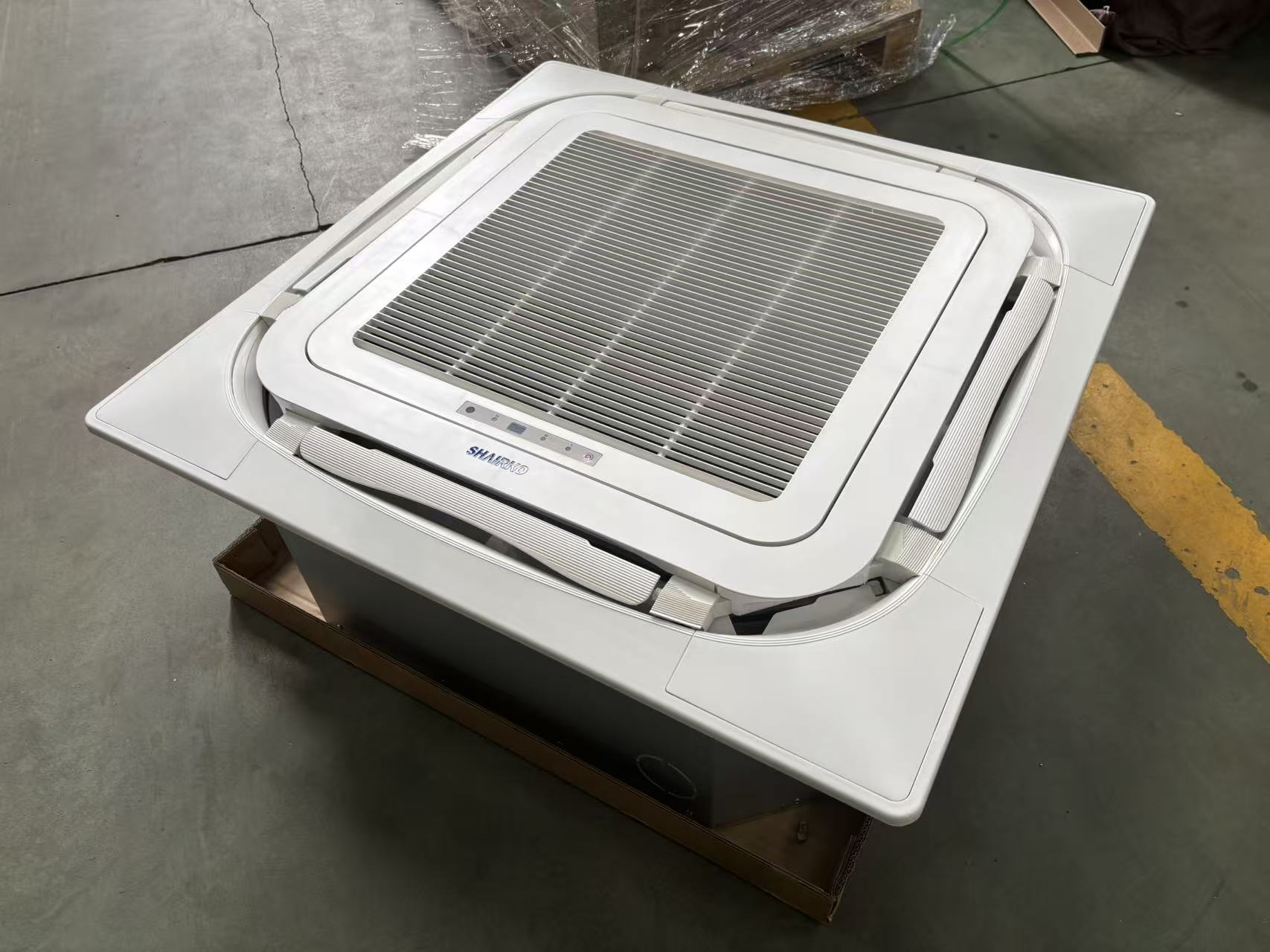
Most buyers of cassette fan coil units from China check the price first—and end up paying for it later in noise complaints, condensate leaks, or a coil that struggles in humid weather. The real differences hide in details like drain pan slope, fan motor quality, and airflow distribution, none of which show up in a typical spec sheet. Brands such as shairko put those engineering choices front and center, but you still need to know what to look for. Here’s a practical, no-fluff guide to help you avoid the most common sourcing mistakes before you buy.
Is That EC Motor Worth the Extra Money Up Front?
The sticker shock is real—EC motors can run 30-50% more than their PSC counterparts. But if you're running a fan or pump for more than a few hours a day, that premium starts paying you back almost immediately. A typical EC motor cuts energy use by 40-60% at partial load, which is where most systems actually operate. Over a year of continuous duty, the savings often exceed the upfront difference.
Beyond the utility bill, there's the question of heat and lifespan. EC motors run cooler, which means bearings and electronics last longer, and you're less likely to deal with capacitor failures that plague older designs. Factor in fewer service calls and the ability to dial in exact speeds without expensive VFDs, and the payback window shrinks to 12-18 months in many retrofit scenarios.
If the application runs intermittently—say a bathroom exhaust fan—you might never recoup the extra cost. But for anything that moves air or water around the clock, the math usually favors the EC motor. Ask your supplier for a simple energy-cost comparison using your local rates; don't let the initial price tag make the decision for you.
Decibels in the Real World: What 35 dB Sounds Like at Midnight
At 35 dB, the world at midnight sounds less like a measurable number and more like the audible texture of a house breathing. It’s the muted hum of a refrigerator two rooms away, the faint whisper of bed linens as you shift under the covers, or the distant, almost melodic tick of a wall clock that you only notice when everything else goes still. This isn’t the silence of a recording studio—it’s the kind of quiet that still has edges, soft and forgiving, wrapping around small, incidental noises rather than erasing them.
Step outside at that hour and 35 dB might be the rustle of dry leaves skittering across a sidewalk, or the far-off whoosh of a single car passing on a road you can’t see. In a rural area, it could be the barely-there creak of tree branches or the low, rhythmic chirp of a cricket hidden in the grass. The level feels intimate and unforced—loud enough to register as a real sound, yet quiet enough that your brain doesn’t startle. It’s the acoustic backdrop of near-solitude, where the softest details become noticeable simply because nothing louder is competing for attention.
Why 600x600 Panels Don't Always Fit Where You Want Them
A 600x600 panel feels like a safe default until you measure the actual ceiling grid. Most rooms are not born in tidy multiples of 600 millimetres, and once you subtract door recesses, bulkheads or a slight out-of-square wall, the leftover edge strips rarely look intentional. You end up either forcing a full tile into a space that needs a 340 mm cut or living with a row of slivers that draw the eye straight to the perimeter.
The grid itself adds another layer of compromise. Light fixtures, air vents and access hatches are often positioned long before anyone thinks about tile layout, which means the panel joints rarely line up with these openings. Adjusting the grid to suit the room usually creates awkward cuts on both sides, and the more you trim, the more the factory edge disappears. In narrow corridors or irregular alcoves the problem compounds, because a rigid square module leaves no room to fudge the alignment.
There is also the quiet issue of movement. A panel that measures exactly 600 mm in the warehouse can expand or contract slightly with humidity and temperature once installed. If the space was framed with zero tolerance because the spec said 600x600, that tiny shift can turn a snug fit into a bowed edge or a corner that refuses to sit flat. Measuring the actual opening, not the label on the box, is what separates a clean install from a forced one.
Certifications Beyond the Logo: Test Reports You Should Ask For
A certification mark on a product or datasheet is often treated like a stamp of approval, but that tiny logo rarely tells you how a material actually performed under stress. What matters is the test report behind it—the raw numbers, the failure thresholds, the specific conditions under which the sample was evaluated. Without that document, you're trusting a marketing asset rather than evidence.
Ask for the full test report, not just the certificate summary. Look for details like the exact standard revision, the test duration, the sample size, and any deviations or retests. A fire resistance rating, for instance, should come with temperature curves and structural integrity data, not just a pass/fail checkbox. If a supplier hesitates to share this, that hesitation is itself a red flag.
The real value of a certification lies in its traceability. You want to know who performed the testing, whether the lab was accredited, and if the results apply to the same batch or production line you're actually buying from. Smart buyers treat certifications as a starting point—then dig into the reports to verify that the performance claims hold up beyond the logo.
The Condensate Pump Question Most Buyers Forget
Many shoppers focus on the furnace or air conditioner itself, but the condensate pump is the component that quietly keeps everything from turning into a damp mess. The question they forget to ask is simple: will this pump actually handle the volume of water my system produces on a humid day? It's not just about fitting the tubing—it's about matching the pump's flow rate and lift to the specific installation.
Another overlooked detail is the noise level and how the pump cycles. A pump that kicks on every few minutes with a loud hum can be far more irritating than a faint background hum from the HVAC unit. Buyers rarely consider the reservoir size or whether the float switch is adjustable, which directly affects how often the pump runs and how well it tolerates dirty condensate.
Finally, maintenance access matters more than people expect. Many pumps are tucked into tight corners, so a model with a removable check valve or a clear reservoir can save a lot of frustration later. Skipping these questions often leads to premature failure or water damage, and that's exactly what the original purchase was supposed to prevent.
Three Years Later: Will You Still Find Compatible Parts?
The short answer is rarely a confident yes. Manufacturers quietly shift supply chains, discontinue niche connectors, and revise board layouts without warning. What fit perfectly in year one may already be scarce by year two, and by the third year you're trawling secondhand markets or paying inflated reseller prices for a tiny voltage regulator that used to cost pocket change.
A more realistic strategy is to expect partial compatibility. Standardized components like screws, basic capacitors, or generic brackets often survive longer than custom housings or firmware-locked modules. But even so-called universal parts can betray you once firmware updates lock out older revisions. Savvy owners learn to stockpile critical spares early, document part numbers obsessively, and build relationships with independent repair shops that keep dead units for harvesting.
The real test comes when a single proprietary sensor fails. Suddenly you're weighing a costly retrofit against scrapping an otherwise functional machine. Three years in, compatibility isn't a guarantee—it's a negotiation between your willingness to improvise and the manufacturer's planned obsolescence.
FAQ
Focus on the coil material and casing build. Copper tubes with aluminum fins tend to hold up better than all-aluminum coils, and a galvanized steel or ABS casing resists corrosion in humid environments. Also check if the drain pan is sloped and insulated properly, because that's where leaks usually start.
Ask for the factory audit report or visit via video call. Look for ISO 9001 certification, ask about their production line for fan coil units specifically, and request a sample with your own branding if possible. A real manufacturer will be transparent about their testing procedures, not just show you a glossy catalog.
For a typical office or bedroom, aim for under 40 dB at low speed. Cheaper units often have poorly balanced blower wheels or thin metal panels that vibrate. Ask for the noise test data at each speed setting, not just the lowest one. A good unit will be barely noticeable on the medium setting.
Usually yes if you run the unit for many hours. DC motors are quieter and use 30-50% less electricity, which adds up in a commercial space. But if the unit will only run occasionally in a small room, a standard AC motor can still be fine. Just check the motor brand—many Chinese factories use domestic motors that are fine, but avoid unknown no-name motors.
Depending on your market, you'll need CE for Europe, UL or ETL for North America, and possibly RoHS. Don't just accept a certificate image—verify it on the certification body's website. Also check if the unit has a proper IP rating for the control board if it will be installed in a damp ceiling void.
Very important for maintenance. Look for a filter that slides out easily from the return air grille without needing tools. Some cheap units have filters that are awkward to remove, which means they never get cleaned. A washable nylon mesh filter is usually better than a disposable fiberglass one in the long run.
Most Chinese manufacturers will quote 25-30 days for a standard 20-foot container order, but high season can stretch that to 45 days. MOQ is often 50-100 units, though some factories will do a trial order of 10-20 at a higher price. Be wary of anyone promising 10-day delivery for a custom spec—that's where shortcuts happen.
Absolutely. One sample won't tell you everything about consistency, but it will reveal obvious flaws like sharp edges on the casing, poor soldering on the coil connections, or a display panel that's hard to read. Run it for at least 48 hours and listen for any rattles or condensate issues. Pay for the sample yourself to get unbiased treatment.
Conclusion
Before committing to a cassette fan coil unit from China, it pays to look past the glossy spec sheet and think about how the unit will actually behave once it is installed. The choice between a standard AC motor and an EC motor is not simply about energy savings on paper; it is about whether the higher initial cost will be recovered through lower running costs over the life of the unit, especially in spaces that run for long hours every day. Noise is another factor that rarely matches the datasheet. A unit rated at 35 dB might sound quiet in a showroom, but at midnight in a bedroom or hotel room, that same level can become a constant presence that disturbs sleep. Size and fit also demand careful checking, because a 600x600 panel is not universally compatible with every ceiling grid or joist spacing, and minor differences in cutout dimensions can turn a straightforward install into a costly ceiling repair.
Beyond the physical install, the documents and long-term support matter just as much as the hardware. A CE or ISO logo on the nameplate is not the same as a genuine test report from an accredited lab, so ask for the actual certificates and verify the test conditions before you accept a shipment. One component that buyers often overlook until it is too late is the condensate pump; if the unit drains poorly or the pump lacks enough lift for your pipe run, water damage follows quickly. Finally, consider what happens three years down the road. A cheap unit that uses proprietary parts can become impossible to repair if the supplier changes product lines or disappears. Ask the manufacturer how long they keep spare parts, whether common motors and boards are shared across models, and if there is a local distributor or service network. Paying a little more up front for a unit with traceable parts and honest documentation is almost always cheaper than replacing an entire cassette because one small component cannot be found.
Contact Us
Contact Person: Crystal
Email: [email protected]
Tel/WhatsApp: 8613524235353
Website: https://www.airkohvac.com