

China Bead Wire Ring Production Line Drives Global Tire Manufacturing Excellence
2026-09-30
Behind every high-performance tire lies a critical component that rarely gets the spotlight: the bead wire ring. As global tire manufacturing pushes for tighter tolerances and higher throughput, China's production lines have emerged as the quiet backbone of this excellence. At the heart of this shift is AUGU AUTOMATION, whose innovations are redefining what bead wire ring production can achieve. But what exactly sets these lines apart, and why are international manufacturers taking notice? Read on to uncover the engineering breakthroughs driving the next era of tire quality.
What Makes a Bead Wire Ring Reliable
Reliability in a bead wire ring starts with the raw material. The steel used must have a consistent tensile strength and a clean, uniform microstructure, because any hidden inclusions or surface flaws can turn into crack initiation points under repeated flexing and loading. Beyond the chemistry, the wire drawing process has to be controlled tightly—lubrication, die wear, and cooling all affect the final surface finish and residual stress. A bead wire that is over-hardened may snap during tire mounting, while one that is too soft will allow the bead to creep, leading to slow air loss and rim slippage.
The way the ring is formed and joined matters just as much as the wire itself. A continuous spiral wrapping or a single welded joint each has its own failure modes if not executed properly. The weld zone, in particular, must be heat-treated to remove brittleness, and any burr or sharp edge needs to be eliminated so it does not cut into the tire’s bead filler or chafer. However, post-forming residual stress is often overlooked. When a ring is coiled and cut, the ends can spring outward or twist, which puts uneven pressure on the tire bead once mounted. A reliable bead wire ring holds its roundness and lies flat without forcing the tire to compensate.
Corrosion resistance is the third pillar. Even a structurally sound ring will fail early if the protective coating—whether brass, bronze, or another alloy—wears away or is applied unevenly. Moisture, road salt, and chemicals from rubber compounding can attack the steel at the coating’s weak points, causing rust that expands and eventually cracks the surrounding rubber. A dependable bead wire ring maintains coating adhesion during tire curing and throughout the tire’s service life, because any separation between wire and rubber becomes a pathway for air and water to travel.
The Chinese Lines Behind Global Tire Consistency
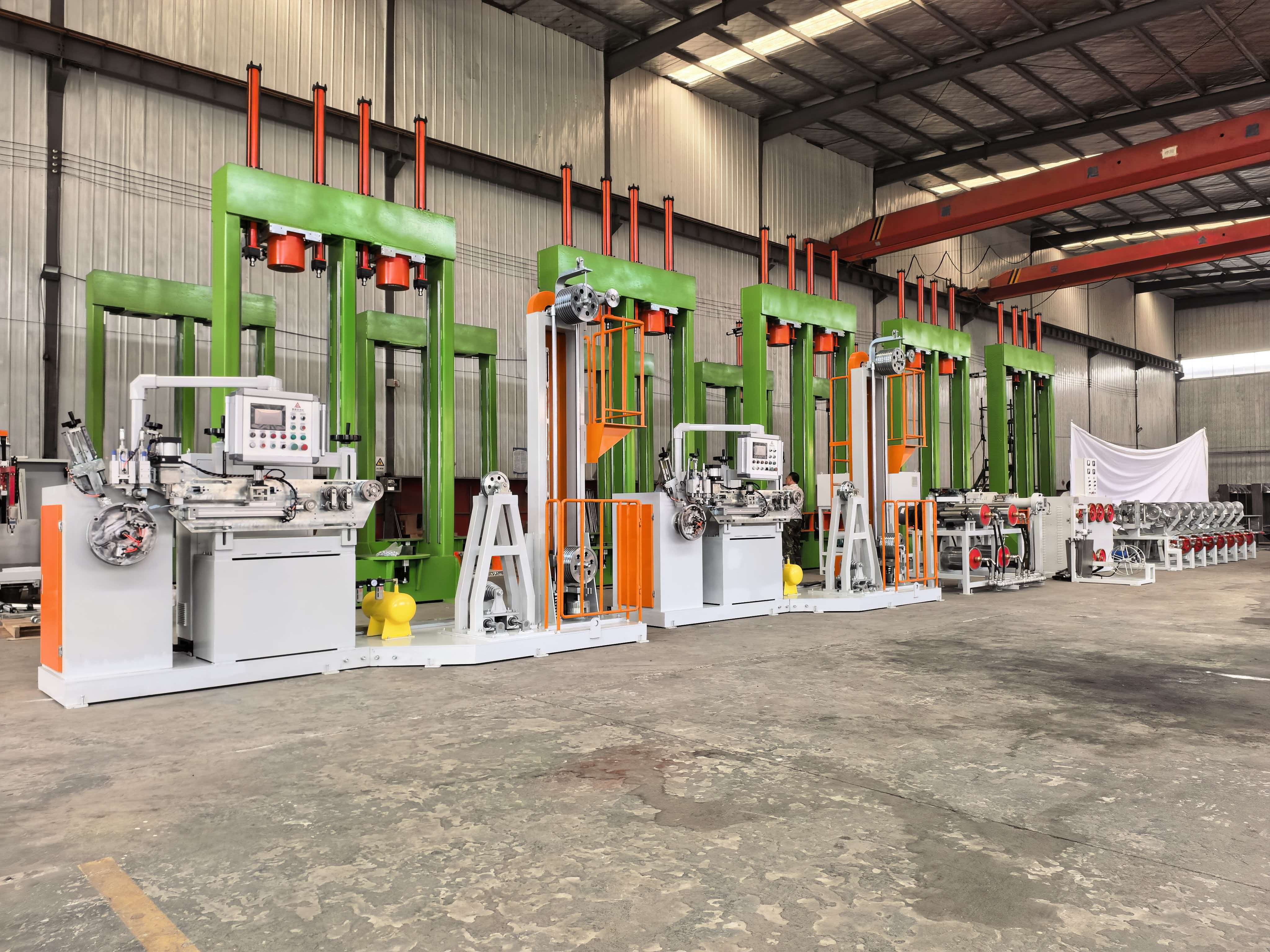
Tire plants in Shandong and Jiangsu don't run on guesswork. Every batch of rubber compound is weighed, mixed, and tested against the same tolerances used in factories elsewhere, so a tire rolling off a line in Qingdao behaves like one made in South Carolina or Slovakia. That consistency isn't a buzzword; it's a set of checkpoints on the floor—temperature curves, extrusion speeds, and curing timers—that leave little room for variation.
The machinery tells part of the story. Chinese production lines often share suppliers with European and American plants, which means the steel cord calendering and tread extrusion equipment operate on identical parameters. Engineers adjust for local humidity and raw material batches, but the target specs remain fixed. When a conveyor pauses or a gauge drifts, operators get an alert before the next tire enters the mold.
What really locks in uniformity is the feedback loop between lab and line. Samples from each shift are cut, aged, and tested for tensile strength, wear, and rolling resistance. If a measurement slips by half a percent, the line recalibrates. It's unglamorous work, but it's why fleets on three continents can reorder the same size and expect the same lifespan—no matter which port the container leaves.
Precision That Starts With the Bead
Every dimension, every curve, every point of contact matters. The bead is where the tire meets the rim, and that’s exactly where our obsession with precision begins. Instead of accepting industry-standard tolerances, we re-measured, re-cut, and re-tested until the bead seated with a consistency you can feel in the first turn.
This isn’t just about tight manufacturing specs. It’s about eliminating that subtle wobble, that tiny air leak, that faint vibration you’ve learned to ignore. By locking the bead’s geometry down to the micron, the rest of the tire can do its job without fighting the rim. The result is a ride that tracks straighter, wears more evenly, and responds the way the engineers intended.
Automation's Quiet Role in Tire Quality
At a busy tire plant, the loudest machines get the attention, but the quietest ones often matter most. Automated inspection stations slide each finished tire past high-resolution cameras and laser profilometers, catching sidewall bulges or tread voids that a human eye might miss at line speed.
The real value shows up in consistency. Older manual checks depended on a technician's judgment, which could drift over a long shift. Automation applies the same pass-fail thresholds to every single tire, whether it's produced at 9 a.m. or 3 a.m., reducing the chance that a marginal product slips through.
Beyond spotting defects, these systems quietly feed data back into the process. If a curing press starts trending toward thinner sidewalls, the software flags it before a batch goes wrong. It's not flashy, but that steady feedback loop keeps quality from becoming a guessing game.
Why Materials Matter for Tire Longevity
Rubber compounds are far from uniform. The balance of natural rubber, synthetic polymers, and reinforcing fillers like silica or carbon black directly controls tread wear rate and heat resistance. Budget tires often use less silica and lower-grade polymers, so the tread blocks chip, crack, and lose grip well before the tread depth indicator shows wear.
Beneath the tread, steel belts and textile plies quietly determine how long a tire holds together. High-tensile steel resists the repeated flexing that generates internal heat, while nylon or polyester cap plies keep the tire from ballooning at highway speed. If these layers are thin or poorly bonded, the tire may look healthy on the outside while its core slowly degrades, cutting its usable life short.
From Steel Coil to Tire Foundation
The journey begins with a flat ribbon of steel, coiled tight and waiting. In the bead wire mill, this coil is unspooled, drawn through a series of dies that thin it to the precise diameter needed for tire beads. The steel's surface is then cleaned and coated with a thin layer of bronze or brass, a step that ensures a strong bond with rubber later on. It's a quiet transformation—raw material becoming the backbone of a tire.
Next, the coated wire is wound into a continuous ring, layer upon layer, until it forms a rigid hoop. This hoop, known as the bead bundle, is then wrapped in a strip of rubber compound. The bead's job is unforgiving: it must grip the wheel rim tightly, holding the tire in place under extreme load and heat. Any inconsistency in the winding tension or rubber application can lead to imbalance or failure on the road.
Finally, the bead is integrated into the tire during the building process. It sits at the very foundation of the tire's structure, anchoring the sidewalls and providing the secure fit that keeps a vehicle steady at highway speeds. From a simple steel coil to this critical foundation, each step demands precision—because a tire is only as reliable as the bead that holds it to the wheel.
FAQ
Chinese lines combine high-speed drawing, precision coating, and automated winding into a single continuous process. This integration cuts material handling and lets a single facility supply multiple tire plants with consistent ring dimensions.
Real-time laser measurement and closed-loop tension control run on every spool. Operators adjust parameters from a central console, and off-spec rings are marked and removed before they leave the line.
The expanded capacity has lowered lead times for tire makers in Europe, Southeast Asia, and the Americas. Many global tire brands now source a large share of their bead rings from Chinese lines because delivery reliability matches local suppliers.
Several plants have switched to water-based lubricants and installed heat recovery on annealing furnaces. Scrap steel from the process is compacted and returned to the melt shop, reducing raw material demand per ton of finished rings.
Automated guided vehicles move coils between drawing and winding stations, while robotic arms load finished rings onto pallets. This reduces manual handling damage and allows the line to run continuously for days without speed drops.
They typically certify lines for ISO/TS 16949 and follow tire maker-specific audits for tensile strength, elongation, and coating adhesion. Test data is shared through digital quality portals so buyers can trace each batch back to its steel coil.
Some Chinese producers now apply a nanoscale brass coating that improves rubber adhesion without extra copper. This coating survives high-humidity aging tests better than traditional bronze finishes, giving tire makers more design freedom.
Conclusion
A bead wire ring rarely gets noticed, yet it carries the entire load of a tire. Its reliability depends on how the steel is drawn, coated, and formed into a precise circle. Chinese production lines have turned this into a repeatable process, starting with raw steel coil and ending with a ring that holds tight dimensional tolerances. Material choice matters more than most people realize: a ring that resists corrosion and fatigue directly extends tire life, especially under heavy loads or harsh road conditions. That is why many Chinese lines now rely on inline testing and automated inspection instead of batch sampling, catching deviations before a ring ever leaves the factory.
Consistency across millions of rings is what global tire plants count on. Factories in Europe, the Americas, and Southeast Asia depend on Chinese-made bead rings to keep their own lines running without constant adjustment. Automation plays a quiet but critical role—welding, forming, and coating happen with minimal human intervention, which reduces variation. Precision starts at the bead because any deviation there forces the whole tire to compensate. A fraction of a millimeter off can lead to uneven wear or mounting problems. By controlling that first step with such discipline, Chinese manufacturers have become an unseen foundation for tire quality worldwide, even if most drivers never see the part.
Contact Us
Contact Person: Lareina
Email: [email protected]
Tel/WhatsApp: +86 17561696737
Website: https://www.auguauto.com/