

Best Marine Generator Set Options for Reliable Onboard Power
2026-08-22
When you're miles offshore, the last thing you want is a generator set that sputters just as the galley or navigation gear demands power. Choosing the right marine generator means balancing durability, fuel efficiency, and low-noise operation—and not every option on the market holds up in saltwater conditions. In this guide, we break down the best marine generator sets for dependable onboard power, including proven solutions from Hichai Power that are built to keep your vessel running smoothly, whether you're cruising coastal waters or crossing open seas.
Quiet Power Below Deck: Inverter Generators That Don't Ruin the Anchorage
Anchoring in a quiet cove at sunset loses its charm when a rattling generator shatters the calm. Traditional portable units may get the job done, but their constant roar becomes a soundtrack nobody asked for. Inverter generators tackle this problem by adjusting engine speed to match the actual load rather than running flat out all the time. That means at low draw, the engine barely whispers, and the noise stays below the level of normal conversation. For boaters who value a peaceful night on the hook, this isn’t a luxury — it’s the difference between relaxing and gritting your teeth.
Beyond the obvious courtesy to neighboring boats, a quieter generator changes life onboard. You can run it before sunrise to top up batteries without waking everyone in the cabin. At anchor, the low hum fades into the sound of water lapping against the hull instead of competing with it. The best models also produce clean sine wave power, so sensitive electronics like laptops or chartplotters won’t complain. And because the engine isn’t screaming at full throttle, fuel lasts longer, which matters when the nearest fuel dock is a day away.
Installation below deck or in a cockpit locker often amplifies vibration and noise, so choosing an inverter unit specifically designed for marine use pays off. Look for enclosed cases with sound-dampening foam, rubber mounts that isolate vibration, and exhaust systems routed away from living spaces. A generator that is merely quiet on a test bench can still become an annoyance if installed poorly. But done right, the result is a power source you barely notice — until you check the battery monitor and see a full bank with no one asking you to turn it down.
Sizing for the Real World: Why Oversizing a Marine Generator Wastes More Fuel Than You Think
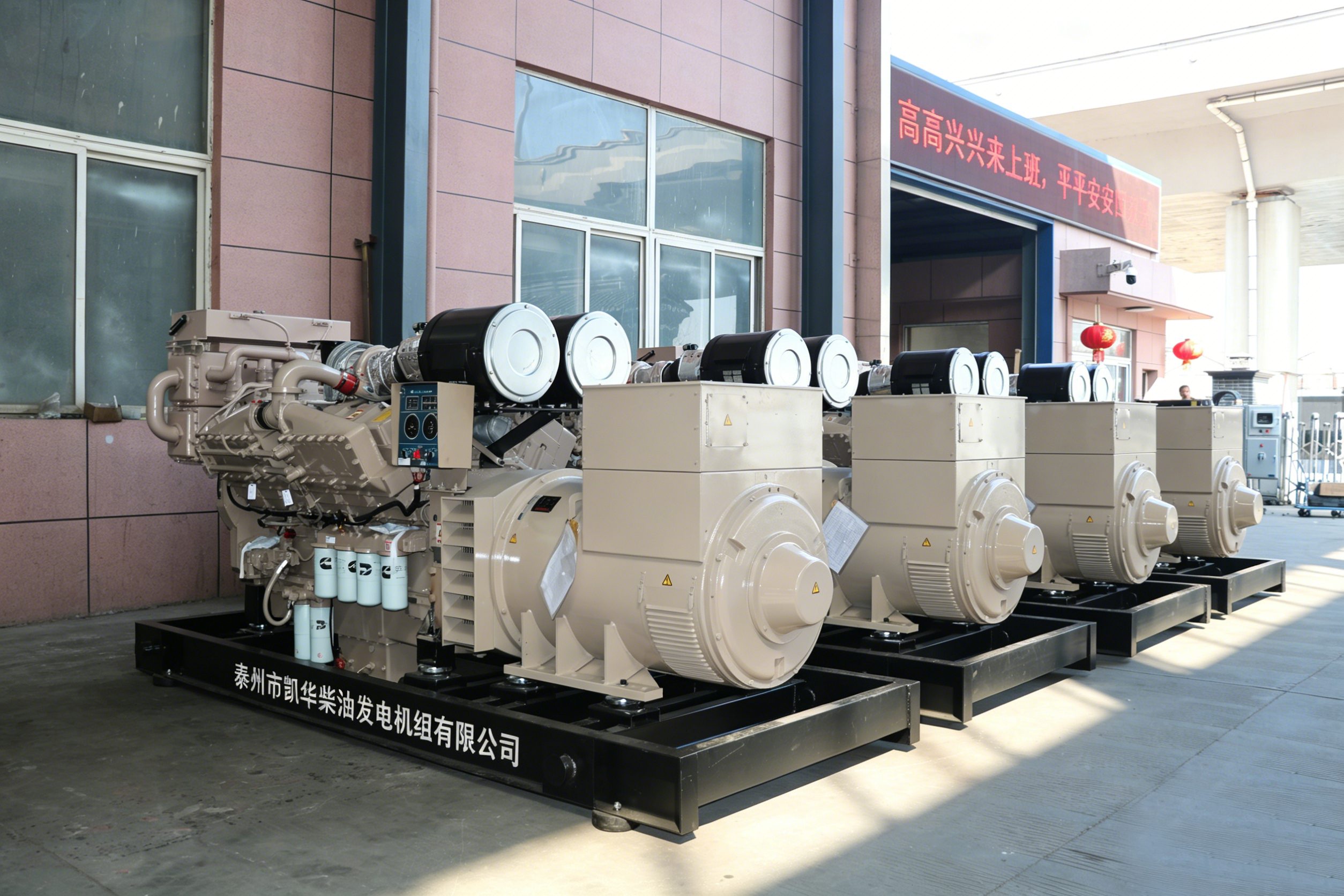
Most marine generator sizing guides still lean on peak load calculations that assume every appliance, pump, and air-conditioning unit could fire up at once. That approach might feel safe on paper, but out on the water it quietly drains your fuel budget. A generator rated far above your actual demand spends most of its running hours at a fraction of its capacity, where diesel engines are notoriously inefficient. You end up burning extra gallons not because you need the power, but because the engine never reaches the load range where it converts fuel into electricity cleanly.
The problem compounds in the low-load zone. Below roughly thirty percent of rated output, many marine diesels suffer from incomplete combustion, carbon buildup, and wet stacking. That black smoke and slobber aren't just cosmetic; they're fuel that failed to become useful work. Oversized units also tend to cycle more frequently, starting and stopping to meet small loads, and every cold start carries a fuel penalty that never shows up on a simple kilowatt-per-hour chart. In real-world cruising, where you might run a charger, fridge, and a few lights for hours on end, a right-sized generator often consumes noticeably less fuel over a season than a larger one idling through the same duties.
A better starting point is your actual, measured load profile, not the nameplate total of everything aboard. Log a typical evening at anchor, then a day underway; you will likely find your true demand sits somewhere between twenty and fifty percent of what a conservative installer might recommend. Matching the generator to that range lets the engine operate closer to its efficiency sweet spot, reduces maintenance headaches from carboned injectors, and keeps the exhaust cleaner. In an era of expensive marina fuel and tighter environmental awareness, the old habit of adding ten or twenty percent "just in case" often costs more than it protects.
Saltwater's Silent Toll: Materials and Coatings That Actually Survive in a Marine Engine Room
Walk into any marine engine room after six months at sea and you’ll see exactly where saltwater has been doing its quiet work. The air itself is humid with brine, condensation drips from cold pipes, and stray spray finds its way into every seam. Ordinary carbon steel turns to rust scale in a matter of weeks, while even 316 stainless can develop pitting and crevice corrosion around bolted flanges and under gaskets. The failure mode is rarely dramatic—just a slow weeping leak, a seized valve stem, or a pipe that crumbles when you tap it. That’s the silent toll. Surviving it means choosing materials not for their brochure specs, but for how they behave when salt, oxygen, and temperature swings work together.
For the wetted parts—pump casings, valve bodies, heat exchanger tube sheets—super duplex stainless steels like UNS S32750 have become the workhorse. They resist chloride pitting far better than 316L and handle the mechanical stress of high-pressure seawater service. Titanium shows up in condenser and cooler tubing where crevice corrosion would eat lesser alloys in months, though it demands careful isolation from copper-based alloys to avoid galvanic attack. Aluminum bronze and 90/10 cupronickel still hold their ground in seawater piping and fittings, developing a protective patina that actually gets tougher with exposure. The trick is avoiding mixed-metal couples: a titanium valve bolted to a carbon steel flange without insulating washers will sacrifice the steel in record time. Sacrificial anodes—zinc or aluminum—are not optional extras; they are the planned weak point that keeps the rest of the system intact.
Coatings in a marine engine room need to do more than look good. A single coat of alkyd enamel will blister and peel within weeks, but a properly applied multi-layer system can last five to ten years. The base is usually a zinc-rich epoxy primer, which provides galvanic protection at scratches, followed by a high-solids epoxy intermediate for barrier strength, and finished with a polyurethane or polysiloxane topcoat that shrugs off constant humidity and occasional chemical splashes. In areas with foot traffic or abrasive wear—bilge plates, ladder rungs, pipe supports—ceramic-filled epoxies add impact resistance without getting brittle. The surface preparation matters as much as the product: a near-white blast profile gives the coating something to bite into, while stripe-coating welds and bolt heads before the main spray prevents the first points of failure. No coating survives neglect forever, but the ones that last in this environment are those treated as an engineered system, not a paint job.
Diesel, Gas, or Electric? The Real Trade-offs Nobody Puts on a Spec Sheet
Modern diesels deliver that satisfying low-end shove, but the real cost hides in the emissions plumbing. A spec sheet won't tell you about the seventh injector clogging at 60,000 miles, or the AdBlue tank freezing in a Midwest January. You'll feel it in the service bay, not the brochure.
Gas engines feel refined and quiet until you push them hard. The turbo lag on a small displacement unit is real, but so is the oil consumption nobody mentions until you're adding a quart between changes. And at high rpm, that smoothness turns into a buzzy drone that the dyno chart conveniently ignores.
Electric motors are brutally quick off the line, yet the trade-offs live in the margins. A 20% range drop in cold weather doesn't show up on the window sticker. Neither does the slow degradation of fast-charging capacity after year three, or the way a 350-kW charger is useless when the battery's preconditioning never kicked in because your navigation route changed.
Vibration and Sound Shields: The Difference Between a Hum and a Headache at Sea
On a long crossing, the line between a tolerable hum and a skull-splitting headache often comes down to how well the vessel handles structural vibration. A low, steady thrum from the engine room can feel almost soothing when it stays within limits—passengers barely notice it over the rush of water. But once that energy travels through steel decks, cabin walls, and pipe runs, it sharpens into a persistent rattle or high-frequency whine. That is where marine vibration shields earn their keep. By using constrained-layer damping, resilient mounts, and tuned mass dampers, engineers interrupt those pathways before the noise reaches berthing areas. The goal is not silence; it is keeping the sound character closer to a distant murmur than an intrusive buzz.
Sound shields at sea serve a slightly different role. While vibration control tackles the physical movement of panels and machinery, acoustic shielding focuses on airborne noise—engine intake roar, exhaust throb, and HVAC rush. Composite barriers with viscoelastic cores can knock down mid- and high-frequency energy without adding the weight of traditional lead sheets. The payoff shows up in real spaces like crew cabins, galleys, and bridge wings. A well-shielded ship can run at cruise power and still let people sleep, work, or hold a conversation without raised voices. That difference—between a background hum you forget and a headache you cannot shake—often decides whether a voyage feels routine or wears everyone down by the second watch.
Maintenance Windows That Matter: What Manufacturers Won't Tell You About Marine Generator Longevity
The first 50 hours after a new marine generator is installed are treated like a break-in period in the manual, but most owners don't realize this window decides whether the engine will burn a quart of oil at 400 hours or stay tight for 2,000. Manufacturers rarely mention that the initial oil is often a thin break-in blend that loses shear strength fast, and the factory filter is sized for assembly line convenience, not for catching the fine metal particles that shed during the first few dozen starts. If you skip the 50-hour oil and filter swap, those particles circulate through the main bearings and cylinder walls, cutting microscopic grooves that widen with every heat cycle. The next 100 to 150 hours are equally critical for raw-water pump impeller wear—especially if you run in silty or shallow anchorages—yet the standard maintenance schedule treats this as a routine check, not a survival window.
Load banking is another window that builders gloss over because it makes their fuel consumption numbers look worse. A marine generator that runs for weeks at less than 30 percent load will eventually wet-stack: unburned fuel washes down the cylinder bores, dilutes the oil, and forms a hard carbon crust on the exhaust valve stems. The fix isn't in the regular oil change interval. You need to force a 70 to 80 percent load for at least one full hour every 30 to 40 running hours, ideally with a resistive load bank. This burns off the soft carbon before it bakes into a valve-seat-wrecking deposit. Most owners never do this because no warning light comes on until the generator starts hunting for RPM and the exhaust smells like a diesel-soaked rag.
The most overlooked window on a marine unit is the 500-hour mark for heat exchanger and anode inspection. Saltwater generators sold with a "self-sacrificing" zinc pencil often hide the fact that the pencil's location is optimized for easy replacement, not for protecting the end caps or the raw-water inlet elbow. By the time you see a white crust around the end cap bolts, electrolysis has already eaten pinholes through the copper-nickel tube stack. Check the anode at 250 hours if you run in a marina with shore-power leakage or nearby steel pilings, and pull the end caps at 500 hours even if the pencil looks half intact. The manufacturer's table says inspect at 1,000 hours—that's the warranty expiration talking, not the reality of warm, oxygenated saltwater moving through the system every time you anchor out for the night.
FAQ
On a sailboat, weight and space matter more than raw output. I'd prioritize a compact diesel unit with a sound shield and a rpm that matches your charging needs—usually a 3-5 kW model handles lights, fridge, and battery charging without overloading the hull.
Saltwater is brutal. Rinse the enclosure with fresh water after every trip, check the sacrificial anodes monthly, and use a corrosion-resistant exhaust elbow. Also, run the generator under load at least once a month to prevent moisture buildup inside.
They can be, especially if you run sensitive electronics like navigation gear or laptops. Inverter models throttle down under light loads, which saves fuel and cuts noise. The upfront cost stings, but the quieter operation and cleaner power often pay off on longer cruises.
Diesel usually wins for boats that already have a diesel main engine—you can tap the same tank and avoid carrying gasoline below deck. Gasoline generators are cheaper up front but pose more fire risk and need careful ventilation. For a 30-40 foot cruiser, diesel is the safer, simpler match.
Most boats under 45 feet do fine with 5-8 kW. That covers a battery charger, refrigerator, air conditioning, and a few outlets without constantly maxing out the unit. If you skip AC, a 3.5 kW model can handle the rest. Oversizing wastes fuel and causes wet stacking in diesel engines.
Running it with no load for long periods is a big one—it leads to carbon buildup and glazed cylinders. Skipping oil changes after low-hour seasons also hurts. Another mistake is using automotive parts instead of marine-rated ones, especially for the exhaust and cooling system.
Unless you're comfortable with marine electrical codes, exhaust routing, and fuel line fittings, hire a certified marine technician. A bad installation can leak carbon monoxide or start a fire. Even if you do the prep work, have a pro sign off on the final connections.
Start with a good sound shield and soft mounts. Then add a waterlift muffler and make sure the exhaust hose has no sharp bends. Mounting the unit on vibration isolators and lining the compartment with mass-loaded vinyl also makes a noticeable difference, especially at night.
Conclusion
Most boat owners chasing reliable onboard power end up overlooking the basics. A quiet inverter generator tucked below deck changes everything at anchor—nobody wants the constant drone of a construction-site unit echoing across a calm harbor. Yet picking the most silent model isn't enough if you size it wrong. Oversizing a marine generator doesn't just cost more upfront; it loads the engine lightly, which leads to wet stacking, carbon buildup, and fuel burn that's far worse than the spec sheet suggests. Real-world loads rarely match peak demand. A well-matched set running at 60–75% of its rated output stays efficient and happy. So before you chase decibels, map out your actual amp draw with everything running—watermaker, air conditioning, battery charger—and then pick a unit that sits comfortably in that range.
Then there's the hidden war against saltwater. Standard paints and mild steel brackets crumble within a season or two in a damp engine room. Look for marine-specific coatings, stainless or aluminum casings, and sealed electrical connections—these are the details that separate a five-year generator from a fifteen-year one. The fuel question matters too. Diesel still wins for long-range cruisers thanks to torque and safety, but modern electric and gas options are closing the gap for day sailors and weekenders who need short, clean bursts of power. Don't ignore vibration isolation either; soft mounts and a well-designed sound shield turn a headache into a low hum that fades into the background. Finally, pay attention to service intervals that manufacturers bury in the fine print—raw-water impellers, anode replacement, and valve adjustments are the real longevity levers. A generator that's easy to maintain will actually get maintained. That's the difference between reliable onboard power and a very expensive paperweight.
Contact Us
Contact Person: Ms. Lu
Email: [email protected]
Tel/WhatsApp: 8618917899306
Website: https://www.hichaipower.com