
Best Direct Expansion Air-Conditioning Units for Efficient Climate Control
2026-11-26
When summer heat settles in, a reliable direct expansion air-conditioning unit stops being a luxury—it becomes the quiet backbone of everyday comfort. Whether you're cooling a compact office or a busy retail floor, the right DX system balances sharp temperature control with energy costs that won't spiral. That's where ROTER enters the picture, offering a practical route to efficient climate management without the usual guesswork. In this guide, we'll unpack what makes a direct expansion unit genuinely efficient, the features worth paying attention to, and how the right choice can transform indoor air from an afterthought into a consistent advantage.
Why Direct Expansion Units Respond Faster to Sudden Temperature Shifts
Direct expansion cooling removes the middleman. Instead of chilling water and then circulating it through air handlers, a DX unit boils refrigerant inside the coil that sits directly in the air stream. That means the cooling surface itself changes temperature almost as soon as the compressor and expansion valve respond. There is no large volume of water to pull down first, no long pipe run to temper, and no secondary pump lag to overcome.
The thermal mass in a DX circuit is small and localized. When a thermostat or sensor detects a sudden rise in room temperature, the system can ramp the compressor, adjust the electronic expansion valve, and push more refrigerant through the coil within seconds. The air passing over that coil feels the effect on the next pass, not several minutes later. In spaces where heat loads spike quickly, this short feedback loop is what keeps temperatures from drifting.
There is also less energy lost to intermediate heat transfer. Chilled water systems have to cool the water, distribute it, and then transfer heat from air to water before returning it to be cooled again. Each step adds delay. A DX unit still has to move refrigerant, but the heat exchange happens at the point of use, which shortens the time between a temperature shift and the system's corrective response.
Sizing a DX System Without Oversizing the Cooling Load
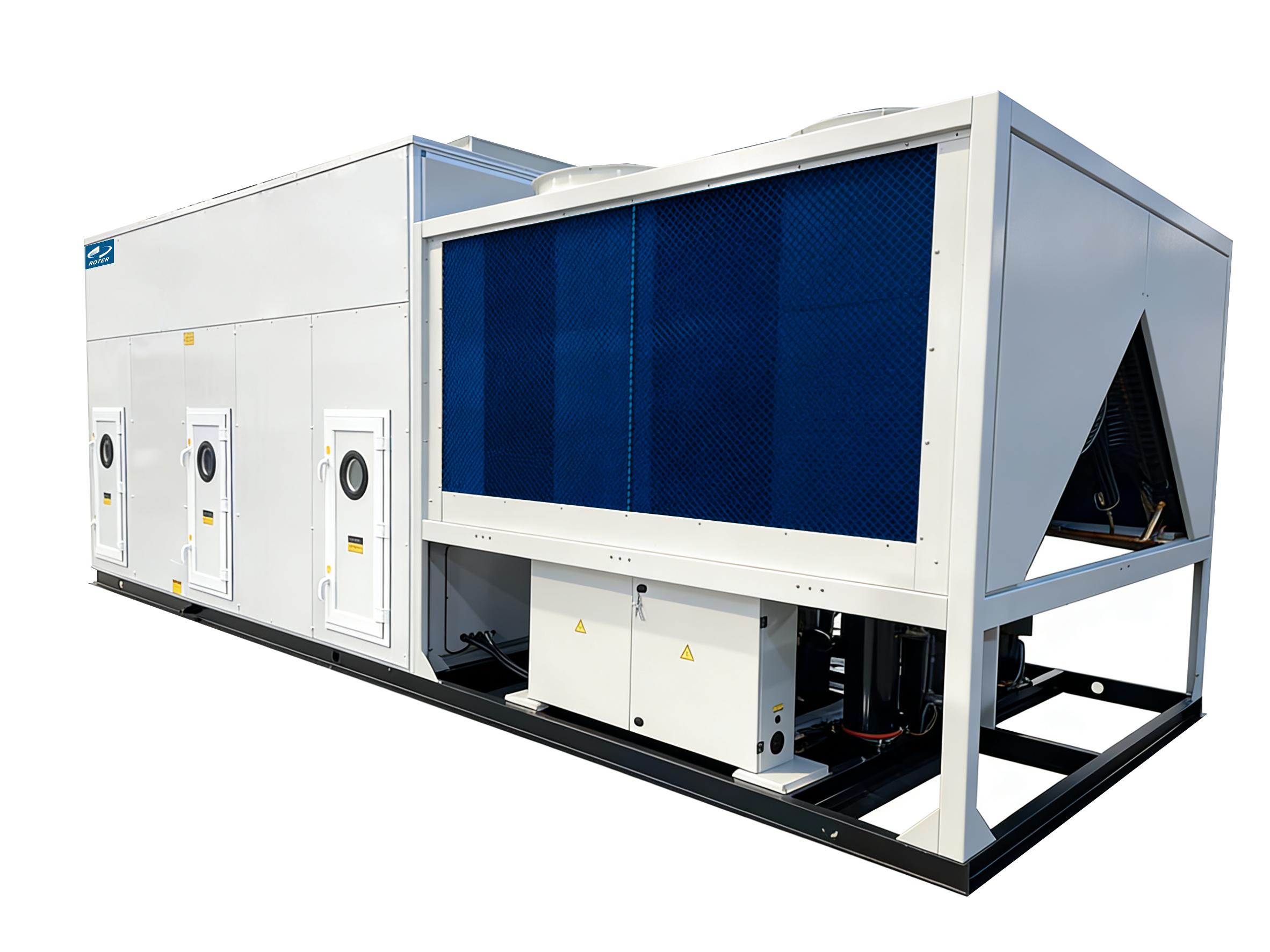
A DX system starts to lose its ability to control humidity the moment the cooling coil becomes too large for the space it actually serves. The most common path to oversizing is not a single bad number; it is the slow accumulation of small cushions. A 5 percent safety factor here, a 10 percent fudge factor there, and a design that once matched the room suddenly runs short cycles and leaves the air clammy. Instead of inflating the final tonnage, work from a room-by-room load profile that respects when different spaces actually peak. West glass and east glass rarely hit maximum solar gain at the same time, so adding their individual peaks as if they occur together creates a phantom load that no real afternoon will ever produce.
Manufacturer ratings also need more attention than they usually receive. A nominal capacity listed for 95°F outdoor air and 80°F dry bulb/67°F wet bulb indoor air may have little to do with your design conditions. When the return air is drier or the condenser air is cooler, the same unit can behave very differently. Match the equipment performance data to the specific entering air temperatures, altitude, and static pressure of the project. This is where many oversizing problems hide: the load calculation is reasonable, but the selected unit is based on a generic rating point and then padded again because someone does not trust the derating.
Finally, resist the habit of treating diversity as an optional luxury. A building with conference rooms, offices, and a lobby will not need every zone at full cooling simultaneously. Look at the actual operating schedule and the way interior loads move through the day. Choose a unit that can unload cleanly at part load, because a properly sized DX system will spend most of its life well below design conditions. When the unit is sized to meet both the real sensible peak and the real latent peak at the same time, it runs longer, removes more moisture, and avoids the constant starting and stopping that wears out compressors and degrades comfort.
Refrigerant Choices That Lower Operating Costs in Warm Climates
In warm climates, the difference between rated efficiency and actual operating cost often comes down to refrigerant behavior at high condensing temperatures. R-32 systems typically maintain better capacity than older R-410A units when the outdoor coil is heat-soaked, because the refrigerant properties allow the compressor to move more heat per watt as the lift increases. Over a long cooling season, that shows up as fewer hours at full compressor speed and a smaller monthly power bill.
For existing equipment that cannot justify a complete redesign, A2L blends such as R-454B offer a practical middle step. They keep system pressures close enough to familiar R-410A levels for many service routines, yet the lower discharge temperature reduces stress on the compressor oil. In hot commercial buildings, that means fewer high-head shutdowns and fewer emergency callouts during the worst afternoons of the year.
The real savings are not only about energy. A refrigerant that holds stable discharge temperatures helps prevent acid formation and moisture-related damage inside the circuit, especially in humid coastal areas. That stability can stretch the interval between major services and delay compressor replacement. When the total cost per cooling season is considered, the right refrigerant choice quietly lowers both utility spend and long-term maintenance exposure.
Keeping Airflow and Coil Temperature in Balance
A coil that runs too cold because the blower is moving too little air will start pulling moisture out of the air only until the surface freezes over. After that, heat transfer drops off sharply and the compressor works harder for less cooling. On the flip side, pushing too much air across a coil raises its temperature and turns it into a poor dehumidifier, leaving the room cool but sticky.
Most balance problems show up as small clues before they become obvious failures. Frost in one section of the evaporator, a temperature split that slowly narrows, or a drain pan that stays dry on a humid day usually means the airflow and coil temperature have drifted apart. Adjusting the fan speed or correcting duct restrictions often brings the suction line and coil surface back into the range where condensation forms and drains normally.
The target is not a single number but a stable relationship. Static pressure, refrigerant charge, blower settings, and filter condition all feed into it. When one of those changes, the coil temperature shifts in response, so a unit that was balanced last season can fall out of tune quietly. Routine checks that pair a manometer with a pipe thermometer tend to catch the drift early, before comfort drops or a coil turns into a block of ice.
Smart Thermostats and Load-Based Staging for DX Units
Modern direct expansion (DX) cooling systems often run into a mismatch between how they stage compressors and what the space actually needs. A conventional thermostat calls for second stage based on a simple temperature offset, but that approach ignores latent load, runtime history, and the thermal mass of the building. Smart thermostats change this by tracking how long the first stage has been running and how quickly the indoor temperature is drifting. Instead of jumping to full capacity the moment the setpoint is missed by a degree, they evaluate whether the current stage is making meaningful progress. If the trend is flat or moving in the wrong direction, a load-based staging algorithm brings on additional capacity. This keeps short cycling down and avoids dumping cold air into a space that only needed a slight nudge.
Load-based staging also leans heavily on run time accumulation. A smart thermostat might wait until the first stage has run a minimum number of minutes over a rolling window before allowing a call for the second stage. That prevents nuisance staging caused by a door left open for thirty seconds or a brief spike in solar gain. At the same time, the thermostat watches the rate of temperature change. If the space is recovering quickly on first stage alone, the algorithm holds back the second stage even if the offset from setpoint is larger than a fixed differential would allow. This produces a longer, lower-intensity cooling cycle that pulls more moisture out of the air and puts less stress on the compressor, relays, and contactors.
For DX units with multiple compressors or tandem scrolls, the same logic extends beyond two stages. A smart thermostat can stage a four-step system based on measured load rather than a rigid time delay. It may bring on stage two after the first stage has proven insufficient for a sustained period, then add stage three only if the temperature trend flattens again. Some algorithms also factor in outdoor temperature or discharge air temperature when available, using that data to anticipate whether the next stage will actually deliver the needed capacity. The result is a staging sequence that follows the building's thermal behavior instead of a generic timer, which is especially useful in shoulder seasons when loads swing rapidly and oversized equipment tends to short cycle.
Maintenance Steps That Keep Cooling Capacity From Drifting
Cooling capacity rarely drops overnight. More often it slips away because heat exchange surfaces get dirty, airflow shifts, or small refrigerant losses go unnoticed. A practical maintenance routine starts with the evaporator and condenser coils. Wash away dust, grease, and biological film with a coil cleaner that will not corrode the fins, and replace filters before they look completely clogged. Even a modest rise in pressure drop across a filter changes the air volume across the coil, which pulls the system away from its rated sensible and latent capacity.
Refrigerant-side checks matter just as much. Watch the sight glass, measure superheat and subcooling, and compare those readings with the manufacturer's charging charts instead of relying on suction pressure alone. A slow leak can reduce charge enough to lower capacity while the system still appears to run. Also replace liquid-line filter driers on a schedule, purge non-condensables if the head pressure drifts upward, and make sure the expansion valve sensing bulb is tightly clamped and insulated on the suction line. These details stop small charge or feed issues from becoming a gradual loss of cooling.
Airflow and controls deserve equal attention. Calibrate return air, supply air, and outdoor sensors so the control loop is not responding to false readings. Check blower wheel cleanliness, belt tension, and damper actuator travel, and clear condensate drains and traps so the coil does not carry water into the airstream. Keep a simple monthly log of approach temperatures, pressures, and air temperatures. Tracking the trend matters more than any single reading because it reveals drift early, before occupants start adjusting thermostats to compensate.
FAQ
DX systems skip the secondary water loop entirely, so the refrigerant cools the air directly at the coil. That removes a layer of heat transfer losses, trims installation footprint, and usually simplifies day-to-day upkeep. In spaces under roughly 150–200 tons of cooling load, the reduced mechanical room requirements often tip the decision in favor of DX.
They can be, provided the outdoor condensing section is matched with a variable-speed compressor and proper low-ambient controls. The key is avoiding short cycling in mild weather; inverter-driven compressors handle partial loads far more gracefully than single-stage units, and that keeps temperature swings tighter in perimeter zones.
Don't rely on a rough square-footage rule. Run a room-by-room cooling load calculation that accounts for glass exposure, occupancy, lighting, and latent heat from ventilation. Oversizing hurts humidity control and can drive up energy use, so matching the sensible and latent loads separately is what prevents that sticky, clammy feel.
Look at EER and IEER rather than the marketing copy alone. IEER is especially useful because it weights part-load performance, which is where these units spend most of their operating hours. Also check the integrated part-load value if the unit has staged or variable capacity; a high full-load EER means little if the compressors cycle harshly at 40% load.
Coil hygiene is the biggest one. Dirty evaporator or condenser coils force the compressor to work against higher pressures, and that quietly eats into capacity. Beyond filter changes, check the refrigerant charge once a year, inspect the condensate drain, and make sure the outdoor coil hasn't collected leaves or cottonwood fuzz.
Yes, but only if it's ordered or retrofitted with the right low-ambient kit. Standard units often lock out the compressor below 55°F or so. A head pressure control, crankcase heater, and variable-speed outdoor fan allow stable cooling when outdoor temperatures drop well below freezing.
In moderate climates, a DX heat pump consolidates heating and cooling into one refrigerant circuit, reducing equipment count and simplifying control sequences. The trade-off is capacity falloff at very low outdoor temperatures, so buildings in colder regions usually still need supplementary heat.
The shift toward lower-GWP options like R-32 and R-454B is changing availability and service practices. Those refrigerants carry mild flammability, so code requirements around leak detection and mechanical room ventilation are becoming more common. Buying a unit designed for the new refrigerant from the start avoids a future retrofit headache.
Conclusion
Direct expansion systems earn their reputation in warm climates because the refrigerant loop sits close to the conditioned space, letting the coil answer a sudden temperature shift almost immediately. That speed helps in spaces with sharp load swings, but only when the compressor is not oversized. Matching capacity to the actual cooling load, rather than padding the design with a large safety factor, keeps cycles long enough to pull moisture from the air without short cycling. Refrigerant selection also shapes everyday running costs. Lower-GWP blends with solid heat transfer at high outdoor temperatures can trim energy use while holding capacity on the hottest afternoons.
The air side matters just as much as the refrigerant side. If airflow falls too low, the coil runs colder than it should and may ice over; if airflow is too high, latent heat removal drops and the room feels sticky. Keeping fan speed and coil temperature in balance, and using smart thermostats that stage compressors or modulate fans around the real load, prevents the unit from working harder than needed during mild hours. Maintenance keeps that balance from drifting. Checking charge, cleaning coils, and replacing filters before pressure drop rises all help cooling capacity stay closer to the original rating season after season. The best DX packages combine careful sizing, smart refrigerant choices, and steady airflow control into a quiet, responsive system for efficient climate control.
Contact Us
Contact Person: Rhea
Email: [email protected]
Tel/WhatsApp: +8618800560886
Website: https://www.rotorairtech.com