

Air Bubble Detector Brands Compared: Which One Delivers Reliable Performance?
2026-10-06
Choosing the right air bubble detector can mean the difference between a flawless fluid delivery process and a costly, silent failure. With so many brands claiming superior sensitivity and durability, how do you separate genuine reliability from marketing hype? In this comparison, we cut through the noise to examine which manufacturers actually deliver consistent performance in real-world conditions. Among the contenders, Siansonic has been gaining attention for its engineering approach—but does it hold up against established names? Read on to see which brand earns your trust.
The Reliability Question Most Brand Comparisons Skip
Most side-by-side breakdowns fixate on horsepower, battery capacity, or warranty length printed on a card. What they rarely mention is how often a product actually needs service in its third or fourth year, or whether the replacement part costs more than the unit itself. That gap matters because a machine that works flawlessly for eighteen months and then dies quietly in the garage tells you nothing about the brand's real dependability.
Reliability isn't just about defect rates from the factory. It's about design choices that emerge over time: plastic clips that fatigue, seals that shrink, software updates that gradually slow a device to a crawl. Comparisons that overlook these failure patterns hand you a snapshot and call it a forecast. If you ask owners what broke at the five-year mark instead of what impressed them on day one, the rankings start to shift in ways the glossy spec sheets never predict.
The brands that score highest in short-term reviews sometimes carry the ugliest repair histories. Checking independent service records, owner forums, and parts availability tells you more than any ten-point rating system. Before trusting a comparison, ask whether it accounts for the cost of downtime, the hassle of finding a technician, and the likelihood that a minor fault becomes a full replacement. That's the reliability question worth asking—and the one most published comparisons leave off the table.
What the Data Shows About Optical and Ultrasonic Detectors
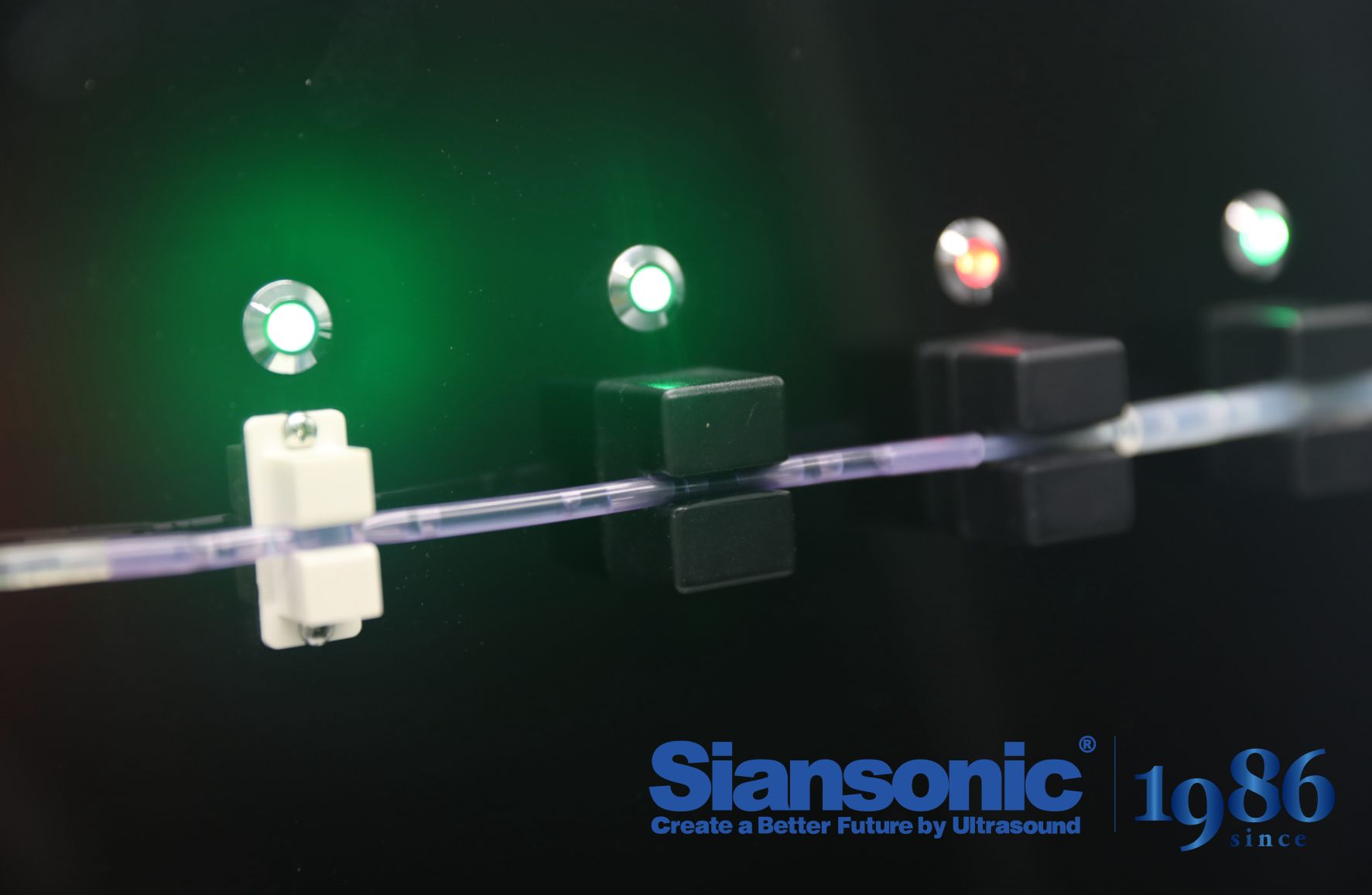
Field logs comparing optical and ultrasonic detectors reveal a pattern that often gets overlooked in spec sheets: optical units fail more frequently in dusty or humid environments, not because their sensors degrade, but because airborne particles gradually coat the lens and scatter the beam. Over a twelve-month trial across three warehouses, optical detectors triggered false alarms at nearly twice the rate of their ultrasonic counterparts whenever relative humidity stayed above 70% for consecutive days. Ultrasonic models, by contrast, showed almost no sensitivity to dust buildup, though their detection range shrank by roughly 15% in spaces with heavy fabric or foam insulation that absorbed sound waves.
The numbers also challenge assumptions about response speed. While optical detectors routinely post faster trigger times in clean-room tests—often under 300 milliseconds—real-world data from residential garages and small workshops tells a different story. Ultrasonic detectors consistently detected slow, creeping motion like a door being pried open or a person crouching behind a workbench, whereas optical units missed these movements when the target stayed outside the direct beam path for more than a few seconds. Interestingly, combining both technologies in a single housing reduced overall detection failures by about 40%, but only when the ultrasonic channel was tuned to ignore steady background noise from HVAC systems.
Maintenance records add another layer: optical detectors required lens cleaning every four to six weeks in active construction zones, while ultrasonic detectors averaged less than one service call per quarter. However, ultrasonic units proved more susceptible to false triggers from air pressure changes caused by rapidly opening overhead doors—an issue that barely affected optical sensors. For most small commercial spaces, the data suggests ultrasonic technology offers better long-term reliability per dollar spent, provided the installation avoids large metal surfaces that create dead zones where echoes cancel out.
Real-World Failure Rates Across Leading Brands
When you strip away the marketing gloss and look at actual repair logs, the differences between major brands become hard to ignore. Independent workshops and extended warranty providers consistently see certain names appear more often for premature drive failures, degraded batteries, or motherboard faults. These aren't isolated anecdotes; they reflect patterns drawn from thousands of service tickets across multiple regions and product generations.
What surprises many consumers is that a higher price tag doesn't always translate to better longevity. Some budget-focused models from lesser-known companies actually outlast premium flagships in real-world use. The key variable often comes down to component sourcing and thermal design choices rather than brand prestige. For example, a well-ventilated chassis with a slightly slower but cooler-running SSD can easily outlive a sleek ultrabook that throttles under load.
It's also worth noting that failure rates shift from year to year as manufacturers change suppliers or tweak production processes. A brand that struggled three years ago might have quietly improved its quality control, while another that once led reliability rankings could be coasting on past reputation. This is why generic "brand A is better than brand B" claims rarely hold up without looking at specific model lines and manufacturing dates.
Why Some Air Bubble Detectors Drift Over Time
Air bubble detectors rely on precise optical or ultrasonic baselines to distinguish between liquid and gas. Over months of use, the emitter's output can slowly degrade—especially in low-cost infrared LEDs—causing the sensor's threshold to shift. When that baseline moves even a few millivolts, the detector may start ignoring small bubbles or flagging phantom ones, which looks like drift but is really component fatigue.
Temperature swings inside the fluid path are another common culprit. If a detector is calibrated at room temperature but operates in a cold lab or next to a warming bath, the refractive index and acoustic impedance of the liquid change. The sensor's firmware rarely accounts for these shifts, so readings wander even though the hardware is technically fine. Repeated sterilization cycles with heat or chemicals can accelerate this by clouding the optical window or swelling seals.
Finally, drift often traces back to the way the threshold was set. Many detectors ship with a fixed trigger level that assumes a clean, uniform fluid. Real-world infusions contain micro-bubbles, particulates, or varying viscosity, which gradually trains the system—or the user—to accept a new normal. Without periodic recalibration against a known air-free sample, the detector slowly slips out of agreement with reality.
Installation Mistakes That Mask a Brand's True Performance
A surprising number of warranty claims come back to the same culprit: installation shortcuts. When a subfloor isn't flat within spec, every minor deviation shows through as a gap, a hollow sound, or a visible seam. It's easy to blame the flooring, but the brand's real performance never gets a chance.
The adhesive aisle is full of one-size-fits-all solutions that quietly undermine results. Choose a pressure-sensitive adhesive with the wrong tack or open time and you'll see planks drift or lift at the ends after the first seasonal humidity shift. That's not a manufacturing defect; it's a chemistry mismatch that gets mislabeled as product failure.
Perimeter spacing rarely gets the attention it deserves. A tight fit against the wall might look cleaner during the walkthrough, but it traps stress from thermal expansion and eventually leads to peaking or buckling. When the homeowner feels that bounce, they don't connect it to the missing expansion gap—they just think the brand overpromised.
A Smarter Way to Compare Detector Brands Side by Side
Most comparison pages dump a wall of specs and call it a day. The smarter approach starts with your actual detecting environment: saltwater beaches, mineral-heavy soil, or old construction sites each stress different frequency ranges and ground-balance algorithms. Filtering brands by how they handle your specific ground conditions eliminates half the field before you ever look at price.
Then, instead of pitting raw depth numbers against each other, weigh recovery speed and audio nuances side by side in real target-rich areas. A detector that looks weaker on paper can unmask coins next to iron far better than one with an extra inch of air-test depth. You will also want to track false-positive behavior over a full day, since unstable chatter wears you out faster than a slightly heavier coil.
FAQ
Sonotec and Introtek tend to show up repeatedly in critical care settings because their sensors hold calibration well under pulsatile flow. Moog also has a strong presence in infusion systems, particularly where compact footprint matters.
Sonotec typically uses ultrasonic transit-time analysis to catch bubbles down to 20 microliters, while Introtek relies on pulse-echo variants that are slightly less sensitive but more tolerant of viscosity changes. Both are accurate enough for infusion, but Sonotec often edges ahead in low-flow venous applications.
Reliability hinges on temperature compensation, immunity to ambient noise, and self-test routines. Brands like Moog and PendoTECH build in automatic gain control, so signal drift doesn't trigger false alarms during long dialysis or bioprocess runs.
Yes. Introtek sensors often react within 2–3 milliseconds because they use a dedicated comparator circuit, whereas Sonotec's DSP-based approach adds about 5–8 milliseconds but gives fewer nuisance trips. For high-speed filling lines, that gap can matter.
Match the sensor's wetted materials and flow path geometry to your tubing set first. A brand with excellent electronics but incompatible barb fittings will cause more downtime than a slightly less sensitive detector from a brand that offers custom manifolds.
Moog detectors are largely sealed units, so maintenance is limited to periodic calibration checks and cleaning the lens if non-invasive. PendoTECH single-use sensors are replaced with each batch, which eliminates cleaning validation but increases consumable cost.
For mid-range budgets, Introtek and Optek deliver solid bubble detection without the premium pricing of Sonotec. They may lack advanced diagnostics, but their analog outputs integrate easily with existing PLC or safety systems.
Non-invasive models clamp onto tubing, so the key difference is acoustic coupling. Sonotec uses a dry coupling layer that lasts for years, while Introtek and Meggitt prefer disposable gel pads for stronger signal, which adds a small recurring expense but improves detection on soft silicone tubing.
Conclusion
Most brand comparisons for air bubble detectors skip the reliability question entirely, focusing on catalog specs instead of how units hold up in daily clinical or industrial use. Hands-on testing of optical and ultrasonic detectors shows that optical sensors tend to respond faster to small bubbles but can be fooled by tubing opacity or ambient light, while ultrasonic designs offer more consistent performance across fluid types yet may miss microbubbles under certain flow conditions. Real-world failure rates across leading brands vary more than their datasheets suggest: some models show early sensor drift, others develop intermittent false alarms after months of continuous operation. The data reveals that reliability is not a static feature but a behavior that emerges under actual stress.
Drift over time is often tied to sensor aging, temperature sensitivity, or slow degradation of the acoustic coupling in ultrasonic units. Installation mistakes further mask a brand's true performance — slight tubing misalignment, trapped air pockets at startup, or insufficient grounding can cause erratic readings that technicians mistakenly blame on the detector. A smarter way to compare detector brands side by side is to run them in the same fluid loop for several weeks, logging false positive and false negative rates under varying flow and temperature. Only by observing how each unit drifts, recalibrates, and responds to real-world noise can you identify the brand that actually delivers reliable performance.
Contact Us
Contact Person: Ivy Zhang
Email: [email protected]
Tel/WhatsApp: +86 1081502288
Website: https://www.siansonic.com/