

4 Chamber Laundry Pods Factory Innovations for High Volume Detergent Manufacturing
2026-11-03
When a single-chamber pod no longer cuts it, high-volume detergent makers are turning to four-chamber designs that change how product is dosed, filled, and sealed. LANJIEYA is one factory pushing these 4-chamber innovations beyond conventional limits—not just chasing output, but rethinking cavity alignment, fill accuracy, and cycle speed. If you're still running multi-chamber lines that bottleneck at the filling station, this look at what's coming next might change your production roadmap.
Four Cavities, One Pass: The Filling Speed Advantage
The real bottleneck in most filling lines isn't the pump or the nozzle—it's the back-and-forth motion that resets between cycles. A four-cavity head removes that idle travel by completing four dose-and-seat sequences in one downward stroke. Operators see the gain immediately: fewer index cycles per tray, less air exposure for sensitive formulations, and a steady rhythm that doesn't force the drive system into a sprint just to hit mid-range throughput.
Speed claims usually fall apart when you add changeover time or viscosity shifts. With four cavities ganged on a single manifold, the fill weight stays consistent because the stroke length and dwell are shared, not staggered. That shared timing means one adjustment carries across all four lanes, so line speed doesn't come at the cost of drifting tolerances. In practice, a run that used to occupy the afternoon now clears before lunch without touching the servo parameters twice.
The advantage isn't purely mechanical. Fewer passes per batch reduce the number of clean-in-place interruptions, and the shorter dwell time on the fill head limits product buildup in shear-sensitive materials. What used to be a trade-off between output and consistency becomes a single setting: one pass fills four cavities, and the machine's cycle count drops enough to extend seal and bearing life well beyond the maintenance schedule.
Inline Mixing That Keeps Each Chamber Chemically Stable
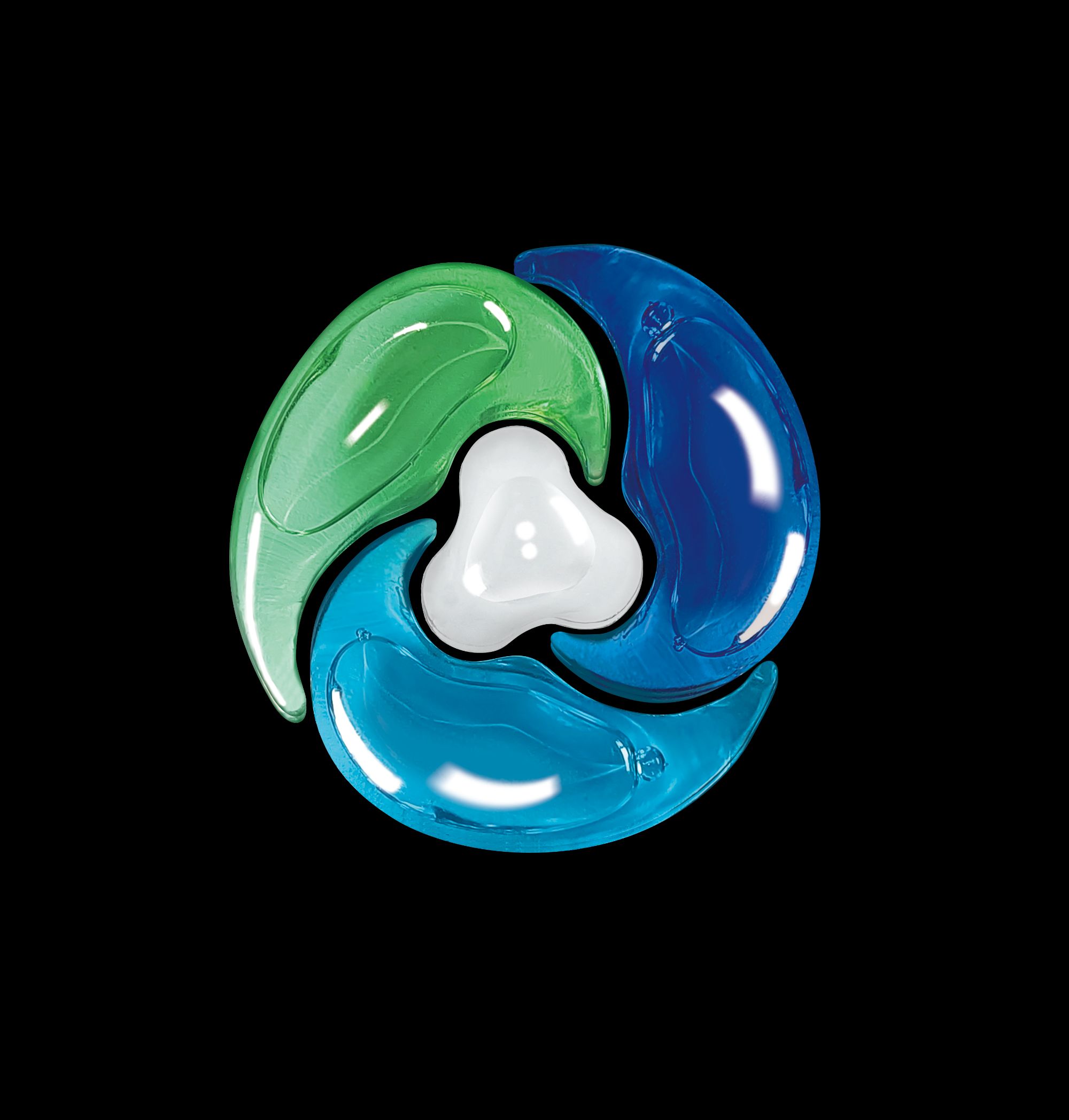
In multi-component dispensing, the real challenge isn’t just blending materials—it’s preventing premature contact. Inline mixing solves this by keeping reactive components isolated until the exact moment they enter the mixing element. This means each chamber holds its own formulation without cross-contamination or partial curing, so shelf life and pot life remain intact even after the cartridge is opened.
The geometry of the static mixer plays a key role. Instead of relying on moving parts that can trap residue or create dead zones, the element’s alternating baffles force the two streams to fold and recombine only inside the nozzle. Because the fluids never share a common path before the mixing zone, there’s no chance for slow side reactions to destabilize the chemicals back in their respective reservoirs.
That separation matters most with moisture-sensitive or oxygen-sensitive resins. A well-designed inline system keeps the sealed chambers airtight and chemically inert until the plunger drives both components forward. The result is consistent ratio control, no hardened plugs at the inlet, and no drift in viscosity or reactivity—just clean, repeatable mixing at the moment of application.
High-Volume Sealing Methods That Prevent Cross-Chamber Leaks
Instead of relying on a single flat gasket squeezed between two machined faces, high-volume production often shifts to continuous compression beads molded directly into one housing half. The bead’s cross-section is tuned so that when the mating cover is torqued down, the elastomer fills a defined groove and maintains contact pressure across the entire perimeter. This removes the tolerance stack that typically opens small leak paths in multi-chamber manifolds.
For enclosures that separate wet and dry zones, dual-shot molding lets a rigid frame carry a soft sealing lip exactly where the chamber wall meets the cover. The lip deflects under assembly load rather than crushing, so it survives repeated thermal cycles without taking a permanent set. Because the seal is integrated into the housing, there is no separate gasket to misalign on a fast-moving line.
High-volume lines also favor robotically dispensed cure-in-place gaskets. A bead of thixotropic silicone or polyurethane is applied to one flange, then the parts are assembled while the material is still wet. As it cures, it bonds to both surfaces and copies every irregularity. This method pairs well with leak testing that pressurizes each chamber independently; any cross-talk shows up as a pressure drop in the adjacent cavity before parts leave the station.
Dust-Free Powder Feed Systems for Continuous Runs
Many continuous production lines still rely on manual powder top-ups, which creates a predictable rhythm of interruptions, dust clouds, and cross-batch contamination risks. A dust-free powder feed system eliminates that stop-start cycle by using sealed transfer vessels, vacuum conveyance, or gravity-assisted docking stations that keep the material enclosed from storage hopper to process inlet. This means operators no longer hover near open manways or scoop from bags mid-run, and the surrounding equipment stays cleaner for longer, reducing both housekeeping labour and the chance of fine particles drifting into sensitive areas like control panels or neighbouring product lines.
For extended campaigns, the real advantage isn't just cleanliness—it's the ability to hold a steady feed rate without the pressure drop or bridging that often follows a hurried refill. Systems designed around continuous runs integrate buffer hoppers with level sensors and automatic switchover valves, so a fresh powder source comes online before the active one runs dry. Because the transfer path is fully enclosed, there is no surge of ambient air or humidity entering the process, which helps preserve powder flowability and prevents lump formation in hygroscopic or cohesive materials. Operators monitor the feed from a distance, adjusting parameters rather than physically intervening, which keeps cycle times consistent and reduces variability in the final product.
Maintenance and changeover also shift from reactive cleaning to scheduled inspection. Dust-free systems typically use quick-release clamps, split valves, and wash-in-place ports that allow rinse cycles without opening the line to the room. Over a multi-day run, that translates into fewer stoppages for wipe-downs, less cross-contamination between batches, and a safer working environment with lower respirable dust exposure. The investment pays off most clearly when production runs stretch beyond eight hours, because the hidden costs of manual powder handling—spills, rejected material, and operator fatigue—accumulate quietly in conventional setups.
Thermal Control Tricks for Heat-Sensitive Pod Films
Heat-sensitive pod films can warp, shrink, or lose clarity when exposed to uneven temperatures. A practical first step is to slow down the sealing process. Lowering the dwell time and temperature by just ten to fifteen percent often prevents edge distortion without sacrificing bond strength. Run a few test seals on scrap material before committing to a full batch, and watch how the film reacts at the corners where heat concentrates.
Another overlooked trick is managing the cooling phase. After the seal bar lifts, hold the pod in place for an extra second or two with a light air burst or a cooled platen. This locks the film geometry before it can contract. If your machine allows, stagger the heating zones so the center reaches peak temperature slightly after the edges, reducing thermal shock. Keep a log of adjustments per film lot; different batches can vary by as much as five degrees in their softening point.
For high-speed lines, consider using a pulsed heat profile instead of a constant one. Short bursts with brief pauses let heat dissipate through the film's thickness more evenly, avoiding surface scorch while still achieving a full melt at the interface. Also check your tooling for hot spots; a worn cartridge heater or a misaligned jaw can create a ten-degree difference across the seal width. Simple fixes like rotating the seal bar or adding a thin silicone buffer layer often yield more consistent results than chasing lower setpoints.
Swapping Formulas in Minutes, Not Hours, on a Four-Chamber Line
On a four-chamber line, changing a formula used to mean pulling apart the transfer pipes, flushing each cavity with hot water and solvent, and recalibrating flow meters by hand. Even a skilled crew would burn three or four hours, with the line completely idle. That kind of downtime made small-batch custom runs almost impossible to justify.
The new quick-swap setup turns each chamber into a plug-and-play module. An operator releases the locking collar, slides out the old module, pushes in the new one, and the control system reads the tag on the module to load the right temperature curve and mix ratio automatically. Cleaning has also shifted from a full pipe soak to a pulsed spray that verifies itself in minutes.
Just last week we ran a thick body butter and then a thin lotion back to back on the same shift. The switch took seven minutes, and the first batch off the line passed spec without any tweaking. The four-chamber line is no longer tied to a single recipe, which finally makes short production runs practical.
FAQ
The main benefit is ingredient isolation. You can keep enzymes, bleach, softeners, and fragrance separate until the pod dissolves in the wash, which prevents premature reactions and extends shelf life. On a high speed line, this translates to fewer rejected batches due to chemical instability, so you get more usable output per shift.
Modern lines use synchronized servo driven nozzles that fill each chamber in milliseconds with very little drip. The filling heads are mounted on a common rail so all four chambers receive their dose at the same station, and a quick weight check follows immediately. This keeps cycle times nearly the same as a single chamber pod while still delivering four separate doses.
We typically recommend PVOH film with a moisture barrier coating, sealed using heated die plates that apply pressure only along the partition walls and outer edge. This avoids heat damage to the film over the chambers themselves. The seal width is tuned to stay tear resistant during shipping but still dissolve completely in cold water.
Yes, the most advanced factories use cartridge based dosing manifolds for each chamber. Operators can swap a cartridge in under ten minutes and load the corresponding recipe from the control panel. The software automatically adjusts fill volumes, seal temperature, and vision inspection tolerances, so you don't need a separate line for every SKU.
QC shifts from checking one cavity to checking four per cycle. In practice, this means each chamber gets its own micro scale reading after filling, plus a short wave infrared scan to verify film thickness along the partition. Any pod with a chamber missing more than 0.05 grams is kicked off the line before sealing.
Depending on pod size and film handling, a well tuned four chamber line can produce 600 to 800 pods per minute. That’s lower than the fastest single chamber lines, but because each pod contains a full multi benefit dose, the effective wash loads per hour are often higher.
The main extra maintenance is cleaning the partition molds and checking the servo alignment for the multi nozzle head. Most factories schedule a 20 minute washdown between shifts and a laser alignment check once a week. The good news is the sealing station is designed with quick release plates, so a full die change takes less than half an hour.
Look for proven experience with PVOH film tension control and a clear protocol for chamber leak testing. Ask about their defect rate on previous multi chamber runs and whether they use closed loop feedback on fill weights. A partner that can provide batch level traceability for each chamber’s formula version will save you a lot of trouble later.
Conclusion
Modern four-chamber laundry pod production lines have rethought filling from the ground up. Instead of sequential dosing, a single pass aligns all four cavities under dedicated nozzles, slashing cycle time while keeping each pod's dose weight within tight tolerances. That speed only works because inline mixing maintains chemical separation until the final milliseconds. Enzymes, surfactants, and brighteners stay in isolated streams, so a stain-fighting chamber never bleaches the adjacent fragrance or softener pod before the film seals. High-volume sealing relies on heated platens that compress each chamber's perimeter in a single stroke, using pressure profiles that compensate for film thickness variations and prevent the microscopic channels that cause cross-chamber leaks.
Dust-free powder feed systems keep continuous runs from choking on airborne fines. Vacuum-assisted hoppers and enclosed augers meter ingredients directly into the mixing manifold, eliminating static buildup and spillage that would otherwise force line stoppages every few hours. Thermal control is equally unforgiving: pod films are sensitive to radiant heat, so sealing stations now cycle through short bursts with active cooling between contacts, preserving the film's tensile strength without sacrificing bond integrity. Finally, formula changeovers no longer mean a full teardown. A four-chamber line with quick-release manifolds and self-draining circuits can switch from a standard detergent to a sport or baby variant in minutes, not hours, because each chamber's dosing parameters, mixing ratios, and sealing temperatures are stored as recipe files and loaded with a single scan. The result is a line that stays flexible enough for short runs yet fast enough for high-volume retail demand.
Contact Us
Contact Person: Zhao Yanlong
Email: [email protected]
Tel/WhatsApp: 8615832007309
Website: https://www.gzlanjieya.com